


From Data to Revenue: How AirAsia Move Maximizes Customer Lifetime Value Through Unified Engagement
For many brands, Customer Lifetime Value (CLV) is simply a number tracked for reporting. While acquisition-focused growth is important, ignoring the full customer journey can lead to untapped revenue and missed loyalty opportunities.
AirAsia Move demonstrates how CLV can be transformed from a static metric into a growth engine when supported by a unified data and engagement strategy – moving beyond acquisition to deliver value at every interaction.
In this article, we’ll explore:
- What CLV means in practice and why segmentation matters
- How unified data enables customer-first engagement
- Real-world AirAsia Move strategies and examples
- Actionable tips for building loyalty that lasts
What is Customer Lifetime Value (CLV)?
Customer Lifetime Value is the total revenue a customer generates over their relationship with your brand. It’s influenced by:
- Average transaction value
- Purchase frequency
- Retention period
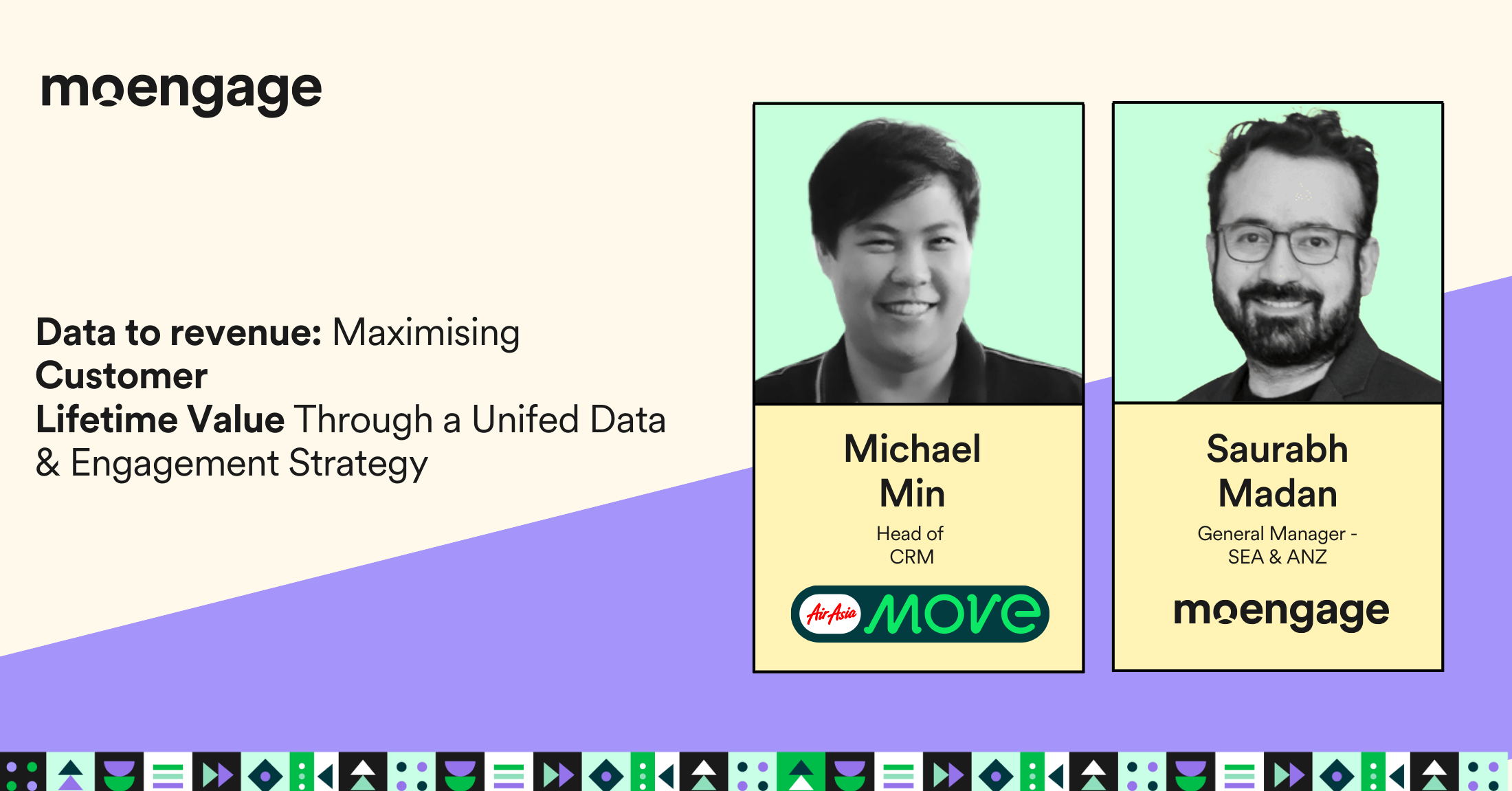
Brands often rely on a single average CLV – but as Michael Min, Head of CRM at AirAsia Move, explains:
“One average CLV number hides differences in behaviours and opportunities. Look at CLV as a lens, not a fixed figure.”
Why Unified Data and Engagement Matters
A unified data strategy combines all customer information – online and offline – into a single profile:
AirAsia Move integrates:
- Web, iOS, and Android app activity
- Backend APIs
- Offline sources via secure transfers
- Partner integrations with CDPs
This approach helps:
- Map the entire journey – from search → check-in → travel → feedback
- Identify “quiet periods” between engagements as opportunities for personalised outreach
- Reduce wasted effort by focusing only on actionable data points
💡 Tip: Collect only the data you can use. “Too much unused data is wasteful,” says Min.
Key Touchpoints That Influence CLV
Similar to post-purchase communications in Ecommerce, these touchpoints drive value in travel:
- Transactional Communication: Booking confirmations, flight status updates.
- Experience Enhancers: Price drop alerts, in-app ride booking upon arrival.
- Feedback Loops: NPS surveys, post-trip reviews.
- Re-Engagement Triggers: Outreach during quiet periods before travel.
- Cross-Sell/Upsell Offers: Ancillary services such as extra baggage and premium seating.
Strategies for Maximizing CLV
Drawing from AirAsia Move’s example, here are five actionable ways to boost CLV with unified engagement:
1. Map Customer Journeys
Document every touchpoint across travel booking and execution. Identify gaps — including long quiet periods – and design engagement around them.
👉 Example: AirAsia Move discovered business travellers book within 7 days, while leisure groups book much earlier. Tailored reminders and upsell timing follow these booking trends.
2. Segment CLV into Meaningful Cohorts
Avoid a single average. Instead, split by:
- Opt-in vs opt-out status
- Purchase frequency vs transaction value
- Milestone behaviours (e.g., multiple bookings within a period)
📊 Data Insight: Opted-out customers in monopoly routes may still retain high CLV – focus on service experience rather than marketing campaigns.
3. Use Quiet Periods as Engagement Opportunities
The time between booking and travel is rich with intent:
- Share destination tips
- Offer upgrades or add-ons
- Send travel reminders
💡 Tip: Consider these windows as prime moments to re-engage – not gaps.
4. Build Loyalty Using 5 Experiential Pillars
Michael Min breaks loyalty into:
- Time Saved – Frictionless booking/check-in processes.
- Uncertainty Reduction – Confidence in flight plans (e.g., guaranteed same-day alternate flights).
- Control – Balanced autonomy without overwhelming customers.
- Respect – Honouring promo promises and consent preferences.
- Continuity – Helping travellers resume or deepen their interests seamlessly.
5. Personalize Across Languages and Behavioural Data
AirAsia Move personalizes almost all outbound communication, including:
- Multi-language messages
- Recommendations powered by data science
- AI-generated copy with guardrails to manage brand risk
💡 Tip: Success starts with targeting one segment effectively, then scaling.
Real-Life Examples from AirAsia Move
1. Seamless Boarding Passes
Mobile QR codes replace paper passes – reducing friction and saving time.
2. Price Drop Notifications
Alerts for high-intent searchers yield click-through rates 5-10x higher than those for generic fare campaigns.
3. In-App Ride-Hailing Upon Arrival
Immediate value by offering taxi booking and directing travellers to pickup points.
4. Milestone Travel Offers
Aligning offers to booking lead-time patterns for different traveller types.
Industries That Benefit Most from Unified Data Strategies
As highlighted in the webinar:
- Retail: Large SKU bases, frequent repeat purchases, multiple journeys.
- Travel & Hospitality: Multi-touch journeys, abundant cross-sell opportunities.
- Banking & Fintech: Long retention cycles tied to milestone actions.
Customer Lifetime Value: Acting for the Customer
Unified data makes it easier to:
- Capture only relevant information
- Map journeys for insight-rich touchpoints
- Segment CLV for targeted action
- Design loyalty experiences grounded in value
- Personalize at scale
“Don’t do things to the customer. Do things for the customer.” – Michael Min
Brands that follow this principle will not just increase CLV – they’ll earn lasting loyalty.
However, turning CLV into a true growth engine requires the right technology foundation. Platforms like MoEngage help make unified, customer-first engagement possible by bringing together data from multiple sources to create a single customer view. This enables brands to understand behavior across channels, segment customers meaningfully, and deliver timely, personalized communication at every stage of the journey. With tools for analytics, journey orchestration, and AI-driven personalization, brands can turn insights into action, transforming Customer Lifetime Value from a static metric into a measurable driver of growth and loyalty.
💡 Next Step:
Watch the full webinar Data to Revenue: Maximizing CLV Through Unified Data and Engagement
OR
Speak to MoEngage’s team about powering your customer-first strategy.