



Your Customer Journeys Aren’t Broken. Your Tech Stack Is!
Every serious conversation about growth today eventually leads to the same place: customer journeys. In this dog-eat-dog marketplace, the most personalized customer experience wins. Not campaigns. Not touchpoints. Journeys. And brands know what great journeys should look like: timely, personalized, and responsive to behavior. Yet at scale, those journeys fracture. Messages arrive late. Context gets lost. Customers are treated like first-time visitors every time they switch channels.
Because customer journeys only work when the three Ds operate as one: Data, Decisioning, and Delivery.
However, orchestration at that scale requires capabilities that most brands simply don’t have in one place.
- Ingest and unify data from all channels
- Segment intelligently
- Personalise at scale
- Automate journeys across touchpoints
- Adapt instantly to customer behaviour
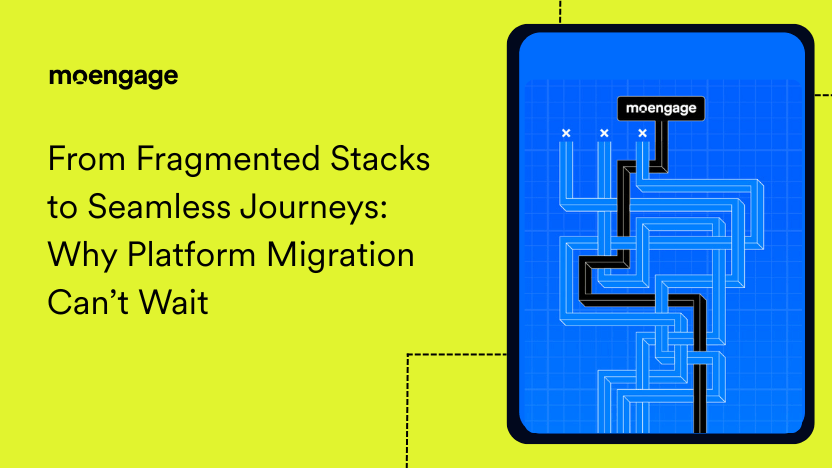
The problem? Most organisations are sitting on fragmented, outdated tech stacks built over years, patched together with point solutions, and riddled with incompatibilities. It doesn’t matter if they’re B2C giants or nimble startups – the stack is there. It’s “good enough,” and it’s deeply integrated into operations.
On paper, the solution seems obvious: migrate to a platform that can do it all, replacing fragments with a single, unified system (yes, like MoEngage).
But here’s the catch: migration from legacy systems is not “plug and play.” It’s a high‑friction, high‑risk process that scares even the most forward‑thinking business leaders. And that fear is why many brands ignore the ticking underneath their “comfortable” tech status quo until the market leaves them behind.
Why Strategic Minds Delay or Abandon Migrations
When leadership weighs the known pain of migration against the vague promise of improved orchestration, three friction points almost always stall the process:
1. The Data Compatibility Crisis
Customer data is the lifeblood of personalization, but years’ worth of data from legacy stacks comes with tangled roots:
- Complex mapping: Old platforms often utilize proprietary data fields that require translation into a new schema.
- Data cleanliness issues: Duplication, outdated records, and fragmented customer profiles.
- Operational overload: For e‑commerce retailers, migrating millions of customer profiles plus daily product catalogue syncs is not a lift‑and‑shift; it’s slow, manual, and expensive.
Without a meticulous data migration strategy, brands risk starting day one on a modern platform with broken segments and incomplete customer views, crippling the very customer journeys they aimed to improve.
2. Campaign and Content Code Management
Legacy platforms often run hundreds of active campaigns written in outdated templating languages.
Migrating those campaigns manually means:
- Rewriting template code line‑by‑line, campaign‑by‑campaign.
- Checking for content fidelity to ensure that creative assets and dynamic fields continue to render perfectly.
This is where many projects grind to a halt. Without automation, migration suites purpose‑built for marketing assets, the process becomes an organisational bottleneck.
3. Risk and Uncertainty of Disruption
Even when the tech challenges are solvable, the perception of risk can tank migration plans:
- Operational downtime fear: No one wants journeys, notifications, or emails to go silent during migration.
- Timeline ambiguity: Without strict migration milestones, leadership fears the project will drag on.
- Accountability gaps: Who owns each migration stage? Who signs off on fidelity before go‑live?
The result: Stakeholders retreat into the “safe” stability of the legacy system, even as the market moves forward without them.
Why Inaction Costs More Than Migration Pain
Every month spent on a patchwork legacy stack is a month of:
- Customers experiencing uneven journeys
- Teams are wasting time on manual fixes and workaround integrations
- Competitors are building AI‑powered, real‑time personalised experiences that your tech simply can’t match
That “comfortable” system is a time bomb:
- When the legacy vendor sunsets features or raises costs without adding value
- When regulatory or privacy updates require capabilities your stack doesn’t have
- When your growth goals demand orchestration beyond what the current tool can provide
Modern platforms like MoEngage are built to make migration not just possible, but transformative with unified data, plug‑and‑play integrations, automated asset migration, and journey orchestration tools ready from day one.
Download Our Migration Guide NowTL; DR
Migration is not optional if becoming a truly customer‑centric brand is your endgame. The pain points are real, but they are transient. The opportunity cost of staying static is permanent. With the right platform, a methodical migration plan, and an automation‑driven approach to content and data fidelity, you can move past the compatibility crisis, retire outdated campaign code, and minimise disruption risk.
Sitting still on a legacy stack might feel safe now, but from a customer experience perspective, it’s choosing slow extinction over sustained growth.