



KAYAK Case Study: Where Real-Time Travel Meets Real-Time Engagement

case-study-banner-image
Kayak
About KAYAK

KAYAK is a global travel search engine that helps millions of travelers compare flights, hotels, and rental cars across hundreds of providers. Operating across multiple brands and dozens of locales, KAYAK delivers real-time travel information, price alerts, and trip updates that help customers make confident decisions before, during, and after their trips. For KAYAK, timely and relevant communication isn’t just part of marketing, it’s part of their customers’ travel experience.

case-study-brand-image

Business Need

Travel happens in real time. Prices change without warning. Gates shift. Flights are delayed. Customers expect to know immediately, and need to act just as quickly. Before MoEngage, KAYAK’s messaging ecosystem operated across multiple platforms, with Email and Push notifications managed separately and customer insights spread across different systems. Launching a new campaign required engineering support, custom queries, and weeks of coordination across teams. Even small changes were taking up to a month to implement, limiting the team’s ability to experiment, personalize, or respond to real-time travel moments. These fragmented systems created processes that made it harder to scale engagement across KAYAK’s audiences, resulting in significant manual effort and ultimately slowing the team down at a time when customers needed real-time updates the most.

Business Need

MoEngage gives our team the flexibility to experiment quickly, test new ideas and scale what works across brands and locales.

John Ferris
John Ferris

VP of Technology, KAYAK

The Solution: Real-time Communications Travelers Can Trust

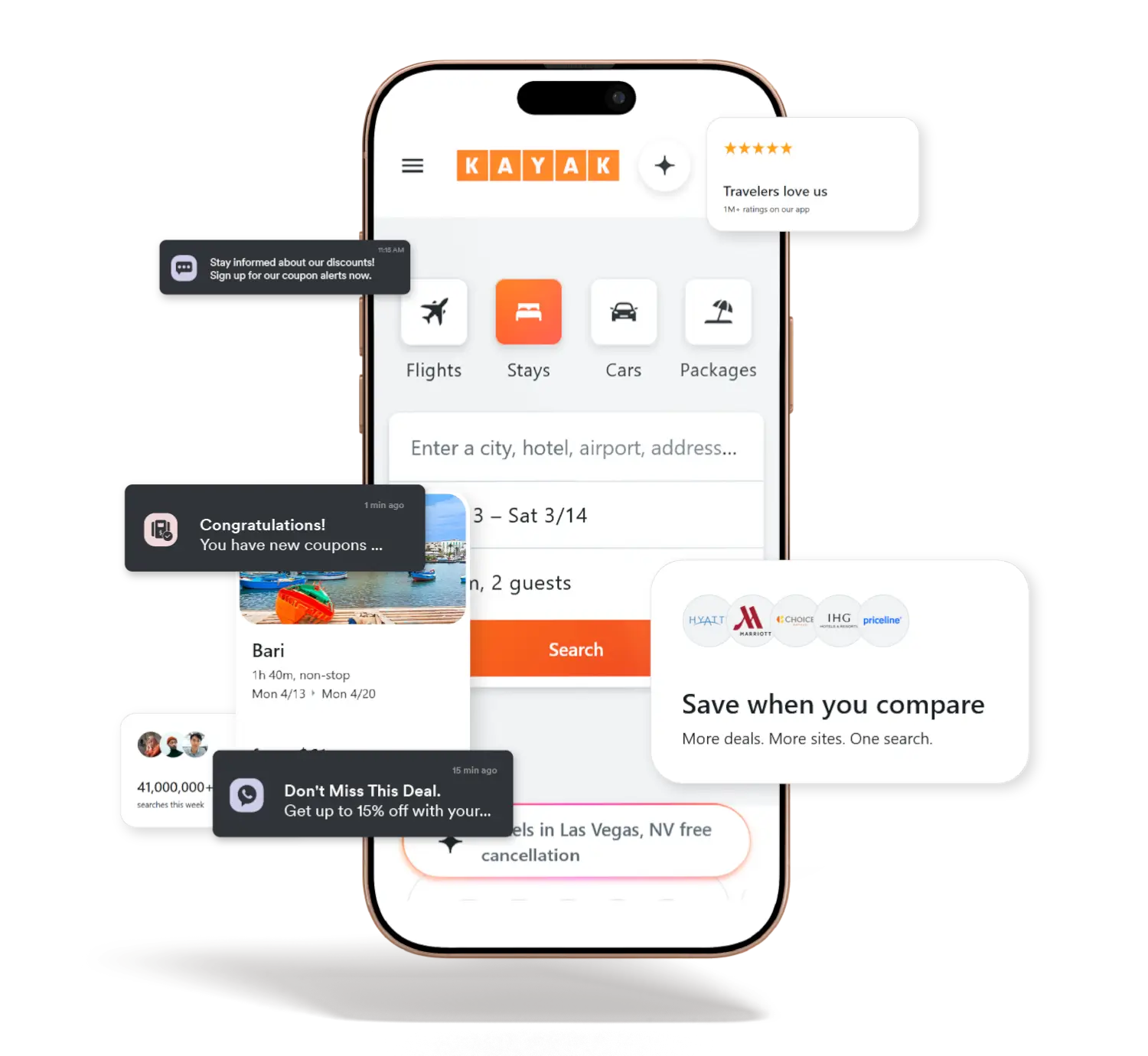
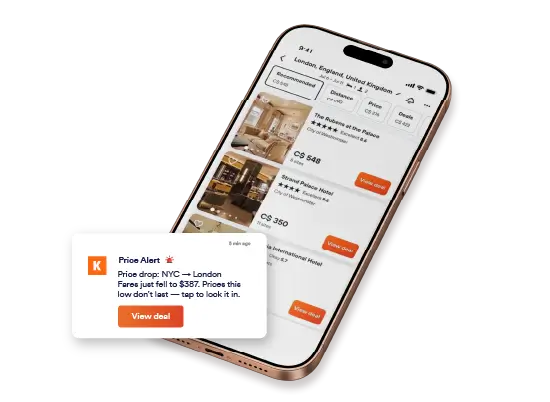
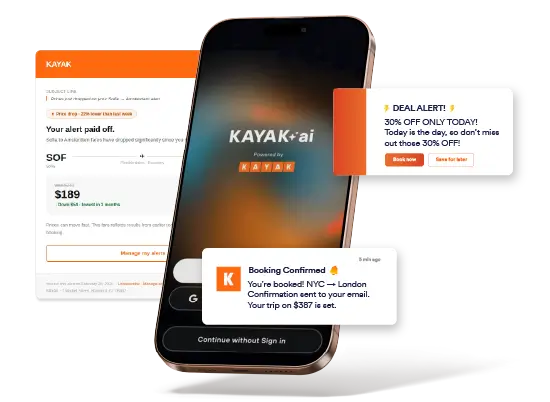
KAYAK implemented MoEngage to power its most critical communications, including price alerts, booking confirmations, trip updates, and gate change notifications. Using MoEngage Inform, KAYAK’s engineering team routes transactional messages through the platform’s APIs to make sure these time-sensitive emails are delivered within strict service-level agreements. This allows travelers to receive updates exactly when they need them, whether they are planning a trip or navigating an airport. Beyond transactional messaging, KAYAK also uses MoEngage Flows to orchestrate lifecycle communications across email and push. These flows trigger messages based on user actions such as searches, alerts, and trip activity, making sure customers receive relevant updates the moment something changes. Together, Inform and Flows enable KAYAK to deliver reliable, real-time communications at the exact moment travelers need them most.

case-study-solution-featured-image

The Solution: Hyper-personalization at Global Scale

KAYAK personalizes messages using behavioral data captured directly in MoEngage via past searches, home airports, trip activity, and traveler preferences. These are stored as events and custom profile fields, which KAYAK’s teams use to build audience segments inside the platform. Building those segments used to take about a month. Now it takes less than a week. Dynamic content and reusable content blocks handle the variation work. KAYAK can personalize recommendations and alerts within emails while keeping templates consistent across brands and locales.These modular components help teams quickly adapt campaigns for different markets without rebuilding messaging variations from scratch. Lifecycle journeys are personalized through Flows, MoEngage’s journey builder. KAYAK uses the same segmentation logic to trigger sequences from onboarding through activity-based nudges.

case-study-solution-featured-image

Products Used

case-study-product-used-image

Customer Journey Orchestration

case-study-product-used-image

Email

case-study-product-used-image

MoEngage Inform

case-study-product-used-image

Push Notification

case-study-product-used-image

Segmentation

The Results

KAYAK unified Email and Push on MoEngage and achieved the following:

  • Campaign launch time reduced from 30 to 6 days
  • Increased team autonomy with reduced engineering dependency
  • Expanded experimentation into Push notifications
  • Unified monitoring across transactional and lifecycle messaging
  • Real-time delivery of critical travel alerts and trip updates