





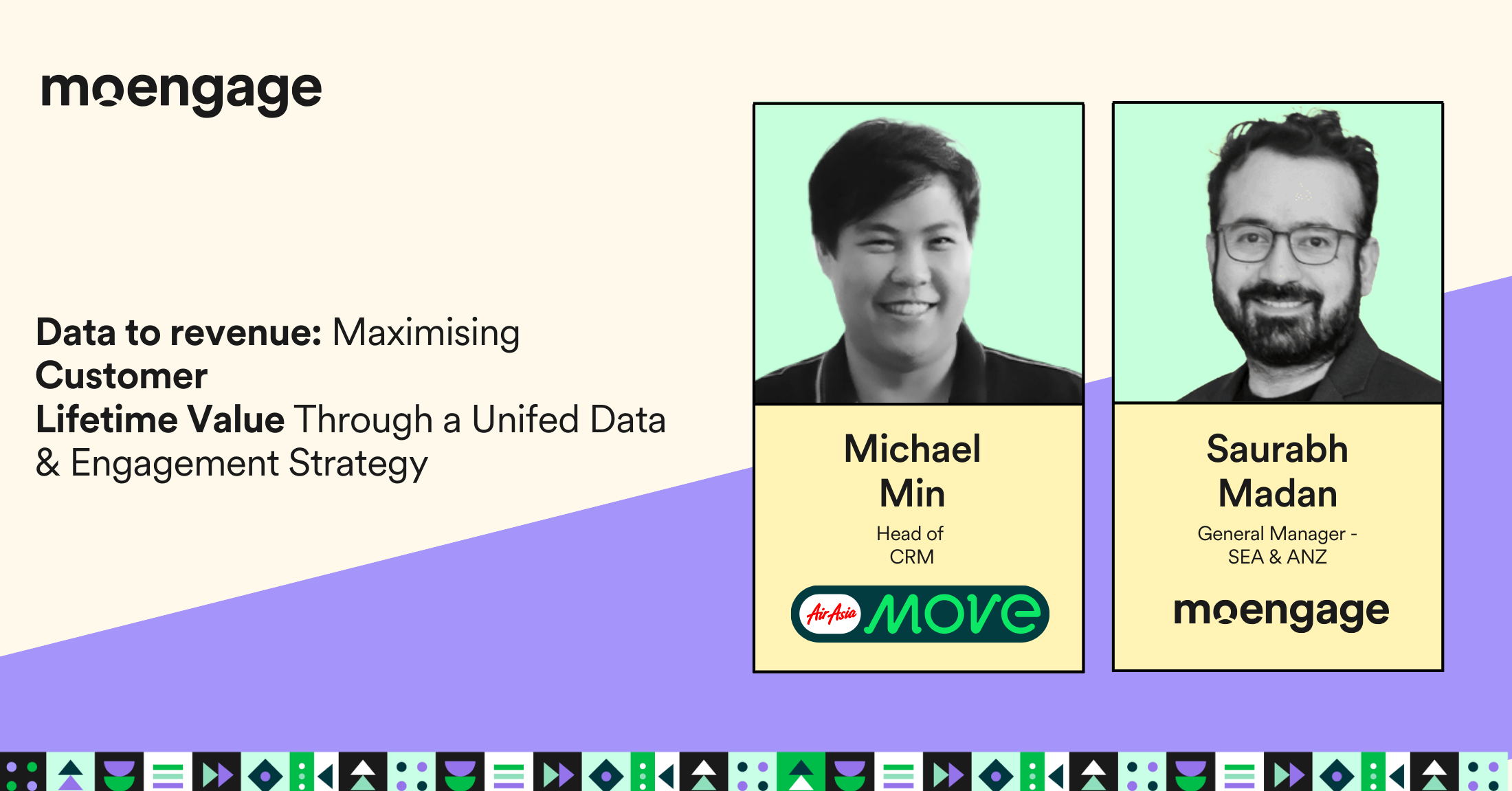
From Data to Revenue: How AirAsia Move Maximizes Customer Lifetime Value Through Unified Engagement
For many brands, Customer Lifetime Value (CLV) is simply a number tracked for reporting. While acquisition-focused growth is important, ignoring the full customer journey can lead to untapped revenue and missed loyalty opportunities.
AirAsia Move demonstrates how CLV can be transformed from a static metric into a growth engine when supported by a unified data and engagement strategy – moving beyond acquisition to deliver value at every interaction.
In this article, we’ll explore:
- What CLV means in practice and why segmentation matters
- How unified data enables customer-first engagement
- Real-world AirAsia Move strategies and examples
- Actionable tips for building loyalty that lasts
What is Customer Lifetime Value (CLV)?
Customer Lifetime Value is the total revenue a customer generates over their relationship with your brand. It’s influenced by:
- Average transaction value
- Purchase frequency
- Retention period
Brands often rely on a single average CLV – but as Michael Min, Head of CRM at AirAsia Move, explains:
“One average CLV number hides differences in behaviours and opportunities. Look at CLV as a lens, not a fixed figure.”
Why Unified Data and Engagement Matters
A unified data strategy combines all customer information – online and offline – into a single profile:
AirAsia Move integrates:
- Web, iOS, and Android app activity
- Backend APIs
- Offline sources via secure transfers
- Partner integrations with CDPs
This approach helps:
- Map the entire journey – from search → check-in → travel → feedback
- Identify “quiet periods” between engagements as opportunities for personalised outreach
- Reduce wasted effort by focusing only on actionable data points
💡 Tip: Collect only the data you can use. “Too much unused data is wasteful,” says Min.
Key Touchpoints That Influence CLV
Similar to post-purchase communications in Ecommerce, these touchpoints drive value in travel:
- Transactional Communication: Booking confirmations, flight status updates.
- Experience Enhancers: Price drop alerts, in-app ride booking upon arrival.
- Feedback Loops: NPS surveys, post-trip reviews.
- Re-Engagement Triggers: Outreach during quiet periods before travel.
- Cross-Sell/Upsell Offers: Ancillary services such as extra baggage and premium seating.
Strategies for Maximizing CLV
Drawing from AirAsia Move’s example, here are five actionable ways to boost CLV with unified engagement:
1. Map Customer Journeys
Document every touchpoint across travel booking and execution. Identify gaps — including long quiet periods – and design engagement around them.
👉 Example: AirAsia Move discovered business travellers book within 7 days, while leisure groups book much earlier. Tailored reminders and upsell timing follow these booking trends.
2. Segment CLV into Meaningful Cohorts
Avoid a single average. Instead, split by:
- Opt-in vs opt-out status
- Purchase frequency vs transaction value
- Milestone behaviours (e.g., multiple bookings within a period)
📊 Data Insight: Opted-out customers in monopoly routes may still retain high CLV – focus on service experience rather than marketing campaigns.
3. Use Quiet Periods as Engagement Opportunities
The time between booking and travel is rich with intent:
- Share destination tips
- Offer upgrades or add-ons
- Send travel reminders
💡 Tip: Consider these windows as prime moments to re-engage – not gaps.
4. Build Loyalty Using 5 Experiential Pillars
Michael Minh breaks loyalty into:
- Time Saved – Frictionless booking/check-in processes.
- Uncertainty Reduction – Confidence in flight plans (e.g., guaranteed same-day alternate flights).
- Control – Balanced autonomy without overwhelming customers.
- Respect – Honouring promo promises and consent preferences.
- Continuity – Helping travellers resume or deepen their interests seamlessly.
5. Personalize Across Languages and Behavioural Data
AirAsia Move personalizes almost all outbound communication, including:
- Multi-language messages
- Recommendations powered by data science
- AI-generated copy with guardrails to manage brand risk
💡 Tip: Success starts with targeting one segment effectively, then scaling.
Real-Life Examples from AirAsia Move
1. Seamless Boarding Passes
Mobile QR codes replace paper passes – reducing friction and saving time.
2. Price Drop Notifications
Alerts for high-intent searchers yield click-through rates 5-10x higher than those for generic fare campaigns.
3. In-App Ride-Hailing Upon Arrival
Immediate value by offering taxi booking and directing travellers to pickup points.
4. Milestone Travel Offers
Aligning offers to booking lead-time patterns for different traveller types.
Industries That Benefit Most from Unified Data Strategies
As highlighted in the webinar:
- Retail: Large SKU bases, frequent repeat purchases, multiple journeys.
- Travel & Hospitality: Multi-touch journeys, abundant cross-sell opportunities.
- Banking & Fintech: Long retention cycles tied to milestone actions.
Customer Lifetime Value: Acting for the Customer
Unified data makes it easier to:
- Capture only relevant information
- Map journeys for insight-rich touchpoints
- Segment CLV for targeted action
- Design loyalty experiences grounded in value
- Personalize at scale
“Don’t do things to the customer. Do things for the customer.” – Michael Minh
Brands that follow this principle will not just increase CLV — they’ll earn lasting loyalty.
💡 Next Step:
Watch the full webinar Data to Revenue: Maximizing CLV Through Unified Data and Engagement
OR
Speak to MoEngage’s team about powering your customer-first strategy.