Adapt or Die: How the Resilient Marketer Survives 2026
Read Report
close-icon

Adapt or Die: How the Resilient Marketer Survives 2026

  • UPDATED: 04 February 2026
  • 17 minread
Adapt or Die: How the Resilient Marketer Survives 2026
Reading Time: 17 minutes

In the race to 2026, the mandate for brands has shifted from “grow at all costs” to a starker, more urgent reality: Adapt or Die.

As we analyze the defining marketing technology trends for 2026 in this joint report with Branch and Movable Ink, one thing is clear. The industry has reached the physical limit of what human effort alone can achieve. We have mastered the art of keeping campaigns running, yet we are drowning in the manual labor required to maintain them.

This is a systemic weakness visible in the data. To understand the true state of the industry, we surveyed 651 B2C marketing professionals, ranging from Team Leads to C-Level executives, across sectors like Ecommerce and Retail, Financial Services, and QSR. The consensus among these leaders was alarming.

42.86% of marketers admit that marketing data quality and targeting would be the first things to fail if they had to double their campaign volume without new hires.

Think about what that actually means. Nearly half the market is one growth spurt away from breaking its own infrastructure. Most teams have enough manual oversight to survive today, but they lack the automated resilience to thrive tomorrow.

This is the crossroads. You can continue running on the treadmill of manual grunt work, or you can build an engine that scales.

Interestingly enough, the data reveals that money isn’t the problem. The real issue is the limitation of using old, disconnected tools that don’t talk to each other. While 68.1% of marketers are expanding their marketing stack with AI, 57.8% are simultaneously consolidating tools. This means they aren’t just cutting costs. They are cleaning house to make room for a new kind of strategy.

Welcome to the era of the Resilient Marketer.

1 word to describe how a marketing team in 2026 adapts to change word cloud


Foreword by Scott Brinker

The world is spinning faster than ever. For marketers, there are only two choices: keep up or fall behind.

This is not easy. It’s hard as hell.

But those who rise to the challenge are standing out. They’re not waiting to see what AI will do to their jobs. They’re putting a bridle and saddle on it to ride like the wind.

When we asked marketers to describe their team’s ability to adapt to change, look at the word cloud they painted: Adaptive. Change. Good. These are the keywords of the Resilient Marketer. Change is good — if you’re built for it.

So what does “built for it” actually look like?

Resilient marketers lean into continuous experimentation. They never rest on their laurels or fall prey to complacency. Over 50% are continuously experimenting across email, paid social, and website channels. And more than 44% maintain that same experimental rigor in mobile channels — SMS, push, in-app, and WhatsApp. They’ve internalized a fundamental truth: what worked yesterday is just a hypothesis for tomorrow.

Resilient marketers are ahead of the curve in capturing and activating first-party data. They’re collecting behavioral data streams and rapidly applying those signals into personalized, optimized campaigns. In a world where third-party data is increasingly unreliable, owning your customer intelligence isn’t just an advantage. It’s table stakes for survival.

Resilient marketers embrace a move-fast ethos, but without breaking things. Their accelerated cadence doesn’t come at the expense of quality. In fact, the top use case for AI agents among respondents is bringing greater quality assurance to emails, creatives, and copy (49%). Speed and quality aren’t trade-offs for these teams.

Resilient marketers harness AI without surrendering to it. They keep a steady hand on the wheel and their eyes on the road, refusing to let AI run amok in autopilot mode. Harnessing AI doesn’t mean turning over the reins to it. The resilient marketers remain in command.

Resilient marketers are ready to rethink every facet of their martech stack. Approximately half reported they’re likely to replace their existing ESP, CDP, or CEP in the next 12-18 months. And here’s an apparent paradox: they’re simultaneously expanding their stack with new AI tools while consolidating their existing toolset. But it’s not really a contradiction. They’re clearing out the clutter to make room for capabilities that actually matter.

Finally, consider this finding: 43% of marketers say data quality and targeting would be the first thing to break if they had to double their campaign volume without new hires. Pretty clear that’s where investment needs to go.

But here’s what inspired me to my core: only 12% said team morale and burnout would break first.

That speaks to the true resilience of the marketers in the trenches. They’re not just surviving this era of relentless change. They’re built for it.

Respect.
– Scott Brinker, Analyst & Advisor, chiefmartec

Executive Summary: The Resilience Mandate

We have hit a production ceiling. Marketing teams today have mastered the art of keeping campaigns running, but they lack the automated infrastructure to actually grow. This 2026 marketing trends report identifies a critical fracture point in the industry: targeting and marketing data quality are the first things to break when pressure increases.

This report is more than a collection of statistics. It is a reality check for the modern B2C marketer. 

In collaboration with our partners, Branch and Movable Ink, and other leading industry voices such as Scott Brinker, Juan Mendoza, and Aboli Gangreddiwar, we analyzed responses from over 600 marketing professionals to define exactly what the “Resilient Marketer” looks like in 2026.

Here is what you need to know right now:

  • The Consolidation Focus: 

 Marketers are prioritizing agility over austerity. With 52.53% of teams planning to replace their email platforms in the next 18 months, the market is signaling a massive infrastructure overhaul. This replacement wave coincides with a broader trend where 57.76% of marketers are actively consolidating tools to improve integration and efficiency, rather than just reducing spend.

  • The AI Trust Gap: 

AI has achieved table-stakes status for operational tasks like quality assurance, but nearly 38% of leaders refuse to let it handle brand-sensitive copy. This indicates marketers trust the machine for speed but still demand human oversight for taste and strategy.

  • The Manual Policing Trap: 

Although 70.51% of marketers have access to customer behavioral data in real-time, scaling is often stalled by manual oversight. Because marketers are doing many campaign creation tasks manually, data integrity has become the literal governor of growth.

By reading the report, you will discover why “good enough” data is killing your agility and why the true competitive advantage of the next 12 months lies in the manual processes you can eliminate with technology.


Who We Surveyed and Why

Objectives and Methodology

We surveyed 651 B2C marketing professionals in December 2025 to unravel market trends and deliver actionable guidance to help you understand:

  • Where to apply AI
  • Where human judgment is still essential
  • How resilient teams adapt their channels, data, processes, and metrics
  • What separates flexible, modern teams from those that risk falling behind
  • What makes a marketer resilient in 2026

Profile of Respondents 

To ensure this report reflects a holistic view of the market, we surveyed marketing professionals across different industries, job roles, and organization sizes:

  • Industries: Led by Ecommerce & Retail (21.4%), Financial Services (14.4%), Telecom (13.8%), and QSR (11.1%).
  • Roles: A mix of strategic and tactical leaders, including Team Leads (25.8%), Directors (23.4%), and Senior Directors (16.1%).
  • Company Size: Respondents represented a broad spectrum, with the largest segment coming from enterprises (27.2%).

Resilient marketer survey industry breakdown graph

Resilient marketer survey respondent roles graph

Resilient marketer survey employee counts graph


Martech Reality Check: Consolidation Over Cost-Cutting

Findings show that the most stable parts of your tech stack may actually be the most fragile. It appears that a massive replacement wave is coming, and it is not driven by budget cuts. It is driven by a need for integration.

A) The Investment Paradox

The narrative that marketers are slashing budgets is false. Only 23.96% of respondents reported reducing spend due to cost concerns. Instead, we are seeing an “Efficiency-Innovation Paradox.”

While 68.05% of marketers are expanding their stacks with new AI capabilities, 57.76% are simultaneously consolidating their tools. This indicates a strategic swap in the martech investment strategy. Teams are aggressively shedding tool bloat to adopt unified platforms that can actually talk to one another. The goal is no longer just having the tool. It is about integrating it to bypass cross-functional bottlenecks.

Martech investment strategy graph

B) The Replacement Wave

This drive for integration explains why the tools most relied upon are currently the ones most at risk of being swapped out. 

Data shows that 52.53% of B2C marketers plan to replace their email platforms within the next 18 months, closely followed by Analytics/Attribution tools (49.92%).

What tools marketers will replace in the next year graph

Why replace such core systems? Because legacy tools silo different channels rather than showing how they work together. As privacy changes make tracking harder, brands need tools that can accurately prove ROI across a connected customer journey. 

This massive shift caught even seasoned experts off guard. Engagement platforms and email marketing systems are historically very sticky, as Juan Mendoza, CEO of The Martech Weekly, points out, “imagine trying to replace 250 user journey flows, all with unique integrations, content, and logic.”

And yet more than half of marketers are looking to move away. The main driver, Mendoza explains, is the increasing pace of migration from old to new infrastructure. 

The ‘New School’ CEP has a radically different approach to data management, storage, and activation into channels. With each passing year, the platforms that many enterprises relied on back in 2010 just have not kept up with the innovation curve.

Reed Kuhn, Head of Business Strategy at Branch, points out that this need for modernization stems from a structural failure of the tools themselves:

Legacy attribution tools silo paid and owned channels instead of showing how they work together. Marketing teams need to see how users move between channels, because that connected data actually improves campaign accuracy on both sides.

Marketers are no longer looking for standalone features; they are searching for infrastructure that bridges the gap between data and action. Tracy Meyer, Associate Director of Strategy at Movable Ink, argues that modern platforms must drastically shorten the window between insight and execution.

Marketers need platforms that act on customer signals immediately and at scale while enabling marketing, compliance, and data teams to work together seamlessly.

This shift toward unified measurement is the first step. However, once the stack is integrated, the focus must shift to how those tools are actually used to engage customers across every touchpoint.


Channel Performance Matrix: Bridging the Maturity Gap

Our findings show that not all channels are equal. While some are running like optimized factories, others are stuck in the experimental lab phase. So who’s to blame?

A) The Channel Maturity Gap

Email remains the undisputed leader in YoY performance, with 68.51% of marketers reporting better performance in 2025 than in 2024. 

This dominance is not an accident. It is the result of operational discipline. 57.14% of teams maintain a continuous experimentation cadence on email, using it as a laboratory to optimize performance.

In stark contrast, mobile channels are lagging significantly. While many marketers are experimenting across such channels, they don’t bring the same rigor as they do to more established channels like email. 

SMS shows the highest YoY rate of total stagnation, with 7.37% of marketers admitting they never run experiments. Furthermore, 48.69% of marketers described their SMS personalization level as basic or none. Other mobile channels like Push and In-app follow a similar pattern. 

Channel maturity matrix graph

This lag does not indicate a lack of potential. Since email has decades of established best practices, it provides a safety net to marketers that mobile channels currently lack. Additionally, mobile channels are often perceived as being invasive, which explains the industry-wide hesitancy to experiment with them. 

However, Reed argues that this perceived risk is actually the source of mobile’s greatest strength:

Marketers are right to be cautious; push and SMS appear on home screens, so they feel more invasive than email. But that’s also why they have the highest upside for engagement and CTR. The key is earning that access through good targeting, links that lead directly to content, and strong attribution of down-funnel events to prove what is working. These are powerful channels that deserve respect.”

B) Leaders vs. Laggards

When brands fail to apply the same scientific rigor to mobile that they do to email, they create a lopsided maturity gap. The data draws a clear line between leaders and laggards. 

Push Notifications lead the survey in declining results at 7.53% claiming worse performance YoY, while SMS shows the highest rate of non-experimentation (AKA total stagnation).

Laggards matrix graph

The danger of this gap is a disconnected customer experience. If a customer sees a hyper-personalized website but receives a generic SMS, it erodes trust. 

Tracy highlights the risk of this omnichannel disconnect, noting that it often manifests when brands invest in sophisticated web personalization but fail to sync it with other channels, such as a bank sending a mortgage application campaign to a customer who just completed that exact transaction.

For Meyer, this isn’t just a technical glitch; it’s a fundamental breakdown of the brand-customer relationship:

That disconnect undermines trust because customers don’t think in channels or journeys, they think: ‘Does my bank understand my financial life or not?’

Bridging this channel maturity gap requires more than just testing. It requires the speed and automation that AI promises. But as we adopt these new tools, we must be careful about where and how we apply them.


AI as the Operational Engine: Solving for Speed, Not Strategy

The AI marketing trends for 2026 indicate that AI has officially transitioned from an experimental co-pilot to an operational worker. However, the human element remains the ultimate gatekeeper for creativity and brand soul.

A) The Efficiency Shift

How marketers use AI today is focused almost entirely on removing the grunt work that historically slowed down campaign velocity. Its top use cases are Quality Assurance for content (49.31%), Automating Customer Journeys (41.01%), and Generating Creative Assets (41.01%).

How teams are using AI graph

This confirms that the market is in a productivity-first phase, where the primary metric for success is improved operational speed (66.21%).

B) The Trust Gap

However, speed does not equal trust. 37.94% of leaders don’t trust AI to handle brand-sensitive copy, and 30.41% don’t trust it with campaign strategy. This indicates marketers value the speed AI adds to execution, but they are skeptical of letting it take a strategic lead.

What marketers do not trust AI with graph

But Reed recommends brands look beyond operational speed to determine if their AI strategy is actually delivering results:

The brands that win will use AI to provide real customer value, not just output volume. The way to break out is by using down-funnel measurement to see what actually converts and taking a long-term view of engagement metrics. Ask yourself: Are the AI-generated emails driving repeat purchases? And is personalized content increasing lifetime value? Without measuring such outcomes, you’re wielding powerful tools blind.

Similarly, Tracy suggests shifting the focus from the performance of a single AI-led campaign to the long-term health of the customer relationship:

Customer Lifetime Value is a powerful way to see how AI changes how marketers meet customer needs. With AI, we can move from campaign calendars built on best guesses to strategies that drive long-term meaningful value incrementally by identifying and nurturing higher-value relationships earlier so you’re optimizing for lifetime value, not just the next campaign.

However, AI can only optimize the journeys it can see. This makes the quality and accessibility of the underlying data more critical than ever.


Data Evolution Matrix: Moving from Passive to Active

Having data is not the problem. The problem is accessing it fast enough to matter.

A) Activation Readiness

First-party customer behavioral data has officially become the gold standard for resilient marketing. Currently, 70.51% of marketers are successful in obtaining this data in real time, providing the essential fuel for advanced personalization and continuous experimentation. 

Data activation readiness scatter chart

Conversely, third-party data has fallen into a significant “Risk Zone.” Despite its perceived importance for reach, it sits at the bottom of the health scorecard with a mere 30.41% quality rating and less than 50% claiming real-time accessibility. As cookies crumble, relying on this “bought” data is becoming a liability rather than an asset.

Juan notes that this shift toward owned data was an inevitable reaction to platform instability. 

After years of Google’s inconsistent timeline regarding third-party cookies, brands have stopped waiting for platforms to dictate their strategy and are instead moving aggressively toward direct-to-consumer models and loyalty programs. As Juan explains:

The volume, depth, and veracity of the customer data you can work with is now a defining factor in a Martech team’s success.

This aggressive pursuit of veracity directly impacts how teams view the importance of the data they collect. However, as the value of data rises, so does the risk of poor data management.

B) The Rising Importance of Data

This hunger for data is evident across the board. Every single data category shows an increase in importance for 2026, compared to 2025. But marketing data quality remains a critical bottleneck. 

42.86% of marketers say data quality is the first thing to break under pressure. Why? Because manual oversight cannot survive rapid scaling. 

Data importance growth from 2025 to 2026 comparison chart

To move from manual data policing to automated activation, brands must stop guessing customer intent and start responding to actual customer behavior in real time. In fact, the gap between “having data” and “activating data” will be the primary differentiator between market leaders and laggards over the next 12 months.

Tracy suggests the fix begins with an internal audit to bridge the silos between marketing, data teams, and other lines of business. By mapping existing behavioral data and opening cross-departmental communication, brands can finally stop speculating on intent. As she puts it:

The opportunity is activating that first-party data in real time so you’re responding to actual behaviors, not guessing about customer intent.

Ultimately, achieving a “wow” moment for the customer depends on shrinking the time between data collection and campaign adjustment. Reed agrees, noting that real-time utility, driven by AI-assisted optimizations, is the only way to outpace the competition. He emphasizes that the era of manual, 24-hour adjustments is over:

The future is AI-assisted optimizations built directly into your marketing tools. AI will respond to signals in real time; optimizing targeting and shifting budget to what’s converting right now. But success will only come from partnering with the right technology providers.

That said, the biggest barrier to resilience isn’t found in the data layer but in the organizational friction that prevents insights from moving through the campaign lifecycle. 


Process and Operating Model Matrix: Addressing the Human Friction

While sophisticated technology is a prerequisite for modern marketing, even the most advanced tools cannot break the scalability ceiling if the organizational engine is stalling. 

Our findings indicate that marketers are currently planning faster than they can execute, creating a significant gap between the speed of strategy and the speed of collaboration. So, the bottleneck isn’t the strategy. It is the organization.

A) The Operational Audit

Our martech stack optimization audit reveals a stark contrast in velocity. “Campaign planning & strategy” is the strongest area, with 64.06% of teams executing at a “Fast speed. However, “Cross-functional collaboration” is the weakest link, with only 42.4% of teams rating it so.

Process health score card matrix graph

This suggests that ideas are being generated at the speed of light but are often buried by the friction of moving them through the organization.

B) Strategic Focus vs. Friction

Marketers seem to have accepted this friction as an unavoidable cost of doing business. Only 50.1% identify it as a strategic priority for improvement in 2026.

Instead, they are focusing on data integration (55.0%) and high-level strategy innovation (64.7%), and using technology to bypass human/cultural bottlenecks. 

Strategy focus versus operational pain scatter chart

Aboli Gangreddiwar, Sr. Director – Lifecycle & Product Marketing at Credible, suggests that this prioritization creates a path of least resistance for innovation, as marketers double down on the areas they can actually influence:

It’s not surprising that cross-functional collaboration is the weakest link. Execution depends on alignment across product, legal, data, and ops, all with competing priorities. What’s interesting is that innovation is still expected to show up most in campaign planning and strategy, where lifecycle marketers have the most ownership and control. With AI speeding up planning and ideation, marketers are naturally investing where they can move the fastest, even as execution remains complex.

However, optimizing only what you control is a mistake. An agile marketing strategy cannot bypass a lack of organizational alignment. Tracy warns that even the best tech fails if teams are misaligned:

You can’t bypass collaboration with technology alone, especially in Financial Services, where moving from product-centric to customer-first requires marketing, compliance, data, and product working together. The challenge isn’t usually the technology; it’s the collaboration drag that prevents teams from implementing quickly. I see marketers with sophisticated data integration who still can’t launch campaigns fast enough because internal processes take weeks. Technology enables speed, but only if teams can collaborate at that same pace.

Reed agrees, calling this alignment non-negotiable:

Alignment between marketing and data teams is non-negotiable. When these teams work together, you create a feedback loop: identify the KPIs that matter, measure them rigorously, and build campaigns that push those metrics forward. Too often, marketers are left in the dark even though the data exists. Without that alignment, teams can’t move at the speed modern customer journeys require.


What Sets Resilient Marketers Apart: Concluding Thoughts

The message from the data is clear: Adapt or Die.

But for the Resilient Marketer, adaptation isn’t about endurance; it’s about infrastructure.

While 64.7% of the industry plans to prioritize strategy innovation in 2026, the true leaders know that even the best ideas are worthless if they are trapped in a bottlenecked execution engine.

What sets resilient marketers apart is their refusal to let manual processes govern their growth. They invest in foundations that shorten the time between a new idea and a live test. 

Juan emphasizes that this investment cannot be delayed:

The best time to invest in your Martech foundations was yesterday. I can’t recall how many times a brand has said, ‘We can’t do that because the platform, data, or integrations won’t let us.’ That, my friends, is a losing attitude; one that hasn’t planned for resilience. You can make the changes needed to resist the dark forces of inertia and delay, delivering a great customer experience and driving growth for your brand. It starts with looking at what’s broken and why, and building a strategy to make improvements.

Resilient marketers understand that in a world where AI is a commodity, the only sustainable competitive advantage is unified speed. This is because resilience is about building a system that can handle growth without breaking. It means actively dismantling the silos that slow you down and engineering a stack that welcomes change.

So if you want to be a Resilient Marketer in 2026, don’t wait for the system to break. Rebuild it so it never has to.


MoEngage: The Foundation for Resilience

Knowing the best practices is one thing. Executing them at scale is another. If your stack is fragmented, resilience is just a buzzword.

The data we’ve analyzed makes it clear: to break through the production ceiling, you need a system that removes the friction, not adds to it. 

MoEngage is designed to be that engine: the foundation that lets your strategy and data keep pace with your customers’ expectations.

Here is how we help you be resilient:

  • MoEngage provides a system that allows you to scale up campaign volume without the “production ceiling” identified in this report. We build the engine that handles growth, so your team and your workflows don’t break under the pressure.
  • We provide the real-time engine needed to move away from manual data checks. By unifying your customer behavioral data into a single profile, MoEngage automates the flow of insights, ensuring that the data powering your emails is the same data powering your push notifications, without a human having to verify it first.
  • MoEngage acts as a unified platform that bypasses departmental hand-offs, giving marketing, product, and data teams a shared view of the customer so you can launch campaigns in minutes, not weeks.
  • We make it easy to run the same types of rigorous experiments on SMS, Push, and other channels that marketers already do on email. We turn your mobile channels from a “risk” into a “factory” for growth, closing the channel maturity gap.
  • We built Merlin AI to handle high-speed execution. It handles the optimization and decisioning (like Best Time to Send or Channel Preference) while leaving the brand voice and creative strategy to the humans.  


Marketing Technology Trends for 2026: Frequently Asked Questions

  1. What are the emerging trends in B2C marketing?

Marketing trends for 2026 point to a major shift: 57.8% of marketers are consolidating their tools to improve efficiency and integration. The focus is moving from expanding tool sets to building unified, resilient stacks that can support real-time experimentation.

  1. How do martech trends differ by industry sector?

While Email is a strong performer across the board, industries like Financial Services struggle more with cross-functional silos, whereas Ecommerce & Retail lead in experimentation speed. However, the need for better attribution is universal, with ~50% of all respondents planning to replace analytics tools.

  1. What are the key skills my team must develop to remain competitive in 2026?

Teams need to master agile marketing strategies and AI adoption. The ability to use AI for operational speed while maintaining human oversight for creative strategy is the defining skill of the Resilient Marketer.

  1. Where in their martech strategies are marketers investing most?

Investments are flowing into AI capabilities (68.1%) and tool consolidation (57.8%). This martech investment strategy is designed to replace “tool bloat” with platforms that offer better integration and real-time data access.

  1. What are the best and worst performing channels compared to last year?

Email is the best-performing channel (68.51% growth) due to rigorous testing. Mobile channels like SMS and Push are the worst performing, largely because many marketers “never” experiment on them.

  1. Where should I start with AI technology for marketing?

Start with the “grunt work.” How marketers use AI most effectively today is for Quality Assurance (49.31%) and automating journey triggers. You must use it to speed up execution before trusting it with high-stakes creative work.

  1. How are modern marketers measuring AI’s impact on their customer engagement efforts?

Currently, most measure it by operational speed (66.21%). However, resilient marketers are shifting to down-funnel metrics like CLV to ensure AI is driving value, not just noise.

  1. Which aspects of marketing should I humanize vs. trusting AI?

37.94% of leaders do not trust AI with brand voice, preferring a human-in-the-loop approach. You should trust AI with data analysis, QA, and journey automation. Humanize your brand-sensitive copy and high-level campaign strategy. 

  1. How can I integrate AI into my marketing technology stack?

Look for platforms that have AI built in, like MoEngage’s Merlin AI, rather than bolting on separate tools. Integrated AI allows for real-time optimization of customer behavioral data without creating new silos.

  1. How can I keep up with the latest marketing trends?

Focus on marketing data quality and real-time activation. The trend is moving away from passive reporting to active, automated decisioning. Follow reports like this one to benchmark your maturity against the market leaders.

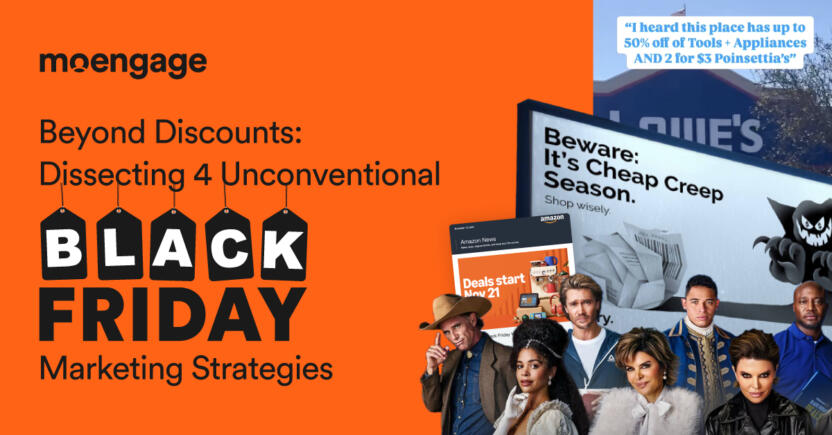
Beyond Discounts: Dissecting 4 Unconventional Black Friday Marketing Strategies

  • UPDATED: 11 November 2025
  • 9 minread
Beyond Discounts: Dissecting 4 Unconventional Black Friday Marketing Strategies
Reading Time: 9 minutes

Forget the panic of the price war; the Black Friday marketing game is no longer about who can slash prices the lowest. With brands now kicking off promotions weeks in advance—starting as early as Halloween—the entire month of November has become a competitive battleground. 

The new imperative for B2C marketers is about who can tell the best story, offer the most seamless customer experience, and earn genuine, long-term loyalty throughout this extended selling season.

As a marketer, you know the four-day peak event still holds immense sway. Recent projections, such as those from Bain & Company, indicate that U.S. retailers could see Black Friday through Cyber Monday account for nearly 9% of total holiday sales, representing year-on-year growth of 11%, despite broader market slowdowns. 

To secure your share of these colossal sales, whether they land on the peak weekend or in the early launch windows, you must move beyond generic Black Friday promotion ideas and embrace creative Black Friday Cyber Monday marketing strategies like other industry leaders.

Here’s how four top B2C brands are successfully redefining their Black Friday marketing strategies and campaigns, turning a transactional weekend into an entire season of acquisition and engagement.

Top 4 Omnichannel Strategies and Examples for Black Friday Marketing

1. Walmart: Using Entertaining Content to Create Desired Deals

Walmart didn’t just run an ad campaign for Black Friday; it produced a hit television series. Their strategy was a masterclass in “advertainment,” transforming monotonous deal announcements into a highly engaging, 10-part cinematic miniseries: “Deals of Desire.”

This campaign was the attention-grabbing centerpiece of a well-coordinated and technologically advanced holiday marketing effort. Starring familiar faces, such as Ian Somerhalder and Anthony Ramos, the content humorously spoofed popular TV genres and was deployed across an omnichannel mix, including TV commercials, YouTube, TikTok, and Out-of-Home (OOH) media. 

Walmart leveraged the advertainment strategy to promote its extended sales period. They utilized a three-wave approach across November (including early deals, the main event, and Cyber Monday deals) designed to incentivize loyalty membership. These deals and Walmart’s loyalty program were promoted regularly on Walmart’s website, app, social handles, and email. 

Black Friday and Cyber Monday marketing strategy by Walmart across its website, social accounts, and email. (Walmart's Omnichannel Black Friday and Cyber Monday Marketing Strategy)

The ultimate goal of their Black Friday marketing strategy was to funnel customers toward the Walmart+ loyalty program with the incentive to secure five hours of early access to all Black Friday deals that were dropped strategically across the Walmart app, website, and physical stores.

Reinforcing this digital focus, Walmart also introduced a beta test of Sparky, its cutting-edge GenAI-powered shopping assistant, on its digital platforms, to help shoppers easily find and compare gifts. 

This strategy paid off. Creative data from DAIVID showed that Walmart’s ad series significantly boosted purchase intent by 5.8%, while ranking well above industry averages for Creative Effectiveness Score (CES)

Key Takeaway:

  • Shift your campaign investment from traditional selling to attention-grabbing “advertainment” for your Black Friday Cyber Monday marketing (BFCM) campaigns.
  • Create high-quality, memorable, and entertaining content to cut through the holiday noise and earn user attention. 
  • Strategically leverage that viral-ready content to drive sign-ups for a critical conversion funnel, such as early-access deals or a loyalty program. 

This approach moves beyond simple sales messaging, helping you secure more customer eyeballs and transforming your creative execution into a high-performing engine for customer acquisition and retention.

2. Amazon: Leveraging UGC and AI for Five-Star Shopping Experiences

Amazon’s recent Black Friday Cyber Monday marketing campaign seamlessly blended high-concept storytelling with cutting-edge technology. Their core strategy transformed their greatest asset—the unique and often humorous customer reviews—into compelling, shareable content.

The centerpiece was the “Five Star Theater” Hollywood-level ad series, featuring actor Adam Driver delivering dramatic monologues based on real customer reviews, like the “banana slicer that saved a marriage.” This campaign was inspired by insights from Amazon’s customer data, which indicated that 80% of Amazon shoppers read customer reviews before making a purchase.

The ad videos were distributed across a robust omnichannel mix, including paid social (TikTok, Meta, Snapchat), OTT content on Amazon Prime (like Thursday Night Football), and Amazon’s owned channels (Instagram, Facebook, and YouTube), perfectly aligning the viral creative with the peak shopping period. 

This approach successfully generated over 1 billion total impressions and sparked widespread customer fandom, including fans creating re-enactments of the ads, validating the brand’s goal of using entertainment to drive interest in their BFCM marketing deals. 

In addition to this, the ad series was complemented by a powerful digital utility: Amazon promoted its newly launched, advanced AI offerings, such as Rufus (a conversational AI shopping assistant), Amazon Lens (a visual search feature), AI Shopping Guide, and an interactive Virtual Holiday Shop (for AR browsing and shopping), across different channels and platforms. 

Amazon’s Black Friday marketing strategy involving AI offerings (Amazon’s AI offerings for Black Friday)

Amazon also leveraged influencer collaborations on Instagram to showcase viral products daily, while presenting its AI offerings as shopping hacks to help users find the best products and deals. Furthermore, they sent bi-weekly newsletters to promote the BFCM week and AI features. 

Amazon’s omnichannel BFCM marketing campaign across its Website, App, Email, and Social Channels (Amazon's Omnichannel Black Friday and Cyber Monday Marketing Strategy)

The integrated strategy of viral creativity meeting technological utility drove Amazon’s biggest holiday season ever, helping it generate $187.8 billion in Q4 revenue.

Key Takeaway:

  • Instead of relying on generic holiday promotions, identify the unique, human truth about how customers interact with your brand: whether it’s a funny FAQ, a common challenge solved by your product, a beloved feature, or any other user-generated content (i.e. UGC). 
  • Use the information to create a viral, shareable creative campaign with great storytelling.
  • Then take this a notch up by providing offerings such as AI tools to help streamline the customer’s buying journey.

This dual strategy of marrying high-impact, entertaining creative with high-tech utility is the blueprint to ensure the mass traffic generated from your black friday marketing strategy is converted into a superior, frictionless shopping experience.

3. Deciem (The Ordinary, NIOD, etc.): Turning Values into Volume with “Slowvember”  

Deciem, the company behind The Ordinary, has focused on a unique Black Friday marketing strategy centered on anti-consumerism since 2019, opting to replace the traditional sales frenzy with a month-long initiative called “Slowvember.”

For its 2024 Black Friday campaign, Deciem announced a “Blackout Period”—an event where all its brand websites and standalone stores were shut down and made transaction-free on Black Friday. Instead, to encourage mindful shopping, a flat 23% discount was applied to all products throughout the entire month of November.

Deciem also launched a dedicated campaign page for Slowevmber and an FAQ page to explain their intent behind this campaign. This was promoted via their website and app pop-ups and rotating banners, which had a CTA to their campaign page. 

Unique black friday campaign ideas like The Ordinary (The Ordinary's Anti-Black Friday Campaign)

To further emphasize this messaging, they ran campaign ads offline throughout November across major cities in the U.K., U.S., and Canada via bold OOH posters and strategic ads in major print publications like The New York Times and The Guardian. 

Additionally, they utilized social media channels such as Instagram and TikTok to educate consumers about the “10-step shopping routine.” The same was the case in all emails from Deciem’s brands, wherein the content was focused on helping customer navigate the science of skincare by “slow[ing] down” and “shop[ping] wisely”.

Best black friday marketing campaigns involve omnichannel promotion across OOH, Print, and Social, like The Ordinary’s (The Ordinary’s omnichannel marketing for Black Friday Cyber Monday)

This approach garnered significant media attention, reinforcing the brand’s core value of radical transparency. While the results from the 2024 campaign are not publicly available, one of the previous campaign iterations observed a 400% sales lift for the NIOD brand alone and heavily impacted customer acquisition rates, with 51% of customers being brand new

Since this has proven to be one of the best Black Friday marketing ideas for brands prioritizing values, Deciem has continued a similar strategy for BFCM year on year. 

Key Takeaway:

  • Instead of participating in the crowded, race-to-the-bottom discounting frenzy, consider disrupting the traditional Black Friday shopping narrative by taking a stand that reflects your core brand value (e.g., sustainability, transparency, or quality over quantity). 
  • Develop a well-integrated, month-long omnichannel campaign centered around it, utilizing high-impact channels such as OOH and print to amplify your message. 
  • Repeat this year, year after year, to reinforce your brand’s authenticity and build trust among your audience. 

This strategy can help you earn significant media attention and serve as a powerful engine for customer acquisition, particularly among value-aligned customers. 

4. Lowe’s Home Improvement: Converting a Weekend Sale into a Loyalty Season  

In the past few years, Lowe’s has brilliantly decoupled the Black Friday shopping event from a single weekend to a loyalty-driven, multi-week campaign that rewards homeowners. The core of its Black Friday marketing strategy centers on its loyalty program, MyLowe’s Rewards.

Loyal members receive a comprehensive suite of rewards, including: 

  • Early access to special Doorbusters Black Friday deals online 
  • A gamified giveaway where the first 25 members received a free, stocked bucket of mystery products valued at $150 and a discounted coupon 
  • Free member gift offers throughout the holiday season
  • Exclusive in-store workshops throughout the holiday season

Other recent BFCM marketing activations by Lowe’s include:

  • A dedicated landing page on its website and app with gift guides for different budgets and gift types to showcase how Lowe’s “helps [its customers] get more holiday for less”. 
  • Improved buy online, pickup in-store options featured on its website and app. 
  • Mylowe’s AI assistant to find the perfect gift and deals on them, which was launched this year. 
  • Month-long “Early Black Friday” or “Black Friday Buildup” deals (with Buy One, Get One, Two or Three offers on select brands) starting as early as late October to help customers tackle those crucial home improvements and kickstart their holiday shopping at significant savings

Lowe's innovative Black Friday marketing strategy using its website (Lowe's Black Friday Promotions on the Website and App)

  • Multiple TV commercials (e.g., the “Holiday Emergency Broken Refrigerator” spot) with the slogan “We Help. You Save.” to promote the seasonal discounts and Lowe’s customer-first features like Same-Day and Next-Day Deliveries, Buy Now-Pay Later, a Low Price Guarantee, and the MyLowe’s AI Assistant.

  • Paid ads on channels like Facebook to promote products with deals and reinforce the slogan “Lowe’s Knows Deals.”, which has been used multiple times in previous campaigns.
  • Humorous reels on platforms like Instagram reminded customers to grab holiday savings and check the gift guides to simplify their shopping process.
  • Emails and physical brochures outlining daily product deals. 

Lowe's omnichannel approach to Black Friday marketing via email, brochure, organic social, and paid social (Lowe's Omnichannel Marketing Strategy for Black Friday Cyber Monday)

Overall, Lowe’s offers multiple strategic incentives at various customer touchpoints to maximize engagement across the homeowner’s entire journey, whether they are purchasing a high-ticket appliance, a DIY tool, or holiday décor. 

While Lowe’s 2025 Black Friday marketing activations are still underway, the success of its approach is validated by the company’s Q4 2024 results, a notable gain given the industry’s headwinds. 

Similarly, Lowe’s online sales grew by 9.5% in the quarter, which was cited as “record-breaking sales during Black Friday Cyber Monday”. Also, the MyLowe’s Rewards program, which was introduced in 2023, reached 30 million members by the end of Q4 2024. 

Key Takeaway:

  • Move away from the frantic single-weekend sale by stretching your Black Friday and Cyber Monday promotional activities across an entire month. 
  • Anchor multiple incentives to your loyalty program. 
  • Focus on actively gamifying the member experience with unique, in-store, and digital rewards to drive enrollment and repeat visits. 

This strategy converts the holiday shopping frenzy into a powerful, sustained engine that can help you build a captive, high-intent audience for year-round retention.

The New Black Friday Marketing Blueprint: Values, Vows, and Viral Content

The days of Black Friday as a simple, single-weekend price battle are over. The most successful B2C campaigns now execute a winning blueprint that prioritizes sustained engagement and lasting customer retention.

This involves high-impact creatives, such as campaigns like Walmart’s and Amazon’s, that leverage major investments in “advertainment” by turning features into viral content that earns customer attention. It includes values-driven differentiation, as Deciem has proven that strategic disruption and a values-based stance can drive record customer acquisition. It also requires exclusive offers and benefits for loyal customers, such as those offered by brands like Lowe’s and Walmart. 

In addition to this, brands should consider extending the shopping weekend into a full shopping season, as Deciem and Lowe’s transitioned their BFCM campaign into a multi-week strategy where their sales period served as an engine for lifetime value.

Either way, the future of BFCM is AI-powered utility. Both Amazon and Lowe’s demonstrated that launching and promoting conversational AI assistants and smart shopping tools is vital for maximizing conversions and minimizing any friction in the buyer’s journey. 

The ultimate lesson for B2C brands seeking to enhance their Black Friday marketing strategies is to move beyond the use of coupon codes. The focus must now be on delivering flawless, real-time experiences that seamlessly blend high-quality, viral storytelling with sophisticated, AI-enhanced systems to engage and retain customers in the long term. Once a strong foundation is laid out you can always use post-holiday marketing strategies to keep bringing back your customers

Ready to Execute State-of-the-Art Customer Experiences for Black Friday?

Discover how AI-powered personalization, real-time journey orchestration, and deep customer insights can transform your Black Friday Marketing from transactional sales into lifelong customer relationships. Get a demo of MoEngage today. 

Looking to Read More Thematic Marketing Pieces?

🔗 Check out these blogs:

In-App Messaging: Examples, Best Practices, and Tools

  • UPDATED: 30 December 2025
  • 15 minread
In-App Messaging: Examples, Best Practices, and Tools
Reading Time: 15 minutes

There’s a small corner in every app that quietly shapes whether a customer stays or drifts away: in-app messaging. It’s the channel that speaks when emails go unread and push notifications get swiped aside.

Sometimes, it’s a gentle reminder, sometimes a nudge to finish what they started, and sometimes just the right bit of help at the right moment. Most customers don’t recognize these messages for what they are, but their customer journey often depends on them.

Not all in-app messages work. The difference between a message that connects and one that irritates usually comes down to context: what the customer is doing, thinking, or expecting at that moment.

This blog looks at how in-app messaging actually drives engagement and what best practices help these messages become useful, instead of background noise.


What Is In-App Messaging?

In-app messaging refers to sending targeted messages to customers while they are using the app. The message may appear as a banner, a slide-up card, or a full-screen overlay. It can guide customers through a feature, announce an offer, or induce them to stay when they’re about to leave the app.

But how does in-app messaging work?

It feels more like a conversation happening in context. Timing is what makes it different.

Basically, in-app messages arrive when the customer is paying attention; not before, not after. That is, when the customer has already opened your app and is using it. Done well, this kind of message doesn’t interrupt the customer. It feels almost invisible, and yet quietly nudges customers toward the action you want them to take.

In-app messaging vs. push notifications: Understanding the difference

In-app messaging and push notifications can seem similar at first. Both pop up on a screen. Both try to get attention. Yet they work in very different ways.

In-app messages appear while the customer is actively using the app. They guide, explain, or help with what the person is doing at that moment.

Meanwhile, push notifications, such as location-based notifications or rich push notifications, reach them when they’re not using the app, aiming to bring them back.

Here’s a simple breakdown that makes the contrast clearer:

Aspect In-App Messaging Push Notifications
Where it appears Inside the app, during active use On the device home screen or notification tray
Purpose Guide, educate, or assist during usage Re-engage or bring customers back to the app
Timing Real-time, context-aware Scheduled or trigger-based (often time-sensitive)
Interactivity Can include buttons, forms, or walkthroughs Limited – mostly one-click redirects

For a deeper understanding of how they differ, explore our detailed guide about in-app messaging vs. push notifications.


5 Common In-App Messaging Use Cases

In-app messages can guide customers through new features, reassure them that you’ve responded to their query, tell them about any new offers, or simply remind them to complete a task. Let’s take a look at a few in-app messaging use cases in detail that typically work well.

1. Onboarding new customers

When a customer opens an app for the first time, they are both curious and unsure. In-app messaging can help them find their way through the app. That’s why you can easily use this channel when following customer onboarding best practices.

A short walkthrough. A tip about a key feature. A small note after completing the first action.

In-app messages give a bit of confidence early on without overwhelming the customer. Those first moments often shape whether someone sticks around or churns in the first few days.

2. Feature announcements

Launching a new feature and hoping customers will notice it rarely works. In-app messaging can point it out in context. It can be a small card, a subtle banner, or a brief overlay explaining what’s new and why it matters.

Because it appears while the customer is engaged, they are more likely to try it instead of just reading about it somewhere else and forgetting.

3. Contextual prompts and nudges

Sometimes, all it takes for a customer to make a purchase is a small push. Whether it’s a reminder about items still in a cart or a suggestion for a related feature after completing a step, in-app messaging works effectively because it reacts to customer behavior in real-time. That immediacy can turn hesitation into action.

4. Transactional or confirmation messages

Receipts, order updates, confirmations — not every one of these always needs a push notification.

Delivered inside the app, these kinds of transactional messages keep things flowing. Customers don’t have to switch screens or check an inbox.

They see what’s relevant while staying in the moment. It’s simple, quiet, and builds trust.

5. Feedback and surveys

Finally, in-app message use cases include surveys and customer feedback.

Asking for feedback is tricky. Waiting days for an email often misses the moment.

In-app messaging makes it feel natural and easy to get customer feedback. A quick emoji rating after a ride or a quick question after a purchase can be low-effort, immediate, and more likely to capture real sentiment before it fades.


6 Real-Life In-App Messaging Examples to Learn From

Seeing in-app messaging in action makes it easier to understand why it matters. The strongest examples show timing, context, and intent. Each one solves a problem, nudges a customer toward something meaningful, and often blends into the app so quietly that it hardly feels like a message at all. Here are a few in-app message examples worth noting.

1. Onboarding Guidance: Duolingo

In-app messaging examples from Duolingo

Source: https://uploads-ssl.webflow.com/5f7ae188ef1b6bacc308dbdf/62c306daefce299b43d9fd48_duolingo-onboarding.png

Duolingo sends a series of in-app messages to guide new learners through the first lessons. Each prompt tells the user what to do next, reminds them of streaks, or celebrates small wins. It removes confusion and friction while maintaining motivation.

The main takeaway is to break onboarding into small steps and celebrate progress along the way. Simple, gentle guidance makes a difference in those first few days.

2. Feature Highlight: Spotify

Spotify uses messaging in app to send feature highlights

Source: https://storage.googleapis.com/pr-newsroom-wp/1/2023/03/New-Home-Feed_FTR-Header.png

Spotify introduces new features through targeted banners or overlays while customers are already using playlists. The messages explain what’s new and include a direct call to try it immediately. Because the timing matches engagement, adoption tends to be higher.

For your app, you can track moments when someone might benefit from a new feature and present it right there rather than relying on emails or push notifications that might get ignored.

3. Announcement: Amazon

Messaging in app from Amazon
Source: https://cdn3.notifyvisitors.com/blog/wp-content/uploads/2020/12/Amazon-makes-important-announcements-through-app-push.png

Amazon shares relevant news and announcements with shoppers through subtle in-app messages while they are still browsing. These messages are effective because they arrive at the right moment and make customers feel like you genuinely care about them, prompting them to be notified about any changes that could impact their experience.

A takeaway for your app is to identify what your customers actually feel about their experiences with your brand, and then provide small, relevant nudges catering to their feedback

Which leads us to the next example.

4. Feedback Request: Uber

Uber sends a message in app asking customers for feedback after a ride
Source: https://www.tidio.com/wp-content/uploads/rating-uber-1200×789.png

One of the most common in-app messaging examples is when Uber prompts riders for feedback immediately after a trip. It is low-effort, just a few taps, and the timing is perfect because the experience is fresh. The method captures genuine sentiment without frustrating the customer.

You can apply the same approach in your app by asking for feedback while the experience is still in mind, instead of sending B2C sales follow-up emails days later.

5. Promotional Offer: 18Birdies

One of the in app message examples from 18Birdies which is a golf GPS app
Source: https://help.18birdies.com/article/620-activity-sharing

Partnering with MoEngage enabled 18Birdies, a Californian golf GPS app, to increase in-app stickiness by welcoming new golfers and making them aware of the app’s new features.

The app now delivers offers and loyalty rewards through in-app messages while customers navigate the ordering interface. Their messages are personalized, relevant, and often time-sensitive. These messages work because they feel like part of the journey, rather than a separate marketing push.

A testimonial of how 18Birdies has increased its in-app stickiness after using an in app messaging platform like MoEngage

For your app, integrating promotions where the user is already active usually increases engagement and makes the message feel helpful rather than disruptive.

6. Shopping Assistance: Sephora

An in app message from Sephora to help customers while shopping

Source: https://www.sephora.com/contentimages/campaigns/App/2022-06-app-evergreen-asset-update-site-desktop-landing-page-980×900.jpg?imwidth=980

Sephora sends in-app messages to help customers while they shop. Personalized product recommendations, short tutorials, or limited-time offers pop up while someone is browsing. The messages are contextual.

For example, showing items related to what’s in the cart or suggesting complementary products at checkout works. Why? Because it provides something useful without interrupting the shopping flow.

In your app, you can do something similar. Offer guidance, tips, or suggestions at the moments when customers are most open to them. It makes the experience feel more helpful than just promotional.

These in-app message examples show that this channel is more than just sending notifications inside an app. The key is delivering the right message at the right moment. Done well, it nudges customers, reinforces trust, and quietly keeps them moving toward the right direction.


How to Craft Engaging In-App Messages

Just sending a message inside your app isn’t enough. Customers see dozens of prompts every day, and if your message doesn’t feel relevant, timely, or useful, it’s usually ignored. Sometimes, it even annoys them.

Crafting in-app messages that actually work takes thought, attention to context, and some precision. The goal isn’t simply to communicate. It’s to guide, connect, or occasionally delight the customer while they’re actively using the app.

Below are some in-app messaging best practices that make a real difference.

1. Segment your audience thoughtfully

Not all customers are the same, and your messages should reflect that. Segmenting based on behavior, preferences, or app usage patterns allows you to send messages that actually matter to each group.

For example, new customers may get onboarding tips, while long-term customers see rewards that improve customer loyalty, or advanced feature suggestions.

Thoughtful customer segmentation makes messages more personalized rather than generic, which improves engagement and reduces irritation. When you tailor messages to what different customers actually need or want, they are far more likely to take action.

2. Personalize based on customer behavior

Generic messages rarely resonate. Effective in-app messaging leverages insights into the customer’s behavior, including their actions, interactions, and current stage. It makes use of what you know about the customer, the actions they have taken, what they have interacted with, or where they are in their journey. Personalized marketing makes a message feel relevant.

For example, suggesting a feature the customer has not tried yet or reminding them about an incomplete action shows that your app ‘understands’ them. Context is critical. The more the message matches what the customer is doing, the more likely they are to respond positively. In most cases, even small touches of personalized communication can significantly improve engagement.

3. Keep messages short and clear

Customers don’t have time to read long paragraphs while navigating an app. A concise message that focuses on one clear action is usually noticed and acted upon. Stick to one point at a time, use simple language, and make the call-to-action obvious.

For example, instead of saying, “Explore our new features and see how they can help you get the most out of our app,” you could say, “Try our new feature now — it helps you track your progress instantly.”

Some ways to keep it short and clear include:

  • Focusing on a single idea per message.
  • Using plain, everyday language.
  • Making the next step obvious, so the customer doesn’t have to guess.

Short, clear messages reduce friction, improve customer engagement, and make customers feel the app respects their time.

4. Maintain a consistent tone and voice

Messages should feel like a natural extension of the app experience rather than impersonal alerts. Using a consistent tone, whether professional, friendly, or playful, helps customers recognize and trust your messages. It also reinforces your brand identity.

For instance, a finance app might use clear, reassuring language, while a lifestyle app could take a more casual or energetic tone. Consistency makes messages feel human and reliable, rather than robotic or pushy. Even small changes in tone can significantly impact how the message is perceived, so paying attention to this detail matters.

5. Provide value, not just promotion

Customers respond best when a message provides genuinely helpful content, rather than purely promotional content. Tips, shortcuts, reminders, or contextual guidance often outperform marketing messages alone.

For example, a productivity app could highlight a time-saving feature rather than simply announcing a new subscription plan. Prioritizing value helps build trust and strengthen the customer relationship.

In most cases, customers notice when a message actually helps them. Value-driven messaging leads to better engagement and a stronger long-term connection.

6. Use visuals and interactive elements

In-app messages do not have to be plain text. Icons, images, or interactive buttons can make a message more noticeable and more actionable. A well-designed message attracts attention, clarifies the point, and guides the customer toward the next step.

For example, a progress bar showing task completion or a ‘Try Now’ button can dramatically increase engagement. The visuals should support the message and not distract from it. In many cases, even small graphical cues can make a message feel more approachable and easier to act upon, making it more friendly and easier to take action.

7. Time messages appropriately

Even a perfectly written message fails if it appears at the wrong moment. In-app messages are most effective when they align with the customer’s current activity or need. Showing a tip about a feature while the customer is navigating it is far more effective than sending the same message hours later. Timing should feel like a gentle tap on the shoulder, rather than a random interruption.

Good timing usually involves:

  • Delivering tips while the customer is actively using the feature.
  • Avoiding messages that come too early or too late.
  • Treating the message as helpful guidance rather than a forced alert.

8. Test and iterate

No single message works perfectly for every customer. Testing different versions, like variations in wording, timing, placement, or design, helps you figure out what actually resonates.

Monitor customer engagement metrics, such as clicks, completion rates, or dismissals, and adjust your approach accordingly. Iteration ensures your in-app messages stay relevant over time.

Without testing, messages can quickly become stale or ignored. Small, incremental adjustments often lead to better long-term performance than trying to create a perfect message from the start.


In-App Messaging Tools: How They Work & How to Choose One

Running in-app messaging well takes more than just drafting a few messages and hoping for the best. It requires a platform that can handle delivery, targeting, personalization, timing, and analytics.

These in-app messaging tools sit between your app and your audience, allowing you to reach customers in ways that feel natural and timely, rather than forced or generic. They analyze engagement, help manage who sees what and when, and provide insights so your next message isn’t just a guess. In most cases, having the right tool can make messaging feel like part of the app rather than an interruption.

How to choose an in-app messaging platform

Choosing the right in-app messaging platform is not just about the features it offers. You need to think about how it fits your team, your app, and the journey your customers take. It should make messaging seamless, insightful, and actionable without adding technical headaches.

The goal is to focus on the content, the timing, and the value your messages provide, not the tools themselves.

Start by considering the types of messages you plan to send, the level of personalization required, and the kind of analytics and reporting you want. The right platform should enable your team to focus on crafting effective messages rather than grappling with technical hurdles.

Here are the key features to look for in an in-app messaging software platform:

  • Targeting and Segmentation: Being able to segment customers by behavior, demographics, or app usage is essential. This ensures the messages reach the right customers at the right time. It reduces wasted prompts and helps prevent annoyance. Usually, the more granular your segmentation, the more relevant your messaging can be.
  • Personalization Capabilities: Tools that allow dynamic content, personalized greetings, or behavior-triggered messages make in-app messaging feel alive. Customers are far more likely to act when the message seems tailored to their journey. Even small touches, like referencing the last action they took in the app, can make the difference between engagement and dismissal.
  • Timing and Trigger Options: The context of a message is crucial. An in-app messaging platform should let you schedule messages, trigger them based on events, or set conditions so they appear exactly when the customer is most likely to notice and respond. Sending it too early or too late usually misses the mark. Timing is often more important than wording.
  • Analytics and Reporting: Understanding what works and why is crucial. Look for tools that show open rates, engagement metrics, conversions, and behavioral insights. Having that data helps refine the strategy. If a message is ignored or dismissed, you can see patterns and make adjustments, rather than guessing what happened.
  • Multi-Format Messaging: Some platforms allow banners, nudges, carousels, or pop-ups. Using multiple in-app formats means you can match the type of message with the context. For example, a walkthrough might work better for onboarding, while a banner could suffice for an informational note. Flexibility helps you meet customers where they are.
  • Ease of Integration: The last thing you want is a tool that requires complicated coding or constant troubleshooting. It should integrate smoothly with your app, CRM, or other marketing tools. Difficult setups slow campaigns and make the system feel more like a burden than an aid.
  • A/B Testing and Experimentation: No message is perfect for everyone. Platforms with built-in A/B testing make it easier to experiment with content, design, and timing. You can see which version resonates better with different customer segments. Testing takes the guesswork out of the equation and allows your messaging to improve steadily rather than remaining static.

But we’ve overlooked a key criterion in this list: pricing. Related to this factor, MoEngage’s perspective on Branch’s 2025 State of App Growth Report is interesting. The report states that the biggest challenge for 36% of app marketers is scaling without increasing costs. To overcome this challenge, MoEngage recommends investing in retention-focused lifecycle strategies.

Expanding on the pricing factor…

How does in-app messaging pricing work for tools & APIs?

Pricing for in-app messaging tools typically depends on the number of active users, the volume of messages you send, or the total app audience. Some platforms stick to a monthly subscription, while others charge based on how many messages are sent or which features you access.

However, the exact structure often varies, and it’s worth paying attention to the details before making a commitment. In most cases, basic plans start around $50–$200/month for small apps, covering core messaging features and limited monthly sends. Mid-tier plans, often $200–$1,000/month, add advanced segmentation, analytics, and automation. Enterprise tiers can exceed $1,000/month, offering full customization, unlimited messaging, dedicated support, and integration options. Some tools also charge per active customer or per message sent, which can be ideal for apps with fluctuating usage.

The takeaway here is simple: costs usually scale with audience size, message complexity, and the features you want. Looking at pricing alongside what you actually need, and what kind of return you expect, makes it much easier to choose the right in-app messaging solution for your business.

How in-app messaging works on popular customer engagement platforms

Selecting the right in-app messaging platform can significantly impact the effectiveness of your engagement strategy.

Different platforms offer different levels of control, personalization, and ease of use, and they aren’t all built the same way. Some focus on mobile-first engagement, others lean more toward email or B2B workflows. It helps to see what each one actually does in practice and where they might fall short.

MoEngage In-App Messaging

MoEngage is an in app messaging platform that lets you easily design in-app messages with a drag-and-drop editor

MoEngage delivers a complete solution for in-app messaging, combining strong personalization with usability that doesn’t require constant developer intervention. The platform uses AI-driven insights so marketers can target messages based on real behavior, preferences, or lifecycle stages, often without needing to code.

Key capabilities that set MoEngage apart:

  • Advanced Personalization Engine: You can pull from nearly unlimited data points to segment audiences and send personalized dynamic product messages that feel genuinely tailored to what a customer is doing at that moment.
  • Intuitive Drag-and-Drop Editor: Ready-made in-app templates and a visual editor let you create messages on your own. No developer needed for most customizations.
  • Contextual Targeting: Messages can appear in specific parts of the app, triggered by actions or contextual cues, which helps ensure the timing feels natural.
  • Cross-Channel Orchestration: MoEngage integrates in-app messaging with push, email, SMS, and web push, allowing you to deliver a consistent omnichannel customer experience.
  • Real-Time Optimization: Analytics and A/B testing tools let you measure what’s working and adjust messaging quickly, rather than guessing and hoping it works.

MoEngage’s platform is designed for B2C marketers who demand both power and simplicity, enabling sophisticated campaigns without the constant need for technical resources.

Braze In-App Messaging

Braze in app messaging can be designed with its editor

Braze offers in-app messaging as part of its broader engagement suite. You can trigger messages based on user actions and use some template options, but customization often still requires developer work, especially for formatting or advanced behavior. It does have AI copywriting tools, though the quality can be inconsistent.

A few limitations of Braze often come up in user feedback. Many users say Braze has a steep learning curve. It takes time to get comfortable with its advanced features and reporting tools. The reporting and customization options are also somewhat limited, which makes building custom reports or getting detailed analytics harder than expected. Some reviewers have mentioned issues with pricing transparency and segmentation accuracy, while others felt that customer support tends to give surface-level answers instead of digging into complex problems.

Learn more about how MoEngage compares to Braze.

Adobe In-App Messaging

Adobe in app messaging is a part of Journey Optimizer

Adobe’s in-app messaging is part of Adobe Journey Optimizer, a comprehensive omnichannel platform for mobile engagement. It offers capabilities in in-app messages, push, content cards, real-time personalization, and behavior-based delivery rules.

That said, many users mention that the platform comes with a steep learning curve, especially for those new to Adobe’s ecosystem. The setup process can also be complex, often requiring significant time and coordination to get everything running smoothly. Smaller teams tend to find it expensive for what it takes to implement, and some reviewers note that the overall complexity can slow down integration and make day-to-day use more challenging.

Read about the detailed comparison between Adobe Marketo Engage and MoEngage.


How to Engage Customers with In-App Messages: Concluding Thoughts

Crafting thoughtful in-app messaging can transform your app from a tool into a truly engaging experience for your customers. Platforms like MoEngage make it easier to deliver personalized, timely, and impactful messages inside your mobile app that drive action and loyalty.

If you’re ready to see it in action, try a demo today and explore how in-app messaging can elevate your customer engagement.

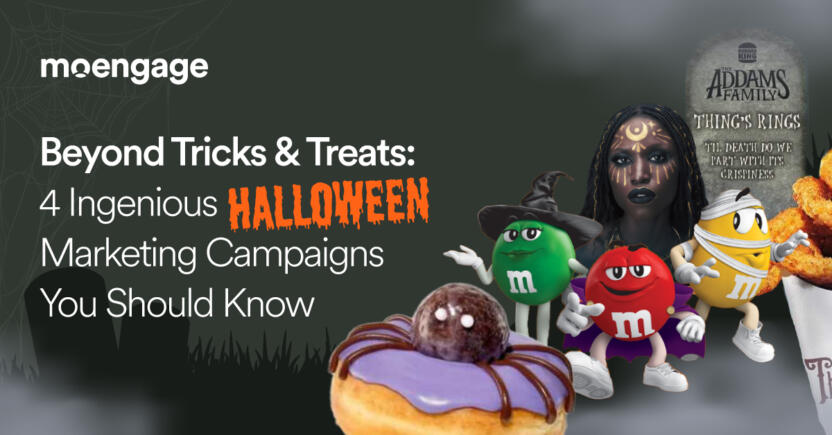
Beyond Tricks and Treats: 4 Ingenious Halloween Marketing Campaigns You Should Know

  • UPDATED: 05 November 2025
  • 6 minread
Beyond Tricks and Treats: 4 Ingenious Halloween Marketing Campaigns You Should Know
Reading Time: 6 minutes

Autumn arrives…bringing with it a crisp chill and a chance for marketers to get creative with their Halloween marketing campaigns. 🍁🍂 🍁🍂

This isn’t just a holiday; it’s a cultural event that lets brands connect with their customers through playful frights and festive delights. 

But to truly stand out, Halloween marketing needs to be innovative and rooted in a solid understanding of the audience. This includes going beyond simple orange and black packaging or offering 10% discounts to launching campaigns based on immersive experiences and captivating content that make a lasting impression on customers.

In this blog, we explore some of the best Halloween marketing campaigns from leading brands, such as MAC Cosmetics, Burger King, M&M’s, and Dunkin’ Donuts. 

4 Real-World Examples to Inspire the Best Halloween Marketing Campaigns

Here’s a breakdown of the unique strategies that the four major brands implemented during Halloween. You’ll also find valuable insights that you can use while planning your own Halloween marketing campaigns.

1. MAC Cosmetics’ Halloween Campaign: Spooky Looks & In-Store Magic 

MAC Cosmetics, a brand synonymous with bold self-expression, consistently uses topical events and holidays to connect with its customers. Their recent Halloween marketing campaign was centered on empowering consumers to become their own makeup artists. This approach featured a dedicated Halloween webpage and an omnichannel promotion through channels such as email and Pinterest

On these platforms, MAC provided a treasure trove of resources, including step-by-step makeup guides for a variety of spooky looks, each with direct product recommendations. Additionally, to simplify the shopping process, they also sold curated combo sets for popular themes like “Vampire” or “Ghoul.”

Beyond digital content, the brand provided exceptional customer support. Customers could book a complimentary in-store makeup service in advance or use a live chat feature to get personalized advice from a MAC artist on their Halloween looks. This blend of online and offline support made their campaign truly innovative. 

Halloween Marketing Campaigns by MAC Cosmetics

To amplify their reach, MAC also launched a “Halloween Makeup Challenge”, encouraging customers to share their creations for a chance to be featured on MAC’s website and social handles. This strategy successfully leveraged user-generated content, turning the promotion into a community-driven celebration. 

Takeaway for Marketers: 

MAC demonstrates the power of a comprehensive, customer-centric strategy. By empowering your audience with educational content, personalized support, and opportunities for engagement, you can turn a seasonal promotion into an immersive experience that builds deeper brand loyalty.

2. M&M’s Halloween Campaign: Rescuing Customers, One Candy at a Time

M&M’s, with its iconic colorful candies and playful brand identity, naturally fits into the festive spirit of Halloween. For its recent Halloween marketing campaign, the brand went beyond just seasonal discounts and offers to address the single biggest fear of the season: running out of candy. Backed by findings from the Mars Tricks, Treats and Trends report, which revealed that 78% of consumers shared this anxiety, M&M’s positioned itself as the hero of the holiday with its “Halloween Rescue Squad.”

This multi-faceted Halloween campaign was anchored by a dedicated webpage and new seasonal products. M&M’s launched Halloween-themed candies and new seasonal flavors like M&M’s Milk Chocolate Pumpkin Pie and M&M’s Ghouls Blend. They also offered unique, customizable M&M’s, allowing customers to imprint personalized messages, Halloween clip art, and photos for parties and trick-or-treating. 

The dedicated website was a hub of engagement and content, sharing Halloween recipes, guides for making crafts and décor with Mars products, and ideas for pumpkin carving. It also featured fun, interactive elements like Halloween-themed games and candy charcuterie board ideas, all of which were promoted across their social media and other marketing communication channels, such as email.

M&M’s Omnichannel Halloween Marketing Campaign

But the core of the strategy was one of the quirkiest Halloween marketing ideas: to provide real-time candy relief. M&M’s installed “Rescue BOOths” in areas with the highest past demand, where candy lovers could visit phone-box-style pop-ups and receive an instant, free candy refill. For those not near a booth, M&M’s partnered with instant commerce company Gopuff to provide free delivery of candy within 30 minutes on Halloween night. 

M&M’s Halloween Rescue Squad

This convenience-driven approach turned a marketing stunt into a genuine service, reinforcing brand loyalty and a positive customer experience. 

Takeaway for Marketers: 

M&M’s demonstrates the power of a data-driven Halloween marketing strategy. By identifying and solving a genuine consumer pain point, you can create a campaign that is not only innovative and memorable but also builds a strong emotional connection with your audience.

3. Dunkin’s Halloween Campaign: 1 Donut, 1 Viral Campaign, 0 Ad Spend

Dunkin’ Donuts proved that the most effective Halloween marketing doesn’t require a massive budget, but rather a sharp understanding of digital culture. Their recent Halloween campaign took its seasonal Spider Donut and spun it into a character-driven, viral phenomenon. They christened the character “Spidey D,” who then “hijacked” all of Dunkin’s social accounts—updating bios and blasting out chaotic, hilarious content in a brilliant organic stunt. Spidey D’s daily antics built a light-hearted, engaging narrative that culminated in a parody “firing” after he “leaked” Dunkin’s official holiday menu. 

Dunkin’s Viral Halloween Marketing Campaigns

This strategic move created a huge buzz and drove incredible results for Dunkin’ despite a minimal budget:

  • Over 2.5 million engagements
  • 2.9 billion earned impressions
  • 700K+ shares and 30K+ comments
  • 100K+ new followers
  • Attracted engagement from other brands like Walgreens and Oreo, who joined the conversation
  • The menu leaked by Spidey D became the most liked product launch in Dunkin’s history
  • Spidey D merchandise featuring the character’s memes sold out within an hour of its launch

Takeaway for Marketers: 

Dunkin’s campaign demonstrates that the most effective Halloween marketing campaigns prioritize compelling storytelling over large ad spends. Also, having a deep understanding of platform-specific content and a willingness to break traditional brand guidelines to become “unhinged” can sometimes lead to immense success. 

4. Burger King’s Halloween Campaign: A Spooktacular Brand Collaboration

Burger King has carved out a niche for itself in the Halloween marketing landscape by embracing humor and a playful rivalry with its competitors. One of their recent Halloween campaigns involved a creative partnership with The Addams Family franchise, resulting in a limited-time menu inspired by the kookiest family around. 

This partnership offered a unique and thematic spin on their classic offerings, with items like the Wednesday’s Whopper, Thing’s Rings, Gomez’s Churro Fries, and Morticia’s Kooky Chocolate Shake.

Burger King’s Partnership with The Addams Family as one of their Halloween marketing ideas

Beyond the menu, Burger King’s marketing for this collaboration was omnichannel. They leveraged their social media platforms and other channels like email to announce the new menu items and share visuals of the spooky-themed food. The campaign also included a limited-edition line of King Jr. Meal toys inspired by The Addams Family characters, further engaging with a family-friendly audience. 

This approach was a departure from some of their previous campaigns, showing a more integrated strategy. The collaboration with a well-known brand allowed Burger King to tap into existing fan bases and touch the emotional chord of customers.

In fact, for Q4 2024, Burger King announced that its U.S. same-store sales growth was 1.5%, (beating StreetAccount estimates of 0.8%). While these results show signs that Burger King’s year-end strategy has won back many customers, Burger King U.S. President Tom Curtis credited its Addams Family menu, timed for Halloween, and its Million Dollar Whopper promotion in November, for this achievement. 

Takeaway for Marketers: 

Burger King’s campaign highlights the power of a strategic partnership to create a great Halloween campaign. By leveraging a well-known property, a brand can tap into existing fanbases and create a highly shareable, nostalgic experience that transcends a simple product launch and resonates deeply with consumers.

Final Takeaway: The Spookiest Secrets to Successful Halloween Marketing Campaigns

As these brands demonstrate, truly standout Halloween marketing campaigns are about more than a spooky logo or a limited-time offer; they’re about crafting an experience and building a story. MAC Cosmetics proved the power of empowerment, turning customers into co-creators with educational tutorials and user-generated content challenges. M&M’s showed us the genius of a data-driven strategy, solving a genuine consumer pain point with their “Halloween Rescue Squad” to build loyalty. Burger King highlighted the immense value of strategic partnerships, leveraging a beloved franchise to tap into cultural nostalgia. And Dunkin’ taught us that authentic, character-driven storytelling can generate viral buzz and organic engagement that far outweighs a massive ad spend.

Ultimately, the most successful Halloween campaigns are those that transcend traditional advertising to become part of the holiday experience itself. They are not just selling products; they are selling a feeling of empowerment, relief, nostalgia, or entertainment through innovative approaches and compelling storytelling. By embracing creativity and a willingness to be bold, you can also conjure up a campaign that leaves a lasting impression long after the last treat has been handed out.

Ready to launch your next winning campaign? 

Take a demo of MoEngage and find out how the AI-first customer engagement platform can help you orchestrate a successful, omnichannel Halloween campaign. 

If you liked this content, check out our other thematic pieces:

iOS 26 SMS Updates: How to Adapt Your SMS Campaigns

  • UPDATED: 13 October 2025
  • 7 minread
iOS 26 SMS Updates: How to Adapt Your SMS Campaigns
Reading Time: 7 minutes

You’ve crafted the perfect SMS campaign with a compelling offer, accurate segmentation, and personalization. You hit ‘send’. Now, you wait for the engagement to roll in. But what if a huge chunk of your audience doesn’t even get the notification? With the new iOS 26 SMS updates, that’s a reality all SMS marketers need to prepare for.

Apple is once again raising the bar for customer privacy and control. While this is great news for consumers, it means another strategic shift for SMS marketing teams.

But don’t panic. Every challenge iOS 26 poses is an opportunity for savvy marketers to build deeper, more meaningful relationships with their customers. You just need to work smarter, that’s all.

Let’s break down what’s changing with iOS 26, what it means for your SMS marketing strategy, and how you can stay ahead of the curve.


What are the iOS 26 SMS Updates and How Do They Affect SMS Campaigns?

Apple’s updates are centered around giving customers a cleaner, more controlled messaging experience. Here are the key features that will impact your mobile marketing automation campaigns:

1. The ‘Screen Unknown Senders’ Upgrade

iOS 26 now lets customers screen unknown senders of SMS messages

Out of all the iOS 26 SMS updates, this one takes center stage. When a customer enables the ‘Screen Unknown Senders’ setting, messages from numbers not saved in their contacts will be filtered into a separate ‘Unknown Senders’ list within the Messages app.

The Impact on SMS Campaigns

This feature isn’t enabled by default, except in India, Brazil, and China, according to Apple’s iOS 26 All New Features document. But if a customer does enable it, they won’t see any message alerts from brands they haven’t interacted with before. No alert on the lock screen and no unread message badge on the app icon, either.

Your message will sit silently in the ‘Unknown Senders’ list. From there, customers can permanently mark your brand as known, which would move your message to their main inbox. Or, they can delete your messages altogether.

This poses a major hurdle for customer acquisition and initial engagement via SMS, especially for legitimate brands.

Becoming a ‘Known Sender’ on iOS 26

To land in the customer’s primary inbox and trigger that all-important notification, you need to be classified as a ‘Known Sender’. This happens when a customer:

  • Has your number saved in their contacts list.
  • Has previously replied to one of your messages.
  • Initiates the conversation with you (for example, through a ‘tap-to-text’ button or using a QR code or keyword).

2. More Text Filters

iOS 26 is also getting smarter about message organization. Apart from letting customers filter out ‘Unknown Senders’, iOS 26 is taking customers’ privacy preferences a step forward through Text Filters. Customers can now sort messages from unknown senders into two folders: Transactions and Promotions.

The Transactions folder will contain order confirmations, bills, receipts, and other transactional messages. Meanwhile, the Promotions folder will house offers, subscriptions, and all other kinds of marketing communication.

Note: This feature is only available in the USA, India, and Brazil for now.

As transactional messages, like urgent confirmations and One-Time Passwords, are time-sensitive, they’ll get a temporary pass. Whether from known or unknown senders, all such messages will be displayed in the main conversations list for about an hour.

But for promotional campaigns, earning the ‘Known Sender’ status is like winning a golden ticket.

3. Allow Notifications

Another of the iOS 26 SMS updates is that customers can choose which types of messages from unknown senders they want to receive notifications for.

Whether Promotions, Transactions, Personal, or Time Sensitive, the selected messages will be shown as notifications and displayed in the customer’s main conversation list for 8 hours.

4. On-device Spam Detection

iOS 26 updates include creating separate SMS folders for unknown senders and spam

You know how Gmail automatically detects spam and sorts such messages into the ‘Spam’ folder?

Well, Apple’s iOS 26 has introduced the same feature. The model can now filter unwanted or potentially malicious messages from a customer’s conversation list. It also keeps updating the spam folder based on the customer’s feedback, just like Gmail does.

However, iOS 26 may also filter messages from unknown senders as spam. Customers can still recover those messages, though, routing them out of the spam folder and into their main conversations list. All spam messages will be auto-deleted after 90 days.

5. RCS Support for Smarter Messaging

Last but not least, Apple is finally embracing Rich Communication Services (RCS).

This opens the door for richer, more interactive messaging experiences with features like high-resolution photo sharing, read receipts, and typing indicators, bringing SMS closer to the experience of apps like WhatsApp.


How Can SMS Marketers Prepare for iOS 26 SMS Updates?

There’s no time to wait for the consequences of the new iOS 26 SMS updates. As an SMS marketer, now’s the time to create and implement best-in-class SMS marketing strategies that adjust to the changes.

Here are a few actionable strategies you can execute right away:

1. Use Tap-to-Join Buttons in SMS Opt-ins

Implementing a tap-to-join flow simplifies the subscription process for customers. The moment they tap your message’s CTA button to join your SMS list, their device creates a message automatically pre-populated with a short code or a keyword.

All the customer needs to do is hit ‘send’, and they’re added to your SMS subscribers’ list. At the same time, this helps you make it to their ‘Known Senders’ list.

2. Give Customers More Time to Opt In

Typically, customers get just 24 to 48 hours to opt in to automated text messages. For all you know, your message might be sitting silently in your customer’s ‘Unknown Senders’ list. And the customer might not have discovered the message at all in such a short time.

If you extend the confirmation window to, say, 72 hours, customers will get more time to complete the opt-in process.

3. Clarify All the Opt-in Steps in Your Forms

To keep pace with the new iOS 26 SMS updates, your sign-up forms should lay out the complete opt-in process for your customers, step-by-step. In short, tell them how to find your SMS messages on their iPhones.

For example, your form or thank-you page can say, “If you don’t see our text straightaway, go to Messages > Doner menu (inverted hamburger menu) > Unknown Senders > Click the message and tap ‘Mark as Known’.”

That will help them understand where to check for your messages, so they can opt in for future communications from your brand.


How to Future-Proof Your SMS Campaigns for iOS 26 with MoEngage

The new iOS 26 changes might seem daunting, but they’re a clear signal to move away from batch-and-blast tactics and toward truly personalized, omnichannel engagement. That’s why having a powerful SMS marketing automation platform like MoEngage becomes a game-changer.

Here’s how MoEngage can help you adapt your SMS marketing campaigns and thrive:

Orchestrate Journeys to Become a ‘Known Sender’ on iOS 26

Relying on a simple SMS opt-in is no longer enough. You need a multi-step strategy to earn your place in the primary inbox, and MoEngage’s orchestration capabilities are built for this.

With MoEngage Flows, you can design intelligent customer journeys that actively encourage customers to make you a ‘Known Sender’.

MoEngage Flows lets brands easily design, automate, and optimize omnichannel customer experiences

Here’s an example of one such journey:

  1. A customer signs up on your website.
  2. Trigger a Push Notification or an In-App Message that says, “Welcome! Tap here to get exclusive deals and order updates directly via SMS.” This tap initiates an SMS message from the customer to your brand, immediately classifying you as a ‘Known Sender’.
  3. Or you can use SMS sign-up templates to ask your customers for their consent to receive your SMS message alerts.
  4. You can even follow up with an automated message containing a vCard (.vcf file), making it one-tap easy for customers to save your contact details.

Deliver True Value with AI-Powered Personalization

If you want a customer to save your number, you have to give them a good reason to do so. Generic, irrelevant messages are the fastest way to reach the iOS 26 SMS ‘Spam’ folder. It’s time to double down on personalization.

Luckily, MoEngage’s platform helps you move beyond basic segmentation using the following features.

  • Deep Segmentation: Use real-time behavioral data (like products viewed, items carted, or last purchase date) to craft hyper-relevant messages.
  • Merlin AI: Leverage Merlin AI, our generative AI engine, to determine the perfect moment to send a message, predict which customers are most likely to engage, and deliver content that truly resonates. When a message feels like it was written just for them, customers are far more likely to engage and keep you in their primary inbox.

Pivot in Real-Time with a True Omnichannel Approach

With the potential for lower SMS visibility, you can’t afford to have your channels operating in silos. An insights-led omnichannel marketing strategy is crucial.

MoEngage provides a single, unified view of your customer, allowing you to see how they interact with SMS, Email, Push Notifications, In-App Messages, and more, from your brand.

Now, what does this look like in action?

Here’s an example: If you send an SMS and our platform detects that it hasn’t been opened or clicked within a certain timeframe, you can automatically trigger a follow-up action using a different channel. This could be a push notification reminding them of the offer, or even a targeted email with more details. The fallback mechanism works even if you’re sending transactional messages through MoEngage Inform.

MoEngage Inform is a cross-channel marketing platform that helps you with Ecommerce marketing automation

This tactic ensures your message is always delivered through the most effective channel for each individual customer, maximizing your ROI.


Adapt to iOS 26 SMS Updates with Customer-Centric SMS Campaigns

Don’t view Apple’s iOS 26 SMS updates as a roadblock. Rather, think of them as a redirection. These updates are pushing the SMS marketing industry toward a place it should have been heading all along — a future where marketing is less about shouting at customers and more about having valuable, two-way conversations.

Focusing on building trust, delivering undeniable value, and seamlessly engaging customers across all their preferred channels will help you build a more resilient and effective marketing engine for the long term.

Ready to future-proof your customer engagement strategy? Schedule a personalized demo to see how MoEngage can help you navigate the iOS 26 SMS updates and beyond.

Unlock Growth in Mobile-First Markets: Mastering App Personalization

  • UPDATED: 18 June 2025
  • 6 minread
Unlock Growth in Mobile-First Markets: Mastering App Personalization
Reading Time: 6 minutes

The Mobile-First Reality: A Complex Landscape for Apps

In today’s digital landscape, engagement is won or lost on the mobile screen, especially within mobile-first markets. The smartphone is more than just a device for a large number of people in India, Southeast Asia (Indonesia, Malaysia), and Africa’s rapidly digitizing landscape; it is often their only and primary internet connection.

The mobile app is more than just a channel in these crucial markets; it is also the main storefront, service center, and brand ambassador. Success here demands navigating unique and significant challenges simultaneously:

  • Fierce Competition: Battling a plethora of alternatives in crowded app stores
  • Immense User Diversity: Catering effectively across languages, cultures, technical savviness, and regional needs.
  • Varied Technical Landscape: Ensuring performance across a wide spectrum of devices and fluctuating network conditions.
  • Sky-High Expectations: Meeting user demands for intuitive, context-aware, and instantly relevant experiences, often set by global players.

Generic, one-size-fits-all strategies will always fail in this complex reality. They don’t meet higher user expectations, get lost in the noise of the competition, and don’t appeal to a wide range of needs. To build lasting customer relationships and drive meaningful growth in these dynamic environments, the strategic imperative is clear: App Personalization. It is the essential strategy for directly addressing these mobile-first challenges by providing user-specific experiences that are uniquely relevant and timely.

Why App Personalization is Non-Negotiable: The Strategic Imperative

While apps dominate the mobile-first interactions, deep in-app personalization often seems daunting due to perceived technical complexity, limiting brands to traditional channels. Dedicated Personalization & Experimentation platforms (like Dynamic Yield, MoEngage Personalize, Adobe Target) empower non-technical teams to rapidly build, test, and deploy personalized experiences directly within the app, overcoming this hurdle to unlock vital strategic benefits:

  • Drive Engagement: Boost interaction & session depth with real-time, relevant 1:1 experiences.
  • Build Loyalty & Reduce Churn: Foster retention by adapting to user journeys & proactively mitigating churn risk.
  • Accelerate Conversions & Revenue: Increase sales & goal completion via optimized funnels, AI recommendations & targeted offers.
  • Maximize CLTV: Drive lifetime value through sustained engagement, leading to repeat purchases & advocacy.
  • Deliver Superior UX: Differentiate by creating journeys that are frictionless and customer-centric to increase satisfaction.

App Personalization & Experimentation Use Cases: From Strategy to Impact

The true power lies in the diverse applications. The following are a few important use cases that show App personalization and Experimentation in action. Each one is designed to address major challenges that modern mobile-first businesses face:

Onboarding & Activation:

  1. Driving Activation: Personalized Onboarding
    • Fintech: Guide users to KYC completion via Journey Orchestration & Dynamic Content based on sign-up data.
    • E-commerce: Display relevant category highlights via Segmentation based on acquisition source upon app open.
  2. Guiding Users: Targeted Feature Introduction
    • Travel: Introduce ‘Price Alert’ feature via In-App Messaging using Contextual Triggers for users actively searching flights.
    • Productivity: Highlight collaboration features via Dynamic Content callouts using Segmentation for users with work email domains.
  3. Improving Opt-ins: Optimized Permission Priming
    • Social Media: A/B Test value-exchange explanations delivered via In-App Messages before native location permission prompts.
    • Delivery: Experiment with permission request timing via Contextual Triggers and A/B Testing.
  4. Boosting Activation: First-Time User Incentives
    • Mobile Gaming: A/B Test different personalized starter packs offered to new player Segments.
    • Food Delivery: Present Targeted Offers (discounts) via Dynamic Content potentially based on location-inferred cuisine preference.

Engagement & Content Discovery:

  1. Engaging Users: Personalized Content & Home Screens
    • Media Streaming: Prioritize ‘Continue Watching’/genre banners via AI Recommendations & Dynamic Content based on viewing history.
    • Airlines: Display trip details/offers prominently using Real-time Data integration & Dynamic Content.
    • News/Publishers: Populate personalized article feeds using an AI Recommendation Engine analyzing reading history & Content Affinity.
  2. Providing Help: Contextual In-App Guidance & Messaging
    • Fitness: Send personalized workout tips via In-App Messages using Behavioral Triggers based on user progress.
    • Education: Deliver In-App Messages about relevant new courses using Segmentation based on module completion.
    • Banking: Provide context-sensitive explanations via In-App Messaging triggered by specific screen views (Contextual Triggers).
  3. Increasing Interaction: Personalized Gamification
    • Language Learning: Personalize daily goals/streak rewards via Dynamic Content, using Segmentation and Behavioral Triggers.
    • E-commerce: Implement personalized badge systems via Dynamic Rewards Logic based on user actions (e.g., reviews).

Monetization & Conversion:

  1. Driving Discovery: AI-Powered Product & Search Results
    • Retail: Show “Frequently Bought Together” via AI Recommendation Engine, A/B Testing different strategies.  
    • Grocery: Suggest repurchases in cart using an AI Recommendation Engine fed by Behavioral Tracking.
    • E-commerce: Rank search results using Search Personalization Algorithms informed by individual Affinity Profiling.
  2. Boosting Sales: Targeted Offers & Journey Recovery
    • Fashion: Deliver targeted discount offers via Dynamic Content using Segmentation based on browsing history.
    • E-commerce: Trigger Omnichannel cart reminders with product details via Personalized Messaging and Dynamic Content.
    • Travel: Send timed reminders for viewed hotels via Journey Orchestration, potentially A/B Testing urgency messages.
  3. Driving Upsell/Cross-sell: Personalized Subscription/Product Nudges
    • Media: Target free users for premium upgrades via Personalized Messaging using Segmentation based on consumption patterns.  
    • Fintech: Suggest relevant financial products via Targeted Offers using Behavioral Triggers and profile data.  
  4. Reducing Friction: Optimized Checkout Flows 
    • E-commerce: Optimize layouts/payment displays via A/B Testing, informed by Behavioral Analytics.  
    • Ticketing: Test variations in form fields and CTAs using A/B Testing informed by analytics. Improving Retention: Predictive Re-engagement & Churn Prevention
    • Telecom: Enroll high-churn-risk users (identified via Predictive Modeling & Segmentation) into retention Journeys with targeted offers via Personalized Messaging.
    • Subscription Service: Send Personalized Surveys or special offers proactively to at-risk users identified via predictive Segmentation.
    • E-commerce: Reactivate dormant users via Personalized Messages containing AI Recommendations based on past activity.
  5. Building Affinity: Personalized Loyalty Rewards
    • Airline: Display tier status/personalized perks via Dynamic Content using Segmentation.
    • Food & Beverage: Tailor rewards via Dynamic Rewards Logic, informed by Behavioral Tracking of purchase frequency/preferences.  
  6. Gathering Insights: Personalized Surveys & Feedback
    • Travel: Send In-App Surveys about recent trips using Contextual Triggers and Segmentation.
    • SaaS: Trigger targeted feature feedback via In-App Messaging post-interaction using Segmentation.

Experimentation & Feature Management:

  1. Informing Design: UI/UX Experimentation 
    • Any App: Compare user responses to UI variations (buttons, CTAs, images) using an A/B Testing Platform.
    • E-commerce/Booking: Test combinations of headlines, images, or CTAs sequentially using A/B/n Testing
  2. Managing Releases Safely: Feature Flag Management
    • Social Media: Perform canary releases for new features using Feature Flags targeted via Segmentation.
    • B2B SaaS: Control feature access based on subscription tiers using Feature Flags and user attributes.  
    • Any App: Use Feature Flags as remote ‘kill switches’ to instantly disable problematic features.  
  3. Testing Core Logic: Experimenting on Algorithms
    • Ride-sharing: Compare pricing/matching algorithm impacts via A/B Testing targeted using Segmentation.
    • Media: Evaluate different Recommendation Engine logic versions using A/B Testing.

Cross-Cutting Use Cases:

  1. Creating Consistency: Omnichannel Journey Orchestration
    • Retail: Coordinate app > email > push sequences using a Journey Builder and Multi-Channel Messaging capabilities.
    • Banking: Enable seamless cross-channel processes (e.g., starting in-app, continuing online) via Omnichannel Orchestration.  
  2. Leveraging Context: Real-time Location & Time Targeting
    • Retail: Send relevant near-store offers via Personalized Messaging using Geofencing triggers.
    • Food Delivery: Promote time-appropriate deals via Dynamic Content using Time-Based Triggers/Scheduling.
  3. Ensuring Accessibility: Platform & Locale Adaptation
    • Global Apps: Display correct language/currency automatically using Contextual Data Recognition and Dynamic Content Rendering.
    • App Teams: Optimize layouts for different screen sizes using Device Detection informed by A/B Testing.

Getting Started with App Personalization: Seize the Mobile Opportunity Now

In mobile-first markets, the strategic imperative for App Personalization is clear, moving beyond theory to practical implementation. Typically, success begins with the creation of accessible, unified user data. It’s also crucial to choose the right technology platform – platforms that empower Marketing and Product teams with agility via user-friendly tools, while simultaneously offering robust APIs and SDKs, essential for enabling the critical Tech integrations needed for deeper, API-driven experiences. Consistently, effective strategies rely on strong cross-functional alignment between these Marketing, Product, and Tech teams.  Implementation often progresses most effectively by concentrating initially on high-impact use cases, establishing an early experimentation culture, and committing to continuous iteration based on performance data, rather than attempting to overhaul everything at once. While demanding commitment and collaboration, modern tools significantly accelerate the growth journey and drive customer loyalty. Evaluating the right platform partner to power this personalization strategy is the crucial next step for businesses ready to act.

Ready to Implement Real-Time App Personalization? Talk to a MoEngage personalization expert today to see how our AI-powered platform drives growth and engagement in mobile-first markets.

Automated Text Messages for Business: A Marketer’s Guide

  • UPDATED: 30 May 2025
  • 9 minread
Automated Text Messages for Business: A Marketer’s Guide
Reading Time: 9 minutes

Did you know SMS open rates are as high as 98%, with 45% replying to branded SMS marketing? As texting continues to witness a steady rise, your brand could be missing out if you’re not leveraging automated text messaging for business!

Text messaging is when your brand communicates with customers via SMS. These messages may be automated, that is, scheduled to be sent at opportune times.

Interested in sending an automated text message for business? Keep reading.


What is SMS Marketing Automation?

SMS marketing automation is the process of automatically sending text messages to recipients. It enables brands to send messages when certain trigger conditions are met. For instance, sending messages to a customer to confirm a purchase or remind them to complete a purchase when they have left items in the cart.

What are the main benefits of automated SMS marketing?

An automated text message for business can unlock many benefits, some of which are listed below:

  • Saving time: Automated text message marketing saves time for core tasks rather than dedicating time for manual text responses for order confirmations, abandoned cart reminders, etc.
  • Scalability: Using SMS marketing automation, brands can look to scale their SMS campaigns to a large customer base.
  • Strategic communication: With SMS marketing automation, brands can deliver larger automated SMS drip campaigns tailored to specific target groups.
  • Greater engagement: 90% of SMS messages are read within 3 minutes of delivery. With automated SMS marketing, brands can send timely responses and elevate customer experience.
  • Higher open rates: Automated text messages typically have higher open rates than emails, making them a more favorable medium for reaching customers.

Is sending automated text messages legal for businesses?

Businesses can send automated text messages to customers as long as they follow the rules and regulations of the state where they are being sent.

In the United States, automated text marketing requires following the Telephone Consumer Protection Act (TCPA), which requires brands to get written consent before sending messages to customers. The new TCPA rules also state that brands need to honor SMS opt-out requests within 10 business days.

Additionally, the CAN-SPAM Act sets rules for commercial communications. Brands need to ensure that recipients have opted for an automated text message service, as spam messages can result in fines.

Moving on, how can your brand implement SMS messaging? Here are some use cases for automated text messaging for business to help you get started.


5 Common Use Cases for Automated Text Messaging for Business

From the many ways in which brands can tap SMS marketing automation, below are a few use cases:

1. Reminders and Confirmations

You could send personalized reminders and notifications to customers in the form of an informative automated text message, be it for bill payments, restaurant bookings, or any other appointments.

Example: “Hi [Customer Name], here’s a reminder of your appointment with Dr. XYZ at 2 PM tomorrow. Reply 1 to confirm, 2 to reschedule, and 3 to cancel.”

2. Order Confirmations

SMS marketing automation can be used to send tailored order confirmations and update customers on shipping and delivery. Manually doing this may be cumbersome and lead to errors, making it impossible for brands to operate at scale.

Text messaging automation software can solve this problem by automatically sending shipping and delivery updates to customers to keep them informed of the latest activity. Triggers can be scheduled depending on the movement of the shipment.

3. Abandoned Cart Reminders

An often underrated use of automated text messages for business is nudging customers about items they left in their cart. Brands can incentivize customers to complete their purchase by sending them text messages with specific deals on items left in the cart. The result? Higher potential conversions!

4. Promotional Offers

Sending customized offers to customers via SMS marketing automation can be another way to boost conversions. Brands must ensure a crisp message followed by a clear CTA to relevant product pages. In this case, automation can do what is not manually possible. With the use of customer behavioral data, the right customers can be targeted with their preferred products.

5. Customer Support and Feedback

While your customer support may not be available 24/7, some customer queries can be handled automatically using automated text messages for business.

For instance, your brand could answer frequently asked questions (FAQs). SMS marketing automation can also be used for gathering quick feedback from customers who have recently interacted with your brand by simply including a link in the message.


How to Set Up Automated Text Messages for Business

How to set up automated text message for business

Setting up SMS marketing automation is easy and can be accomplished in just 5 steps, as listed below.

1. Sign up for an automated text messaging service

To begin your automated text messaging campaign, you would first need to select a platform that meets your requirements. It would be wise to pick a service that allows you to automate end-to-end workflows and empower your team.

2. Upload recipients’ contact details

Next, upload the contact details of those who have opted to receive your texts. You can either drag your contact file onto the page or browse for it to upload it. Remember, just having the recipients’ phone numbers doesn’t mean you can start sending them SMS messages right away. They need to explicitly give you their consent first.

3. Create segmented lists

Create segmented groups of recipients based on criteria such as demographics, customer type, and so on. This can help your brand send automated text messages to relevant audiences and raise the chances of engagement.

4. Compose messages

This step can be highly crucial as the content of your SMS can make or break your connection with your customer. Leveraging data can help with hyper-personalizing your communication. Typically, a crisp message with a relevant CTA could boost your click-through rates.

5. Schedule, test, and deploy

Once your text messages are ready, it’s time to set up a schedule to send them. Some messages may be on specific recurring dates like birthdays, while some may be triggered by certain customer actions like cart abandonment. Finally, don’t forget to test your SMS marketing automation before you deploy it!


5 Automated Text Message Examples and Templates for Campaign Inspiration

Now that you know how to set up automated text messages for business, let’s get some much-needed inspiration for creating your own successful SMS marketing campaigns.

1. Lulus | Promoting Offers and Deals

Automated SMS marketing by Lulus

Source: https://smsarchives.com/messages/lulus-text-message-marketing-example-12-31-2021/

Notice how women’s wear brand Lulus strategically uses automated SMS marketing to remind customers of their ongoing holiday sale, with a link to finish the purchase.

In this case, automation helps deliver personalized deals to customers who may have earlier browsed through the brand’s website. For those who dropped off the website due to the absence of offers, this SMS can work as a smart nudge to complete that purchase.

2. Old Navy | Wishing Customers on Special Days

An automated text message from Old Navy

Source: https://smsarchives.com/messages/old-navy-text-message-marketing-example-05-09-2021/

In the example above, Old Navy not only wishes its customers Happy Mother’s Day, but also goes a step further in offering deals on women’s wear.

In this case, an automated text message could be used to narrow the target audience to women who are or could be mothers. This also includes wishing them on their special days.

3. Gaspar | Appointment Confirmation and Reminders

An appointment confirmation SMS from French restaurant Gaspar

Source: https://support.opentable.com/servlet/rtaImage?eid=ka0UQ0000003ogD&feoid=00N0c00000Ay3y5&refid=0EMDn000001hK7V

A practical use of automated text messages for business is to confirm appointment reservations and get a response from the customer if they are willing to make changes. To elevate the experience further, the brand could add options to reschedule or cancel the reservation on the SMS itself, using automated text messaging.

4. Amazon | Shipping and Tracking

Automated order tracking SMS messages from Amazon
Source: https://www.wonderment.com/hubfs/Wonderment_September2021/image/amazon_sms_shipping_alerts_w720.jpg

This template ticks all the boxes for a well-crafted automated text message for business. Amazon informs the customer of the product name, expected date, and order status, along with the tracking link. These kinds of informative messages tend to be super useful to customers.

5. The Perfect Jean | Retargeting via Cart Abandonment Messages

An automated text message for business from The Perfect Jean (TPJ) in NYC as an abadoned cart reminder

Source

This automated text message example can serve as a model template for cart abandonment notifications. The brand reminds the customer of the items left in the cart and encourages the purchase by offering a custom discount code and a link to complete the purchase.


Top 3 Automated Text Message Services for Businesses

SMS marketing automation can be simple to set up with the right tools. Here are some leading services that can help you send automated text messages to your customer base.

1. MoEngage

MoEngage is the best SMS marketing automation platform as it integrates SMS into the overall customer journey

MoEngage’s SMS automation software can make targeted SMS campaigns seem like a breeze with ready-to-use campaign ideas, hyper-personalized messaging, and 360-degree customer views.

Standout SMS Automation Feature: MoEngage’s automated text message marketing service stands out for its ability to integrate SMS into the overall customer journey and deliver insight-led, revenue-driven campaigns.

How Pricing Works: Schedule a demo to know which of the two pricing plans works best for your business.

2. Textedly

Textedly is an easy to use SMS marketing automation software tool

Textedly offers an easy-to-use automated text message software for real-time conversations with your customers. However, it lags behind in providing an omnichannel brand experience.

Standout SMS Automation Feature: The service has an intuitive platform and also a shared team inbox to ensure timely automated responses for instant customer support.

How Pricing Works: While the service offers a free plan with limited features, the basic plan starts at $26 a month and varies for other advanced plans.

3. Sender

Sender offers simple templates for automating SMS campaigns

Sender enables SMS automation campaigns for bulk, personalized messages to customers.

Standout SMS Automation Feature: Sender is an automated SMS software that offers affordable, easy-to-use templates for automating text messaging campaigns. However, it is limited to email and text message services, and does not offer integrated engagement solutions as part of the overall customer experience.

How Pricing Works: Sender offers a free plan, with paid plans starting at $10 a month.


SMS Marketing Automation Strategies That Improve Campaign Performance

Sure, you may be excited to launch your own automated SMS campaign. But hold on! There’s so much more you can get from automated text messaging, with some practical SMS marketing automation strategies listed below.

1. Make your automated text message conversational and interactive

Customers love it when their brands are responsive to their needs! Using automated SMS services, you can make your text messages conversational. For instance, you can ask a series of questions to help customers reach informed decisions regarding your product or service.

2. Always ask for consent

Before blasting automated text messages to your customers, it’s best to get their consent. Clear opt-in and opt-out options are necessary not only from a legal standpoint but also from the transparency angle.

3. Segment and personalize for your customer

Nobody likes a random brand message that could be sent to just about anyone. You can use customer demographic and behavioral data to segment your customers into different groups. Armed with better insights, you can send more targeted and personalized text messages to your customers.

4. Grow your subscriber list with incentives

Customers would be happy to consent to receiving your brand’s messages if they are offered something in return. Weaving smart opt-in messages with exclusive promotional deals and other perks can grow your subscriber base.

5. Review the little things

A text message is one of the quickest ways to reach a customer. When done right, it can work wonders for your brand! But before you hurry to send out texts, remember to include crucial elements like a crisp main message, a valuable offer, a strong CTA, and a link to access the relevant offers or information. Finally, don’t forget to do automated SMS testing before sending the SMS.


Enhance Your Outreach with Automated SMS Marketing from MoEngage

Brands can use the small but mighty SMS in many ways to deepen customer engagement. However, it is important to get subscriber consent and use other best practices to make the most of automated SMS marketing.

MoEngage’s SMS marketing platform can help you have smoother interactions with your customers guided by detailed analytics, as part of a seamless omnichannel journey.

Get a personalized demo to know how MoEngage can help you tap the massive potential of automated text messaging.

New TCPA Rules in 2025: Are Your SMS Messages Compliant?

  • UPDATED: 23 April 2025
  • 8 minread
New TCPA Rules in 2025: Are Your SMS Messages Compliant?
Reading Time: 8 minutes

Famous shoe and fashion accessory store chain Designer Shoe Warehouse (DSW) faced a $4.42 million lawsuit in March 2025. They’d violated the Telephone Consumer Protection Act (TCPA), sending unwanted marketing SMSs to consumers. And unless you want to walk the same path, you should know the new TCPA rules.

In a nutshell, the TCPA regulates how businesses must handle SMS opt-outs and follow other procedures to protect consumer privacy while running SMS engagement campaigns. As per the recent changes, companies must honor opt-out requests made through “any reasonable means,” not just standard keywords like “STOP”.

This shift presents new challenges for businesses, demanding a more robust and flexible approach to SMS opt-out management. So without further ado, let’s dive into the new rules, what risks they entail, how to comply with them, and what best practices you should follow.

But first…


What is TCPA?

The Telephone Consumer Protection Act (TCPA), 1991, is a federal statute enacted by the Federal Communications Commission (FCC) to protect consumers from unwelcome calls, texts, and robocalls from telemarketers.

TCPA compliance requires businesses to request explicit customer consent to send them pre-recorded voice messages, SMS, fax, and auto-dialed calls. A customer may sue if a company doesn’t follow the TCPA compliance guidelines.

Who Does the TCPA Apply To?

The TCPA applies to everyone in the United States. But what if your business is situated outside the US? In that case, the TCPA can still apply if you make telemarketing calls or send SMS messages to consumers in the US.


What are the New TCPA Rules?

Approved by the Office of Management and Budget (OMB), the new TCPA rules will become effective on April 11, 2025. Here are the key TCPA rule changes and what they mean for you:

Expanded Opt-Out Methods

Consumers can now revoke consent through various methods, including emails, voicemails, and informal messages, such as “Leave me alone.” This means businesses must go beyond simply recognizing keywords like “STOP” and interpret a wider range of opt-out requests.

Opt-Out Confirmation Text

After receiving an opt-out request, businesses can send a single text to the customer to confirm the request. But this confirmation message should not contain any promotional or marketing information.

Businesses must also send this message within 5 minutes of receiving the opt-out request. If it takes longer than that, they must prove there was a reasonable delay in sending the text.

10-Day Rule for Opt-Outs

The timeframe for processing opt-out requests has also been significantly reduced. Businesses must now process all opt-outs within 10 business days instead of 30 days. This change requires companies to have efficient systems in place to ensure timely compliance.

One-to-One Consent Rule

The one-to-one consent rule will become effective on January 26, 2026. Under it, marketers, especially lead generators, must obtain “one-to-one” consent from consumers to receive telemarketing calls and texts.

This curbs situations where consumers consent once to receive calls from a company, but the consent is linked to multiple other businesses and partners.

Consumers must provide “clearly and conspicuously” written consent for calls from each individual marketer or seller. Further, any more messages from the seller must be related to the website where the consumer consented.

For example, if a consumer agrees to receive calls from a car insurance company, they must not receive calls from a banking partner based on that consent. The banking partner needs to ask the consumer for consent separately.


Challenges and Risks in SMS Marketing with the New TCPA Rules

The new TCPA rules bring the following potential compliance challenges for businesses running SMS marketing campaigns:

  • Failure to Recognize Opt-Out Requests: Businesses that rely solely on keyword-based opt-out processing risk violating the TCPA by not recognizing non-standard opt-out requests.
  • Delays in Processing Opt-Outs: Manual processing of opt-out requests may lead to delays, causing businesses to exceed the 10-day window for compliance, as per the new TCPA rules.
  • Multi-Channel Opt-Outs: Opt-out requests can come from various channels, including SMS, email, and social media. Businesses must track and process these requests across all channels to avoid non-compliance.
  • Increased Scrutiny and Penalties: Non-compliance can lead to severe consequences, including hefty fines ($500 to $1,500 per violation), carrier blocks, and more consumer lawsuits.


TCPA SMS Compliance Checklist

What good are successful SMS marketing strategies and campaigns if they aren’t legal too?

Here’s a checklist based on the new TCPA rules that you can follow when sending SMS messages to your customers:

A TCPA SMS compliance checklist that SMS marketers in the US must follow when running SMS campaigns

1. Get Explicit Written Consent

The TCPA states that you must obtain your customers’ permission in writing before adding them to your subscription list for promotional or marketing communication. After you obtain their consent, it must be documented.

These examples can help you understand how to obtain express written consent in SMS marketing, as per the TCPA:

  • Keyword Response: You can ask your customers to reply to your text message with short code SMS keywords if they agree to receive promotional communications from your business. For example, you can send them a message like, ‘Hi Alan, get up to 50% off on select orders this summer. Want more summer sale offers? Reply with SUMMER25!
  • Form Submission: Your customers can fill an online or offline form that states they’re subscribing to marketing communications from your business.
  • Checking Boxes: Ask customers to check a box if they wish to join your business’ SMS database. Ensure the box isn’t already pre-checked.

2. Provide Full Disclosure with Opt-In and Opt-Out Instructions

After getting the customer’s permission to send them messages, you must send them a comprehensive disclosure statement. It’s one of the TCPA compliance requirements.

Here’s a list of things your message should include:

  • The name of your business
  • Why you’re sending messages to customers
  • How many text messages you intend to send every day, week or month
  • Data rates
  • Terms and conditions
  • How customers can opt out of receiving messages

Here’s an example of a messaging template you could use:

[Business Name], Alerts: News & Sales. Approx. 10 texts per month. Standard message and data rates may apply. Reply STOP to unsubscribe. Reply HELP for more information.

3. Manage SMS Opt-Outs

How SMS marketers need to manage SMS opt-outs as per the new TCPA rules

Customers sometimes opt out of receiving a brand’s SMS messages. Adhering to the new TCPA rules gets easy when you implement these steps in the cases of such SMS opt-outs:

  • Expand Opt-Out Recognition: Implement systems that can recognize different types of opt-out requests, including misspellings, non-English responses, and phrase-based requests.
  • Centralize Opt-Out Management: Maintain a centralized system to track and manage opt-out requests of individual customers from different channels.
  • Automate Opt-Out Processing: Automate the opt-out process to ensure timely TCPA SMS compliance with the 10-day rule.
  • Regular Audits: Conduct regular audits of opt-out processes to verify compliance.
  • Review Confirmation Messages: Check and update opt-out confirmation messaging templates to ensure they don’t contain any marketing content.

4. Share Your Terms and Conditions of Service

Clearly inform your customers how to access your business’s SMS policy terms and conditions. Your initial full disclosure message should include a link to the terms and conditions.

Also, customers often forget that they signed up to receive your messages in the first place. So, you need to keep reminding them. A smart way to do that is to periodically inform your customers how to access your business’ SMS communication policy. You should also notify them every time the terms and conditions change.

5. Mention Your Business Name in All Messages

No matter what the TCPA new rules are, every text message you send to customers should include your business name. This will help customers remember that they’d opted in for your marketing communications and keep your brand name at the top of their mind. This means they won’t unknowingly mark your business communication as spam.

6. Don’t Communicate Outside SMS Quiet Hours

You may have shared your offer with your customers through the most creative and personalized text message till date. But if you do so at ungodly hours, it’s bound to annoy them. How would you feel if your mobile beeped with a message when you were sleeping?

As per the TCPA, you can text or call subscribers strictly between 8 AM and 9 PM in the customer’s time zone.

7. Adhere to the National Do Not Call Registry

Texting or calling anyone on the National Do Not Call (DNC) Registry is illegal. Maintained by the Federal Trade Commission (FTC) and the FCC together, this registry must be honored by all businesses. You must access the registry and remove all numbers listed therein from your calling or messaging lists.


TCPA Compliance Best Practices for SMS Marketing

Every person on your team should understand TCPA guidelines and be aware of the new TCPA rules. Following these best practices can help your business ensure TCPA SMS compliance.

1. Train Your Staff Per the New TCPA Rules

Ensure that customer support and other relevant staff are trained to handle opt-out requests from various channels. They must also be well-versed with every rule and procedure for running SMS marketing campaigns.

You never know when federal regulations might change. That’s why it’s crucial to schedule annual TCPA compliance training sessions with your team.

Your employees should also be informed of any updates to your terms and conditions. This will help them take timely actions and even notify customers of any changes in TCPA rules.

2. Review Past TCPA Lawsuits

Going through past class-action lawsuits can help you grasp the importance of complying with the new TCPA rules.

In 2019, banking giant Wells Fargo paid $17.85 million for violating the TCPA by sending unsolicited texts and calls to people who were not the bank’s customers.

The year 2017 saw Uber settling for $20 million. The company was accused of sending unwanted SMS messages about becoming Uber drivers.

3. Honor All Opt-Outs

Once someone opts out of receiving your messages, respect their wishes. No, sending them ‘just’ one more message, however engaging it might be, isn’t going to change their mind.

Even if their number isn’t featured on the DNC Registry, you should not contact them anymore. They’ve told you they don’t wish to hear from your business, and it’s your duty to respect their privacy.

4. Choose the Right SMS Marketing Platform

Finally, picking a reliable and user-friendly SMS marketing platform goes a long way toward ensuring TCPA SMS compliance. Regardless of the size of your business and the volume of messages, sending TCPA-compliant messages to customers should be easy through the platform.

Navigating the new TCPA rules and regulatory changes can be daunting. How can you ensure your business is always operating in the clear?

Give it up for MoEngage!


Use MoEngage to Comply with the New TCPA Rules and Safeguard Consumer Privacy

Our SMS marketing automation platform offers robust opt-out management capabilities that ensure you stay compliant with the latest TCPA regulations.

How MoEngage helps SMS marketers comply with the TCPA new rules

With MoEngage’s Best Time to Send feature, you can reach out to customers whenever they’re most likely to interact with your messages. No more figuring out customers’ local time zones — Sherpa AI takes care of it all!

In addition, MoEngage’s fuzzy opt-out feature goes beyond simple keyword matching. We understand that customers don’t always use exact opt-out keywords like ‘STOP’. Our system is designed to recognize various opt-out intents, including:

  • Messages containing opt-out keywords.
  • Misspellings and variations of those keywords.
  • Opt-out requests expressed through different phrases and even cuss words.

Plus, MoEngage lets you automate opt-out processing, maintain a clean SMS list, and protect your brand’s reputation while adhering to the new TCPA rules, especially its “any reasonable means” requirement.

Don’t let compliance challenges hinder your business. See MoEngage in action to learn how you can stay compliant and ahead of the curve when it comes to customer communication.

Mobile Customer Engagement Strategies & Examples

  • UPDATED: 16 June 2025
  • 12 minread
Mobile Customer Engagement Strategies & Examples
Reading Time: 12 minutes

No doubt, smartphones are an integral part of our everyday lives. From ordering dinner to making doctor’s appointments to buying furniture, there’s an app for literally anything you can think of.

For customers, that’s a dream come true. But, for brands, it’s almost like playing a high-stakes game of Monopoly. One where you have to constantly strategize and find a way to outmaneuver competitors. The real challenge is in figuring out how to grab your customer’s attention and keep them engaged within your app.

While there are many strategies for effectively engaging your mobile app users, testing them out to find the best ones can take time and effort. That’s where this guide comes in. 

Below you’ll find a curated set of proven strategies, examples, and actionable insights – all aimed at helping you craft a unique customer engagement plan that can drive lasting results. 

What is Mobile Customer Engagement?

Some of the latest studies on smartphone usage show that Americans spend an average of 5 hours and 16 minutes on their phones per day. Smartphones are clearly an integral part of your customer’s lives, and engaging them through this channel ensures your brand remains on their radar.

That’s what mobile customer engagement is all about. It involves creating personalized, meaningful experiences on mobile devices in an effort to reach customers instantly and to keep them hooked. Whether they’re simply browsing through an app, chatting with a customer service bot, or using a mobile wallet—every interaction should feel seamless, relevant, and timely. This builds loyalty and drives conversions.

Aside from all the benefits mobile customer engagement offers brands, it also offers several customer-centric advantages, including convenience and accessibility, personalization, instant support, and real-time interactions.

Why Mobile Customer Engagement Matters

If you want to fully unpack the impact of mobile customer engagement, you’ll need to first understand how it benefits both brands and customers. Below we elaborate on some of them to show you why it matters in today’s digital landscape.

  • Improved customer loyalty: Consistently delivering valuable experiences is key to building strong customer relationships. Brands can use app interactions, reward programs, and real-time support to stay present in their customers’ lives. Additionally, features like mobile wallets, one-tap ordering, and geo-targeted offers make it easier to engage customers and give them exactly what they need. This increases long-term loyalty and retention.
  • Better conversions: Mobile channels provide customers instant access to products, simplify checkout processes, and often drive impulsive purchases. It makes the journey from interest to purchase quick and efficient, leading to improved conversions.
  • Real-time interactions: Features like in-app messaging, push notifications, and instant alerts play an important role in keeping customers updated about new offers, order statuses, promotions, or product releases in real-time.
  • Location-based targeting: Brands can use GPS or location-based technologies to send personalized offers, product recommendations, and messages to customers based on their location. For example, geofencing a physical store can allow you to alert customers about special in-store discounts whenever they’re in the vicinity.
  • Cost-effectiveness: Compared to print, TV, or radio advertising, mobile engagement allows brands to reach a wider audience at lower costs and in real time. Adding automation streamlines campaigns, reducing manual effort. Additionally, mobile strategies like push notifications, in-app messaging, and SMS marketing help brands nurture existing customers at a fraction of the cost of traditional channels, improving customer retention and overall ROI.

Mobile Customer Engagement Statistics and Trends

It’s no surprise that mobile phone usage will continue to see an uptick from here. From shopping to banking to communication and entertainment, customers rely heavily on their smartphones. All the more reason to focus on mobile customer engagement as one of your core marketing strategies. 

Below is a quick overview of the latest trends that are highly likely to shape your mobile marketing strategies this year:

  • According to Genesys, 78% of customers use mobile devices to interact with a business for customer service and support.
  • Mobile responsiveness and load speed are critical. Sites that load in one second have ecommerce conversion rates 2.5 times higher than those that take five seconds
  • The Mobile Consumer Trends Report from MMA Global indicates that smartphone users value personalization, with 71% likely to save and use mobile wallet offers or coupons tailored to their name and shopping preferences.
  • As of September 2024, people using mobile devices contribute to 63.38% of all website traffic.
  • Within the Social Media Advertising market, it is anticipated that 83% of total ad spending will be generated through mobile by 2029.
  • Mobile push notifications can increase retention and engagement when used strategically. In fact, push notifications in particular can influence up to 20% of app opens.

Mobile Customer Engagement Strategy: How to Increase App Usage and Stickiness

A robust mobile customer engagement strategy defines how a brand interacts with users to boost retention, increase app usage, and minimize uninstalls. By optimizing user journeys and leveraging personalization, it enhances the app experience, driving more sessions and reducing churn.

Strategies to Increase App Usage and Stickiness

While there are quite a few ways to achieve these goals, we’ve elaborated on the key strategies that can help you drive meaningful mobile customer engagement.

1. Create seamless onboarding experiences

It’s always exciting when a new user signs up for your app. But the journey doesn’t end there. If your onboarding is complex and unintuitive, users are most likely going to drop-off even before they’ve explored the full potential of your app. 

You must ensure your onboarding process is easy to grasp, enjoyable, and informative. Adding elements like gamification, imagery, tutorial videos, and guided tours can help users understand the value of your app. Other tips include simplifying the registration process, offering instant access to support, and sending welcome messages and tips.

2. Capture attention with perfectly timed alerts

Push notifications have consistently been one of the most effective tools to engage customers on mobile devices. But it all depends on what you’re sending them and when.
Sending timely notifications tailored to customer behavior, in-app activity, and interests is a great way to capture your customers’ attention and nudge them to engage with your app.

For instance, sending a push notification to customers when a sale goes live is a great way to create a sense of urgency and drive immediate attention. If the timing is off, customers may miss out on the offer which in turn impacts their purchasing behavior.

.3. Listen to your customers

Once a user has registered on your app, it’s important to keep a close eye on how they’re engaging with it. Reach out to users who have been inactive for a while. Send them quick surveys to get their feedback on the app. This can help you identify any concerns or issues customers have with using your app and address them proactively. Adding incentives such as discounts or offers can be helpful in encouraging users to come back to your app.

4. Decode customer behavior

Customers interact with your app in multiple ways. In-app analytics help you track these activities and provide critical insights into user behavior. 

Let’s assume a food delivery app finds that most customers abandon their orders at the checkout point. By tracking customer journeys, events, and heatmaps, the app can identify reasons why customers are dropping off. Such insights can help the QSR marketer make data-driven decisions, such as optimizing the checkout flow or offering limited-time discounts at checkout to encourage customers to complete their purchases.

In-app analytics also allow you to tailor push notifications, emails, and in-app messages with content that closely matches user behavior, interests, and preferences. It also helps you understand more about feature usage, study the impact of different re-engagement strategies, and get a clearer picture of what’s working and what’s not.

Aside from this, tools like predictive analytics can also help marketers proactively identify at-risk users and send personalized nudges, such as shopping reminders or one-click checkout options, which can improve conversions.

5. Craft marketing campaigns that reach the right customers

Uninstalls are one of the biggest pain points for apps. In fact, more than one in every two apps is uninstalled within 30 days of being downloaded. This is no surprise since most customers like to keep their smartphones clutter-free, and any app that doesn’t offer immediate value is likely to be forgotten and then uninstalled.

One way to tackle this is to ensure you attract the right users to your app. Understand your key demographic, their challenges, and why they’re likely to download your app. Segment your users based on their behaviors and device usage to create targeted mobile marketing campaigns that resonate with the right audience.

Optimize your app store presence so it meets your audience’s needs. Use app titles, descriptions, and visuals that specifically highlight your app’s unique selling proposition. Being transparent about what your app does increases the likelihood of attracting long-term users and reduces app uninstalls.

6. Allow customers to shape their experience

Another strategy to engage mobile app users is to provide a unique experience that makes the app more personal and engaging to users. Allowing customers to customize the app interface according to their preferences increases usability and stickiness.

For example, a meditation app could allow its users to personalize the app by enabling them to choose their favorite meditation types, themes, session durations, music, and more. This would create a sense of ownership and familiarity among customers and could encourage them to use the app more often.

Boosting Engagement and Retention with a Mobile Engagement Platform

A comprehensive mobile customer engagement strategy is the sum of many moving parts. Like with most things, having the right tool can help you combine all of the different aspects to create a unified experience for your customers.

In this case, a mobile engagement platform is essential to deliver personalized cross-channel communication that reaches the right audience and the right time. It plays an important role in launching targeted strategies that maximize long-term engagement. A mobile customer engagement platform with the following features is a powerful add-on in boosting app usage and retaining app users.

1. Analytics and insights

Data is crucial in customer engagement, and a mobile engagement platform allows you to view critical metrics on a single dashboard. Custom views, filters, and visual tools like charts and graphs make it easier to gauge insights, optimize your engagement strategy, identify bottlenecks, and measure the success of your campaigns. Apart from this a mobile engagement platform helps you anticipate customer behavior so you can proactively adjust your engagement strategy so your campaigns are always meaningful and engaging to customers.

2. Segmentation

A mobile engagement platform helps you create user segments based on app usage, preferences, and interests. This kind of segmentation gives you a complete view of each of your customers—what they like, how they typically behave, and more. You can use these insights to refine messaging to be more personalized, timely, and relevant.

3. Cross-channel engagement

A mobile engagement platform allows you to interact with customers through multiple channels—in-app messaging, emails, SMS, push notifications, etc. It also helps you ensure a seamless and cohesive customer experience across all of these channels. For example, if a customer browses for wallets on the mobile app, the platform tracks this activity and synchronizes messaging across different touchpoints, making each step of the journey relevant.

4. Automation

A mobile customer engagement platform that offers mobile marketing automation makes it easier to launch sophisticated campaigns with a high degree of personalization at scale. The customer engagement platform uses real-time data to create automated workflows that trigger messaging based on user behavior, allowing you to optimize user engagement across different channels. This allows you to quickly build and launch campaigns at scale for individual customers, ensuring each customer receives messages relevant to them but with less manual effort for marketers.

3 Mobile Customer Engagement Examples for Inspiration

Since we’ve discussed various mobile customer engagement strategies, here are three examples of how some popular brands use them.

1. Starbucks

The global coffeehouse chain has always kept customer convenience at the heart of its operations, and it’s no different with its mobile app. The app is equipped with a number of features that allow Starbucks to send personalized offers, rewards, and promotions to customers. It is also designed to bring convenience to customers while improving sales and building customer loyalty.

Starbuck's Mobile Customer Engagement Strategy
Source

How it benefits customers:

  • Convenience: Customers can browse the Starbucks menu through the app, customize their meals and beverages, and place orders which can then be picked up at the store. This eliminates long queues and offers a time-saving experience for the customer.
  • Personalized offers and rewards: The Starbucks app uses in-depth user analysis to offer personalized offers tailored to the customer’s interests and purchasing behavior. This encourages repeat visits and builds customer loyalty.
  • Social gifting: Customers can send gift cards to their friends and family via the app. This increases the app’s reach, and gift cards are a great way to bring in new customers to try out Starbucks.

Why it works:

The idea is simple. The Starbucks app contributes towards a seamless in-store experience with its mobile ordering functionality. Starbucks also actively listens to its customers and continuously enhances its app so it aligns with what customers want. Add in personalization to the mix and you’ve got a recipe for long-term customer loyalty and repeat purchases.

Key takeaways:

  • Tap into what the customers want and tailor your rewards and offerings to individual customer behaviors.
  • Convenience is key. Your mobile app needs to be designed with the aim of making your customer’s lives easier.
  • Integrate mobile and in-store experiences so customers always have a seamless journey across all channels.

2. Nike

Nike has not one but multiple apps that cater to various segments of customers. The SNKRS app in particular is designed for sneakerheads or ‘super-fans’. It offers exclusive access to coveted, limited-release sneakers that are not available anywhere else. The app is a great example of how creating a sense of exclusivity within a niche audience can build loyalty and drive engagement.

Nike's Mobile Customer Engagement Strategy
Source

How it benefits customers:

  • Real-time information: The app keeps close tabs on user preferences, past purchases, and browsing behavior. Nike uses this information to notify customers any time there’s an exclusive release, an event, or a product launch set to happen. This ensures customers are always updated about the latest releases.
  • Gamification: The SNKRS app has something called ‘The Draw’ which is essentially a raffle system for exclusive releases. Customers that enter the draw are required to pre-approve their payment options. If they’re selected, payment will be automatically deducted and the purchase will be completed. The raffle system fosters a sense of competition and contributes to a more immersive user experience.
  • Seamless checkout: Nike’s checkout process is all about efficiency. The process is designed with minimal steps and offers multiple payment methods so customers can quickly complete their purchases. This is especially important when dealing with limited edition releases since a complex checkout process can cause delays which may eventually lead to customers missing out on exclusive products.

Why it works:

By appealing to a specific segment of customers, Nike creates a loyal customer base that has a high lifetime value. These niche customer groups are highly likely to make multiple high-value purchases in a year, contributing to the overall business revenue. Also, gamification elements like raffles make the app more interactive and give customers something fun to do. 

Aside from this, personalized notifications ensure that customers receive information on products, promotions, and events that resonate with them, meaning they are more likely to take action. It’s also worth highlighting that the SNKRS app is like a community for like-minded fashion enthusiasts and sneaker-heads, which can play a huge role in the long-term success of the brand.

Key takeaways:

  • Exclusivity drives excitement and builds loyalty. Consider refining your mobile marketing strategies that make your app feel unique and worthwhile to customers.
  • Gamification makes your app more engaging and fun for customers. It encourages participation and often leads to repeat purchases.
  • A frictionless checkout experience can make a big difference in driving conversions. Remove unnecessary steps and streamline the purchase process, especially if you’re offering high-value products or services.

3. Sephora

When Sephora launched its app, it was almost an instant success among customers. The idea for the app came from the fact that customers were doing a lot of research on their mobiles when shopping in-store. Sephora noticed that many customers were looking for product reviews, better pricing, and other recommendations for products they were looking to purchase from the store.

To keep customers from going elsewhere, Sephora designed its own app—almost like a personal assistant that would help shoppers with personalized product recommendations, pricing information, and reviews in one single app.

Sephora's Mobile Customer Engagement Strategy
Source

How it benefits customers:

  • Same-day deliveries: Customers place their orders and opt for same-day deliveries on the mobile app. This is combined with a feature where the app sends customers additional product recommendations after they’ve left a store. This lets customers make last-minute purchases just in time for any big events.
  • Shopping advisory: The Sephora app connects customers to a live beauty advisor who is highly trained in all of Sephora’s offerings. The advisor gives customers tips on how to use certain products and offers advice whenever they’re stuck making a purchase.
  • Engaging app experiences: When customers from certain parts of the world use the Sephora app, they are invited to play minigames where they stand a chance to win in-app prizes. This creates a fun and engaging app experience for Sephora’s customers while incentivizing them to use the app.

Why it works:

Sephora understands that customers today need an integrated shopping experience. Their app enables customers to do their own research on a single, easy-to-use platform. The brand capitalizes on the growing trend of smartphone research and streamlines the shopping experience so it doesn’t lose customers. 

Additionally, post-store engagement and same-day deliveries improve brand recall and can even boost impulse purchases. Personalization and incentivization within the Sephora app encourage increased brand interactions among customers and can play a huge role in retaining customers.

Key takeaways:

  • Offer a single, integrated platform to keep customers engaged within the app. Identify what customers actively search for and make sure it is easily accessible from your app.
  • Offer real-time support so customers can make informed decisions. When done right, in-app support can improve conversions.
  • With the help of in-app messages, engage customers long after they have left your store. This keeps your brand at the top of their minds and builds better loyalty.

The Future of Mobile App Engagement: Concluding Thoughts

Smartphone usage is predicted to keep growing which means mobile customer engagement is non-negotiable. Brands must look for ways to enhance their app experience so it appeals to a larger audience base. Some actionable strategies include:

  • Leveraging customer insights and AI to implement hyper-personalization and connect with customers on a deeper level.
  • Integrating immersive technologies like augmented reality within your app can enable interactive experiences for customers. For instance, AR can enable customers to virtually try on clothes or even visualize how certain products would look in their homes.
  • Forecasting customer behavior using predictive analytics to deliver the right messaging at the right time, minimizing customer churn.

A mobile engagement platform like MoEngage allows you to do all of this and more from a single, intuitive platform. Features like personalization, push notifications, in-app messaging, in-depth analytics, and automation allow you to consistently deliver meaningful customer experiences. 

Explore how MoEngage’s powerful functionalities can boost app retention by signing up for a demo with our experts.

iOS 18 Updates For B2C Marketers: How To Build Customer Love For Your Mobile App in 2025

Read how the new changes in iOS 18 such as RCS, Widget experiences, Siri voice commands, and more can help you engage customers better!

  • UPDATED: 24 October 2024
  • 4 minread
iOS 18 Updates For B2C Marketers: How To Build Customer Love For Your Mobile App in 2025
Reading Time: 4 minutes

Ready to fall head over heels for iOS 18 as a marketer?

iOS 18 is changing how customers interact with your mobile apps thanks to a suite of changes such as RCS messaging, Widget experiences, Siri voice commands, and more!

This is a great opportunity for your brand to adapt to Apple’s new changes and grab your customer’s attention before your competitors do.

In a nutshell, here are the major announcements made by Apple in WWDC 2024 regarding iOS 18:

  1. Siri can access your mobile app’s features outside your mobile app for quicker and more efficient actions.
  2. Apple Widgets can offer specific functionalities without requiring customers to open your app.
  3. iOS 18 now supports RCS (Rich Communication Services). Read more about RCS and how it can boost Customer Engagement here.

So, how do you adapt to these changes and ace your customer engagement game for your Apple-happy customers?

Allow customers to use Siri to access your app’s features

Image Source: Apple

Siri now makes it easier to access specific features of your mobile app without opening it, helping you be a part of your customer’s daily life seamlessly. Here are a few ways you can leverage Siri:

  1. Banks can capitalize on Siri’s advanced capabilities to offer voice command banking services. For instance, your customers could simply instruct Siri to ‘transfer money to mom’ without opening your banking app. You can also enable voice commands to find the latest stock or portfolio updates.
  2. Shoppers could also start using Siri to add specific products to their carts or wishlists or check availability. You can enable Siri to perform these features through your mobile app to ensure a quick shopping journey.
  3. As a Travel app, you can allow travelers to use Siri for quick booking processes, find nearby attractions, or get travel updates. You can also enable Siri to fetch itinerary information or updates about the next destination in the travel plan.
  4. Your customers could also use voice commands using Siri to play music, search for movies or shows, or even control their playback options. Additionally, you can give options to fetch ticket details of an upcoming event or add it to the customer’s calendar easily too.

Build custom widgets for easy actions your customers can take

Image source: Reddit

Building and supporting Apple widgets for your mobile app is a great way to add more flexibility in the way your customers interact with your brand. Here’s how:

  1. Banks can create widgets to illustrate vital services such as balance inquiries or bill payments, or provide a quick snapshot of essential transactions to increase app interactions.
  2. Shopping brands can showcase their best deals or display personalized shopping recommendations on the customer’s home screen, leading to higher transactions on your mobile app.
  3. Travel apps can keep customers updated on their travel route, flight timings, destination weather, or local experiences by using widgets to ease their travel or stay experience.
  4. Media & Entertainment apps can use widgets to display tailored suggestions, upcoming shows, or newly-released music based on each customer’s individual preferences to re-engage customers and draw them back to the app.

Embrace RCS to evolve your communication strategy

Adding RCS to your customer engagement strategy can boost conversion rates by offering interactive experiences that SMS cannot cater to. By providing instant, rich-media content, RCS paves the way for more innovative customer interactions and a holistic mobile communication experience. Here are few ways how:

  1. Banks can use RCS to send instant transaction alerts, bill payment reminders, and account updates to enhance your customers’ banking experiences. RCS can be used to share financial tips, news, investment opportunities, and recommendations, adding more value to their services.
  2. Highly secure and interactive RCS chat options can also provide better customer service in real-time, boosting customer satisfaction.
  3. Shopping apps can utilize RCS to send high-quality images or videos showcasing their products, leading to increased engagement and conversions. RCS can also be leveraged to send interactive and personalized promotions, offers, and product recommendations based on the consumer’s shopping behavior and preferences.
  4. From order confirmations to shipping updates, Shopping brands can also use RCS to send real-time transactional notifications, making the shopping process smoother after they’ve completed a transaction on your mobile app.
  5. Travel platforms can use RCS to enable instant notifications about flight changes, weather conditions, or travel advisories, and deliver rich-media destination guides or itineraries to travelers, improving each customer’s travel experience.
  6. Media platforms can leverage RCS to notify customers about a new episode release, content updates, and trend alerts instantly. They can also send timely reminders about subscription renewal or upgrading plans via RCS, especially during thematic PPV (pay-per-view) events.
Image Source: Apple

Apple’s philosophy has always been to put their customers at the heart of innovation. And, iOS 18 is a testament to this philosophy – it offers a host of innovative features that can significantly enhance customer engagement on mobile devices. Find out ways to integrate Siri and build widgets for your iOS app. Oh, and don’t forget to leverage the power of RCS to step up your Customer Engagement game!

If you’re looking for a platform that will help you maximize your Customer Engagement efforts on multiple channels, check out what MoEngage has to offer!

MoEngage

© Copyright 2026 MoEngage. All Rights Reserved.