





App Engagement Strategy: 5 Ways to Keep Users Coming Back
With more than 1400 apps released in the Google Play Store and over 1500 released in the Apple Store every day, competition in the app space is, to say the least, fierce.
That’s why you need a solid app engagement strategy from day one.
Getting customers to install your app is hard enough, but the challenge pales in comparison to turning those installs into regular, valuable users. A mobile app engagement strategy ensures that your hard-earned users continue using your app well into the future.
This might seem far from your reach due to strict data and privacy regulations. In fact, 41% of marketers claim that cross-channel attribution has become more difficult than before after privacy changes. However, according to MoEngage’s take on Branch’s State of App Growth 2025 Report, using consented behavioral data collected within your app can still help you personalize experiences while staying compliant. Customer trust gets deeper, and app engagement becomes more meaningful.
In this article, we’ll consider 5 winning mobile app engagement strategies for driving growth. We’ll also see essential mobile app user engagement metrics to measure improvement.
What is Mobile App Engagement?
Mobile app engagement is the extent of user interaction with an app. It measures how often users return to the app, how long they spend using it, and what they do while using it. In-app engagement is a crucial indicator of customer loyalty, which directly impacts a brand’s health and success.
Understanding what app engagement is at its core helps you build better products and retain more customers over time.
What affects user engagement in a mobile app the most?
Three factors greatly affect user engagement: value, experience, and communication.
Value, in this context, refers to the benefits and solutions your app provides to the users. It’s what keeps them coming back for more.
Of these, experience, also known as UX (User Experience), is the greatest. When the user enjoys a seamless, fast, and bug-free experience, your app is more likely to help them reach the core customer value proposition (e.g, ordering food, hailing a cab, or booking a doctor’s appointment).
Effective communication ensures that the app feels relevant, and using push notifications with personalized content will bring users back without annoying them.
A strong app engagement strategy considers all these factors to help design a better user journey from start to finish.
Getting these factors right requires understanding your users at a granular level. That’s where a mobile app engagement platform like MoEngage comes in. With real-time app engagement analytics and behavioral tracking, you can see exactly where users drop off, what features they love, and when they’re most likely to engage.
Why improving app engagement is important
One of the biggest killers of digital businesses is user churn. This is especially evident in the cutthroat world of mobile apps. For example, more than 90% of users quit using a new app before Day 30.
This incredible drop-off after initially encouraging download numbers means that it’s folly to rely solely on acquiring new users. Instead, shrewd businesses realize that the real winners are those that can keep users coming back. This is where app engagement comes in.
High app engagement has a multiplier effect on Customer Lifetime Value (LTV), the accurate measure of profitability. It’s not just about numbers, but about building a loyal user base that is more likely to spend and be loyal customers of the brand.
When you’re focused on user engagement and measure and optimize engagement metrics, you gain invaluable data that can help you improve your product or service.
Also, engaged users can become an incredible marketing channel. Their positive reviews, ratings, and word-of-mouth referrals bring in high-quality users at no acquisition cost. This is a testament to the value of your users in the app’s growth journey.
5 Winning Mobile App Engagement Strategies for Driving Growth
A winning app engagement strategy has, at its core, a laser focus on maximizing the value users get from the app.
Therefore, the methods that work are holistic and user-centric. In this section, we’ll look at some proven mobile app engagement campaigns and real-life examples of brands that have used them successfully to increase app engagement.
1. Optimize the onboarding process
Your app only gets one chance to make a first impression, so make sure it counts. To decrease the likelihood of users abandoning your app after just one use, follow customer onboarding best practices to ensure that the onboarding experience is optimized.
Here are some practical steps to take:
- Reduce Time-to-Value (TTV): TTV measures the time it takes for new users to derive value from your app. A good onboarding strategy quickly shows the main benefits of your app and doesn’t bore users with endless tutorials or forms.
- Make it easy to log in or sign up: Offer sign-up with Google, Facebook, or other providers. Users are more likely to abandon your onboarding process if there are too many fields to fill.
- Keep onboarding focused: Unless absolutely unavoidable (and that’s rare), limit the onboarding flow to a maximum of 5 essential steps. Focus only on the features required for the first successful interaction.
- Let users do something: Instead of just telling users what your app can do—nobody likes static screens—use interactive elements like spotlights to guide users to take action and actually start using your app right away.
- Give them a skip option: Allow your users to skip tutorials or introductory screens.
MoEngage’s app engagement platform enables you to craft rich customer onboarding experiences and in-app interactions, leveraging customer-centric insights to enhance customer retention—a critical aspect of any app engagement strategy.
2. Personalize the user experience
Over 80% of users prefer a personalized experience when interacting with brands. Therefore, treating all users the same is a surefire way to increase dreaded churn. You can combat this by personalizing the app experience to make it feel valuable and relevant.
Here are a few actionable steps to take to personalize the user experience.
- Create personalized content: Using data you’ve gathered on user behavior and demographics, you can suggest the most relevant features, content, or products that would interest each user. A platform like MoEngage makes this easier by automating audience segmentation with Merlin AI Segment Assist and personalizing content delivery based on real-time user actions, so you’re not manually sorting through spreadsheets. For example, music streaming services like YouTube Music and Spotify recommend music based on users’ listening histories. This personalized experience increases user interaction.
- Customized home screens: Every user is unique and will interact with your app in their own way. Therefore, allowing them to personalize their experience by customizing their dashboard or home screen enables them to easily access the features they use most frequently.
- Use audience segmentation: Segmenting your audience (‘inactive users’, ‘high spenders’, ‘new users’, ‘recurring users’, etc.) can be invaluable for personalized in-app communication and offers.
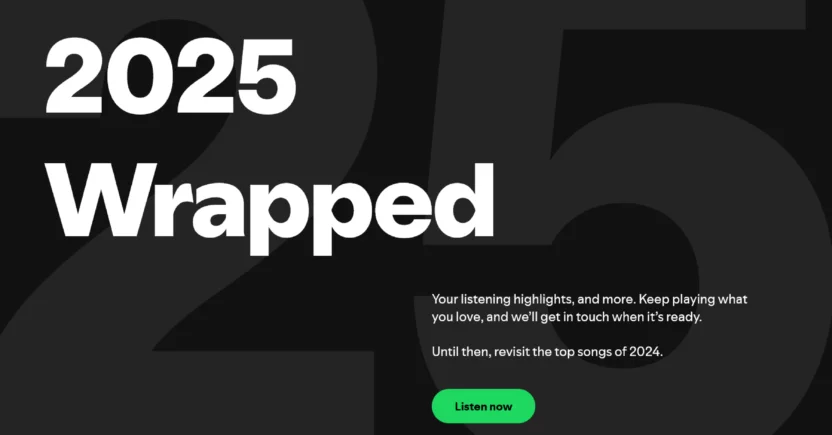
Source: https://www.spotify.com/us/wrapped/
Spotify Wrapped, YouTube Recap, and similar personalized communications from music streaming companies are excellent examples of an app personalizing the customer experience. It’s no surprise that customers use these apps more frequently just to see data about their listening preferences.
3. Use strategic communication
Strategic communication can encourage repeat use. However, it’s imperative to make your messaging, whether in-app or push notifications, relevant without being annoying.
When done right, communication will help retain active users and encourage inactive users to return to the app.
Here are some actionable ways to use strategic communication as part of your app engagement strategy:
- Smart push notifications: Push notifications, especially rich push notifications, can be an excellent way to communicate with users, but require balancing timing, content, and context to prompt user engagement. So, send these notifications at the right time, like a fitness app that reminds users when they are more likely to be ready to exercise. Your message shouldn’t be generic or blatantly promotional. Instead, ensure that the message provides real value, for example, a reminder about an unfinished task.
- In-app messaging: While push notifications are sent while users are outside the app, in-app messages are sent while the user is using the app. As with push notifications, this communication channel must also be relevant and timely, while following in-app messaging best practices. For example, you can achieve good results by announcing a new feature relevant to what the user is doing or by providing tips for a feature they are struggling with. MoEngage offers an extensive catalog of in-app templates that can help you create campaigns that resonate with your customers.
- Deep linking: When sending notifications, especially those containing external links, ensure that these links direct users to relevant content within the app.
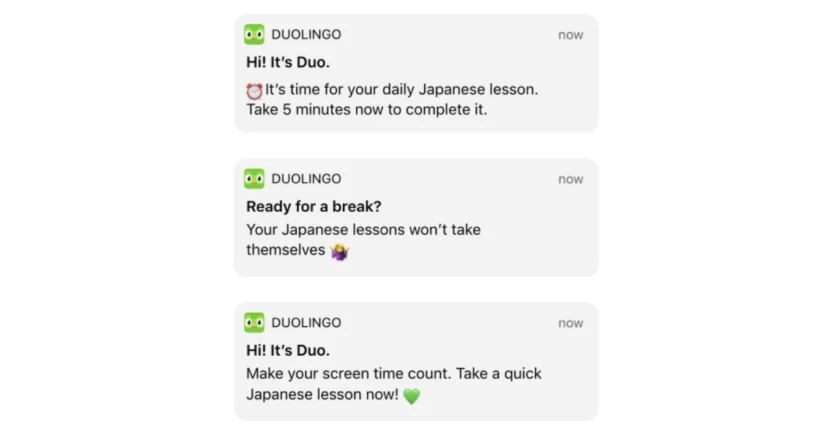
One of our favorite brands that has elevated push notifications to an art form is Duolingo. It uses strategies like puns, pop culture references, and a somewhat humorous passive-aggressive approach whenever the user gets a notification.
4. Leverage gamification
Image source:
Think about your favorite or most-used apps. Do they have leaderboards, give points for completing certain actions, set challenges, or give badges and rewards? If so, you have experienced the power of gamification. This app engagement strategy is one of the most powerful ways to keep users engaged, as this study shows.
You can make the app experience more fun and rewarding by integrating game mechanics. Here’s how you can use this strategy for your app.
- Streaks: Language learning apps, for example, Duolingo, encourage daily use by rewarding consecutive days of activity.
- Badges and rewards: You can also give users badges, virtual currency, or other types of rewards for completing actions or milestones.
- Use progress trackers: People are more likely to complete tasks or do things within the app when they can see the progress they’re making. Therefore, use progress bars or other visual completion meters to keep them engaged.
- Leaderboards and challenges: People love to show off, and integrating leaderboards or sharing options within your app is a great way to increase app engagement. When users complete challenges, congratulate them and allow them to share their achievements on their social media.
Poshmark is one of the most popular social Ecommerce apps, and for good reason. The app uses gamification to keep users engaged.
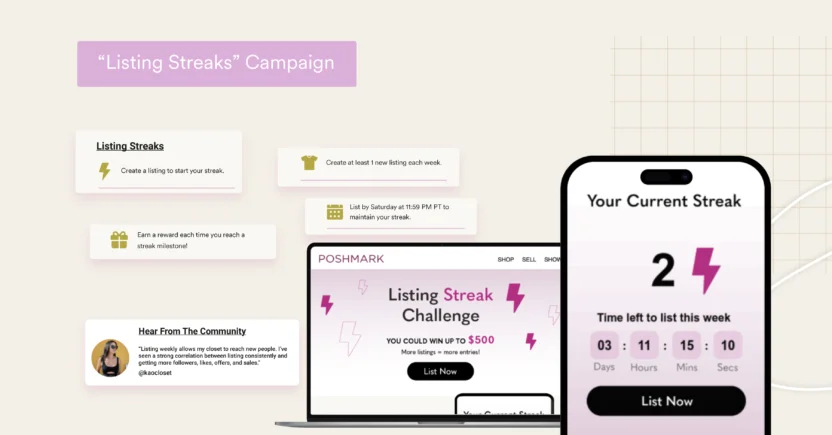
For instance, Poshmark encouraged mobile app engagement through its Listing Streak challenge. Basically, it motivated sellers to list items every week and then rewarded them for maintaining ‘listing’ streaks. MoEngage helped Poshmark achieve 30% more conversions by tracking listing quality and frequency, along with other seller behavior attributes, before sending out email and push campaigns to the sellers. Streak counts and countdown timers made the app users feel like they were ultimately playing a game. This helped increase app engagement and revenue from sellers.
Even though your app might have a different value proposition, you can draw lessons from how Poshmark gamified user interaction.
5. Create user communities
Imagine belonging to a club built around your hobby, like gardening. Wouldn’t you be excited to discuss tips and stories with your fellow gardeners?
In the same vein, add common forums or groups where app users can network and interact with each other, help solve each other’s problems, and share their common experiences. Because the users feel like they belong to these communities, they’re more likely to engage with your app.
Strava’s app is built around community-led motivation for maintaining health and fitness. The app lets users start or join a club where the members can cheer each other on through their fitness journeys. They can even share their workout activities, participate in monthly challenges, recommend popular routes or discover new ones, and compare their achievements on leaderboards.
Such a sense of community not only fosters a feeling of belonging but also motivates users to participate in friendly competitions within their communities while regularly engaging with the app to stay fit.
7 Essential Mobile App Engagement Metrics to Measure Improvements
The best app engagement strategy relies on tracking metrics that offer tangible insight into the frequency, depth, and consistency of user interaction with your app.
These customer engagement metrics are invaluable as they inform your app development roadmap, which products or services to promote or retire, and your marketing campaigns. Let’s see what these mobile app engagement metrics are, why they are essential, and how to track them.
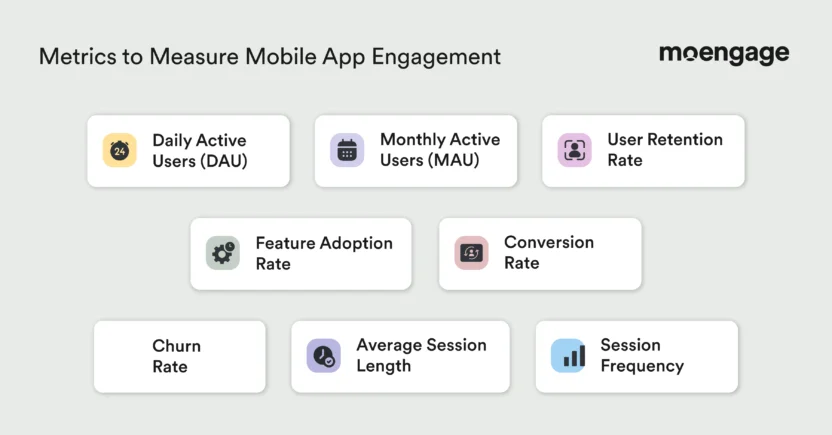
1. Daily Active Users and Monthly Active Users (DAU/MAU)
As the name suggests, these metrics indicate how many people regularly open and interact with your app. DAU is the measure of unique users who open and engage with your app in 24 hours, while MAU is the measure of unique users over 30 days.
These metrics are essential because they show marketers the health of the user base, whether it’s growing, shrinking, or stable.
In addition, these mobile app user engagement metrics are used to calculate the ‘stickiness’ of your app, or how habitual it is.
You can calculate it by dividing the DAU by MAU and multiplying by 100. If it’s low, you can implement actionable mobile app marketing strategies. Meanwhile, a high stickiness ratio (20% or higher) indicates that the app is habit-forming, as users consistently find value in it. This, in turn, is a good indicator of positive user retention.
2. User Retention Rate
The user retention rate reveals your app’s ability to retain users over time, a critical indicator of growth. It specifically measures the percentage of users who return to the app after a period, such as Day 1, 7, or 30.
The metric varies by industry, though. For instance, the media and entertainment industry has an average retention rate of 84%, while the food tech industry has a retention rate as low as 16.5%.
To measure this metric, start by tracking users in groups or cohorts, such as those who downloaded the app on the same day. Next, measure the ratio of users from that original group who still use the app after a set period.
For instance, if you start a month with 1000 installs and have 500 users on day 30, you have a user retention rate of 50%, which is excellent.
It’s crucial to track this metric as user retention determines how valuable your app is to users. A high user retention rate shows that users love your app and it’s part of their routine. If your retention rate is low, it’s a sign for you to implement customer retention strategies.
3. Feature Adoption Rate
Feature adoption rate measures the percentage of active users who use a specific function of your app.
You can track feature adoption by tracking a unique event tied to the feature’s use and dividing it by the total number of active users. For example, digital banks that offer a ‘rewards’ feature can measure feature adoption by tracking how often users click on the ‘redeem rewards’ button in the app.
This metric is important because it measures the success of new or existing features and helps marketing teams or product teams understand user behavior towards them.
Additionally, the feature adoption rate reveals the parts of the app that users find helpful. If core features have low adoption rates, it might indicate poor UX or that users don’t really need the feature.
4. Conversion Rate
This metric tracks the percentage of users who complete a desired action, whether it’s booking a cab, making a purchase, sharing on social media, or clicking a link within the app.
To track this metric, you first have to define what the specific, desired action or conversion event is. Then it’s calculated by dividing the number of users that completed the conversion event by the number of users who could have completed it.
Conversion rate is arguably the most critical metric because of its direct link to revenue. Low conversion rates, even with high engagement numbers, mean there’s a problem with your sales funnel. Solving this roadblock will vastly improve your fortunes and create actual value for your brand.
5. Churn Rate
Churn rate is the inverse of user retention rate. It measures the number of people who stop using your app after a period of time.
You can calculate the churn rate by dividing the number of users lost during a period by the number of users at the start of the same period.
Churn is inevitable, regardless of your best efforts. However, an abnormally high churn rate is concerning and indicates poor user experience, value proposition, onboarding, or app performance. Analyzing when and why users churn helps you identify any issues in your app and is crucial for long-term profitability. Inevitably, the next step is to implement strategies to reduce customer churn.
6. Average Session Length
The average session length is the time a user spends in your app from opening to closing (excluding any pauses).
This metric is tracked using analytical tools that record when the user begins and ends a session. It’s an essential metric because longer session length usually means higher engagement, although it’s not as important if the user just opens the app without taking any action.
It’s especially valuable for social media or gaming apps where longer session lengths indicate that users are truly engaged with the value proposition.
7. Session Frequency
This metric tracks how often active users access the app within a specific time frame and is measured as sessions per week or per day.
It’s measured by counting the total number of sessions in a period and dividing this by the number of unique users in that same period.
High session frequency numbers are a strong indicator of habitual use, which is vital for building long-term brand loyalty.

How to Increase Mobile App Engagement: Final Thoughts
App engagement is an ongoing process of testing, measuring, and refining based on what your users actually do—not what you think they’ll do.
Start small. Pick one mobile app engagement strategy that fits your resources and user base. Maybe it’s adding a simple progress bar to your core feature, or segmenting your push notifications by user behavior. Track the metrics that matter most to your business, then double down on what works.
Doing all this work manually with disconnected tools turns app engagement into a full-time job.
This is precisely why MoEngage exists. It brings everything together. You can set up personalized onboarding flows, trigger contextual push notifications, test different gamification approaches, and track the metrics that matter, all without needing a data science degree.
Want to see how this works for your specific app? Request a demo with MoEngage today, and we’ll walk you through building an engagement strategy that fits your users, your team, and your growth goals.