


Fast Food Customer Journey Map: How QSR Brands Boost Loyalty
Fast food customers move fast, think fast, and expect brands to keep up.
Whether it’s a quick lunch, dinner delivery, or a late‑night snack, their path is full of small decisions that shape where they go and what they buy. That’s where a fast food customer journey map becomes your secret playbook for fast food marketing, giving you crystal‑clear visibility into every step your customers take.
That map is a living guide to what drives repeat orders, app opens, drive‑thru visits, and long‑term brand loyalty. From the moment hunger strikes to the final bite, every interaction is an opportunity to create convenience, drive loyalty, and grow revenue. With digital ordering, delivery apps, and loyalty programs now mainstream, the journey has become more complex than ever.
In this post, we’ll break down the steps to build a journey map that works for fast food, show you real‑world examples from leading brands, and share the tools that make mapping effortless and actionable.
What is a Fast Food Customer Journey Map?
A fast food customer journey map is a visual representation of every step a customer takes with a restaurant, from awareness to ordering to post-meal feedback. It helps QSR brands understand customer behavior and optimize touchpoints for convenience, speed, and loyalty.
A strong journey map captures both the digital path and the in-store experience. It shows everything from ad exposure to mobile app activity, pickup flows, delivery expectations, and loyalty reengagement. For fast food brands where speed and simplicity matter most, customer journey mapping uncovers friction and reveals opportunities to personalize interactions at scale.
Key Stages of the Fast Food Customer Journey to Map
A comprehensive fast food customer journey map typically encompasses a blend of digital and physical touchpoints. While each brand’s journey is unique, most QSR customer journeys follow these core stages.
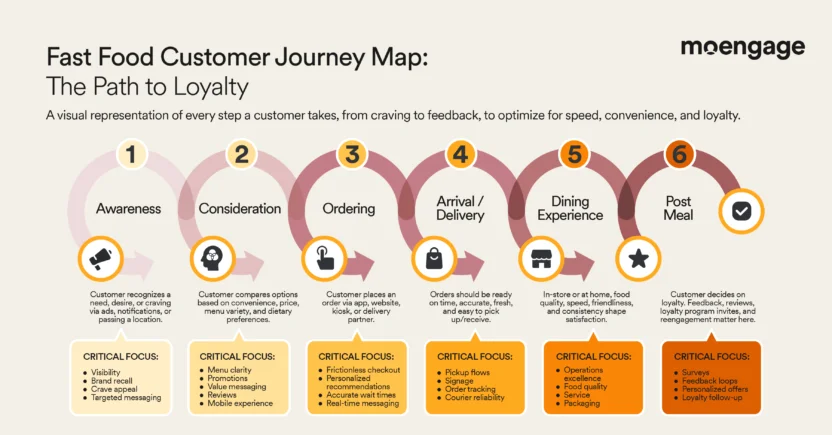
- Awareness: This is the moment a customer recognizes a need, desire, or craving. They may see an ad, pass a location, or receive a push notification. This stage should be all about visibility, brand recall, crave appeal, and targeted messaging.
- Consideration: Customers compare options based on convenience, price, menu variety, dietary preferences, and delivery availability. In fact, the National Restaurant Association’s State of the Restaurant Industry 2025 reports that for 82% of delivery customers, value promos and discounts matter when choosing restaurants for ordering in. Think about menu clarity, promotions, value messaging, reviews, and mobile experience.
- Ordering (Online, App, or Delivery Partner): Customers place an order through your app, website, kiosk, or a marketplace app, like DoorDash or Uber Eats. This moment needs to feel fast, intuitive, and error-free. At this stage, you should focus on frictionless checkout, personalized recommendations, accurate wait times, and real-time messaging.
- Arrival / Delivery: This is where expectations meet reality. Customers expect orders to be ready on time, accurate, fresh, and easy to pick up or receive. Focus on pickup flows, signage, order tracking, and courier reliability.
- Dining Experience (In-Restaurant or at home): Whether dining in-store or at home, the food experience significantly impacts satisfaction. Customers want quality, speed, friendliness, and consistency. Critical focus areas include operations excellence, food quality, service, and packaging.
- Post-Meal: Customers decide whether the brand earned loyalty. Feedback, reviews, loyalty program invites, and reengagement campaigns matter here. Surveys, feedback loops, personalized offers, and loyalty follow-up are critical focus areas at this stage.
With these stages in mind, the next step is to create a fast food customer journey map that your team can use to optimize experiences across both digital and physical channels.
How to Create a Fast Food Customer Journey Map
Whether you’re building your customer journey map for fast food from scratch or refining an existing one, the process follows five essential steps. These steps are designed to help you build a customer journey map and get an idea of how it would work in a customer engagement platform like MoEngage, leveraging specific features to turn insights into action.
Building a fast food customer journey map requires accurate data, real-time insights, and personalization across channels. The following steps are tailored to QSR brands and closely align with what a platform like MoEngage enables.
1. Define the Customer Personas and Use Cases
Before you can design or improve your impactful fast food customer journey map, you need to know who you’re mapping for.
Different types of customers have distinct expectations, preferences, and behaviors. There may be busy parents picking up dinner on the way home, young professionals ordering lunch through a mobile app, or late-night drive-thru regulars. Each of these groups would be categorized into a distinct persona.
Why it matters: If you don’t tailor your mapping to the unique needs of each segment, your ‘one-size-fits-all’ journey will miss opportunities for personalization. You’ll also risk overlooking competitive differentiators.
For example, Chick-fil-A has maintained the highest customer satisfaction score in US fast food for the 11th consecutive year (a score of 83, according to the 2025 American Customer Satisfaction Index).
How does it win?
It consistently meets specific customer expectations for speed, courtesy, and convenience. Customers care about order accuracy, mobile app quality and reliability, and website satisfaction, among other factors.
How to do it:
- Conduct interviews, analyze loyalty program data, and review digital ordering patterns.
- Identify shared traits and goals to form distinct personas (e.g., “The Lunch-Time Loyalist,” “The Family Feast Planner”).
With MoEngage’s customer segmentation analysis and behavioral cohorts, you can surface patterns for each persona across web, app, and offline channels. Capture how frequently they order, which offers they respond to, and what times they engage most. These cohorts can then feed into tailored campaigns, ensuring each persona’s journey map speaks to its true drivers.
2. Gather Behavioral and Operational Data
Good customer journey maps rely on strong data, not assumptions. This means pulling together both behavioral data (what customers do) and operational data (what happens internally to support their experience).
Why it matters: Without data integration, your journey view will be fragmented. You might see strong ad engagement but miss the fact that customers drop off when the app menu takes too long to load, or deliveries consistently show up late in specific regions.
How to do it:
- Collate digital customer engagement metrics from your mobile apps, websites, social media, loyalty platforms, and SMS or email engagement.
- Add operational data from point-of-sale (POS) systems, kitchen dashboards, and delivery logistics software.
- Merge these datasets to establish a single, unified view of each customer’s lifecycle.
MoEngage Unified Identity, for instance, centralizes all events and attributes (both online and offline) into a single record for each customer. It removes channel silos and ensures that ordering interactions, coupon redemptions, and loyalty point activity are all visible in context. This clarity enables cross-channel journey mapping to be faster and more accurate.
3. Map the End-to-End Journey
With personas defined and data in hand, lay out the complete set of customer touchpoints from awareness to advocacy. A customer journey map for fast food should include both digital and physical brand touchpoints, from mobile screens to menu boards.
Touchpoints customers interact with in QSR might be:
- Digital ads and geo-targeted promotions
- Push notifications and SMS offers
- Mobile app menus and ordering screens
- Drive-thru signage, menu boards, and ordering kiosks
- Pickup shelves, counter service, and curbside handoff
- Delivery ETA tracking and in‑order feedback prompts
- Loyalty program messages and cross-sell emails
Why it matters: Seeing touchpoints sequentially exposes exactly where friction happens and highlights the most influential moments in the journey. Examples include long wait times in certain stores, confusing pickup signage, or app pages that load too slowly on Canadian mobile networks during peak hours.
How to do it:
- Document each stage of discovery, consideration, ordering, fulfillment, and post-order engagement.
- Plot customer emotions at each stage for empathy‑driven design tweaks.
- Use customer journey mapping tools to diagram triggers, events, and automated workflows that respond in real-time to customer actions. MoEngage Flows is one such tool that shows you where a customer drops off, where engagement spikes, and how each step feeds the next.
4. Identify Pain Points and Opportunities
Even world-class QSRs have gaps. Identifying them is where the journey map earns its ROI. Look for breakpoints where customers drop off, complain, or disengage. Your goal is to remove friction and make dining easier.
In fast food, that might mean reworking drive‑thru bottlenecks, optimizing in‑app menu search, or introducing better pickup signage in high-volume urban stores.
It could also mean implementing a walk-up concept in urban areas with high foot traffic, as Chick-fil-A did. To meet their customers’ evolving needs for speed and convenience, the brand lets guests order items in their app ahead of time and then pick up their order from the outlet.
While explaining the concept, Khalilah Cooper, Chick-fil-A’s Executive Director, Restaurant Design, maintained:
We want to leverage technology to elevate the human touchpoints in our restaurants. These new digital formats make the customer and Team Member experience more seamless, and therefore more memorable, and give back precious time to connect with each other.
How to do it:
- Look for steps with high drop-off or low conversion rates.
- Pair quantitative data (e.g., completion rates) with qualitative insights (e.g., customer feedback).
- Consider opportunities for regional personalization. Canadian customers might respond more to local event tie-ins, while US customers engage more during sports season promos.
Use MoEngage’s funnel analytics to identify where users churn in a process, and A/B testing to validate which improvements drive conversions — whether that’s changing the pickup confirmation workflow, adjusting offer timing, or rewording loyalty reminder messages.
5. Personalize and Automate Engagement
So, you’ve mapped the journey and diagnosed what’s working. The final step is to craft targeted engagement campaigns and automate them so they run at scale without losing personalization.
Why it matters: Fast food customers expect convenience and relevance. The more you tailor offers, timing, and channels to their habits, the more likely they are to return and advocate for your brand. In a Wharton podcast, Danielle Vona, CMO at Outback Steakhouse, said:
[We] make sure we’re marrying the marketing communications and elements with the operations that are happening in the restaurant so we’re… reinforcing the awesome consistent experience.
How to do it:
- Personalize promotions based on location, preferred menu items, and ordering frequency. Location-based push notifications like, “Hi Cole, driving through Bassett St.? Drop by for a delicious burger @ 5% off!” could work.
- Automate triggers so when a customer reaches a key milestone (e.g., unlocking a loyalty reward), they immediately get a tailored offer via their preferred channel.
- Ensure campaigns work seamlessly across app, email, SMS, and on-premise interactions.
MoEngage’s real-time segmentation, AI-powered recommendations, and cross‑channel orchestration make it possible to deliver these journeys at scale — ensuring every persona receives a cohesive experience, whether they engage with your QSR brand in Dallas drive-thru lanes or downtown Toronto pickup counters. Its Most Preferred Channel feature also ensures your campaigns are sent on the channel each customer interacts with the most.
In fact, MoEngage helped Outback Steakhouse send personalized push notifications with frequency capping to their customers.
With customer journey map templates, you don’t need to start building from scratch. Simply select a template, customize it according to your needs, and your job’s done.
Now that you understand the steps for creating your customer journey map for fast food, let’s look at three real-world examples of QSR brands, in both the USA and Canada, who have turned their journey maps into measurable success stories.
4 Real-Life Examples of Successful Fast Food Customer Journeys
Fast food customer journeys are dynamic, built on actual campaigns, operational practices, and cross‑channel engagement. Different QSR brands shine in different areas along these journeys, depending on whether they’re optimizing in‑store dining, direct delivery, or third‑party food app ordering, according to their QSR marketing strategies.
To make this tangible, let’s walk through a few examples from well‑known QSR brands. Each one shows a different journey map and how that map’s insights can be applied to keep customers coming back, improve operational flow, and proactively remove friction.
1. Chick-fil-A: Drive-Thru and In‑App Ordering Journey
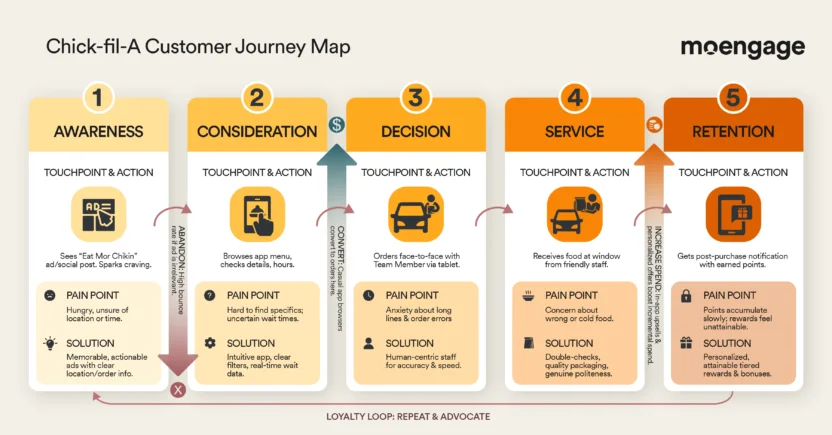
Known for its service excellence, Chick‑fil‑A nails the drive‑thru efficiency game while also investing in its app’s order‑ahead features. This Chick-fil-A customer journey map begins with a social media ad or billboard (“Eat Mor Chikin” cow campaign), proceeds through an in-app selection flow, continues with a drive-thru handoff, and concludes with a rewards program.
What they do well: Their drive‑thru flow is choreographed: greet, confirm, payment, pickup, often with multiple order lanes. The app gives customers control: customize meals, choose pickup type, and pay ahead, minimizing wait time.
Where the map helps: Mapping shows where casual app browsers convert, where they abandon, and which promo mechanics increase incremental spend per visit. Pinpoint exactly where Chick-fil-A’s ACSI‑level satisfaction comes from, and ensure those touchpoints are reinforced in new campaigns.
2. Outback Steakhouse’s In-Store Dining Journey
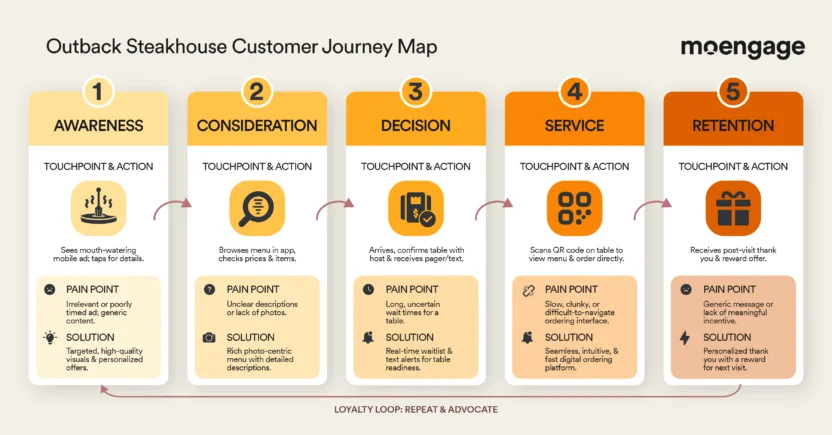
Outback isn’t strictly ‘fast food’, but in the casual dining category, they utilize many QSR-style digital engagement tactics. Think: mobile banners promoting limited‑time steak specials, SMS reminders for reservation confirmations, table‑side payment flows, and targeted loyalty and customer relationship emails.
What they do well: The in‑store dining journey is anchored in consistency and personalization. Whether dinner is a planned family outing or a spontaneous weekday splurge, the offer path is clear, and the in‑venue experience matches the digital promise. Their consistent food quality and clear communication amp the customer experience.
Where the map helps: Mapping this journey — from first exposure to a mobile ad, to checking a menu in the app, confirming a table, scanning a QR code on the table for ordering, and post‑visit thank you — helps identify gaps. For example, do loyalty members who hold reservations convert to higher check sizes? Do customers drop off if the mobile menu takes too long to load? MoEngage’s journey visualization can trace every engagement and booking signal, showing exactly where tweaks boost repeat visits and average spend per table.
3. Domino’s App-to-Delivery Journey
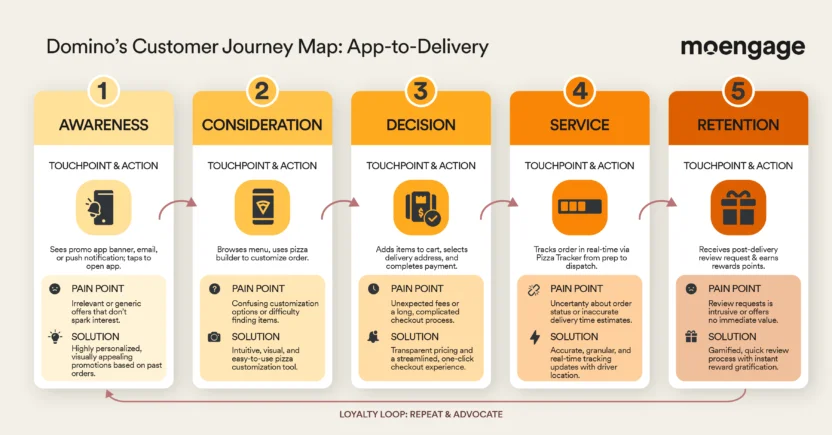
Domino’s built its reputation on “You got 30 minutes” delivery speed, but today that speed is only half the story. The app and web ordering journey are finely tuned to minimize wait and maximize upsell (think: crust choices, side items, desserts).
What they do well: Delivery is integrated seamlessly into the loyalty program. Once a pizza is ordered, their cross‑channel real-time push notifications keep customers updated until the knock at the door and nudge them toward add‑ons in future orders.
Where the map helps: The brand’s food delivery customer journey map connects promotional triggers (app banners, emails, push notifications) to order steps, prep and dispatch, and post‑delivery review requests. That map highlights bottlenecks — like slow kitchen throughput during peak hours — and shows how smoothing those bottlenecks ties directly to customer satisfaction scores and repeat order frequency.
4. MTY Food Group’s Multi‑Brand Delivery Journey
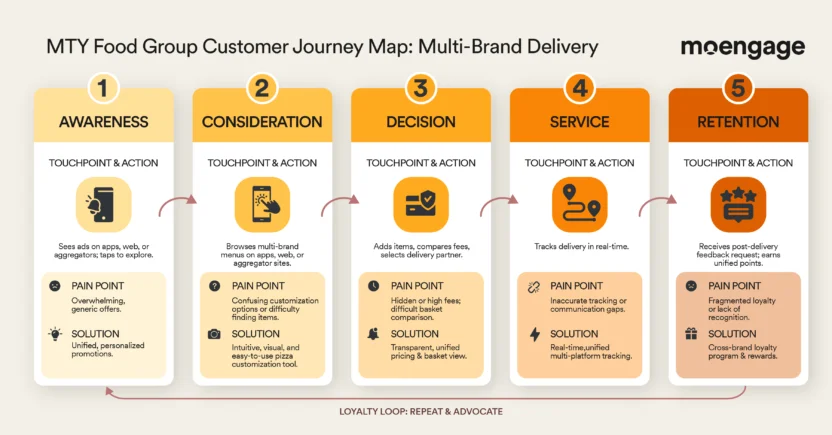
If you’re not familiar, MTY Food Group operates a portfolio of QSR brands in Canada, many of which are available through Uber Eats and other third-party delivery services. This journey map is about the third-party order flow, where the brand doesn’t own every touchpoint.
What they do well: They cater to diverse customer preferences, meaning journeys are multi‑modal — some customers may order via the KFC app, others via Uber Eats for certain MTY brands. They maintain brand presence across these disparate ordering ecosystems. They partner with Uber Eats for “Buy One, Get One” events that spike new customer acquisition.
Where the map helps: The journey map here spans different channels: direct mobile app orders, web orders, and aggregator orders. Mapping allows them to compare performance: Are Uber Eats orders more likely to have higher basket sizes but lower recurrence rates? Are branded app orders more loyal but fewer per month? Cross-channel customer journey orchestration enables the integration of those cohorts into a unified engagement logic, allowing for personalized offers tailored to each channel without compromising personalization.
4 Best Fast Food Restaurant Customer Journey Mapping Tools
You can sketch your ideas on a whiteboard all day. However, unless you have a way to capture real customer behavior, visualize it, and act on it, you’ll be guessing. And we all know that marketing decisions should never be based on assumptions.
So let’s talk about four tools that can help QSR marketers chart these journeys properly and actually make changes that move the needle.
1. MoEngage
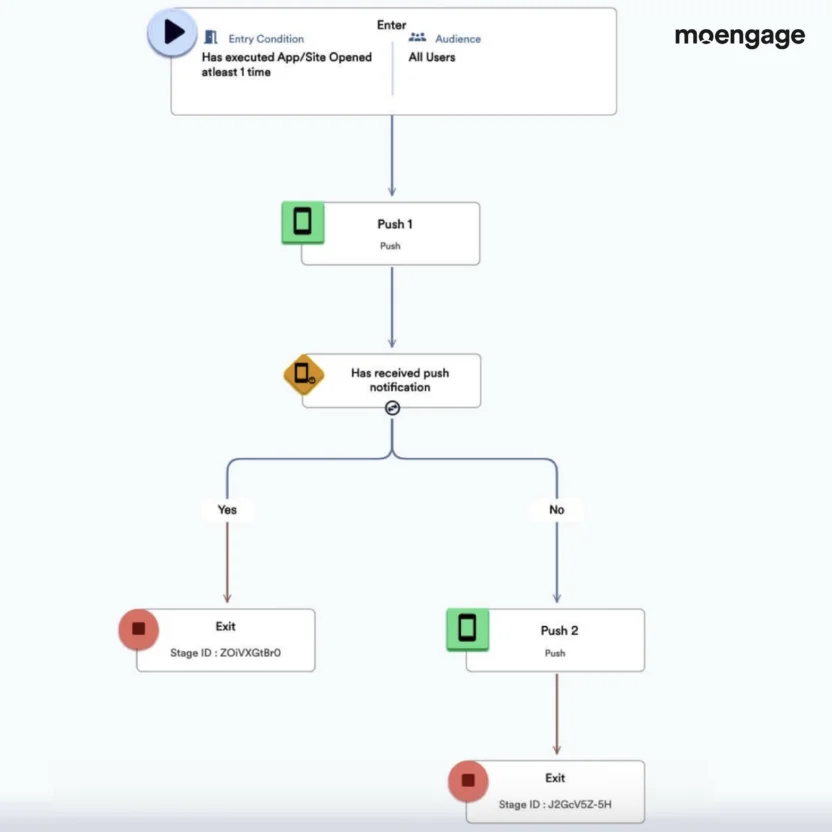
If mapping the fast food customer journey is about turning insight into revenue, MoEngage is built for exactly that. MoEngage helps QSR brands build personalized customer journeys across mobile, web, email, SMS, and app push. It unifies customer data and automates engagement based on behavior, preferences, and context.
Best for: End‑to‑end journey mapping with built‑in cross‑channel customer engagement.
Key features: MoEngage Flows’ journey visualization lets you plot every touchpoint — app open, menu browse, coupon click, drive‑thru pickup — and see where customers move forward or fall off. From there, real‑time segmentation and behavioral cohorts help you run campaigns that actually fit each persona’s needs. Add funnel analytics, AI recommendations, and cross‑channel orchestration (SMS, push, email, in‑app), and you’ve got a single platform that can identify friction points, test fixes, and launch tailored experiences without juggling multiple tools.

2. Qualtrics
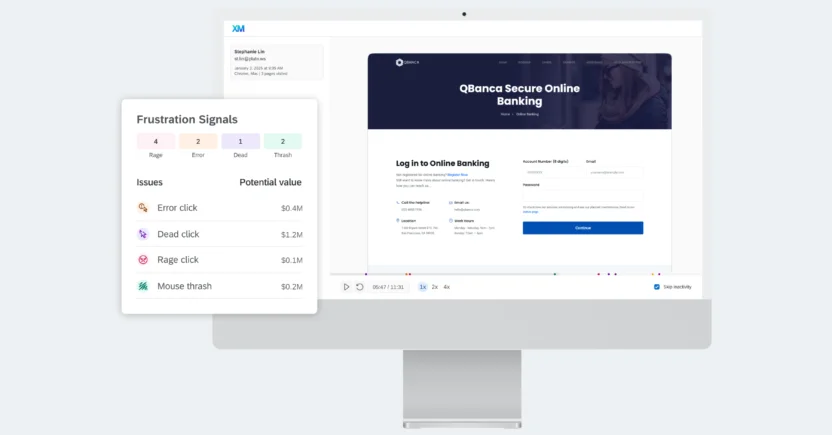
Qualtrics offers robust tools for capturing customer sentiment and identifying journey pain points.
Key features for journey mapping: Built‑in experience analytics and Journey Optimizer let you combine survey data, operational KPIs, and behavioral signals to identify breakpoints in a customer’s path. You can drill into “moments that matter” and quantify the emotional impact of specific steps in the journey.
How this would help with fast food: QSRs can use Qualtrics to correlate satisfaction scores with operational realities, such as tying a delivery time complaint to a region’s staffing levels, or linking “order accuracy” feedback to specific menu processes. In the USA and Canada, this could mean catching small service dip trends before they hit loyalty metrics.
3. Lucidchart
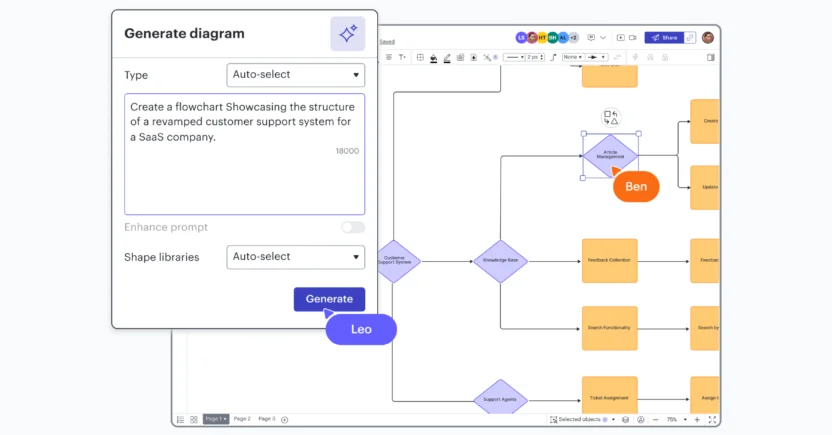
Lucidchart offers flexible diagramming tools to visually map customer pathways.
Key features for journey mapping: Drag‑and‑drop shapes, icons, and connectors make it simple to build journey maps from scratch or based on imported workflow data. You can layer in annotations, group steps, and track parallel pathways (like in‑store diners vs. mobile order pickup).
How this would help with fast food: QSR marketers could use Lucidchart to visually lay out all touchpoints, from digital campaign impressions through in‑store POS, in a way that’s easy for both marketing and ops teams to digest. It’s especially handy when you’re mapping how campaigns run differently in the USA and Canada regions, factoring in operational quirks.
4. Airtable
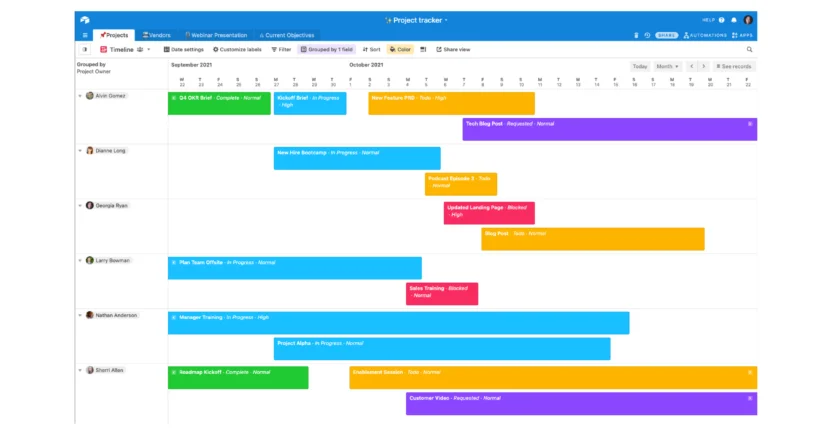
Airtable is the spreadsheet’s cool cousin. It combines database power with flexibility, making it ideal for capturing and organizing journey data. It can serve as a lightweight journey mapping and CX tracking tool for QSR teams.
Key features for journey mapping: Customizable fields, rich media attachments, and view options like Kanban or timeline let you store customer interaction data alongside qualitative notes. You can link records to build sequences, creating a lightweight but clear map of steps.
How this would help with fast food: Airtable works well as a centralized “journey tracker,” especially for multi‑location QSR brands. You can store USA store-by-store engagement metrics, Canadian seasonal promo results, and service feedback, all in one database. Then, filter down to see what’s working and where campaigns need tweaking.
Fast Food Customer Journey Mapping: Closing Thoughts
A fast food customer journey map is more than a diagram. It is a strategy for enhancing convenience, fostering loyalty, and increasing repeat visits across both digital and in-restaurant experiences. As QSR brands continue to digitize their operations, those that understand and optimize their end-to-end journey will emerge ahead.
Explore how MoEngage supports QSR personalization and journey orchestration, or try a demo today.