


Agentic Marketing Tour 2026 Recap: San Francisco
San Francisco was stop two on the Agentic Marketing Tour 2026, and the conversation picked up right where Toronto left off, except this time, the room included teams holding some of the most sensitive data in customer engagement: financial records, DNA, and family history.
40+ customer engagement leaders gathered at State Bird Provisions last evening, with voices from Turo, Morgan Stanley Wealth Management, and Ancestry carrying the day. The question running underneath every session was the same: how much should an AI agent decide once what it’s deciding on gets personal?
Here’s a recap of how the event unfolded:
How Turo’s Custom Agents Caught What Customers Never Saw
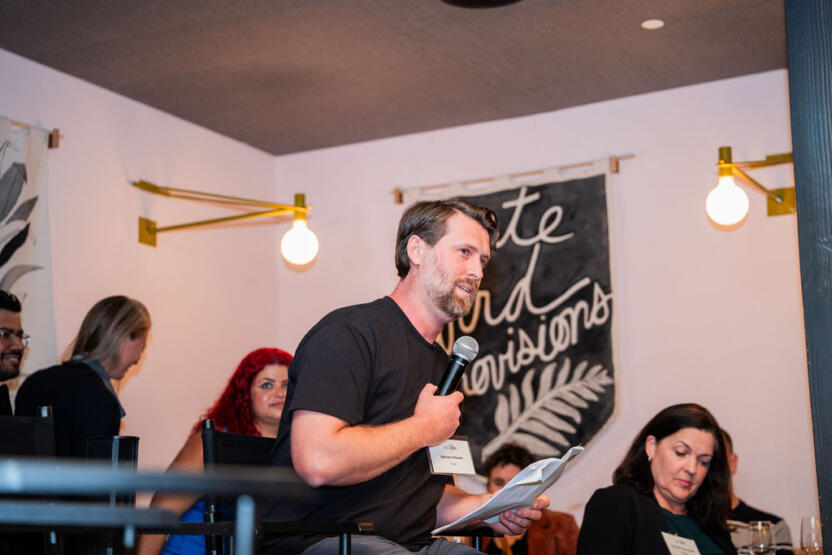
Steven House, Senior Marketing Technology Manager at Turo, took the room through what his first year running agentic AI inside MoEngage actually looked like, and where Merlin AI’s agents fit into the picture now. Turo itself is the world’s largest car-sharing marketplace, connecting roughly 3.5 million active guests with more than 140,000 hosts across 5 countries.
For most of that year, the focus wasn’t on agents at all. Campaign data, audiences, and content were pulled from too many different systems to personalize everything manually, so Turo spent the time rebuilding its data foundation. This meant onboarding a new CEP, reworked events, and expanded catalogs—work that’s still ongoing.
Once that foundation was solid, Turo brought in Merlin AI’s embedded agents, not primarily to move faster, but to catch what a lean team didn’t have the bandwidth to watch for manually.
Three agents now run the stack:
- Reporting Agent — pulls holistic performance reporting and recommendations across campaigns
- Compliance Agent — checks that every campaign has the right holdout groups and confirms content is correctly classified as transactional or promotional, flagging the campaign owner directly when something’s off
- Drafting Agent — builds a campaign end to end from a single instruction, one click from live
The clearest proof came from what the agents caught, not what they created. Two silent segment-filter breaks were flagged automatically before ever reaching customers.
A custom QA agent reviewed every CRM flow before launch, checking setup, audience logic, measurement, and other key requirements in a single pass, catching potential issues before a customer ever sees them (work that used to rely on someone inspecting each step manually). Once those operational catches were solid, Turo moved into real personalization, shifting from past bookings to what someone was actually browsing.
This shift alone drove a 58% increase in click-to-open rate, a 23% increase in click-through rate, and an unsubscribe rate down to 0.07%, proof that relevance, not frequency, was the real lever.
Turo is now pushing that personalization further with a new abandoned-cart email that pulls in the last vehicle a guest searched for, using the image straight from the catalog and personalizing 20-30 fields across profile, event, and catalog data.
Turo’s agents earned their scope by catching what humans couldn’t watch for. The panel that followed asked a harder version of that same question: how much scope should an agent get when the data isn’t a segment filter, but someone’s finances or family history.
Drawing the Line on Agentic Autonomy
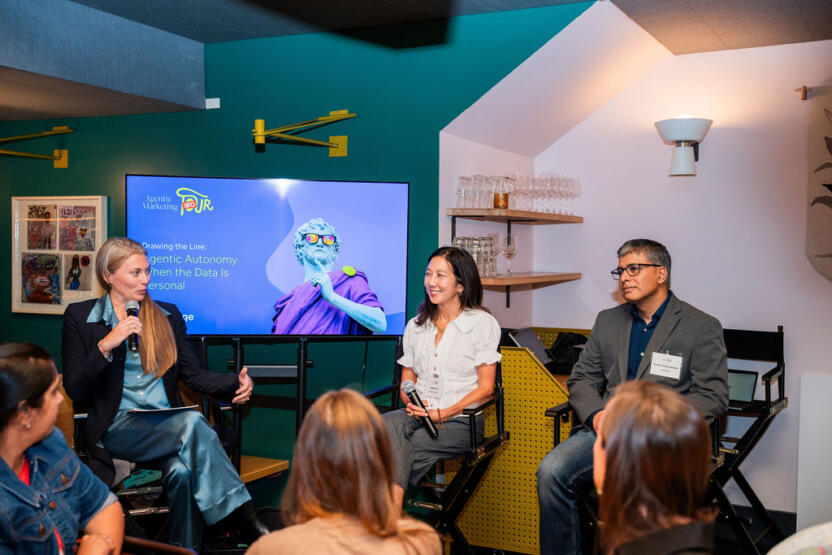
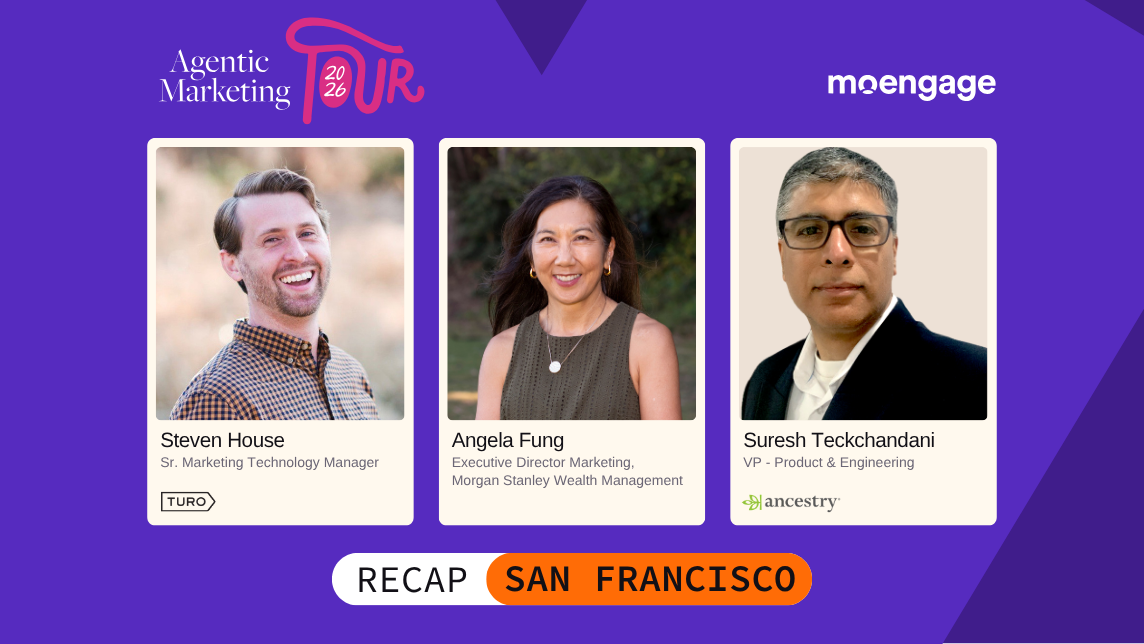
This panel brought together Angela Fung (Executive Director, Marketing, Morgan Stanley Wealth Management) and Suresh Teckchandani (VP, Product & Engineering, Ancestry).
The premise was straightforward. Ancestry holds people’s family history and DNA, and Morgan Stanley holds a complete picture of someone’s financial life, so getting agentic AI wrong in either place costs more than a click.
Suresh described Ancestry’s approach as deliberately bounded: clear objectives, permissions, evaluation, and human oversight built in from the start, even at a scale of hundreds of millions of customers where manual personalization isn’t possible. Angela described the opposite starting point at Morgan Stanley, where teams built their own agents independently with little coordination, except for one firm-wide agent classifying commercial emails under CAN-SPAM rules, which went through real legal review because the work itself is genuinely gray-area. That agent’s confidence score, and Angela’s willingness to override it when it dips too low, was her clearest example of why human oversight still matters.
Both agreed there’s no single right order for building this kind of structure. What matters is staying deliberate about where the line sits, and being willing to move it as trust builds.
Steven’s talk and the panel discussion both circled the same idea: an agent earns more responsibility by proving itself first. The closing keynote took that idea one step further, asking what happens once every single customer has an agent making that call for them.
Where Agentic Decisioning is Headed
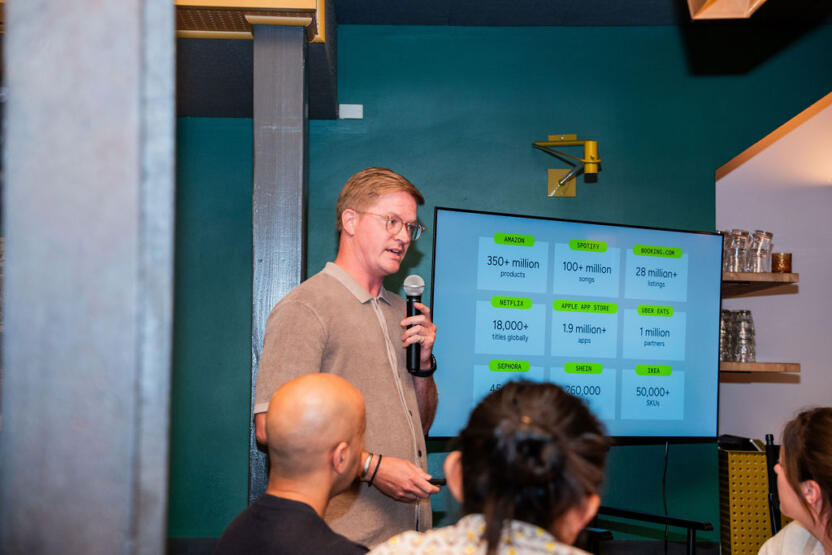
The day closed with a keynote from Paul Meinshausen, co-founder and CEO of Aampe, now part of MoEngage. Where the earlier sessions focused on how much to trust an agent and where the line should sit, Paul’s talk looked at what agentic decisioning looks like in practice once a brand fully commits to it: assigning one agent per customer, and deciding what they see, when, and on which channel.
He pushed back on the idea that brands need more data. What they’re actually missing is more decisions, because a single targeting decision still gets made once for an entire group, instead of for each person in it.
He shared two real-life examples of what that looks like in practice:
- Taxfix handed 65+ campaigns to decisioning agents that ran 200,000 message variants, letting each customer get a version suited to them rather than one message sent to everyone. The result was a 41% revenue lift during tax season and a 21% drop in unsubscribes at peak volume.
- Grab applied the same idea to ride reminders, using an agent per customer to adjust tone and messaging based on what actually got someone to book, and saw roughly a 9% increase in peak rides and an 18% increase in non-peak rides each month.
Key Takeaways
Looking back at the day, here are a few ideas worth carrying forward:
- The biggest wins are often about catching problems, not creating flash. The most convincing use case for an agent usually isn’t a personalization win, it’s the silent bugs it catches before they ever reach a customer.
- Autonomy has to be sized to the stakes. How much an agent gets to decide should depend on the cost of being wrong, not how capable it seems.
- Confidence isn’t the same as correctness. An agent that sounds sure of itself isn’t necessarily right, which is why knowing when to override it matters more than the score it gives you.
- The real constraint on personalization is decisions, not data. Most brands aren’t short on customer signals, they’re short on actual choices made for each person.
Next Stop: Los Angeles
San Francisco marked the second stop on this five-city tour, and it built on everything Toronto started. Los Angeles is next, on October 8th. This is followed by Atlanta on October 13 and New York on October 15.