


Agentic Marketing Tour 2026 Recap: New York
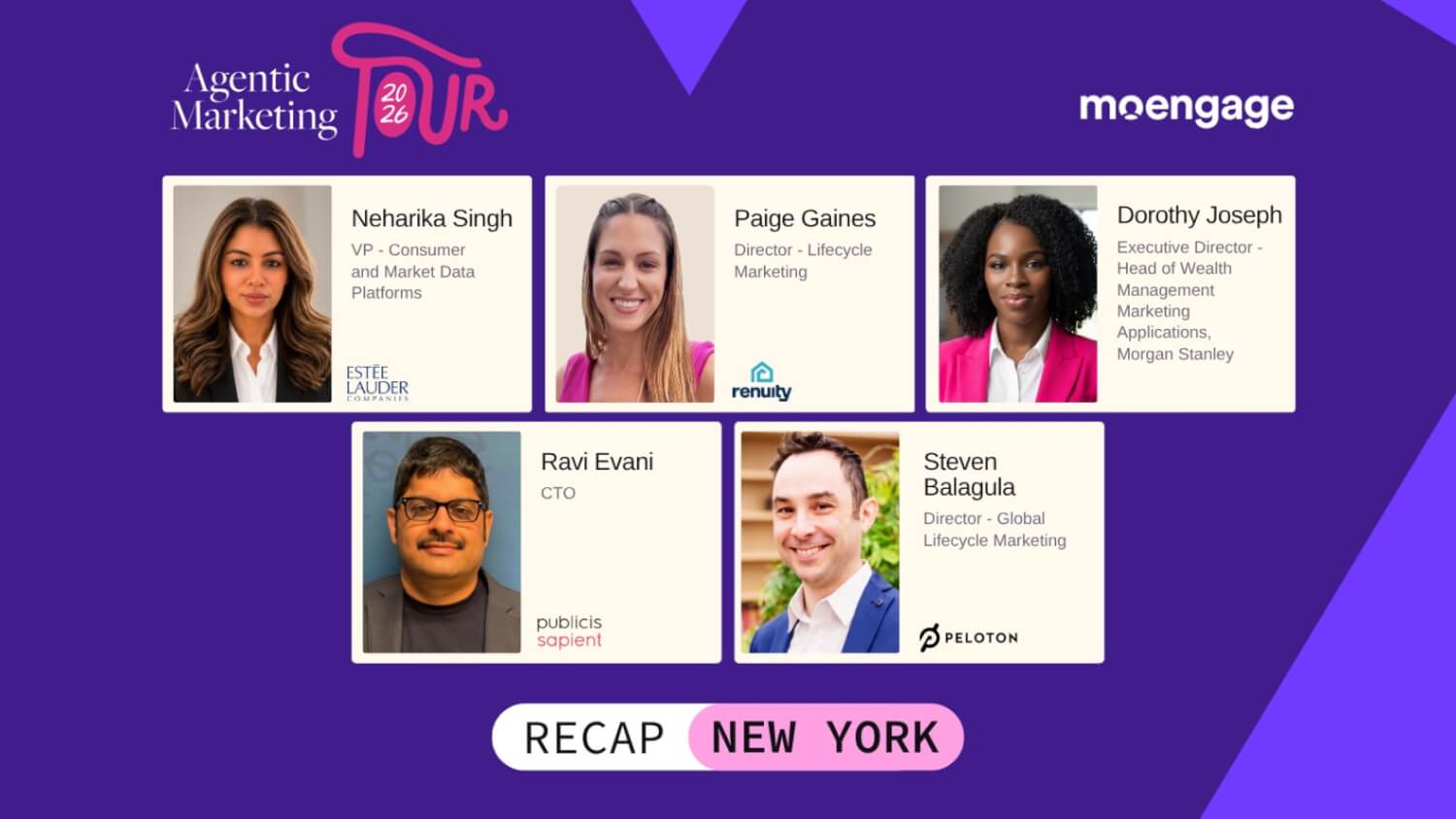
The Agentic Marketing Tour 2026 closed out its five-city run in North America on October 15th, sixty floors above Manhattan at Manhatta, with the city spread out in every direction below. 40+ customer engagement leaders gathered for the final stop, carrying with them everything the tour had built across Toronto, San Francisco, Los Angeles, and Atlanta, with voices from brands like Morgan Stanley, Estée Lauder, Peloton, Renuity, and Publicis Sapient joining the room. Between a look at where agentic AI already stands today, a panel on the groundwork it actually requires, and a customer story putting all of it into practice, New York closed the tour by showing what it actually takes to build this for real, once the trust is earned and the risk is calculated.
Here’s a recap of how the evening unfolded.
Where Agentic AI Stands Today
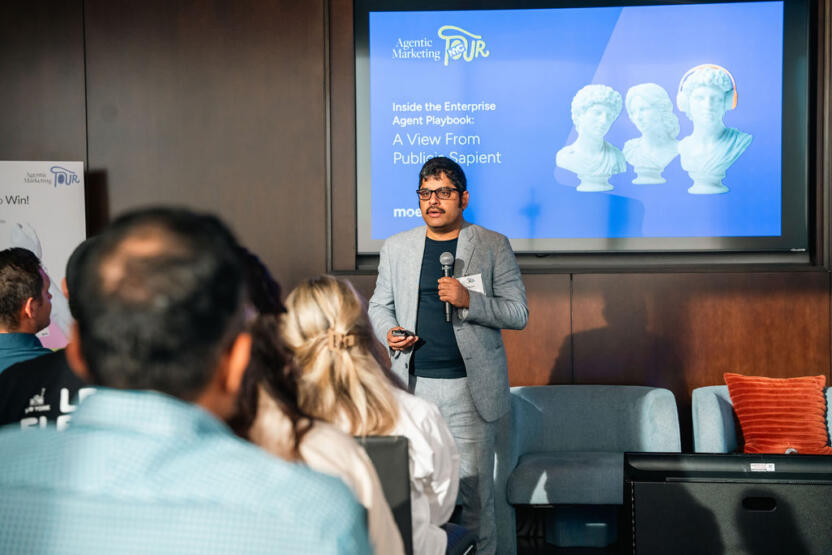
Ravi Evani, CTO of Publicis Sapient, opened the evening with a picture of where agentic AI already stands today. He framed it through a simple, near-future scenario: a personal AI assistant that already knows what you need before you ask for it, picking the thing, placing the order, closing the loop. That scenario, he said, isn’t far off, and in some categories it’s already arriving.
Looking ahead, he said, Marketing is moving inside the product itself: agentic interfaces generating screens and experiences on the fly, so engagement happens in the moment rather than through a message sent separately. Further out, brands will need agents that can talk to a customer’s own agent directly, as more people start their buying journeys inside answer engines and AI assistants instead of a brand’s own channels.
Ravi’s talk set the scale of what’s already possible. The panel that followed brought that same ambition back down to the ground, into the specific, foundational work three companies are doing just to make any of it work at all.
What Has to Work Before the Agent Does
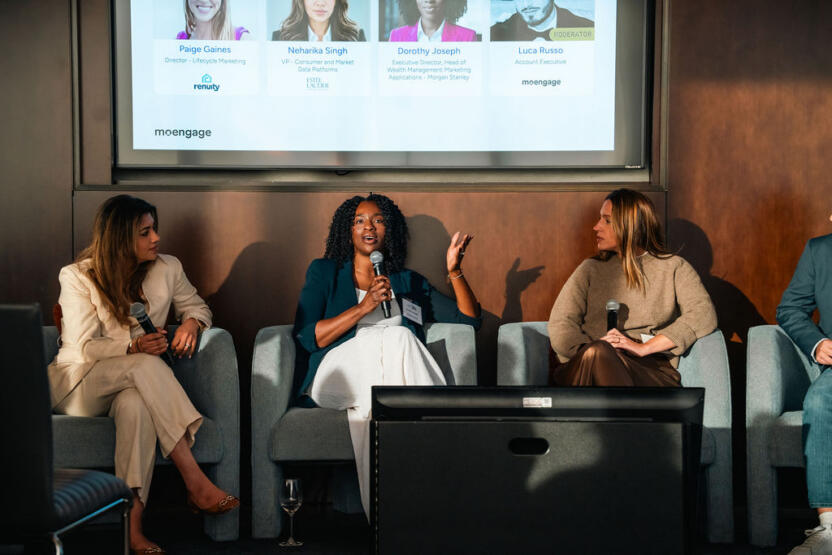
This panel brought together Dorothy Joseph (Executive Director, Head of Wealth Management Marketing Applications, Morgan Stanley), Neharika Singh (VP, Consumer and Market Data Platforms, Estée Lauder), and Paige Gaines (Director, Lifecycle Marketing, Renuity), each fixing a different piece of the foundation underneath agentic AI.
Dorothy’s team at Morgan Stanley started with process, mapping every handoff and bottleneck in something as ordinary as publishing a campaign before any tooling was layered on top. The mindset shift, she said, was getting people to stop asking which AI tool to buy and start asking where the process was actually breaking down first.
Neharika’s starting point at Estée Lauder was data. Five separate regional warehouses, each with its own taxonomy, identity resolution, and consent logic, meant there was no single, consistent view of a customer across the business. The fix in progress is a global data layer, being rebuilt from the ground up, so that whatever agent layer comes later has something clean to actually read from.
For Paige at Renuity, the missing piece is neither process nor data, it is the channel itself. Renuity doesn’t convert through a typical ecommerce funnel, booking an in-home appointment does the work, and 95% of those conversions happen over SMS. Right now that channel only runs scripted, keyword-triggered responses, not a real conversation, so building a genuinely conversational agent (one that can actually handle a prospect asking something like how many windows they need replaced) is the single biggest opportunity sitting untouched in front of her team.
Asked how each of them knows they’ve fixed enough to move forward, the answers diverged in a way that said as much as the similarities did: a clean compliance review for Dorothy, a clear enough use case to build for, for Paige, and for Neharika, having enough of the business migrated onto the new data layer to trust an agent with more. None of these practitioners are waiting for a risk-free moment. Each has simply defined their own bar, and plan to move the second they hit it.
This panel showed what it takes to get ready. The final session showed a brand doing that work live, with real stakes already riding on it.
Peloton’s Big Bet on Agentic Decisioning
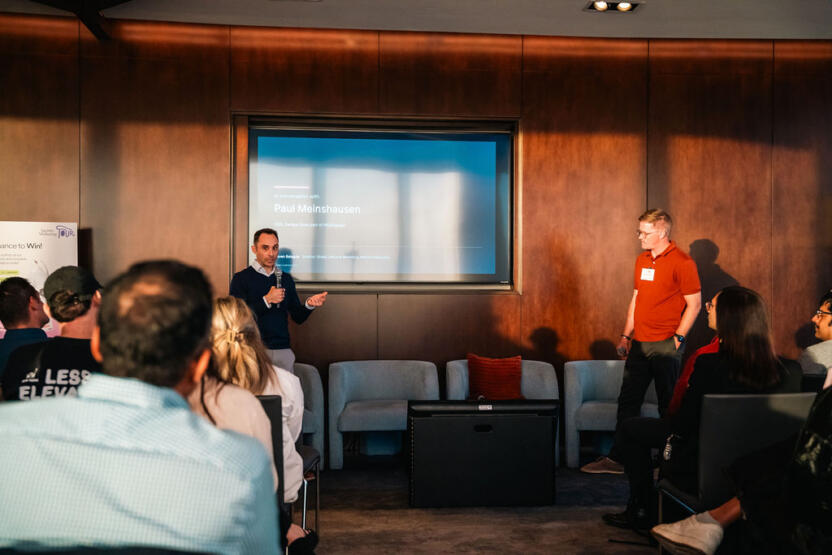
Steven Balagula, Director of Global Lifecycle Marketing at Peloton, closed the tour by sharing a real-world use case of agentic AI decisioning and what it’s made possible, in conversation with Paul Meinshausen, co-founder and CEO of Aampe, now part of MoEngage.
Peloton’s product is personal, every member sees their own stats and recommendations, but its lifecycle marketing was largely rules-based, built for segments rather than individuals.
Steven’s move was to close that gap directly. He brought in a decisioning engine to take control over content, send time, and day of the week for one of Peloton’s largest, highest-stakes audiences. That group was split 50/50 against the team’s existing best campaigns, with lift against a single KPI as the measure.
What made the bet fundable wasn’t the technology, Steven said, it was years of groundwork laid before any vendor conversation happened. Years of maintaining an always-on personalization learning agenda enabled Peloton to build confidence, one single variable at a time. The team went in with real numbers to point to instead of a guess. He tied that to a simple chain leadership already understood: personalization drives member experience, member experience drives members for life, and members for life is lifetime value. That turned the pitch into a company-strategy conversation instead of a channel request, and has now evolved into a new, fully dedicated role built around scaling agentic lifecycle marketing, one Steven now holds himself.
Getting there meant rebuilding the content pipeline first. Every asset now gets tagged by value proposition, tone of voice, and offering, so the agent has something specific to learn from instead of one-size-fits-all copy.
Steven described how that plays out for a single member: the agent tries a piece of content, watches whether the member engages, then looks for something with similar traits to try next. That loop only works with real volume behind it; a thin content library makes the agent hit a wall fast.
With agentic AI coming into the picture, Steven’s role is shifting too: designing and executing a playbook for migrating lifecycle programs to agentic decisioning. This, in part, involves setting up agent rewards and guardrails, defining an AI-first content strategy, and ensuring brand control stays human throughout.
Asked what he’d tell someone earlier in this journey, Steven’s advice echoed almost exactly what other practitioners had said earlier that evening: get your proof points first, tie the business case to a KPI leadership already owns, and make sure your data and content are genuinely ready before any of this starts.
Key Takeaways
The following handful of takeaways have carried through the evening, and in some ways, the whole tour:
- The unglamorous work always comes first. Process maps, data layers, content taxonomies, none of it is agentic AI itself, but none of the rest works without it.
- “Enough” isn’t a universal bar, it’s a decision each team gets to define. A clean compliance review, a clear use case, a data coverage threshold, different businesses, different definitions, but a similar discipline of knowing exactly where theirs sits.
- Scaling this always needs a named owner, not a side project. Every team that got real traction, in this room and across the tour, had someone whose job was explicitly to manage the shift.
- The marketer’s job is getting rewritten. Across every city on this tour, the shift pushed people to spend less time building campaigns and more time setting guardrails, reviewing decisions, and owning the parts of the job that still have to be human.
That’s a Wrap!
Five cities, dozens of speakers, and no shortage of real challenges along the way. But one thing became clear across every stop: agentic AI is no longer optional. It’s here, and the brands moving fastest aren’t the ones waiting for certainty, they’re the ones building the foundation now, so they’re ready when their customers expect nothing less than a truly personal experience.
Other Recap Blogs From the Agentic Marketing Tour: |