Adapt or Die: How the Resilient Marketer Survives 2026
Read Report
close-icon

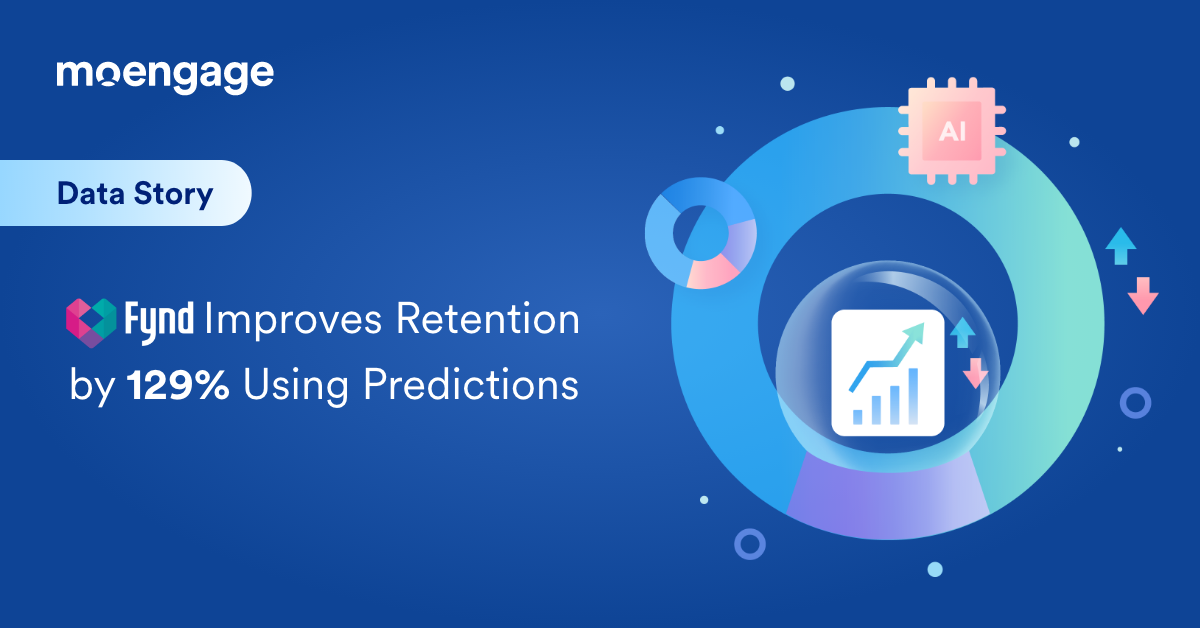
Data Story: Fynd Finds 129% Increase in Retention Using Predictive Segmentation

  • UPDATED: 19 July 2023
  • 4 minread
Data Story: Fynd Finds 129% Increase in Retention Using Predictive Segmentation
Reading Time: 4 minutes

Nestled in the bustling city of Mumbai, India, lies the country’s largest omnichannel platform for retail businesses. Fynd enables retailers to run, view, and manage everything from a single dashboard through a centralized inventory, campaign, and order management solution. Today, this company is growing 20% month-on-month and has recorded a 129% increase in retention, from signups to app open in an 8-week period. Let’s find out how they achieved this with predictive segmentation.

👉Predictive marketing can increase your ROI by 500%! Learn how

First: What does Fynd do?

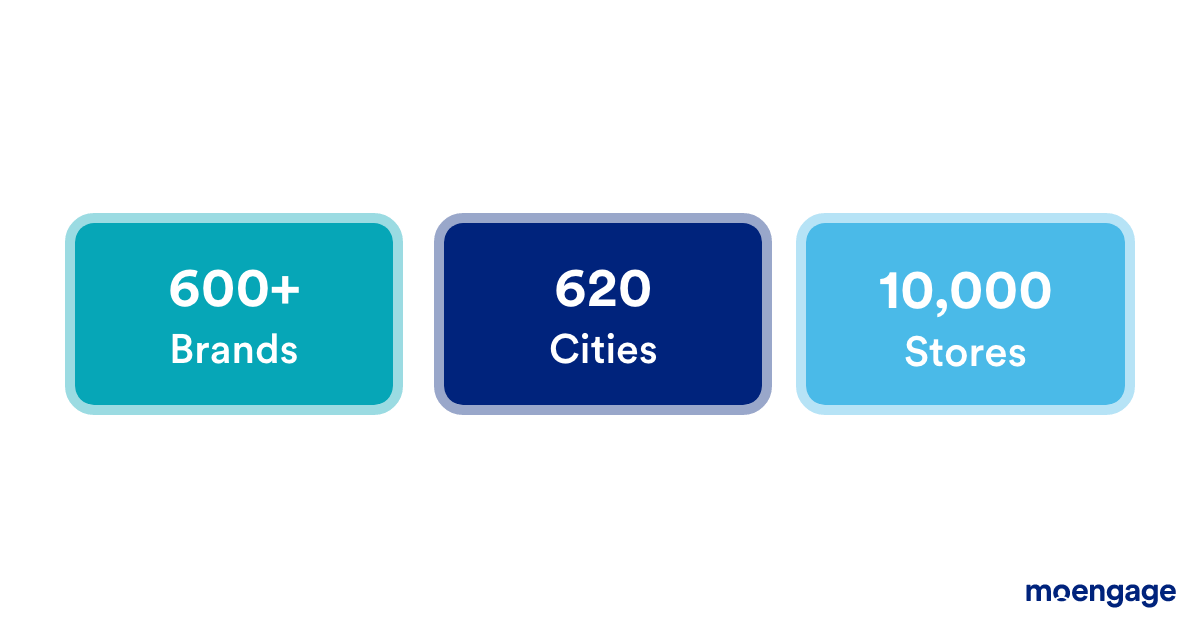
The Fynd suite has two solutions: a store management portal for retailers, and a marketplace for consumers. The marketplace runs on both an app and a website. While the website sees 3X more traffic, the app generates over 80% of the revenue. Here’s a glance at the scale they operate at:

Fynd operates across 620 cities

The audience consists of consumers within the 18-35 age group—deal hunters who shop only because of discounts. A subsection of this group, composed of 18-25 year-olds seek even higher discounts than the rest.

The growth team at Fynd is responsible for marketplace metrics such as DAU, MAU, retention percentage, churn rate, average order value, new customer count, etc. They run sale-, moment-, event-, or journey-based campaigns, capitalizing on rush timings to provide additional discounts. Here’s a glance at the top three rush timings with a surge in orders:

  1. The weekend, from Friday through Sunday
  2. Wednesdays
  3. 7-10 PM on other weekdays
Related Read: How Empiricus Boosts Conversions By 45% Using User Path Analysis

Sounds great, where’s the problem?

The growth team at Fynd realized that only 2% of their customers were coming back to the app after signing up, within an 8-week period. This number directly impacted their north star revenue metrics, so it was crucial to pull this up. To understand why this number was so low, the team looked at email metrics and got the insight that customers were receiving irrelevant emails. Open rates were as low as 3% from a customer base of 15,000. If this continued, it could risk irking the customers, leading to churn.

Fynd needed to identify customers who would respond positively to marketing communication and remove any customers that would react negatively. They had to optimize their marketing efforts and make every communication relevant to each customer without creating a dent in campaign cost.

If only there were a way to pre-emptively segment the audience into groups that would respond well and those that wouldn’t…

Enter MoEngage Predictions

MoEngage Predictions allows you to predict customer behavior (like conversion, churn, dormancy, etc.) with up to 96% accuracy and 99% precision.

Models Accuracy Precision
Conversion 95.9% 99%
Churn 80.1% 98.3%
Dormancy 89.2% 91.6%

Note: Accuracy is the ratio of correctly predicted observations to the total predicted positive observations. Precision is the ratio of correctly predicted positive observations to the total of predicted positive observations.

The team at Fynd leveraged MoEngage Predictions to identify that segment of the audience that would respond positively to their email messaging, and remove any customers who would react negatively. The Predictions algorithm created segments based on the following factors:

Conversion The likelihood of a user to make a purchase
Churn The likelihood of a user to uninstall the app in the near future
Dormancy The likelihood of a user to turn dormant
Add product The likelihood of a user to add a product to their cart
Campaign effectiveness The likelihood of a user to open emails

Sending each customer the perfect email

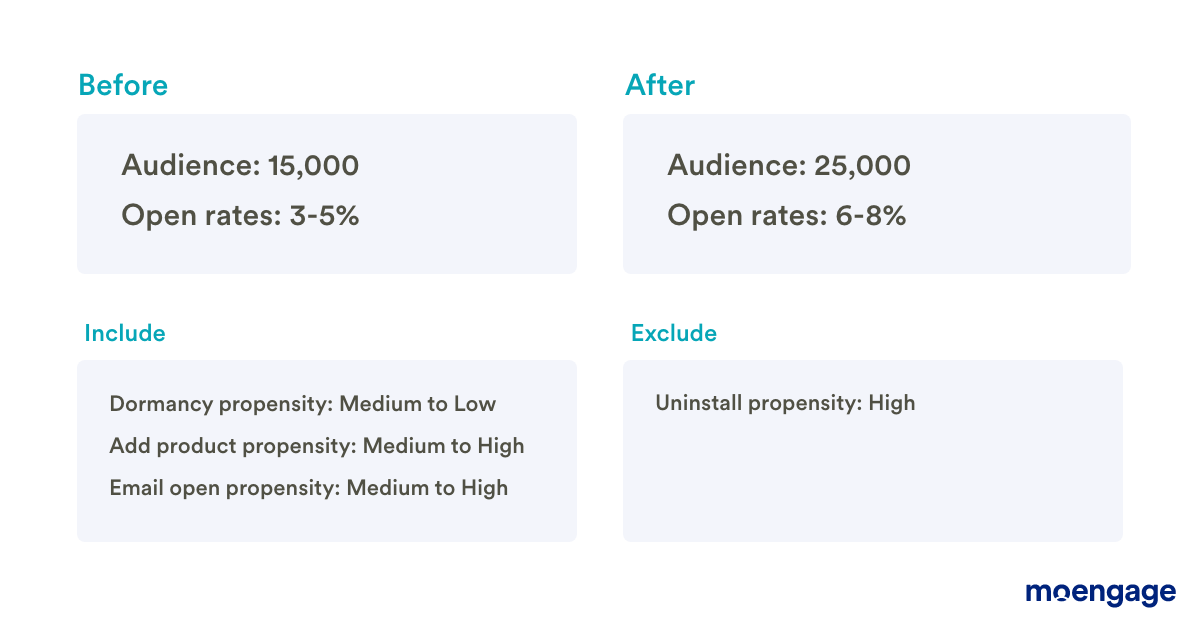
The segments created by MoEngage Predictions enabled Fynd to find their optimal target audience—one that was most likely to purchase products and open emails, and least likely to go dormant or churn. With this in mind, they combined the following sub-segments for their next campaign:

  1. Propensity to Add Products: Medium to High
  2. Likelihood to Open Emails: Medium to High
  3. Propensity to go Dormant: Medium to Low

The following group was excluded:

  1. Propensity to Uninstall: High

The resulting group was most likely to add products or make a purchase, most likely to open emails, and least likely to go dormant. Anyone who had a high propensity to uninstall was excluded. As a result, the email base increased from 15,000 to 25,000 customers—but this time, the target audience was more relevant, and therefore more likely to respond positively. The open rates for this campaign doubled to 6-8% even as audience size increased by 66%.

Immediate improvement in open rates leading to better retention

It’s all about insights

For as long as we can remember, marketers have been following a ‘plan > run > analyze > course-correct’ process, but the market today is flooded with competitors and customers have plenty to choose from. The only way to stand out is by creating delightful experiences at every opportunity. This means that marketers need to flip the process and be insights-led instead.

Insights-led engagement enables you to gather insights about your customers and leverage this information to deliver the most relevant marketing campaigns to each of them. Insights-led engagement is the key to retention and growth. That proved to be true for Fynd—by identifying their ideal customer using predictive segmentation, Fynd was able to optimize every email sent, and ensure that each one delivered the best possible ROI. Retention from signups to app open within an 8-week period increased 129%, from 2.29% to 5.24%.


GET A DEMO OF PREDICTIONS

The 5 Keys to Successful Segmentation

  • UPDATED: 07 February 2024
  • 4 minread
The 5 Keys to Successful Segmentation
Reading Time: 4 minutes

No company’s products are for everyone, and most companies lack the resources to target large masses in their marketing efforts. That’s why knowing your product’s market segment is crucial for effective promotion. Without it, you’ll be relying on hope rather than customer segmentation, resulting in ineffective marketing.

Segmentation is the practice of grouping customers with similar needs and preferences. It enables companies to allocate their marketing resources effectively by providing products and services that meet specific customer needs.

In this article, we explore the key characteristics of segmentation and discuss 5 keys to successful segmentation to help you understand how it works.

Let’s get to it.

Criteria for successful segmentation


segmentation characteristics

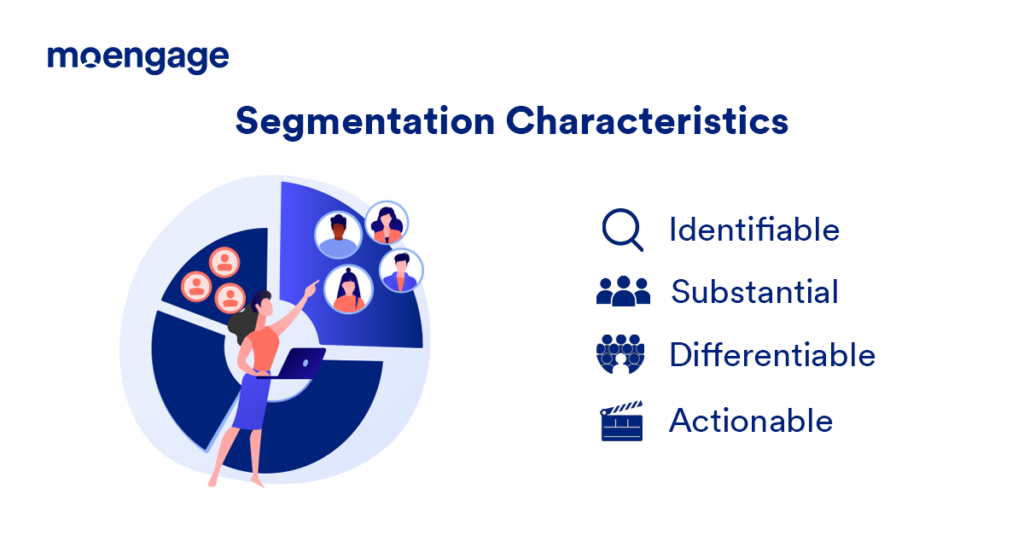
As you start to research and segment your target audience, it’s important to know that not all information you find will be equally valuable. Here are the main characteristics to consider:

1. Identifiable

Your segments can be identified through clear and defined metrics, which are demographic or behavioral. The demographic is when you segment your customers by age and gender. Behavioristic segmentation is when you segment your customers into groups based on how and when they use the product.


2. Substantial

Your segments should be large enough to make the efforts and investment worthwhile. For example, if the number of customers you are going to reach through video content on YouTube is small, there may be no point in investing considerable resources to market yourself on that platform.


3. Differentiable

Different segments should have varying needs and behaviors so you can communicate with each segment through tailored messages. Using A/B testing of paid ads, different content types, varying headlines to emails, and differently styled YouTube thumbnails for your videos will give you valuable insights into what needs and preferences your customers have.


4. Actionable

The segments you’ve identified can be reached, and you can communicate with them through digital and offline channels.


Requirements for successful segmentation

five keys to successful segmentation

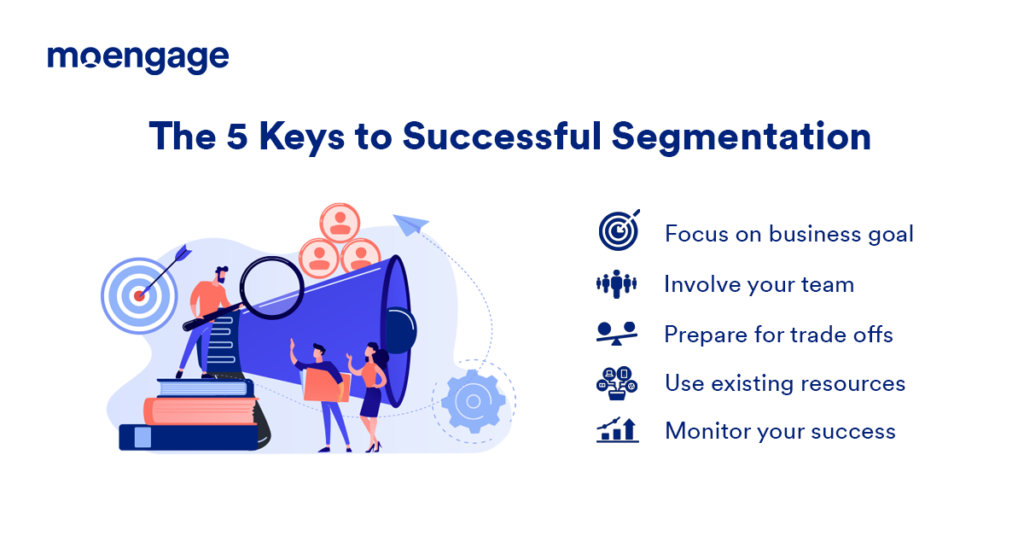
Now, that you have an idea of what data to pay attention to, let’s take a look at the 5 requirements for effective segmentation.

1. Focus on your business goal

As customer segmentation is one of the biggest insights you can get that will drive your business, solid planning is essential. Before starting the segmentation process, you should first understand your business goals. Ask yourself why you want to segment your audience and what the goals you are trying to achieve are. Answering those questions is critical, as the answers to them will drive your further actions. From the very beginning, you need to:

  • Set expectations
  • Identify the audience you plan to segment
  • Define your business goal

Businesses don’t create segments. They uncover them.

Understanding who and why you are targeting from the beginning will alter the course of your actions in more ways than you can imagine.

2. Remember that segmentation is not only about marketing

While segmentation plays a critical role in sales and marketing, it’s crucial to remember that it doesn’t belong only to the marketing department. Everyone in your team, from designers to programmers, should be on board with the segment your business is targeting, as it will have a direct effect on their work.

For example, if a designer is not aware of the customers they are creating the design for, the end result may be damaging. You can go as far as introducing the segments you are targeting during the employee onboarding process. This will help you involve all teams in the segmentation process, putting your audience in the center.


3. Know that there will be trade-offs

As it will be impossible to cater to everyone’s wishes, it’s critical to know from the very beginning that, at some point, you will face trade-offs. The ability to make smart trade-offs is an important skill that will ensure the success of your segmentation process. It will help you concentrate your efforts on improving client relationships with highly targeted customers instead of spreading yourself too thin by trying to appeal to everyone.

Making a smart trade-off won’t be easy and will require thinking and planning. Take time to focus and understand the prospects that you want to keep and that you are ready to let go of.


4. Make use of existing resources

This step is not only about financial resources.

While having the budget to run paid ads on different platforms does help significantly during the segmentation process, it’s not the only resource you may have. Many businesses sit on large amounts of user data they have but don’t put it into action.

For example, if you have a website that has tracking cookies enabled, this may give you insights into where your primary audience is located. And this is only one example! Make sure to brainstorm with your team to understand some of the resources you didn’t initially consider that could be implemented during your segmentation efforts.


5. Monitor your success

The only way you know whether you’ve reached your goal is by evaluating. From the very beginning, consider the mechanisms that you are going to implement to monitor what works best with your audience, where the greatest ROI is, what type of content different segments prefer, and which channels perform better.

You can then use this information to adjust your segmentation strategies and messages. This will also give you information on how well you cater to the needs of specific segments and how your business can fill those gaps.


Successful Segmentation Best Practices: Key Takeaways

The points discussed above are key factors you should consider when starting a segmentation process. Once your business starts to segment its customers, your marketing planning will become easier, as you will know to whom you are directing your messages.

This newly-found company focus and customer-centered approach will help marketers of your company become more efficient in terms of time and money usage while improving your market competitiveness and reaching new clients.

Here’s What You Can Read Next

RFM Segments Based on RFM Analysis: An In-Depth Guide [Updated]

  • UPDATED: 18 July 2024
  • 11 minread
RFM Segments Based on RFM Analysis: An In-Depth Guide [Updated]
Reading Time: 11 minutes

This blog on RFM analysis is a definitive step-by-step guide to understanding the Segmentation and Analysis involved in RFM Modelling and its practical applications, helping you better serve customers and maximize customer lifetime value.

What Does RFM Mean?

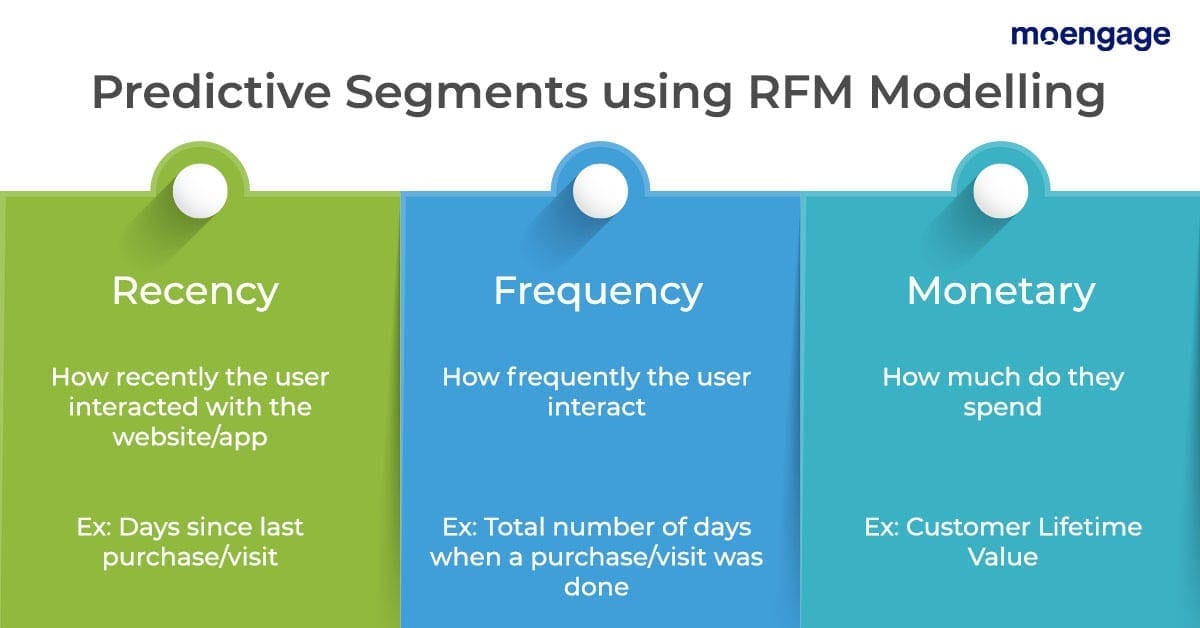
Image of text describing predictive segments using RFM analysis

The RFM model of customer value uses proven marketing principles to help businesses differentiate between marketing to existing and new customers and helps them create relevant and personalized messaging by understanding user behavior.

The RFM analysis model allows the business to segment its customers based on three criteria based on an existing customer’s transaction history, namely:

Recency (When Was The Last Time Your Customer Purchased a Product/Service?)

In RFM analysis, R stands for Recency.

A high recency score means a customer has positively considered your brand for a purchase decision recently. Recency can be scored by grading on custom-built filters such as bought on the last 7 days/1 month/3 months and so on, depending on the nature of the business.

Frequency (How Often Did The Customer Purchase in a Year/Fixed Time Period?)

F stands for Frequency in RFM analysis.

A high-frequency score means a customer buys your brand frequently and is likely to be a loyalist of your brand. To calculate frequency, businesses need to analyze the total number of purchases completed by customers in a fixed time period. Frequency can be scored by grading on custom-built filters such as bought thrice in a year/bought once a month and so on, depending on the nature of the business.

Monetary Value (How Much Money Has the Customer Spent on Your Brand So Far?)

Lastly, the M in RFM analysis stands for Monetary Value.

A high monetary value score means a customer is the highest purchase history of your brand. Monetary value score can be graded on custom-built filters like spent more than Rs.10,000/30,000/50,0000 and so on, depending on the nature of the business.

All the above criteria can be graded on a scale of 1 to 5, with 5 being the best score you could assign a customer. It is also critical to specify an appropriate range for each grade, in order to create a customer group with a similar or a particular behavior.

Why is RFM Analysis Better than Traditional Segmentation Methods?

The RFM analysis model is built on transactions between the customer and the business, to create a robust data-backed method based on hard numbers. This customer data is graded, further analyzed, and then segmented in order to engage customers as distinct groups. This model helps businesses effectively analyze the past buying behavior of each customer, to predict and shape future customer behavior.

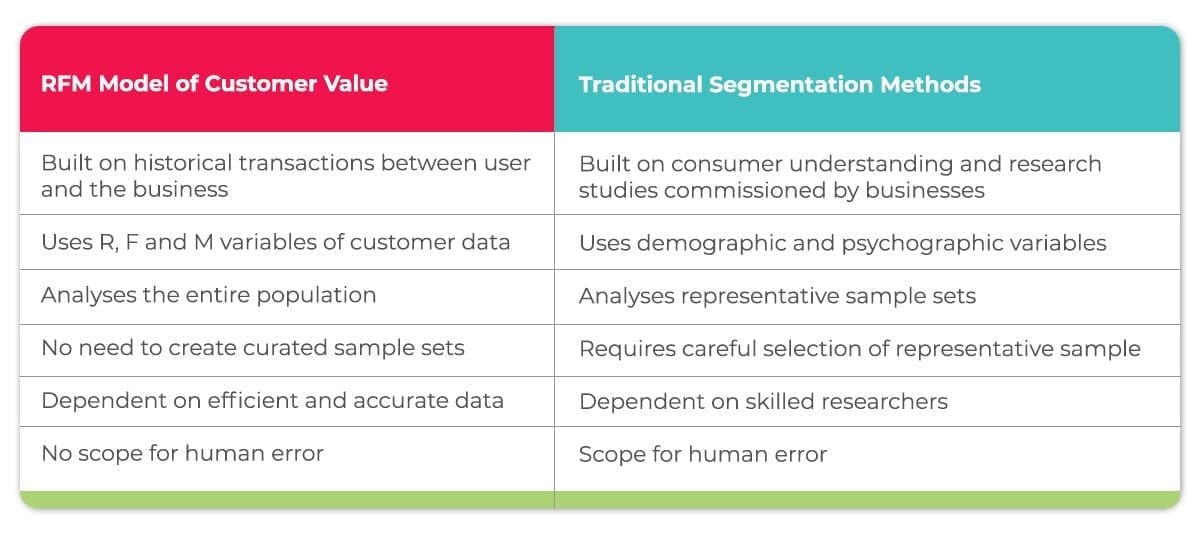
Image containing two columns and text explaining the RFM model of customer value vs traditional segmentation methods
RFM Model of customer value vs traditional segmentation methods


Traditional methods of customer segmentation, used by market research companies before the advent of data analytics, used variables like demographic and psychographic factors to group their customers. Researchers always utilize sample audiences to predict population behavior, which reduces market researchers’ ability in predicting future customer behavior of niche customer groups.

These studies are carried out manually, are dependent on skilled researchers, and are prone to human error. A sample could be incorrect, due to many reasons like an insufficient number of consumers, incorrect gender balance, varying psychographic factors, etc.

These problems cannot occur in RFM analysis, as it is a fundamentally data-centric model which analyses the entire population set, instead of a curated sample set. In addition to that, the variables of the RFM model are 100% accurate and precise, whereas traditional research involved factors like psychographics, which could be interpreted subjectively.

The RFM model helps a business define interactions with each specific customer, creating opportunities to increase the relevance of messaging, and eventually creating the potential for increased customer lifetime value.

RFM analysis has the potential to create seamless interactions with high customer satisfaction, helping customers feel that the brand understands them and can effectively cater to their needs at all times.

How RFM Helps Improve Business Understanding

RFM modeling increases a business’ ability to prevent churn by using fundamental marketing principles of segmentation, targeting, and positioning, which help understand the following:

Customer segmentation allows you to divide potential customer groups allowing businesses to talk to them separately. It helps answer the questions:

  • Are all my customers similar?
  • What differentiates them from each other?
  • Who is my most likely customer?

Targeting involves understanding the routines and customer behavior of these segments, allowing you to consider and choose the ideal way to speak to them. It helps answer the questions:

  • Where do my customers interact with the brand?
  • What’s the best time, place, medium, and format to talk to them about my brand?

Positioning helps you understand how to talk about your product/service, in order to maximize customer lifetime value. It helps answer the question:

  • What type of brand message will increase and ensure brand trust?
  • What type of brand message is likely to induce a purchase interaction?

Principles of segmentation, targeting, and positioning have been used for ages in the field of marketing. However with the advent of data analytics, and the creation of number-driven models like RFM, the scope of these principles has widened tremendously. Today, businesses can go beyond the above questions with the help of RFM analysis and get answers to highly specific questions such as:

  • Who are my best customers?
  • Which customer has the potential to buy more?
  • Which customer has been churned out/has lapsed?
  • Which customer can the business afford to ignore to effectively utilize budgets?
  • Which customer can be converted by creating value through promotions?
  • Which customer is likely to be loyal in the near future?

The RFM model allows businesses to gain key customer actionable insights, through convenient valuable insights, and frame business strategy with those insights at the heart of every decision. The model allows the business to gain perspective on what their brand means to the existing customers, helps businesses manage customer perceptions, and also translates positive sentiment into purchase opportunities.

Businesses can recognize critical customer segments like churn-risk users, and create a bespoke marketing plan, specifically designed for customer retention.

Simultaneously, a business can also use the model to maximize monetary value, the potential of active customers, by creating customized offerings, making them feel like high-value customers.

Why Does RFM Analysis Work?

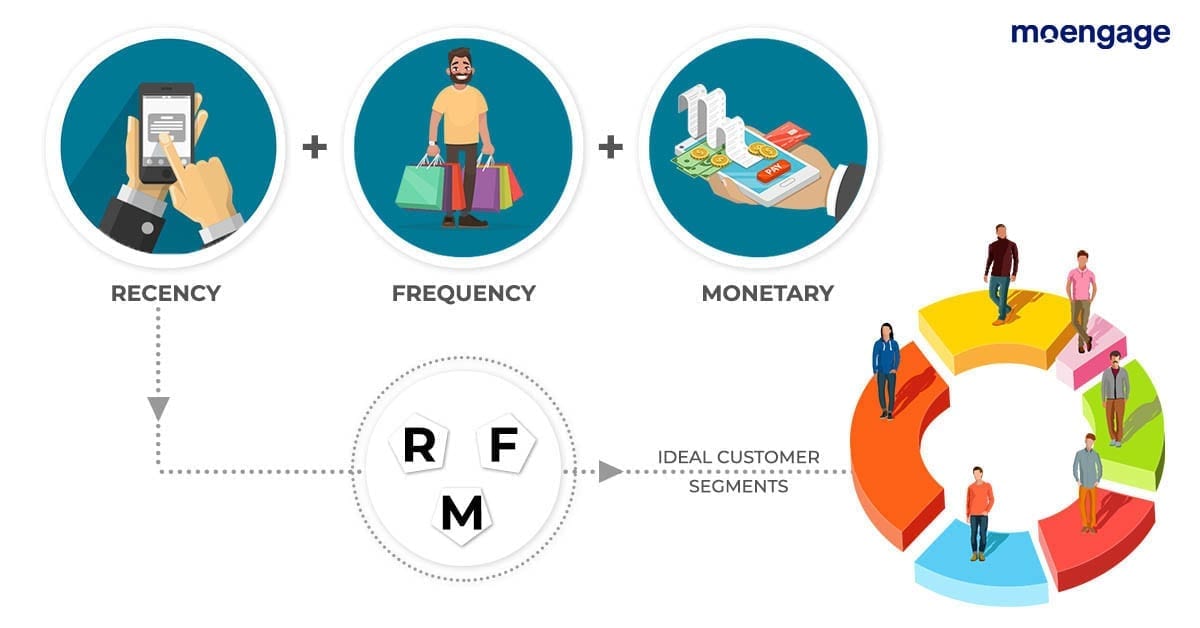
Image showing how recency frequency and monetary become valuable segments for customer marketers
Why does RFM work for customer segmentation?

The RFM model is fundamentally built using principles of data-driven marketing. Data-driven marketing has fundamentally transformed how marketing works ever since its inception, as it allows the RFM analysis of large sets of customer data like never before.

This has led to increased accuracy in understanding customers and enhanced ability to creatively customize messaging. The rise of automation in marketing technology has led to increased granularity and personalization, leading to enhanced relevance of each brand message.

Origins of RFM

RFM traces its origin back to 1995 when it was cited by Bult and Wansbeek in an issue of Marketing Science. Used in the context of direct mail, it showcased how the three criteria could be used to better estimate demand, reduce costs on printing and shipping, and lead to enhanced returns. With the rising sophistication of computing power, RFM has become easier to apply in businesses due to the computerized customer histories of today.

Applying Pareto Principle to RFM

The model is linked with the famous Pareto Principle, which says that 80% of total results are driven by the top 20% of causes. When applied to marketing, it means that 80% of your total sales are likely to come from your top 20% of customers. Regular customers will always be high contributors to business monetary value, and hence that customer segmentation is highly critical for business performance.

Role of RFM in Customer Retention

Small businesses constantly face the pressure of acquiring new customers, which defines their growth and trajectory and are prone to spending high amounts of money to acquire them. A business cannot sustain itself without customers, and while acquisition is a critical part of business strategy, customer retention plays a bigger role in ensuring high returns for the business.

Customer retention depends on customer satisfaction with the product, the service provided by the business, and the interactions the customer has with the business, hence making them feel valued.

Low churn rates are the easiest way to maintain and grow business, as it enables a reliance on customer satisfaction, and also the creation of positive word of mouth by customers. Now, with the RFM model, each segment customers can have their own customer journeys based on personalization. This helps create value and establish loyalty and trust.

RFM: Personalization and Focused Use of Marketing Budgets

The digital world is a buyer’s market, with a plethora of options available to a user at their fingertips. Brands are constantly jostling and fighting for a share of the customer’s wallet and attention. In such an atmosphere, understanding customer behavior and segmenting them into distinct groups, help businesses focus their marketing efforts on relevant customers.

With the power of social media at their fingertips to express displeasure and the ease of choosing alternatives, customer expectations regarding the quality of brand interactions are high. Hence creating relevant messaging, tailored to user behavior has become the norm.

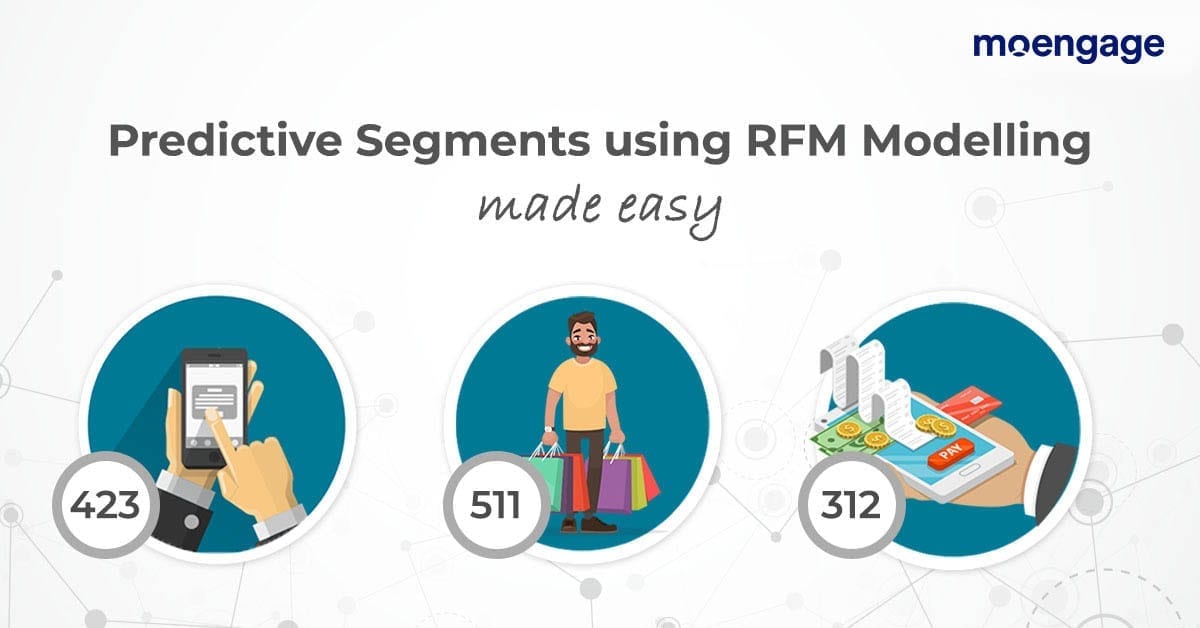
Three circles with a cell phone image, a man holding shopping bags, and a digital representation of spending money
RFM: Personalization and focused Use of Marketing Budgets


Personalization is one of the major benefits of RFM, as it not only allows you to target different customers with varying but equally relevant messaging, but also gives businesses the ability to recognize changing patterns of user behavior through the capture of RFM data, and move the customers to other segments if required.

Through RFM, businesses can recognize and focus on converting critical customer segments like customers on the verge of churning out to becoming active customers, and also encouraging loyal customers to the brand to become ardent followers. By minimizing the waste of resources through effective targeting, RFM helps businesses utilize their marketing budgets wisely and effectively, while also increasing the overall impact of marketing on the business.

A 5-step Approach to RFM Analysis

Now that we’ve understood the benefits and basis of RFM, here are the steps involved in practically conducting RFM analysis on your customers.

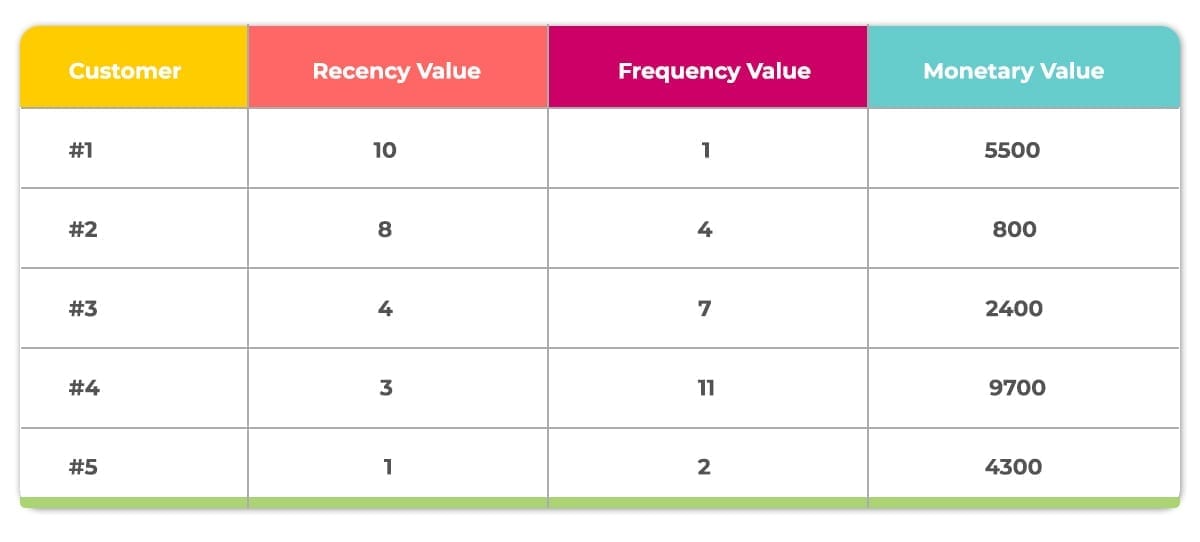
1. Collection and Collation of relevant data/values.

As we’ve mentioned already, the RFM model involves the analysis of customer transaction history. The first step is to pull out the RFM data for each customer in ascending order.

Collection and Collation of relevant data/values in RFM


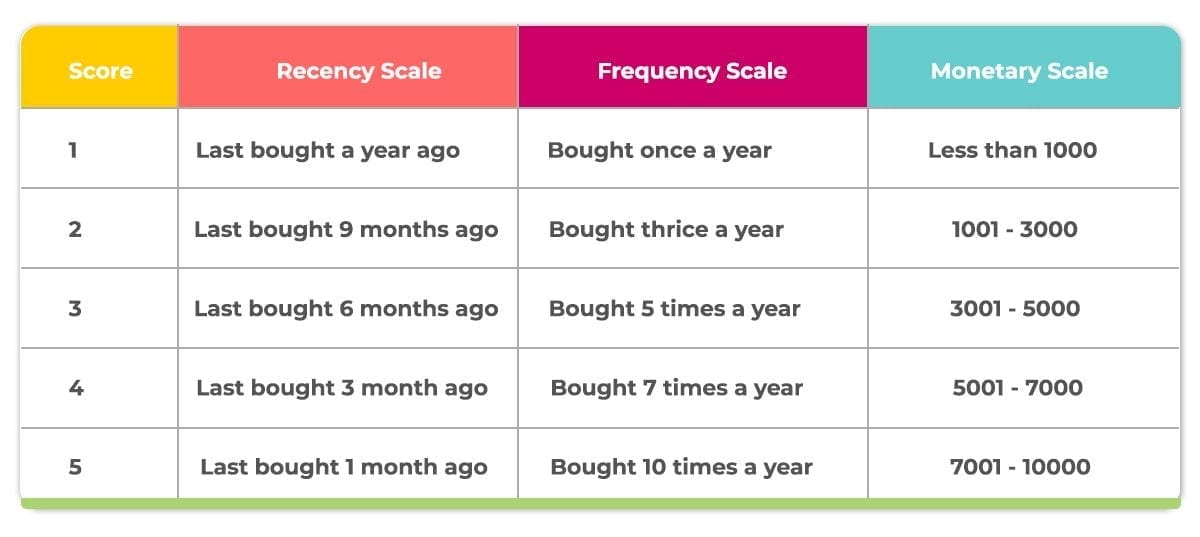
2. Setting the RFM metrics

As mentioned above, businesses need to create custom filters in order to effectively segment the customers. In order to ensure easy understanding, we will create sample RFM metrics below, but this is an important aspect that will vary based on the nature of their business.

Setting the RFM metrics


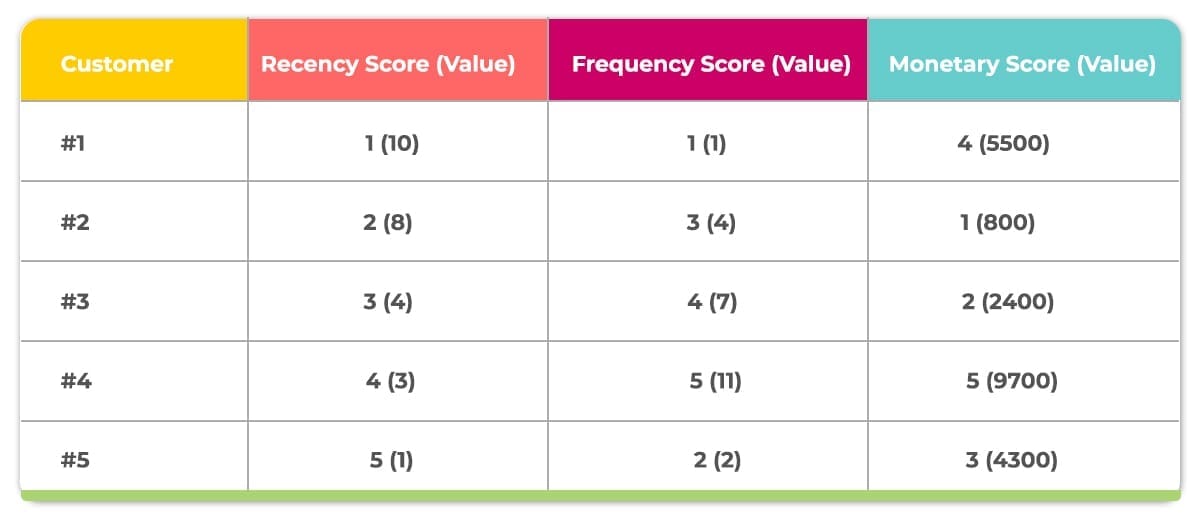
3. Assigning scores with RFM segmentation

You can now assign each customer a grade based on the table above by using RFM segmentation. By doing so, you’re converting absolute values of transactions into chunks of similar transactions, based on RFM. Now you no longer need the absolute values mentioned in brackets, and just use the score for segmentation and analysis. After assigning scores, you can create chunks of similar customers, who have identical or similar scores in the three criteria.

Assigning scores in RFM


4. Labeling segments

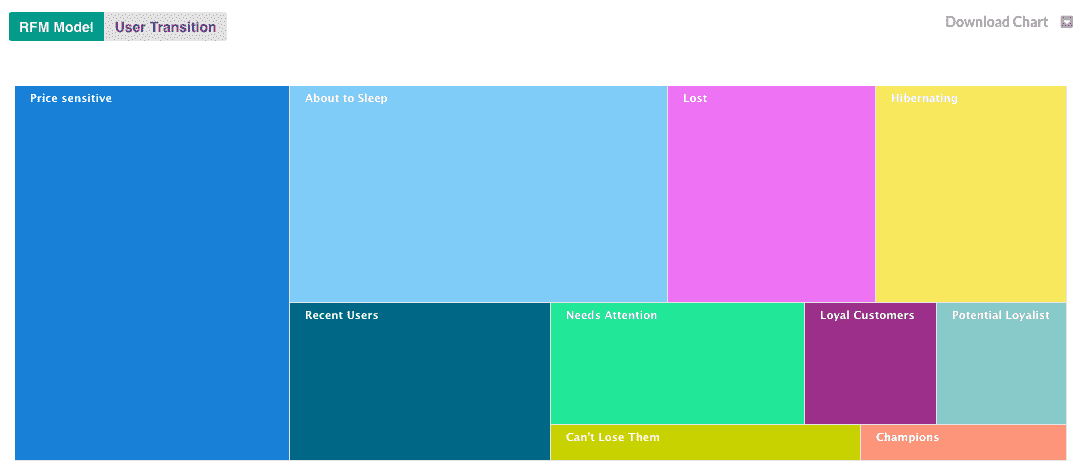
The labels we use will be based on the differing characteristics of the three grades customers have received. As we’ve used 5 (1-5) score segments, and there are 3 criteria, there is a possibility of ((5*5*5) 125 unique segments. Businesses may or may not require 125 distinct segments and can decide the number of scoring segments required and label them, based on the nature of the business. Here are some standard labels which are used:

A colorful grid of squares containing labels of potential customer segments based on where they are at in their purchasing journey
Labeling Segments in RFM


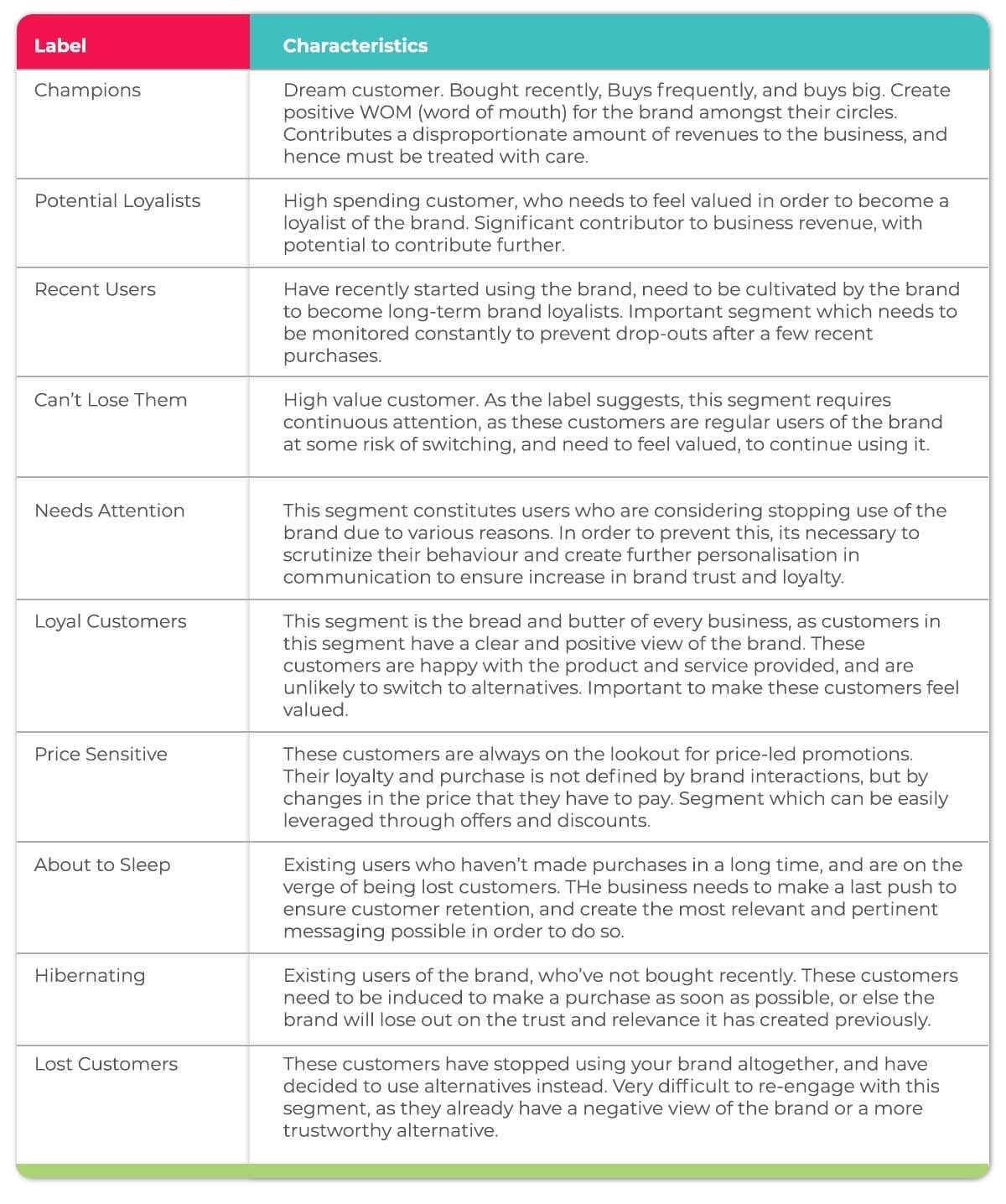
Let’s describe each of these segments in a bit more detail.

A chart containing text-based examples of labels and characteristics
Characteristics of each RFM segment

5. Creating customized strategies/tactics for relevant segments

Once businesses have segmented and labeled each customer, they can ensure personalization in all their messaging. At-risk customers can be targeted with offers, discounts, or freebies, whereas loyal customers can be provided a superior level of service in order to make them feel more valued. Recent customers can be sent information about other products that they would be interested in, whereas the Champion customer could be given greater access to products and used as a mechanism for feedback, before launching it to other customers. All of this can be done simultaneously by the business.

Alternative Models: RF, FM, And RM Models and Relevant Use Cases

Just as businesses can choose to use a varying number of score segments, they can also choose to focus on any 2 of the 3 RFM criteria, based on the nature of their business.

For example, companies with a single product can choose to focus only on the RF criteria, as that will be the easiest way to forecast demand and create messaging. When it comes to the RF criteria, most companies can use this model to gauge demand, by analyzing online search patterns as potential customers look for products online, multiple times.

Companies that sell products that are one-time purchases can choose to focus on RM criteria, as frequency would usually be fixed. Subscription-based businesses can make use of the RM model, to gauge if consumers are satisfied enough with your product, to return and make another purchase.

Companies that produce long-lasting products, can choose to focus on FM criteria, as the importance of recency would be relatively lower. Media platforms can make use of the FM criteria, as it would allow them to observe the consumption of content, and whether the customer has successfully upgraded to paying for premium content, by tracking monetary value.

Things to Remember

  • Understanding the importance of RFM criteria to your business, and recognizing the importance and relevance of each, is essential to getting maximum returns from this model. This will help businesses in choosing the correct criteria, and create the right filters for segmentation.
  • RFM is a model based on historical data and helps forecast future behavior based on past interactions. It is essential to remember that it can be used to target existing customers only, and helps only indirectly in acquiring new customers.

Practical Applications of RFM in Business Strategy

Media selection

Once RFM analysis is completed, there is an increased understanding of what the user needs most from your brand, and based on behavior, when are they likely to interact with you. A differentiated media strategy, combining multiple formats and mediums, for varying durations, can be created to target different segments based on their characteristics.

Messaging

RFM analysis allows you to create customized and personalized marketing messaging, and this can be used to streamline the various messages you send to a specific customer and continue sending messages of only a particular type, thereby reducing the chance of dissatisfaction or annoyance, and create higher customer satisfaction.

New launches

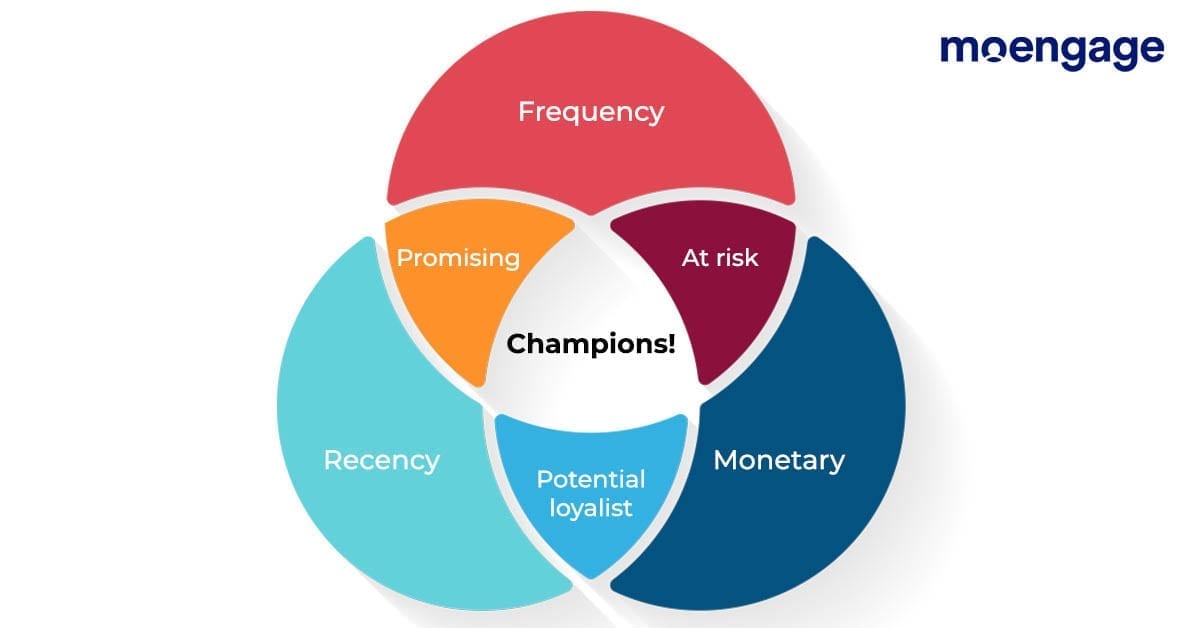
RFM allows you to recognize your most valuable and least valuable customers, and during the launch of a new product, the Champion customer can be engaged in a way that creates high WOM, which positively impacts product perception amongst other customers, leading to greater awareness and eventual purchase.

A Venn-diagram comparing recency frequency and monetary buyer segments
RFM Champion customer


Conclusion

In conclusion, constant improvements in data analytics have ensured that the practical applications of models like RFM are seemingly endless. The RFM model ensures effective marketing practices in a world where creating a customer-centric experience is of utmost importance.

The RFM model, when used in conjunction with traditional models of segmentation, can help businesses visualize new and existing customers differently, and create favorable conditions to maximize customer lifetime value. Finding the right balance between focusing on new and existing customers, along with recognizing behavioral nuances within them, will help businesses create personalized customization, leading to brand trust and loyalty.

Here’s what you can read next

How to Choose Between Behavioral & Demographic Segmentation

  • UPDATED: 28 October 2025
  • 5 minread
How to Choose Between Behavioral & Demographic Segmentation
Reading Time: 5 minutes
Customer Retention Calculator – Learn how to measure retention the way it makes sense for your app.

Watch Video – Lessons on Growth Marketing – Growth Marketing Lesson: Application of User Segmentation and Automation

How well do you understand your users?

The market is flooded with channels that help you maximize reach and conversions, but are you tapping the right people? Keeping up with your user base is an important prerequisite in customer retention and it all boils down to behavioral and demographic segmentation.

In a MoEngage webinar, Krishnan VR, performance marketing at Zoomcar, and Yash Reddy, VP of sales at MoEngage shared critical insights about how to choose the right customer segmentation model for a business.

Watch the video here

We have summarized the various points and advice shared during the webinar below.

Demographic v/s Behavioural Segmentation

Behavioral segmentation played a crucial role while launching one of Zoomcars’ most recent business models – Zap Cars, a subscription-based car rental service.

Behavioral segmentation involves deriving variables based on customer behavior with the brand.  Every time a customer makes a transaction with a brand, he/she leaves behind a digital trail that can be studied to arrive at a particular variable for the customer. For example, there could be different variables based on behavior-discount seeking customers, long-drive loving customers, seasonal customers, etc.

While demographic segmentation is a more direct and generic form of segmentation with basic variables like gender, age, education, behavioral segmentation, on the other hand, is much more complex and requires collecting transactional data points and creating variables based on this data. Companies that have massive data accessible to them are more capable of using behavioral segmentation than start-ups.

The role of behavioral segmentation is elaborated with the following industry case studies.

Case 1 – Cross-Sell or Upsell Look-Alike Business Models Using Non-Paid Channels

Behavioral variables help shape a business model at no cost, for eg: Zoom started Zap Cars. A subscription model, where users, by paying a monthly subscription, can have a car of their choice without the hassle of securing a loan or paying EMI.

Behavioral Variables Used By Zoom Cars to Cross-Sell Zap

  • Frequency
  • % of Weekday/Weekend Bookings
  • Age
  • Discounting Behaviour

These variables helped create a smaller segment or rather a subset of the overall Zoom customer base, which was around 2-3% of the customer base.  Zap ran campaigns for them across multiple cities for 30 days.

They achieved a 50% conversion upliftment at no cost!

Case 2 – Improve Customer Retention For Offline Brands By Reducing Discount Outflows

We see the impact of behavioral segmentation on an offline apparel brand. The apparel brand in question here was dependent on seasonal sales and discounts for customer retention. Blanket offers like 3 on 3 sales are not viable for all types of customers.

Behavioral segmentation was used here to give the right customers, the right offers. For this the brand segmented its customer base based on purchasing behavior:

The behavior variables they derived:

  • Discount Behaviour
  • Average Transaction Size
  • Time of Purchase- Season/Non-Season

For eg: A low discount customer with a low transaction size was pitched a 30% Discount on a single product. The campaign was run during the sale period with a selective exposure of these offers and the brands saw a customer retention upliftment by 2X with a 5% lesser discount burn.

Behavioral segmentation boosts conversions and enhances brand presence at low costs

Mistakes Brands Should Avoid in Behavioral Segmentation

1. Creating too many small segments: Micro segments might increase relevance but can be operationally very tedious. It is suggested to limiting the number of segments that are being targeted with an offer or creating a segment within a segment. Most derived variables can be rolled up into a single variable.

2. Using old strategies for a new customer base: Along with the brand’s customer base and behavior, the segmentation model must accommodate these changes. A change in discounting would change the bucket into which customers fall. For eg; A person who used to discounts more than 50% would not be interested in a lower discount pricing.

3. Launching the campaign without a pilot: The advice to brands is to start small. It also gives the brand to project the campaign’s impact better when it’s run on a smaller customer base.

4. Incorrect impact measurement: The pilot must be run for a specific time period which will give the brands enough to measure. A control group (who consist of people who aren’t targeted with any campaigns) will help measure the impact more efficiently.

When it comes to choosing between Demographic and Behavioural Segmentation, it purely depends on the brand objectives.

A new brand would perhaps prefer to begin with basic segmentation based on age or geographical location for which demographic works well. But in the case of growing brands who want to understand customers in detail, behavioral variables come handy.

Understanding Custom Segmentation and Its Importance in Marketing Strategy

After scaling segments, brands will find it difficult and impractical to identify and segment characteristics right from scratch and that’s where custom segments come in handy.

Custom segments are predefined segments or a set of templates that define the characteristics of a particular cohort of users. These allow for future market analysis and interventions.

Custom Segments Help Compare Customer Cohorts, Understand Purchasing Patterns Over Time and Behavior of App Installers

Comparative Analysis of Different Customer Categories

  1. Geographical Location: How do customers from two different cities respond to the same set of communication.
  2. Purchasing Behaviour Post Communication: Brands can better understand the customer action that is triggered by communication.
  3. Devices Used By The Customer:  The delivery rates of push notifications depend heavily on device composition. Brands can get a deeper understanding of demographics based on Tier 1, 2, 3  segmentation and can modify communication accordingly.

Correlation (negative or positive) between user categories: For eg: Understanding behavioral trends of segments like the performance of organic users v/s paid users in the overall conversion funnel. Custom segments are also helpful in understanding the impact of offline campaigns. Brands can drag and drop these potential users as a custom segment to marketing automation platforms like MoEngage and track their user behavior-like app installation, transaction journey, etc.

Analyze User Behaviour Over A Period of Time:
Analysing week-on-week purchase patterns of customers acquired through paid v/s non-paid channels. Or analyzing the impact on purchasing patterns after notifications or offers.

Understand Purchase Patterns in App Installers: Brands can define custom segments based on monthly retention rates of people. These segments help brands understand the reasons for the dip in conversion or retention rates and why certain categories perform better compared to others. A top-down approach helps in defining custom segments. Brands can begin with a high level of cohort and then branch out to smaller segments.

Custom segments are highly intervention-friendly! Seamless integration of data points churned out by data scientists onto a marketing automation platform like MoEngage allows for market intervention.

For eg: Custom segments who are at the risk of attrition in the next 30 days can be targeted with proactive campaigns using a marketing automation platform. You can then analyze the impact of your interventions and take the necessary decisions.

To know how MoEngage can increase retention using Cohort Analysis Click Here

What Should You Do Next?

Here’s What You Should Read Next

How to Use Event-based Targeting to Win More Customers

  • UPDATED: 26 October 2023
  • 5 minread
How to Use Event-based Targeting to Win More Customers
Reading Time: 5 minutes

We hear a lot from marketers on using event-based targeting to win customers. But what if we can make it even better?

An interesting thing happened.

I was browsing through some e-commerce websites along with my brother to buy utility items for our new space. I was multitasking, not because I had a long list of things to purchase but because I had to keep an eye on my hyper-impulsive-buyer brother.

We got few things in each of our carts, and just then, the plumber rang the doorbell. We rushed to get our plumbing fixed. Our online cart isn’t running away anyway, right? By the time we were done with the plumbing woes, I had one notification on my phone reminding me to complete the purchase. But being the lazy duck that I am, I choose to go for a hot cup of coffee over online shopping.

However, my brother is a different ball game altogether. The moment he received the notification, he jumped onto his system to finish the purchase. Frankly, who buys a new fishing rod when you already have 3 in the closet? I was super impressed with his discipline.

Over the coffee, while I was cursing him for wasting another 50 bucks, I was also thinking how a simple notification can drive someone to make the final purchase. But then, why I haven’t made my purchase yet? While the store was successful in targeting us at the right time converting my brother’s purchase, it wasn’t able to convert me into a buyer.  

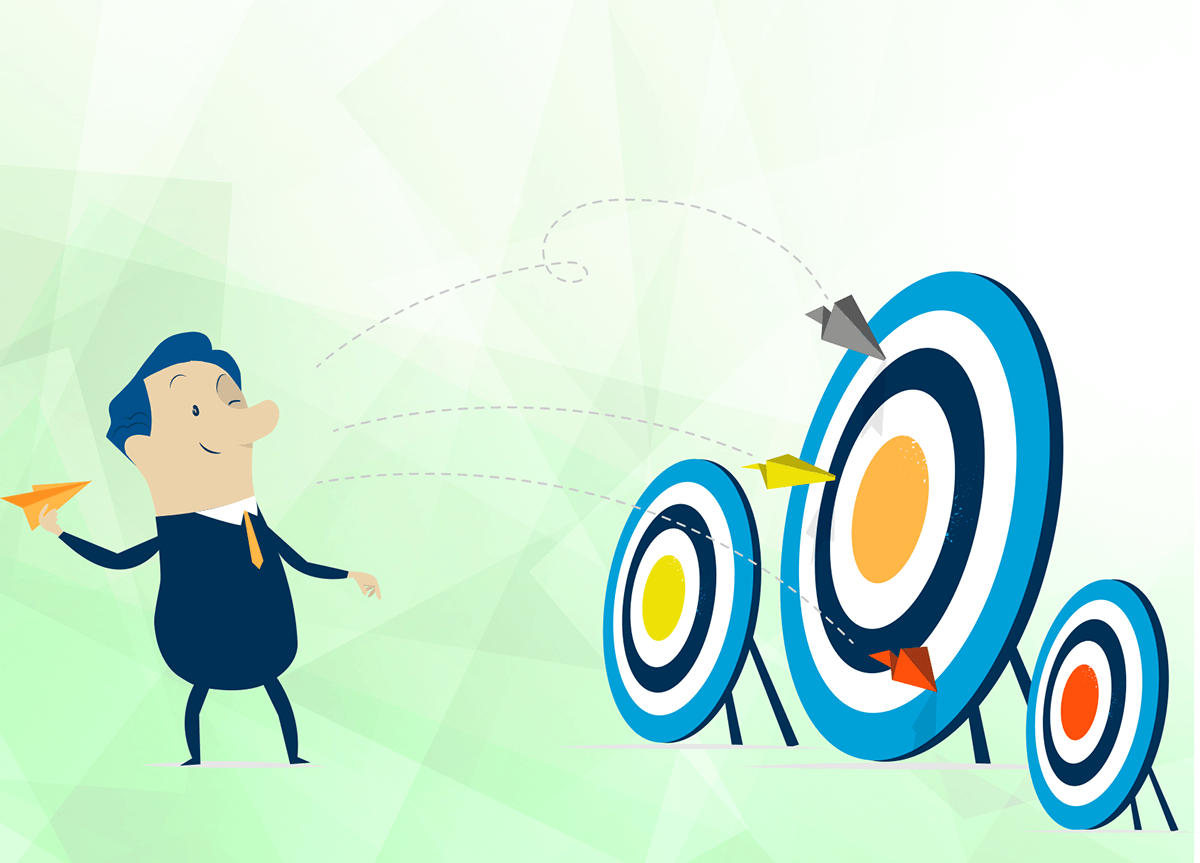
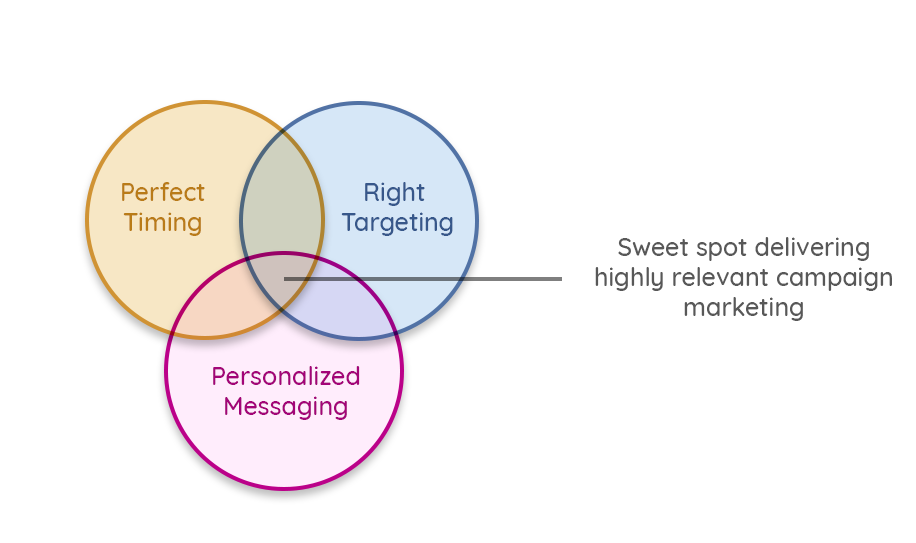
Finding the sweet spot for targeted marketing

Add to Cart” is tough, but “Proceed to Payment” is the toughest.

Therefore, getting users interested and engaged on the platform is not enough. You need to lead them till the very end of the purchase funnel (and even further) to fulfill the end goal of making profits. Effective marketing campaigns help in achieving this goal.

Bonus Content

  • Personalization Pulse Check Report 2021 [Download E-book]
  • Beginner’s Guide to Omnichannel Marketing for 2021 [Download E-book]
  • 2.5X Increase In CTR Through Personalized Engagement Campaigns
  • 60% Boost in Engagement Rate Using Segmentation and Personalization

There are 3 crucial elements that ensure the effectiveness of marketing campaigns:   

Finding the sweet spot for targeted marketing

In the case of my brother and me, we got notified, the store nailed timely and relevant targeting. But while crafting the message, the relevance was absent. Thus the same notification didn’t work for me as it did for him.

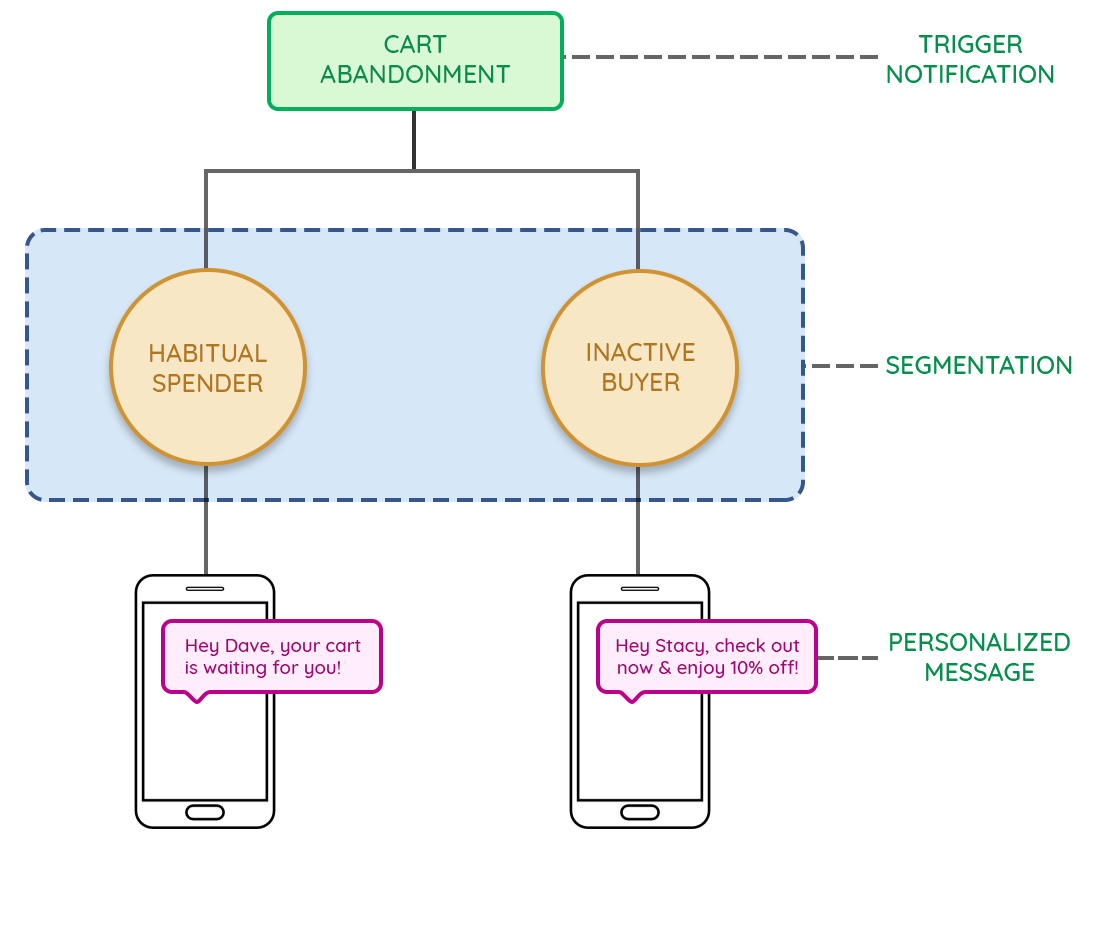
While for both of us the time element in the user journey was the same, our motivations and hence the behaviors are entirely different. While he is a habitual spender, I need a stronger motivation (maybe a good discount) to leave that cup of coffee and get back to shopping. To achieve this, segmentation of the users wrt their user behavior works remarkably well in creating relevant messaging for each user.

The idea is to get all of the 3 elements and ensure that your marketing campaigns are useful as well as relevant for the user. By using Smart Triggers and Segmentation together, you can successfully do this.

Using Smart Triggers

Smart triggers enable you to trigger event-based campaign actions and notifications. It helps in engaging the users at the right time generating the optimum responses. Smart triggers can generate as much as 4X higher conversions than push campaigns. Thus they become pivotal in user onboarding, driving user engagement, and retargeting the funnel drop-offs. Otherwise, if you use the Office 365 shared calendar, a trigger could be sharing it with all attendees so that they know who’s coming.

We have discussed Smart Triggers in a lot more detail in our earlier post while introducing Real-Time Triggers and Exit Intent Notifications.

Smart Triggers help in nailing highly personalized messaging and perfecting message delivery time. By using behavioral segmentation capabilities, you can add the missing component of right targeting to reach the sweet spot.

Using Behavioral Segmentation

Segmentation helps in improving the campaign targeting by delving deeper into user preferences – analyzing user history and behavior patterns. It also enables marketers to target a user segment created basis the most significant user properties or traits.

In fact, our clients have been able to drive 120% premium subscriptions using segmentation.

You can target a variety of use cases with comprehensive segmentation parameters. Here is a sample screenshot from our dashboard showing how marketers can implement behavioral segments directly.

How to use Behavioral Segmentation with event-based targeting (Smart Triggers)

Let’s get back to my experience in which the e-commerce store used smart triggers to retarget the users in the cart abandonment scenarios.

How to use Behavioral Segmentation with event-based targeting (Smart Triggers)

In this case, we can divide the users into two segments – habitual spender and inactive buyer. A habitual spender such as my brother can be defined as the user who has made at least one purchase in the last 30 days. These users have a high probability of completing a purchase and could be targeted with a simple reminder. An inactive user such as me could be defined as the user who has not made a single purchase in the last 30 days. These are the inactive users who need some attractive incentive to make the purchase.

Impact on your ROI

Having a one-to-one conversation with your customers is essential not only to convert them but also to improve your ROI significantly. Segmentation helps in pushing the discounts to users judiciously. Rather than sending the same discount to everyone, you can frame the messaging as per the user motivations. While an inactive buyer needs a stronger push with an attractive discount, a habitual spender could be attracted by a timely reminder. Thus customer segmentation helps in improving the campaign ROI by increasing impact and decreasing the campaign cost.

For delivering impactful marketing campaigns, it is necessary to make the customer experience as exclusive as possible. An intelligent marketing automation suite can be your one-stop solution to achieve this feat.

To ensure that you don’t ruin your night’s sleep in achieving this, we have gone a step ahead to add the sophisticated feature. You can now deliver end-to-end personalization in all the marketing campaigns through behavioral segmentation in Smart Triggers powered by MoEngage.

Check out this exciting feature on our dashboard for free today. Let us know about your feedback or success story or both at [email protected]. We would love to hear your perspective.

Here’s What You Can Read Next

Customer Segmentation and Personalization: What’s the Difference?

  • UPDATED: 14 November 2025
  • 10 minread
Customer Segmentation and Personalization: What’s the Difference?
Reading Time: 10 minutes

Standing out as a brand today feels harder than ever. Competitors pop up everywhere you look, and AI tools make it simple for anyone to churn out marketing content in minutes. The secret to rising above the noise is the effective combination of customer segmentation and personalization.

When your marketing feels personal, customers notice. They feel understood. And that feeling builds customer loyalty in ways generic messaging never could.

The catch, though, is that you can’t personalize marketing effectively without first segmenting your audience. These two strategies rely on each other, and understanding their interconnection will enhance your ability to engage with customers.

In this article, we’ll break down the key differences between segmentation and personalization, show you how they work together, explain the benefits of using both, and share best practices for implementing them in your marketing.


Segmentation vs. Personalization: The Key Differences

The primary difference between customer segmentation and personalization lies in the level of granularity. Beyond that, they differ in implementation, data requirements, and scalability.

  • Segmentation: Groups customers by shared traits, such as location or purchase history, allowing you to send relevant messages to hundreds or thousands of customers at once.
  • Personalization: Tailors the experience to each individual customer based on their unique behaviors, preferences, and interactions with your brand.
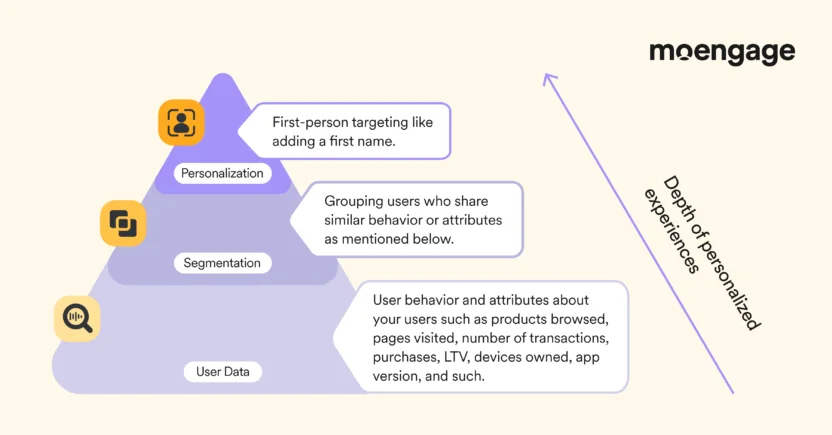
How customer segmentation and personalization are related to each other and how segmentation is nothing but the path toward deeper personalization

Segmentation

Segmentation takes a group approach. You examine customer data and categorize it into segments based on shared characteristics.

These segments group customers who match specific attributes. You can segment by demographics (such as age, gender, and income level), behaviors, purchase history, interests, location, or other relevant factors.

If segmentation is your only strategy, you’ll create messages aimed at entire groups.

For example, a clothing brand might send winter coat promotions to customers in colder regions. Everyone in that region receives the same message, even though one customer might prefer layering hoodies while another just bought three coats last month.

You’re treating diverse individuals as identical just because they share one attribute, missing the nuances that actually drive their purchasing decisions.

Segmentation answers broad questions, such as “Who are our customers?” and “What do different groups need?” It creates buckets that make your audience manageable.

Personalization

Personalization takes an individualistic approach. It tailors communication and experiences based on specific data, preferences, and behaviors unique to each person.

Where segmentation targets groups, customer personalization targets individuals at scale.

Using the same clothing brand example, personalization sends targeted messages to individual customers based on their browsing history, past purchases, items they’ve abandoned in their cart, and their current stage in the customer purchase journey.

On personalization, Robbie Freeman from Movable Ink talked about how setting and forgetting campaigns doesn’t cut it anymore at The Customer Engagement Summit.

Your evergreen campaigns need to be just as relevant, timely, and dynamic as the rest of your strategy, especially when resources are stretched thin and every touchpoint needs to drive value. Your abandoned cart emails from three months ago probably aren’t showing the right product information. Your welcome series might include old promos or offers that are no longer available. It’s time to let your content keep up on its own.

To create relevant and personalized campaigns, you need to do more than add your customer’s first name to an email. You’re showing them products that match their style, reminding them about items they viewed last week, or suggesting complementary pieces based on what they already bought.

You don’t have to choose between customer segmentation and personalization. You use both. How?


Segmentation and Personalization: How They Work Together

Both strategies work well on their own, but they’re most powerful when used together.

A segmentation-only strategy looks good on paper but falls short in practice. Without personalization, your messaging stays too broad. It’s like making small talk at a party: “Nice weather we’re having, right? How about those Warriors?”

This works fine for casual conversation, but when someone’s dealing with something important, generic chatter becomes annoying. It doesn’t speak to their actual needs.

Then what about going all-in on personalization without segmentation?

That path has problems, too.

Personalization without segmentation creates over-fragmented communication. Consider the practical side: you need detailed data on every single customer, and you’ll craft unique, personalized communications for each one. The inefficiency and cost add up fast.

Additionally, when every customer sees an entirely different version of your brand, your core story becomes fragmented. Over time, this confuses customers. Your brand identity blurs.

The most effective approach combines both personalization and segmentation. You benefit from each while avoiding their individual pitfalls.
Segmentation organizes your ideas and campaigns. It powers your personalization, enabling you to craft unique experiences that build real relationships with your audience.

Think of it like a train and train tracks. Tracks without trains sit there doing nothing. Trains without tracks crash.

Segmentation is the train tracks. It provides structure and direction for your marketing strategies, defines your route, and creates a clear path. It answers: “Where are we going, and which groups are we serving?”

Personalization is the train traveling those tracks. Your customers ride the same track (segment), but each one feels their journey is unique. It answers: “How do customers experience the journey?”

When you combine them, segmentation gives you the structure to stay organized and efficient, while personalization makes each customer feel like you’re speaking directly to them.


5 Benefits of Using Segmentation and Personalization Simultaneously

Let’s look at what happens when you use both segmentation and personalization together.

1. Combine efficiency and relevance

Segmentation excels at efficiency. With the right approach, you capture valuable data that groups a relatively large number of customers. Customer personalization optimizes for relevance.

Combining them becomes obvious once you see how they complement each other.
Segmentation prevents you from starting from scratch with every piece of content. Personalization ensures that each person within those segments still receives a unique experience.

MoEngage’s cross-channel marketing capabilities allow you to build personalized journeys for your customers.

Octapharma Plasma, which operates over 175 plasma donation centers across the U.S., shows the power of cross-channel marketing.

The team needed to retain donors through personalized messaging, but doing this individually for thousands of people wasn’t realistic. They segmented donors based on behaviors and engagement levels, then personalized communications within those segments using email A/B testing and multi-channel flows.

Instead of generic “Come donate” messages, partnering with MoEngage helped Octapharma Plasma send tailored content to donors based on their donation history and preferences across their preferred channels.

Email open rates jumped to 35%, conversion rates hit 35%, and month-over-month donation retention increased by 14%. Segmentation created the framework. Personalization made it relevant.

2. Promote better resource allocation

Segmentation gives you solid information about your customers. You learn who your high-value customers are, who’s casual, and who’s somewhere in between.

Combine that knowledge with personalization, and you can invest more in high-value relationships while adjusting your approach to lower-value ones.

Airlines do this well. They maintain communication with most customers, tailoring their messaging based on each customer’s flight history.

Frequent flyers get upgrade offers and exclusive lounge access. Occasional travelers get different messaging focused on booking their next trip.

This focused approach means your marketing budget goes further. You’re not treating everyone the same when they clearly have different relationships with your brand.

3. Scale personalization with consistent brand messaging

As we’ve mentioned earlier, a personalization-only strategy can make your brand messaging appear fragmented. Different customers have such varied experiences that your brand identity becomes unclear and inconsistent.

Used together, personalization and segmentation eliminate this problem.

Segmentation ensures your brand voice remains consistent across various groups. Personalization adds flexibility within that consistency.

Netflix nails this strategy. The company’s tone and design stay consistent (segmentation). However, based on viewing preferences and data, each user’s homepage appears differently (personalization). You recognize Netflix instantly, yet your experience feels custom-made.

If the Netflix example seems too far-fetched, you can learn from one of the many segmentation and personalization success stories we have here at MoEngage.

Consider the example of Outback Steakhouse. They wanted to become digital-first and provide a consistent experience on their mobile app.

To achieve this, they needed a better understanding of current customer behavior on the app and a way to utilize that understanding to create more relevant messaging.

Ultimately, Outback Steakhouse achieved this goal of personalization and consistent brand messaging by onboarding MoEngage as its customer engagement partner. They were able to use channels like push notifications, emails, SMS, and WhatsApp to launch personalized engagement campaigns.

4. Better optimization

Segmentation identifies behavioral trends and creates groups you can test against. You can run experiments on one segment without affecting the others, providing clearer data about what works.
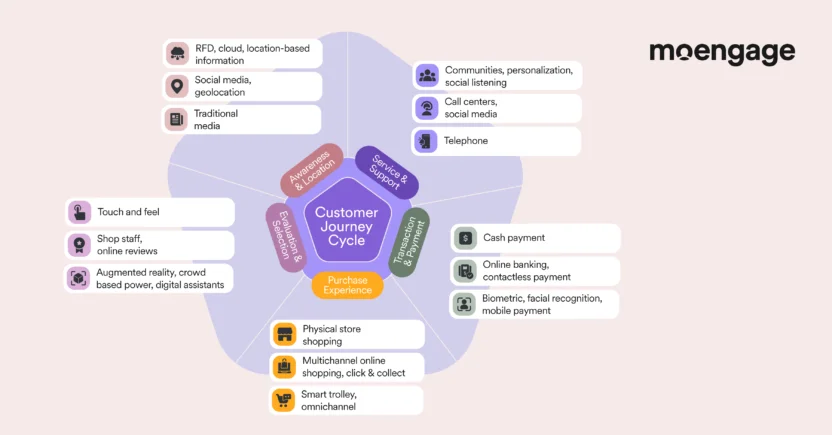
What the modern customer journey looks like

Personalization digs deeper by revealing individual triggers and preferences.

Combined, these strategies create a robust feedback system. Your marketing and product teams get clear signals about what resonates with customers and what doesn’t.

You can spot patterns faster. If personalized messages work for one segment but not another, you know where to focus your efforts. If specific personalization tactics boost conversions across multiple segments, you can scale those tactics with confidence.

This feedback loop enables continuous and data-driven optimization, rather than relying on guesswork.

5. Build a progressive relationship

Combining these strategies helps you build relationships that deepen over time.

Here’s how it works in practice:

A new customer gets minimal personalization because you don’t know much about them yet. You’re still learning their preferences and behaviors. As they engage more and more with your brand, personalization kicks in. You monitor what they browse, what they buy, and what they ignore.

As customer engagement increases, your messaging becomes more refined and targeted. You’re targeting them based on their specific interactions. Perhaps they always buy athletic gear in March, just before marathon season. Or they browse kitchen gadgets, but only buy during sales.

If they stop interacting with your brand, personalization helps you create re-engagement emails and other communications based on what interested them before. Instead of sending random “We miss you” emails, you’re reminding them about new arrivals in categories they love or offering deals on items similar to their past purchases.

This approach creates relationships that feel natural.

Another successful segmentation and personalization story comes from S’More, a next-generation dating app.

S’More’s app works differently from typical dating platforms. Users build 3D profiles with voice clips and music, rather than swiping through photos. New users needed more guidance.

S’More created personalized onboarding campaigns across push notifications, emails, and SMS. This increased Day 1 retention by 20% and boosted onboarding completions by 15%.

They also used in-app messages to introduce new features, but only to engaged users who’d completed their profiles.

As a result, users who saw these personalized messages spent 65% more time in the app.


Segmentation and Personalization Marketing Best Practices to Follow

Now that you’ve seen the segmentation and personalization benefits, let’s cover best practices for implementation.

1. First segment, then personalize

Some brands get excited and jump straight to personalization. They put the cart before the horse, and the results suffer.

Without segmentation first, customer personalization becomes unmanageable, hard to measure, and ultimately unsustainable.

Start with segmentation. Identify your vital segments based on your strategy. What groups make sense for your business? Once you’ve laid this foundation, add personalization through targeted messaging and customized experiences.

MoEngage’s web and app personalization tools can help you deliver a personalized experience for every visitor. When you start with segmentation, you can spend resources judiciously, as you already have a good framework for measuring success or scaling.

2. Start with clear objectives

Before choosing your marketing strategy, define clear goals.

What are you trying to achieve? Reduce the time between a customer’s first visit and their first purchase? Increase repeat purchases? Boost average order value? Reduce customer churn?

When you have specific targets, you can choose strategies that directly support those goals.

Personalization and segmentation offer near-endless customization options. That’s powerful, but it can also be overwhelming. Without clear objectives, you’ll spin your wheels trying different approaches without knowing if they’re moving you forward.

Clear goals keep you focused. They let you measure results against specific customer engagement benchmarks rather than vague notions of “better engagement.”

3. Respect customers’ privacy and be transparent

There’s a thin line between personalization done right and being intrusive.

Done right, personalization makes customers feel understood. Done wrong, it feels creepy, manipulative, and exhausting.

Respect privacy and be transparent about your data practices. Offer customers control over their personalization level by allowing them to opt in or out of various types of messaging.

View data regulations, such as General Data Protection Regulation (GDPR), California Consumer Privacy Act (CCPA), and even the new Telephone Consumer Protection Act (TCPA) rules, as starting points, not ceilings. Go beyond compliance to build trust.

As Megan Kwon, Director of Digital Customer Communications at Loblaw, one of the largest retailers in North America, put it at the Summit:

We don’t wanna actually cause any friction to our customers, and what we see is when those notifications are even a little bit delayed, our customers are very vocal about that. With [MoEngage] Inform, we’re actually able to bring those service levels to a place where we know with confidence that we’re actually able to deliver those timely messages, especially when it comes to Canadians’ health.

Make unsubscribing easy. One-click options in emails show respect for recipients’ time and choices. Occasionally, ask for renewed consent to use their data or send certain types of messaging.

When customers trust you with their data, they’re more likely to engage authentically. Break that trust, and you’ve lost them for good.

4. Iterate and optimize

Customers’ wants, needs, and circumstances change. What worked last quarter might not work now.

Continually refine your strategy using feedback loops from segmentation and personalization data.

Use A/B testing to compare approaches. Let AI and CRM analytics reveal patterns you might miss manually.

You should also have monthly performance reviews to check the pulse of your segments and assess whether the framework you’ve built still meets business needs. By treating segments and personalization as dynamic, you’ll keep your marketing efforts relevant and effective.

5. Don’t forget the human element

Data and automation drive customer segmentation and personalization, but don’t lose sight of the human beings behind the customer engagement metrics.

Numbers tell you what customers do. Understanding why they do it requires empathy and insight.

Use your data to inform decisions, but balance it with human judgment. Sometimes the data suggests one approach, but your team’s understanding of your customers suggests another. Trust your instincts alongside your analytics.

Also, remember that not everything should be automated. Some touchpoints benefit from genuine human interaction. A personalized email sequence works great for nurturing leads, but a real conversation might be what closes a high-value deal or saves an at-risk customer.


Use Customer Segmentation and Personalization with MoEngage

Customer segmentation and personalization aren’t competing strategies. They’re complementary approaches that work best together.

But implementing these strategies effectively requires the right tools.

MoEngage offers digital solutions that can help you segment your market and personalize their experience.

The platform provides digital solutions that enable you to segment your market and personalize experiences across multiple channels. It offers the flexibility to build sophisticated segmentation frameworks and layer personalization on top, without getting bogged down in technical complexity.

Whether you’re just starting with segmentation or looking to add deeper personalization to existing segments, MoEngage provides the infrastructure to make it happen at scale.

Book a demo to see how we can help you achieve your segmentation and personalization strategies.

Introducing MoEngage Segmentation v2.0: Industry’s most advanced segmentation engine

  • UPDATED: 26 October 2023
  • 2 minread
Introducing MoEngage Segmentation v2.0: Industry’s most advanced segmentation engine
Reading Time: 2 minutes

Segmentation is at the heart of MoEngage from the start because helping brands deliver personalized experiences is the essence of everything we do at MoEngage. Today, we are proud to announce the launch of Segmentation V2 – industry’s most advanced segmentation engine.

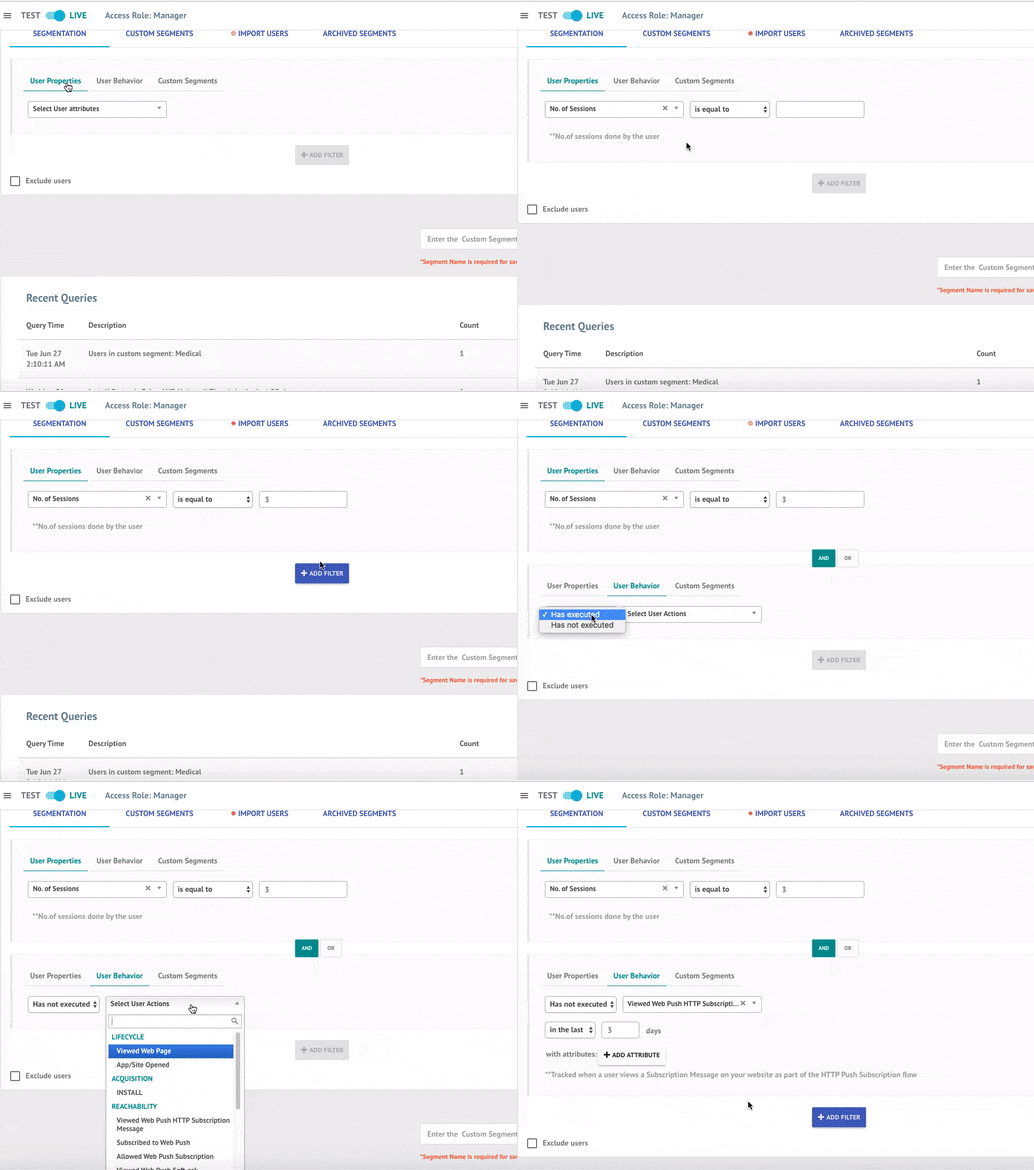
The new customer segmentation engine allows marketers to explore every use case possible. The ability to blend different categories of data like ‘user properties’ and ‘user behavior’ along with ‘custom segments’ through ‘AND/OR’ functions, empowers marketers to create use cases that were not possible earlier.

Moreover, the ability to do this in a newly-designed, quick-response user interface makes, creating use-cases for highly personalized campaigns, a breeze.

Enhanced Categorization

moengage segmentation

We have now split our segmentation into two primary categories, i.e., ‘User properties’ andUser Behaviour.’ making it easy for you to differentiate between them. With this change, you will be able to pick the required segmentation variable in a simpler and faster manner. We have further grouped each category based on location, reachability, campaign related events, lifecycle-based events.

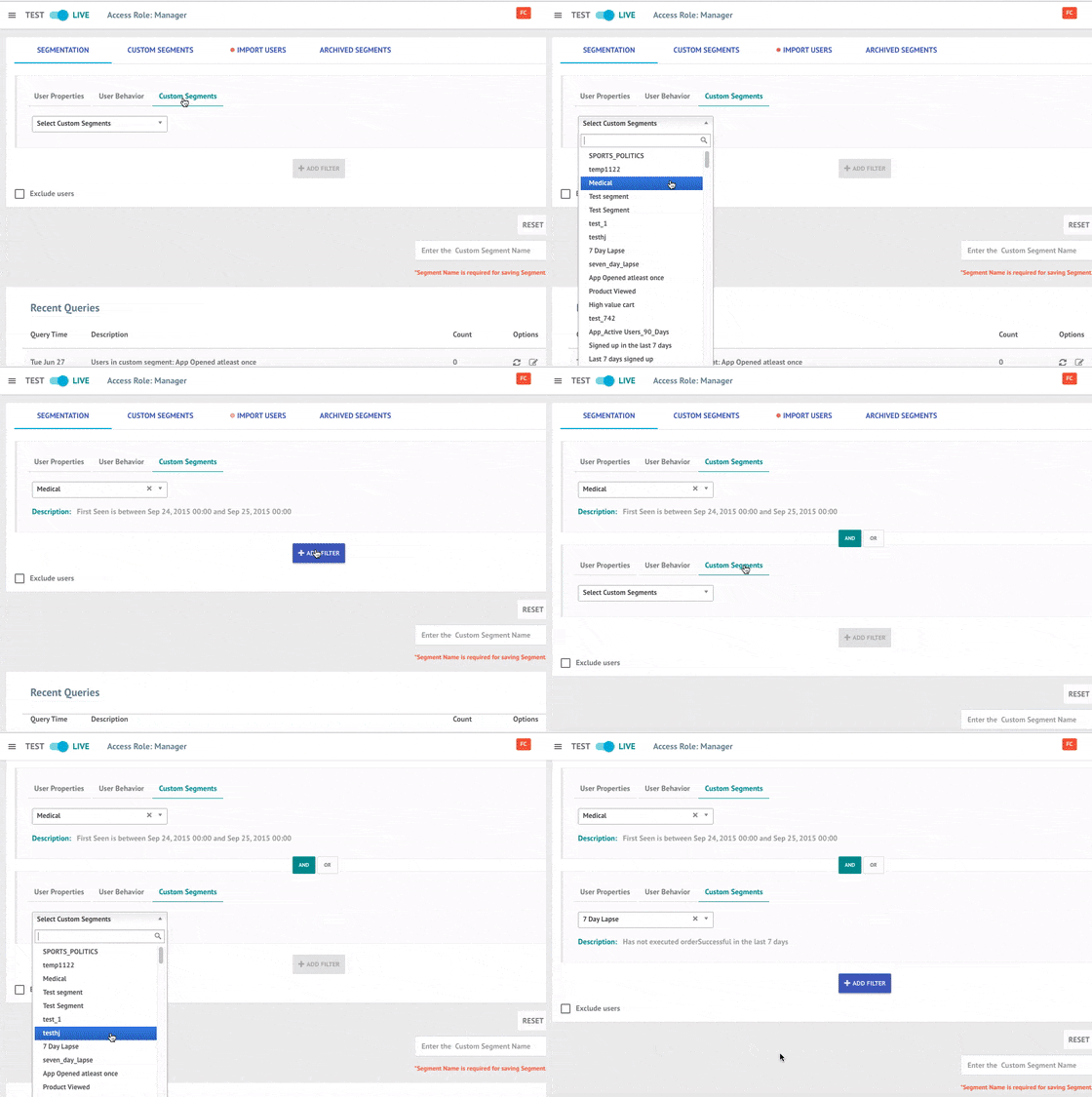
Playing with custom segments

moengage custom segments

So far you have been able to exclude only ‘custom segments’, but with the new UI, you can include custom segments as part of union and intersection of a set of users. With these changes, you will be able to find any segment of users, with little effort. This also means that you can now club your CSV segments with real-time segments.

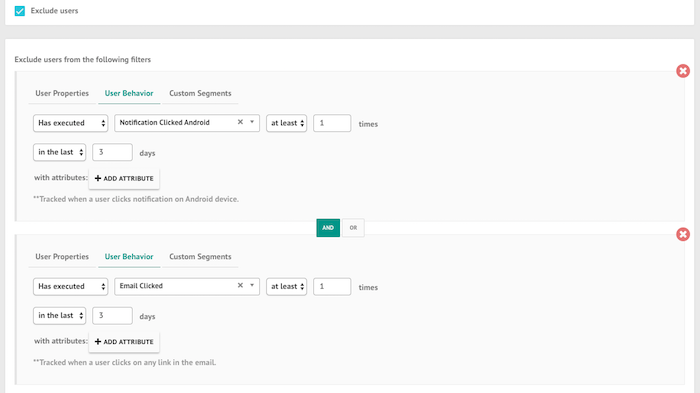
Exclude Anything

segmentation

Exclusion in segments was limited only to custom segments, but now, you can select multiple rules to Exclude Users. This ability becomes necessary especially when you include custom segments as part of exclusion.

Other changes

Other than the above notable changes, we have also introduced the following tweaks to our segmentation:

  • Support for ‘case insensitive’ string filters.
  • Ability to select ‘Has not executed’ query with attributes.
  • Added negation operators like ‘does not contain,’ ‘does not start with’ among others.
  • Ability to check if a field exists for the user.
  • ‘in the following’ operator will now accept comma separated values too.
  • Ability to edit recently run queries.

We hope you love the changes we made in the Segmentation v2.

For any queries on the new changes, feel free to reach us at [email protected]

Send triggers on basis of Trigger Event property [New Feature]

  • UPDATED: 17 July 2023
  • 2 minread
Send triggers on basis of Trigger Event property [New Feature]
Reading Time: 2 minutes
Bonus Content:

Did you want to remind your users about their booked flight, 2 hours before the flight time? Or remind them about the expiry of their subscription that they bought last month. You want them to recharge their mobile data pack 2 days before it expires?

Here is a level?  For your Smart Triggers (Push as well as Email). Starting this week, you can start creating ‘Smart Trigger’ campaigns based on ‘trigger event property’ with MoEngage i.e. you can now trigger the message with respect to attribute values (date/time) of your IF event. What this essentially means is a world of opportunity to send follow-up communication with users out there.

Say you want to remind your users who have booked a flight, 2 hours before the flight time. You will then create your trigger on Flight Booked event using the event property Flight Time.

And set the message to be sent 2 hours before the flight time.

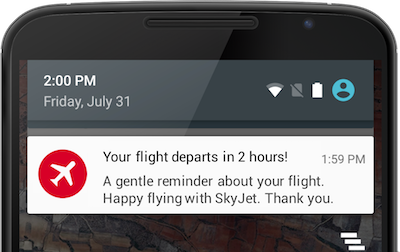
Your users receive a flight reminder two hours before their set flight time:

User reminder notification

Imagining possibilities:

There are several use cases where such a feature can come in handy. We have listed a few below:

– Send discounts/reminders to your subscribers before subscription expiry.

– Send communication minutes before the flash sale to customers who have registered for it.

– Send reminders before customer’s travel date/time, Cross-Sell Hotels/Experiences/Local Transport/Restaurant Bookings.

– Remind customers to refill consumables before it ends.


Want to know more about the feature? Write to us at [email protected] or you can reach out to us for a personalized demo.

Here’s What You Can Read Next –

[Product Update] Campaign Drafts, Pause/Resume and more

  • UPDATED: 20 July 2023
  • 3 minread
[Product Update] Campaign Drafts, Pause/Resume and more
Reading Time: 3 minutes

Our recent release was aimed to make marketer’s job easier (enables the marketers to save their campaign progress as campaign drafts which can then be continued later to create campaign) and better (by executing diverse use cases across channels).

Campaign Drafts

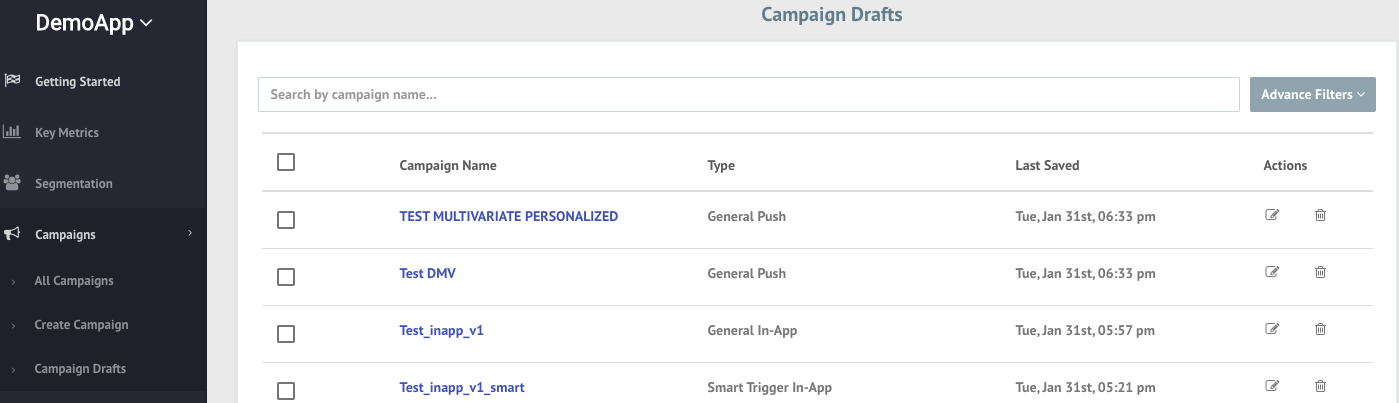
Campaign Drafts allow marketers to continue creating their campaigns from where they left. The feature has been rolled out for Email, In-App and Push Campaigns. Campaigns can be saved on demand by clicking Save Draft button on top right.

Once a marketer leaves the page, drafts are automatically saved so that marketers do not lose any progress. Marketers can access and manage all the existing drafts from Campaign Drafts page present under Campaigns Menu.

Exclude custom segment while creating general push and in-app Campaigns

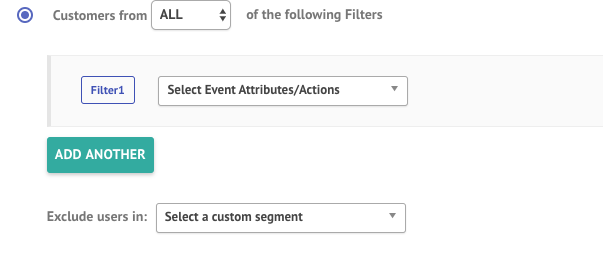
Excluding a custom segment from a target audience has been made easier. Marketers can now exclude the custom user segment from their custom audience filters while creating a General Push or In-App Campaign.

Periodic general push campaigns

  • Pause/Resume capability

For our periodic recurring general push campaigns, we have enabled the capability of pausing the campaign when they are not any-more needed.


Marketers can resume back these campaigns when the right time comes by just clicking on Resume button.


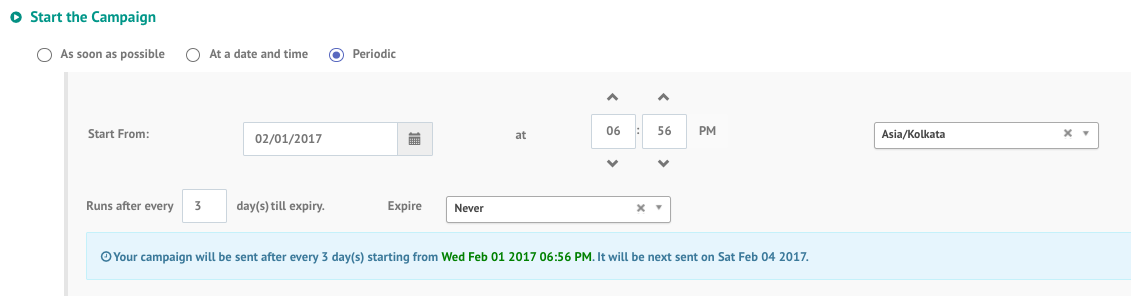
  • Start Date, Instance summary and No Expiry

We realized that, in absence of start date and summary, many-a-times it was confusing to know when a periodic campaign will start to run. We also appreciated the requirement to create never expiring periodic campaigns. We now allow marketers to create periodic campaigns which can start from any scheduled date, which can run for limited time or never expire.

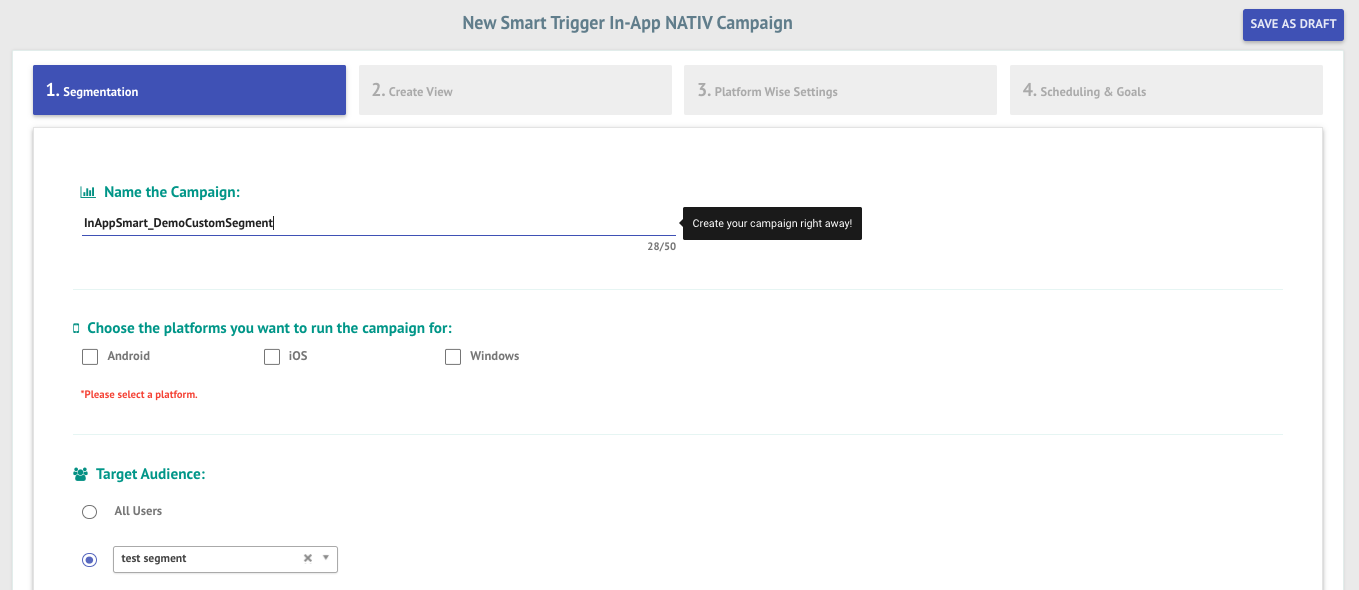
Event segmentation for in-app smart triggers

Marketers can now sharpen their targeting using event segmentation in In-App Smart Triggers messages. One can also target users from a custom segment for his/her In-App Smart Trigger message.

A lot many exciting changes are underway. Just stay tuned and keep turning in your awesome feedback.

MoEngage

© Copyright 2026 MoEngage. All Rights Reserved.