Customer Engagement 2026: Findings from 40 Billion Messages
Sign Up
close-icon

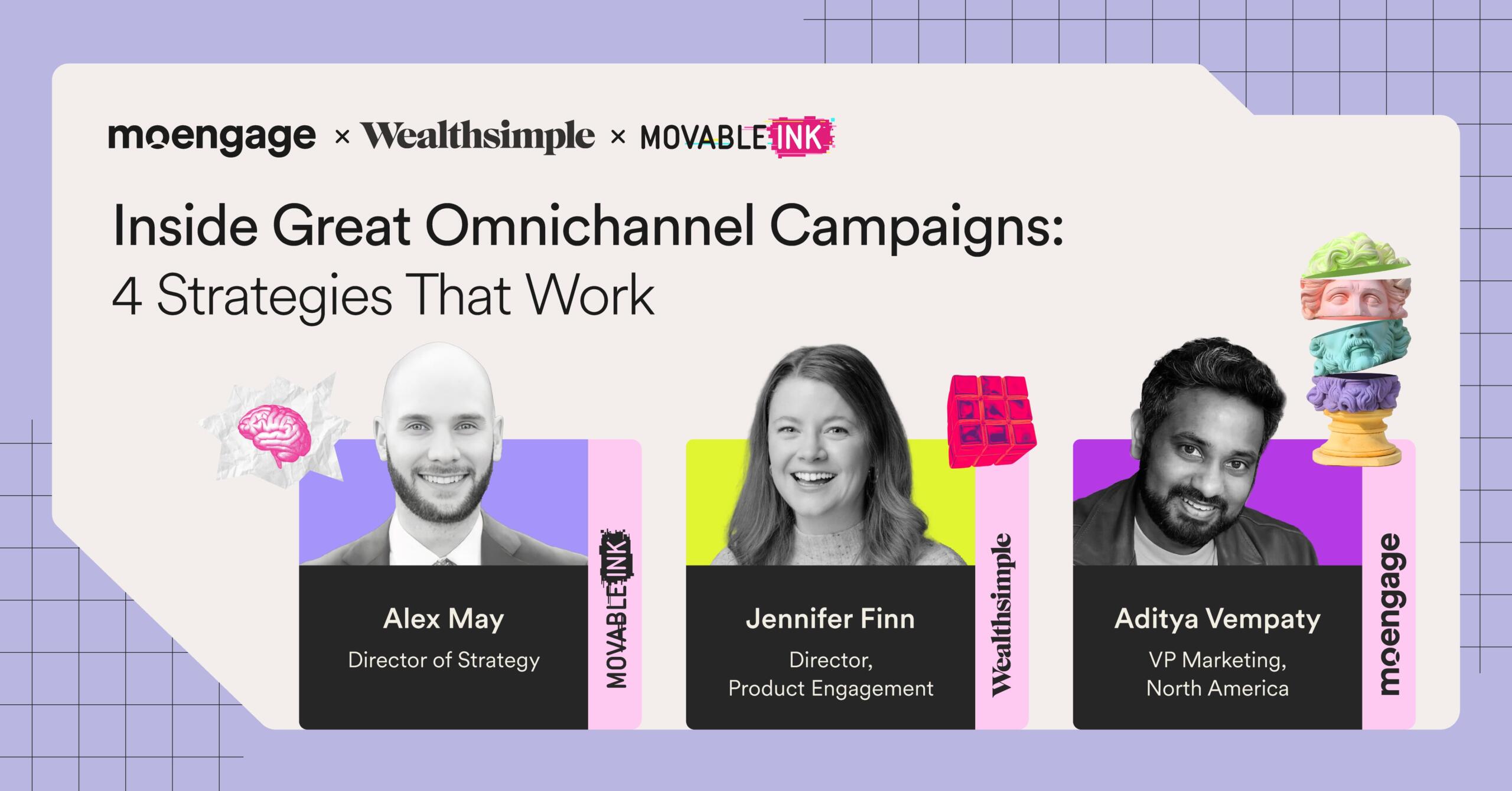
Inside Great Omnichannel Campaigns: 4 Strategies That Work

  • UPDATED: 03 December 2025
  • 4 minread
Inside Great Omnichannel Campaigns: 4 Strategies That Work
Reading Time: 4 minutes

Are you struggling to move past disconnected marketing systems while your competitors seem to be building truly seamless customer journeys? If you want to stop stitching and start orchestrating, this webinar recap is just what you need.

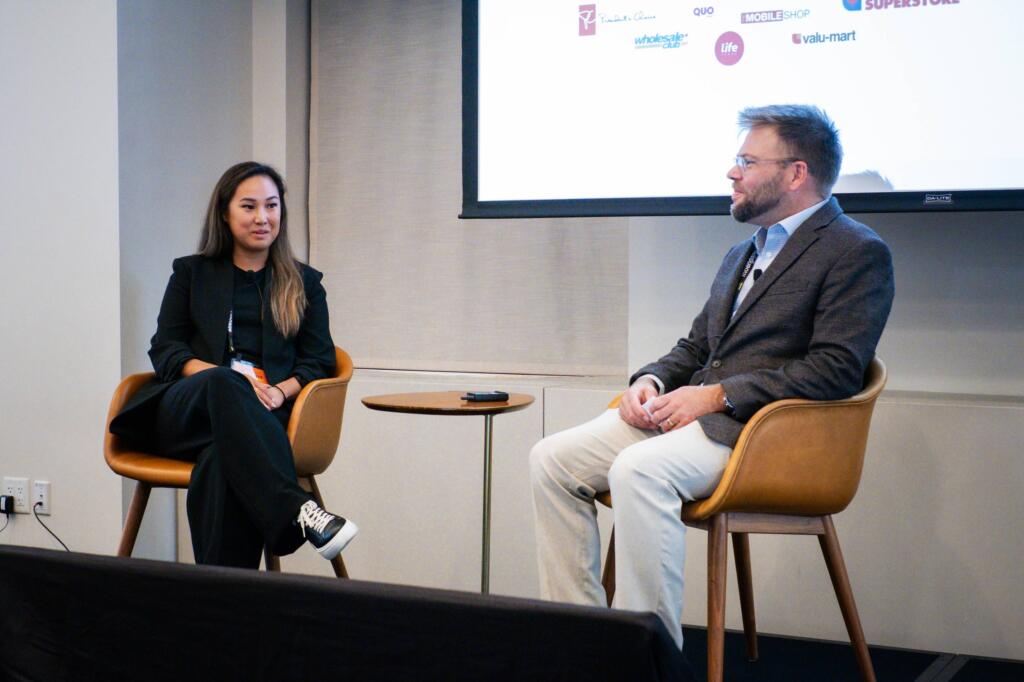
In our recent webinar, “Inside Great Omnichannel Campaigns: Strategy, Tools, and Execution That Work,” marketers got a front-row seat to the real operational secrets of high-impact marketing. We had industry experts Jennifer Finn, Director, Product Engagement at Wealthsimple, and Alex May, Director of Strategy at Movable Ink, authors of The Customer Engagement Book: Adapt or Die. They laid out the exact strategies and execution tactics that transform multi-channel chaos into orchestrated customer engagement.


If you’re ready to move past the basics and build cross-channel campaigns that actually convert, below are the four non-negotiable takeaways from their discussion that you need to implement now.

Takeaway 1: Break Your Omnichannel Campaigns into Clear Phases

When a big project lands on your desk, such as a product launch, a re-engagement drive, or a major event, it can feel overwhelming to map it across every channel. The secret is simple: stop treating it as one massive campaign. Define clear phases to bring immediate clarity to your goals, your channel mix, and your team’s execution.

Jennifer shared how this strategy was applied to a major product event at Wealthsimple. This simple, structured approach ensured every message was purposeful, avoiding the noise that often plagues complex campaigns.  

From a strategic perspective, a multi-week, cross-functional campaign like this one, that has many different moving pieces and components, what ultimately set us up for success from the start was actually breaking it down into phases: Pre-Launch, Launch, and Sustain. This actually allowed us, from a lifecycle vantage point, to approach it almost like three separate campaigns, each with very different goals. Jennifer Finn, Director – Product Engagement, Wealthsimple

By doing this, you’re not just organizing your schedule; you’re defining a progressive path for your customer, ensuring they have a single, clear Call-to-Action (CTA) at every touchpoint.

Takeaway 2: Use Channels to Advance the Story (Not Echo the Message)

If your email, push, and in-app message all say the exact same thing, you’re not doing omnichannel, you’re just spamming in stereo. True omnichannel power comes from narrative progression. You must determine the distinct role each channel plays in moving the customer closer to conversion.

Alex, with his expertise in high-emotion sectors like travel and hospitality, emphasized the need for a continuous, flowing narrative in a well-constructed omnichannel strategy. He pointed out that successful campaigns feel like a personal conversation, not an endless loop of echoes.  

I think it’s really about advancing the conversation. So that’s what really makes omnichannel so powerful. Every touchpoint feels like it’s a part of the same story, but it’s progressive. It’s not just an echo of the last message that a customer saw. Alex May, Director of Strategy, Movable Ink

For example, Alex suggested using channels like email for storytelling and education, and channels like push notifications for timely, context-aware nudges that reinforce the message. 

Ultimately, when in sync, the objective is that each of these channels will help advance the customer to the next logical step in their buying journey.

Takeaway 3: Shift Your Mindset to Predictive Personalization

If your campaigns are still built on endless “if/then/else” rules, then it’s time to upgrade your thinking. 

The most significant shift AI is enabling isn’t fancy generative copy; it’s the move from rules-based logic to predictive probability. This is how you deliver the “right message at the right time” at scale.

During the webinar, Alex articulated this major evolution in marketing capability. He recommended that marketers stop guessing which segment gets which message. Instead, you must use data models to predict the most effective content, context, and channel for each individual.  

What’s really happening is that AI is helping marketers move from rule-based personalization into the predictive personalization space. Instead of deciding who gets a message and when, brands are starting to use models to predict what context, or content, is most likely to perform for each individual in their given moment. It will eventually be less about predefined logic and more about probability. So using real behavioral signals to really surface what’s most relevant right now. Alex May, Director of Strategy, Movable Ink

When you let AI predict performance in such a way, your omnichannel strategy becomes truly intelligent, adapting dynamically to the customer’s actions in real-time.

Takeaway 4: Use AI to Power Relevancy & Humans to Power Authenticity

For too long, marketers have feared that automation means losing the human touch. The reality is the opposite: Automation frees you up to be more human. By leveraging AI for efficiency, you and your team can focus on the strategic and creative processes that ensure empathy is maintained.

Jennifer spoke about this and elaborated on how AI is not a shortcut for strategy but a tool to refine it and complement human capabilities.   

I’m adamant that AI is another tool in our toolkit as lifecycle marketers and not an avenue to replace us. So to remain customer-first, while leveraging AI at Wellsimple, we’ve really doubled down and focused on having AI-powered relevancy. We use AI to inform decisions, whether it’s predictive modeling or segment identification…But we also continue to balance human oversight…And even when AI can help us kick off the first forty percent, it’s honestly still a human that has to bring it across the finish line. Jennifer Finn, Director – Product Engagement, Wealthsimple

Conclusion: Mastering the Fundamentals of Omnichannel Execution

Overall, the discussion between Alex and Jen distilled complex omnichannel execution down to core, actionable principles: Clarity, Progression, Prediction, and Empathy.

By adopting a structured phasing approach, ensuring every channel advances the customer’s narrative, utilizing AI to drive predictive relevancy, and maintaining human oversight to preserve authenticity, you can move past chaotic omnichannel efforts. 

Remember, the current biggest challenge isn’t just new technology; it’s aligning your strategy and teams to execute simple, powerful, and seamless omnichannel customer journeys.

Ready to transform your strategy into execution? Watch the full webinar on demand now.

How Does Customer Journey Automation Work?

  • UPDATED: 29 October 2025
  • 12 minread
How Does Customer Journey Automation Work?
Reading Time: 12 minutes

Too many marketers treat customer journey automation like an overhyped campaign scheduler. They think it’s just about sending the right offer at the right time.

But that’s an oversimplification.

It’s actually much more than that. Savvy marketers are using automation to design adaptive experiences that advance customers from awareness to loyalty, while removing friction at every stage of the customer purchase journey.

In this blog post, we’ll break down everything about automating customer journeys, including the methods, the tools, and the optimizations that help your brand grow. So stick around till the end.


What is Customer Journey Automation?

Customer journey automation is the process of using technology to automatically guide every customer through a series of personalized and timely interactions, from initial contact to loyal advocacy, without manual intervention. By reducing friction in the journey, it helps drive loyalty and control churn.

Automating customer journeys enables the delivery of a connected, adaptive flow that responds in real-time to customer behavior. It ensures that every touchpoint aligns with a customer’s stage, intent, and channel preference, creating a seamless customer experience.


3 Core Benefits of Customer Journey Automation

Before you can invest in customer journey automation, getting stakeholder buy-in is key. But how?

One way to do that is to highlight the benefits of automating journeys. By using automation to guide customers from their first touchpoint to becoming a loyal advocate of your brand, you reduce wasted effort. More importantly, you can create experiences that customers actually want to return to.

With that in mind, here are three advantages of automating customer journeys that you can point out to your leadership.

1. Lower operational costs

Without customer journey marketing automation, your team spends hours manually tracking campaign results. You no longer need to involve humans in different customer touchpoints. Because of that, you can redirect the manpower to other, more pressing needs, like strategy.

Over time, those labor savings add up to lower operational costs. For instance, Gartner found that brands implementing hyperautomation in process redesign see up to 30% less operational expenses.

2. More efficient marketing

Customer journey automation aligns every touchpoint with where the customer is right now. It also ensures that the touchpoint connects seamlessly to the next step in the customer journey.

As you waste less bucks on irrelevant impressions, your conversion rates improve. For example, say you’ve timed an offer only when a customer moves from the consideration stage to the purchase stage. You’ll be spending less money chasing shoppers who aren’t ready to buy your product. Your budget will be focused on those who are actually going to convert.

3. Enhanced customer satisfaction

Automation can significantly enhance the customer experience at every point of interaction in their journeys. If their experience improves, so do their satisfaction levels.

According to Gitnux’s 2025 Workflow Automation Statistics Report, 85% of organizations believe automation helps meet customer expectations more effectively. So much so that customer complaints have reduced by 25% in sectors that use automation.

Apart from bringing these advantages to light, there’s another way to get approval from your leadership.

Angela Rueda, Director of Business Marketing Technology at Meta, shares in the Customer Engagement Book Interview how powerful it is to make the customer journey visible. When pitching new technology or a marketing strategy to stakeholders, she maps out each stage of the customer experience. Then, she shows how the technology powers the channel, personalization, or data input throughout the journey.

This approach helps stakeholders understand both the customer impact and how technology enables it, leading to stronger buy-in for investing in additional tools or automation.

Now that you (and your stakeholders) know why automated customer journeys matter, it’s time to learn how they actually work.


How Does Customer Journey Automation Work?

At its core, customer journey automation is about delivering the right message to the right customer at the right time. But to make it work for your brand’s campaigns, you need to understand how it works.

Let’s examine the key components of the automation process for customer journeys.

1. Map out customer journeys with precision

Before automating any customer journey, take a step back and think: how do you even know what to automate? As in, how can you understand your customers’ interests, needs, behavioral patterns, and pain points? It’s a three-word answer: customer journey mapping.

Mapping out a customer journey means monitoring customers as they move through the different stages of their journey, from awareness and consideration to decision and retention. Otherwise, you’ll be in the dark about the kind of automation you need to do for optimizing each journey stage.

As Martech expert Scott Brinker says, “Mapping [the journey] out, even if it’s a decision tree, is still useful to understand.”

According to Scott, consumers come through various mechanisms or with different intents. In his Q&A for his chapter of The Customer Engagement Book, he asks marketers to consider what a customer’s process or pain points might be when determining whether or not to make a product or service purchase.

This is a key step to understanding the many paths a consumer may take before becoming a customer.

Once you’ve created a customer journey map, list all the touchpoints or channels where your customers interact with your brand. These include your website, social media, emails, and customer support tickets. Visualizing all the stages and channels involved in the customer journey in the form of a map makes delivering an end-to-end customer experience easier.

2. Establish behavioral triggers

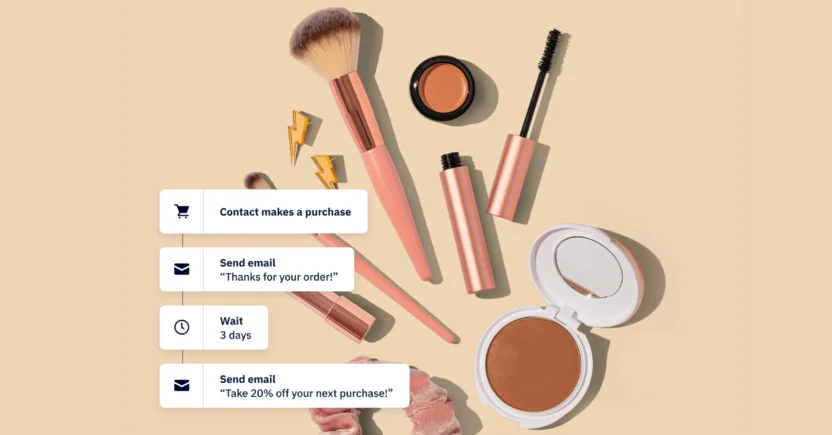
An automated customer journey is incomplete without behavioral triggers: specific customer behaviors or actions that trigger a series of automated events. For example, when a customer abandons their shopping cart, subscribes to your newsletter, or buys a product from your website, an email sequence could be triggered.

Along with clearly establishing triggers, you should set up tailored messages based on your customers’ past interactions and behavior. If they’ve bought a product, for instance, you can trigger an automated email campaign, sharing smart product recommendations related to the product they’ve purchased.

3. Personalize every customer interaction

Gone are the days when any brand could adjust the customer’s name in their greetings and call it ‘personalization’. Today, personalization is the heart of an effective marketing automation customer journey. That means you need to adjust the messaging, offers, and timing based on each customer’s purchase or browsing history and preferences. Sending out generic messages is out of the question.

Why, though? Because customers expect brands to know and understand their journeys. The more they feel understood and valued, the more likely they are to engage and convert.

To personalize the customer experience effectively, segment audiences based on their journey stage and engagement level. Then, deliver hyper-relevant content depending on their purchase history, browsing behavior, and preferences. Your tone and style should resonate with each segment (such as new vs. VIP customers).

4. Ensure coordinated messaging across channels

Your customers are likely to interact with your brand across multiple channels, not just one. From email and your website to your physical store, they keep moving among touchpoints. Bearing that in mind, coordinated messaging means ensuring that every customer interaction feels consistent, no matter where they interact.

Enter omnichannel customer experiences. If your marketing isn’t omnichannel, or if your messaging isn’t consistent, your customers will be left scratching their heads.

Let’s say you’ve sent them a friendly push notification with a 10% discount offer. But your serious email campaign mentions nothing of the sort. Because the message, tone, and voice in both channels are different, your customers get confused.

So what’s the workaround here? While automating customer journeys, create channel-specific versions of the same core message. Maintain the same tone, brand voice, and visual style. Sync campaigns so that each channel can update based on a customer’s action elsewhere.

It’s best to use a customer engagement platform (CEP), a CRM, or a customer data platform (CDP) to keep all interaction data in one place.

5. Test and optimize the customer journey automation process

How can you keep improving the customer experience and your conversion rates over time? The best way to do that is to constantly test and refine every element of your customer journey automation.

A/B test different content formats, subject lines, and message timing. Once the customer journeys are automated, monitor conversion and customer engagement metrics at each journey stage.

These steps, along with continuous testing, can help you identify what’s working and what’s not at specific stages of the automated customer journey. You need to keep refining your journeys to make them efficient and impactful.


How to Automate the Customer Journey and Increase Efficiency

So far, you’ve uncovered what customer journey automation is and how it works. Now is the time to get your hands dirty with the actual automation process. You just need to turn what you already know about your customers into a set of data-driven and targeted actions.

Here’s how to do that using modern marketing automation software.

1. Auto-segment audiences

Manually sifting through demographics and customer lists to segment audiences for a personalized customer journey? Please, we aren’t in the early 2000s anymore.

Segmentation is the foundation of any personalized journey. Dynamic segmentation uses customer data, including behavior, preferences, and purchase history, to ensure each customer gets messages and offers that are relevant to them today, not two months ago.

So, when your segments update in real-time, your campaigns still send the right messages to the right customers. That’s right, no more sending welcome emails to customers who have already bought from your brand thrice.

How to do it

Identify your key audience attributes and set automation rules or AI logic that refresh segments in real-time, in response to changes in these attributes. This way, your messaging is always in tune with where your customers are in their lifecycle.

MoEngage's Merlin AI Segment Assist helps you create audience segments using natural language prompts

MoEngage’s Merlin AI Segment Assist, for example, automatically segments customers based on purchase history, preferences, behavior, and engagement patterns. All it needs from you are simple, natural language prompts.

To enable the AI engine to understand how your customer data is labeled, the feature includes AI-generated event and user attribute descriptions, which add metadata to your attributes and events.

2. Build multi-step customer journeys that adjust in real-time

Do you know when automated customer journeys work best? When your brand listens to what a customer does or doesn’t do, and responds with the right next step.

As we mentioned earlier, mapping out journeys means identifying your customer customers’ lifecycle stages first. That’s followed by setting conditions and triggers for movement between the stages. Basically, the journey should adapt as customer behavior changes.

How to do it

  1. Define the key outcomes you want to achieve at each stage.
  2. Next, map the triggers that move customers forward in their journeys, or re-engage them if and when they stall.
  3. Visualize the journey to see the path a customer might actually take.

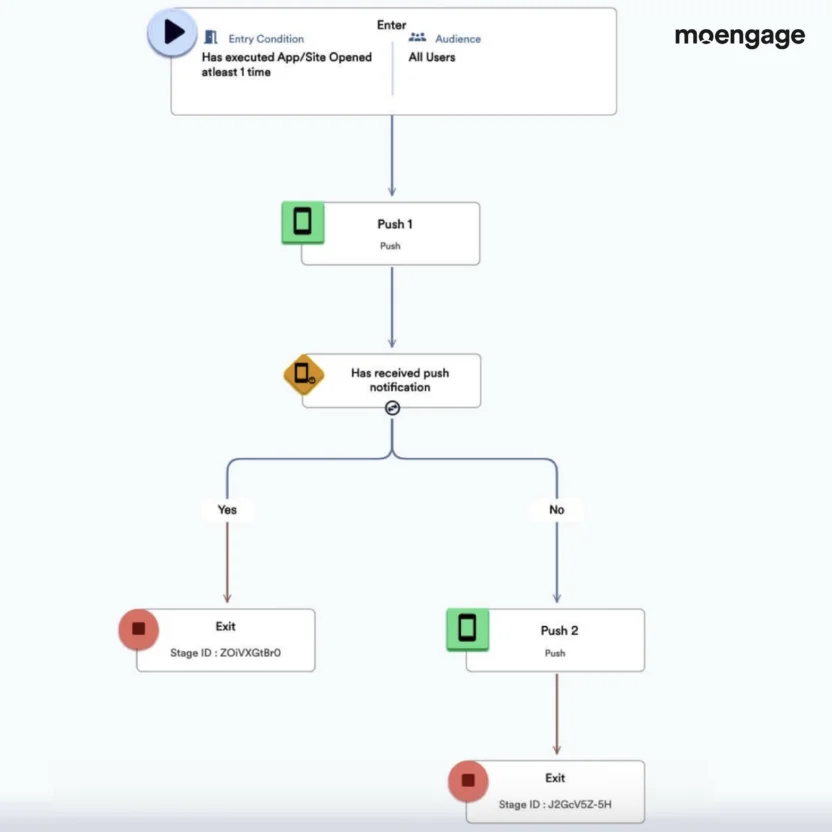
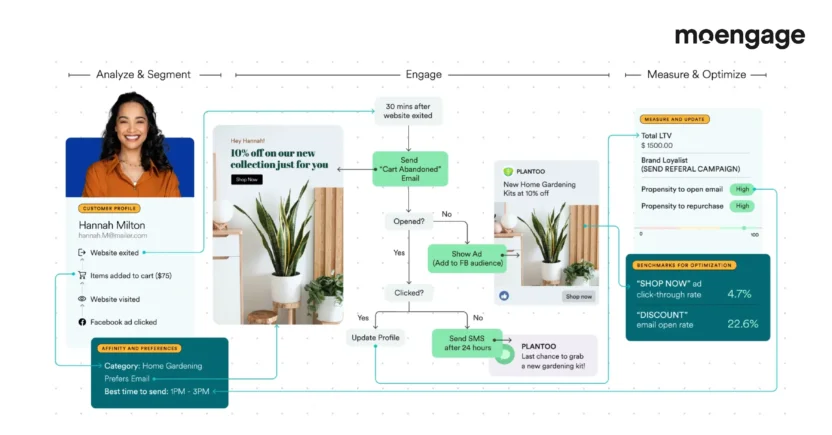
For instance, MoEngage Flows helps you visually map the entire customer journey, step by step.

MoEngage Flows is a marketing automation customer journey visual builder

This is impactful because every customer interaction builds on the last interaction, which in turn, builds on the one before. That’s why it appears as a connected story, rather than a disconnected string of messages.

Start with either ready-made templates (for onboarding, abandoned cart recovery, engagement, or reactivation) or a blank canvas.

Then, visually map the customer journey, segment audiences, define entry conditions, and set conversion goals that guide the flow’s structure.

3. Keep testing and optimizing journey paths

Even a well-designed journey is bound to lose its edge over time. To keep them fresh, you need to test and optimize them regularly. That’s how you can identify which channels, messages, and sequences get the best results and adapt instantly.

Essentially, you can run variations of a journey path. Then, use automation to direct traffic toward the path that is performing best, without needing to manually redirect customers to the best-performing path later.

How to do it

  1. Build variations, such as different offers and email subject lines, into your journey branches.
  2. Let your customer journey automation platform monitor key metrics, like conversions and engagement rates.
  3. As soon as the data points to the best-performing path, automatically route more customers toward that path.

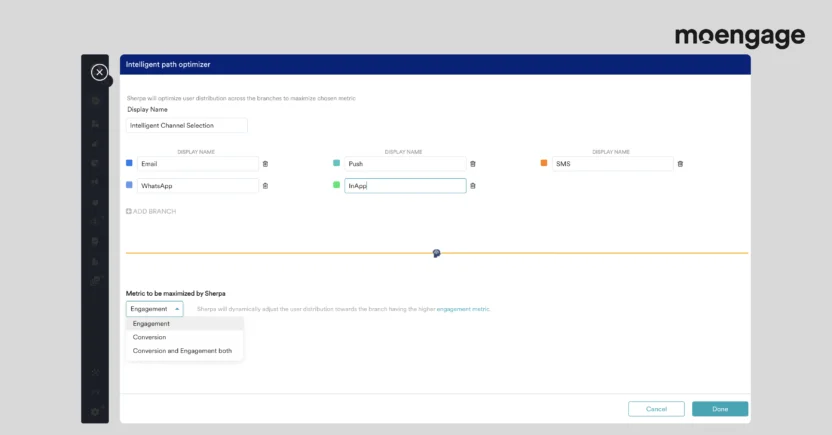
You can use MoEngage’s Intelligent Path Optimizer (IPO) to automatically reroute customers toward paths that are delivering higher conversions or better engagement.

MoEngage's Intelligent Path Optimizer automatically routes customers toward the best-performing paths to keep the customer journeys moving forward

IPO A/B tests up to 5 branches before optimizing the user distribution. Instead of pushing every customer through the same rigid steps, you adapt dynamically in real-time.

While designing a flow in the journey builder, you can add an IPO at any point in the journey where you need to experiment with multiple branches of the journey. The tool will monitor results and adjust user distribution based on which route performs better, letting more customers see your highest-converting or most engaging content.

4. Personalize the next step for every customer

At a deeper level, the goal of personalization is to predict the next best action for every customer right now, based on their history with your brand and their recent intent signals. For example, for a customer who browses your sale page without making a purchase, the next step could be a limited-time offer sent via email.

The upshot of this approach is that every interaction aligns with customer intent. In turn, customers feel like your brand gets them.

How to do it

  1. Track customer activity across your channels.
  2. Set AI models or rules to predict the most relevant next channel and message.
  3. Add fallback options so that there’s always an engaging next touchpoint, regardless of whether the data is complete.

Based on their past behavioral patterns and likelihood to engage, MoEngage’s Next Best Action (NBA) predicts on which channel each customer should see or receive messages next, and when.

Let’s say a customer enters the NBA stage of your Ecommerce customer journey. MoEngage’s AI then selects the customer’s most preferred channel and the optimal hour, based on their activity data over the past 60 days.

Add NBA as a stage in MoEngage Flows while building omnichannel customer journeys. Select a fallback channel in case the most preferred channel is unavailable for a customer.

5. Auto-schedule messages

Building on the previous point, if you don’t optimize message timing, you may be sending messages when customers are busy and unlikely to respond.

Why does it matter? Timely delivery keeps customers moving forward in their journey. You don’t want them to ignore your message or abandon their journey entirely just because your message reached them at the wrong time.

So, instead of blasting everyone at a fixed time, analyze historical data for each customer, such as open rates and click patterns. You can then automate the sends around their unique engagement window.

How to do it

  1. Track engagement time for every touchpoint
  2. Identify patterns for each customer or segment
  3. Automate delivery schedules to consistently hit that customer’s engagement window

MoEngage’s Best Time to Send (BTS) uses machine learning to ensure each touchpoint reaches a customer when they’re most engaged with your brand.

For each journey stage, enable BTS on touchpoints. That way, the campaign delivery will be based on the individual customer’s engagement pattern. This maintains the natural pace of the customer journey.


3 Best Customer Journey Automation Platforms

The right customer journey automation platform will let you visualize journeys, set up triggers, personalize at scale, and keep all messages coordinated. It’s all supposed to be easy.

Below, we’ve rounded up three software platforms that can help you deliver a frictionless experience at the end of the day.

1. MoEngage

MoEngage is the best Ecommerce customer experience platform that helps brands implement cross-channel engagement to win more customers and retain existing ones

MoEngage is an AI-powered real-time customer engagement platform. It’s designed to help brands create seamless, data-driven customer journeys across 10+ channels. The platform stands out for its strong analytics capabilities and AI-based recommendations. Which means you can act on solid, real-time insights, no guesswork involved.

Best for: B2C marketers from retail, Ecommerce, fintech, QSR, and media and entertainment brands, who need to manage complex, omnichannel customer journeys at scale.

Key automation features: MoEngage Flows lets you visually design omnichannel customer journeys and set behavioral triggers using its drag-and-drop journey builder. You can also run A/B split and conditional split tests on the journeys. Its AI engine can even suggest the best time to send an email or any message to maximize engagement. Additionally, MoEngage offers a Multiple Conversion Goals feature that tracks the intermediate steps taken by a customer on the way toward their primary conversion goal. Its Revenue tracking feature shows you the monetary impact of your campaigns in the customer journey.

Explore more of MoEngage’s features that help to automate customer journeys.

2. Lucidchart

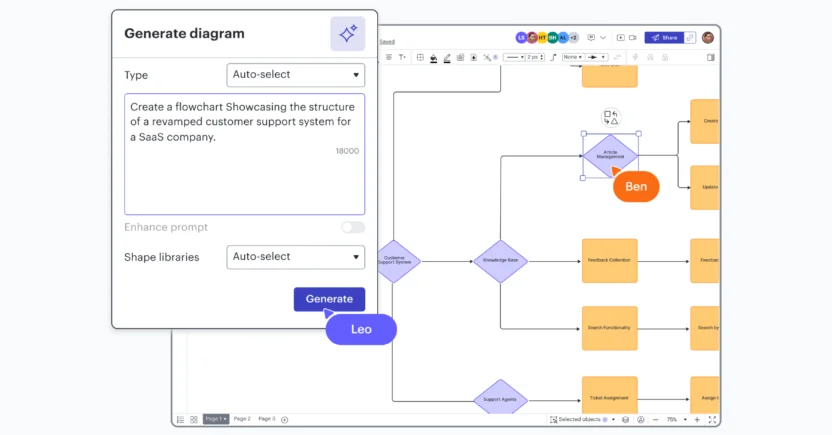
Lucidchart is used to map customer journeys before automating them

Although not a traditional customer journey automation solution, Lucidchart is essentially an AI-driven diagramming tool for clearly mapping out customer journeys. The tool’s intuitive drag-and-drop interface allows you to collaborate with your team members in real time. It even provides a pre-built customer journey map template you can tweak.

But since it’s more about planning than executing, you’ll still need to plug Lucidchart’s journey maps into an actual marketing automation platform to make them work.

Best for: Marketing teams that need to map and visualize their customer journeys in detail before handing them off to an automation solution.

Key automation features: With Lucid AI, you can automatically generate structured customer journey maps using complex or vague AI prompts. Use conditional formatting rules to make your journeys more detailed. And if you want a text-based summary of the journey, Lucidchart is at your service.

3. Sprinklr

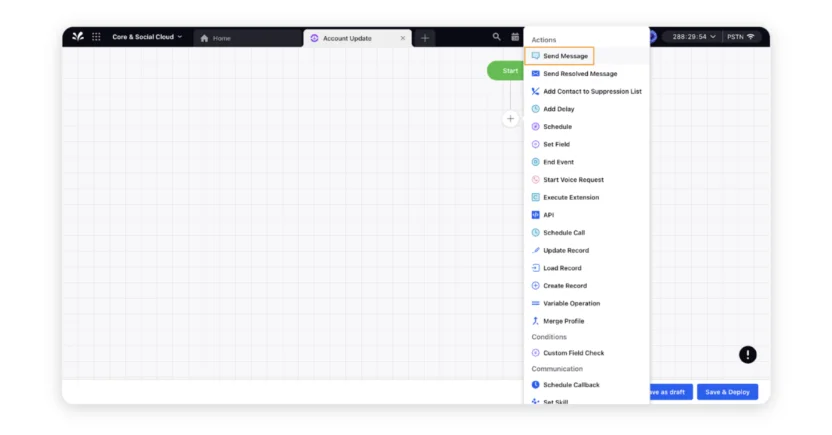
Sprinklr is a customer journey mapping automation platform that can analyze the performance of the journey

A powerful unified customer experience management (CXM) platform, Sprinklr covers marketing, advertising, social engagement, and customer service in one place. As it can tie together data from multiple channels, it gives you a comprehensive view of the customer relationship.

The catch is, Sprinklr is fairly difficult to set up and integrate, especially for new users.

Best for: Enterprise-level marketing and CX teams

Key automation features: Sprinklr’s Journey Facilitator lets you use a visual builder to create unified, omnichannel customer journeys. You can import leads to target audiences and even analyze the journey’s performance. Sprinklr AI also analyzes conversation history and customer intent to personalize all interactions and automate key workflows.


Executing Flawless Customer Journey Automation: Closing Thoughts

As you can see, automated customer journeys make your marketing efforts more efficient and deliver memorable customer experiences every step of the way. The notable payoffs are better customer relationships and your brand’s growth.

But to bring these events about, you need a powerful customer journey automation platform like MoEngage. To see a flawless journey in action, book a MoEngage demo today.

Ecommerce Customer Experience: 7 Actionable Tips for Success

  • UPDATED: 28 October 2025
  • 12 minread
Ecommerce Customer Experience: 7 Actionable Tips for Success
Reading Time: 12 minutes

Your customer can tell a lot about your brand just by the way you interact with them. The way a page loads, the tone of an email, the small delay between adding something to the cart and seeing it appear — it all says something. That’s really what Ecommerce customer experience is about.

Most of the time, the team behind the online store doesn’t see these moments. They look at dashboards and reports, which usually say things are fine.

But the customer’s version is quieter.

A personalized customer experience feels steady. The site behaves as expected, the tone feels right, and the service shows up when needed. They just leave when something feels off, and there’s rarely a message explaining why.

Having said that, this blog explores everything about Ecommerce customer experience, including why it matters, and how to improve it in real ways that actually help retain customers.


What is the Ecommerce Customer Experience?

An Ecommerce customer experience refers to everything a customer feels and encounters while interacting with an online store. It includes all interactions, from browsing and buying to delivery, support, and even returns. Overall, it’s the sum of every touchpoint that shapes how customers see your brand.

The importance of customer experience in Ecommerce

Customer experience in an Ecommerce platform shapes more than just a single sale. It quietly decides whether customers come back or drift toward another store.

Pages that load reliably, clear product descriptions, and support that feels human usually make a bigger difference than most teams realize. Most customers don’t complain about minor frustrations. They just shop elsewhere.

When an experience feels smooth, customers stick around longer. It builds a kind of quiet trust that keeps them returning without needing constant promotions or incentives. Brands that notice small irritations and fix them quickly usually see customer loyalty grow naturally, along with word of mouth.

Most importantly, this isn’t a one-time effort. Expectations shift constantly, and what worked yesterday may feel outdated today. Companies that pay attention, adjust, and keep improving how their store feels are the ones that tend to stay in a customer’s mind over time.


Using an Ecommerce Customer Experience Map

An Ecommerce customer experience map is a way to lay out everything a customer goes through when interacting with your online store. It starts from when they first hear about you, and moves through browsing, buying, delivery, and returns, laying out the Ecommerce customer journey.

Customer journey map that shows all 5 stages of the customer journey

The key is that this map is specific to your store and your customers, not a generic template from the web.

Why it’s useful:

  • Shows friction points clearly. If a lot of customers are leaving their carts at a certain stage, the map points to exactly where that happens.
  • Highlights small fixes that matter. Something as simple as clearer instructions or a slightly faster checkout can improve the customer experience more than big, complicated changes.
  • Gives teams a shared view. Marketing, design, support—they all look at the same customer journey and see the same sticking points.
  • Supports ongoing tweaks. Customer habits change. By updating the Ecommerce customer experience map, you can adjust before small problems turn into bigger ones.
  • Focuses on actual experience. It’s less about raw numbers and more about how customers actually feel while visiting your online store.

In practice, a good Ecommerce customer experience map turns guesswork into something visible. You can identify weak spots, prioritize fixes, and notice places where customers might feel overlooked.

Often, the map reveals opportunities that weren’t obvious before. It’s not perfect, and it doesn’t answer every question, but it gives you a place to start and a way to keep refining.


Measuring Ecommerce Customer Experience & ROI

Figuring out how customers really experience your store isn’t just about tracking sales. It’s about noticing patterns, behaviors, and small moments that add up, and seeing how they tie back to your brand.

How to perform Ecommerce customer experience analysis

You want to know what works, what annoys, and what actually keeps customers coming back. For that, you need to:

  • Decide what matters: Pick the things that really show how your customers feel. Is it fewer abandoned carts, faster checkout, or better post-purchase follow-up? Choose goals that actually reflect experience, not just vanity numbers.
  • Set up dashboards: Put all the engagement metrics in one place. Conversion rates, session times, repeat purchases, support tickets, feedback scores, and so on. It doesn’t have to be perfect, just usable, so you can spot trends without digging through endless spreadsheets.
  • Listen to the customers: Surveys, chats, reviews. Numbers tell one story, words tell another. Most frustrations hide where the data doesn’t show.
  • Look at every touchpoint: Track the whole journey. Where do customers hesitate? Where do they drop off? Which channel or device gives trouble? That’s where insights hide.
  • Check the returns: See how changes in experience actually affect revenue, customer retention, and repeat orders. Sometimes a small tweak pays off in ways you didn’t expect.
  • Keep going: Customer behavior shifts fast. What worked last month may feel slow today. Keep measuring, adjusting, and iterating.

Doing this turns assumptions into real, actionable insight. You start seeing the weak spots, noticing little wins, and making changes that actually matter, without just guessing what the customer wants.

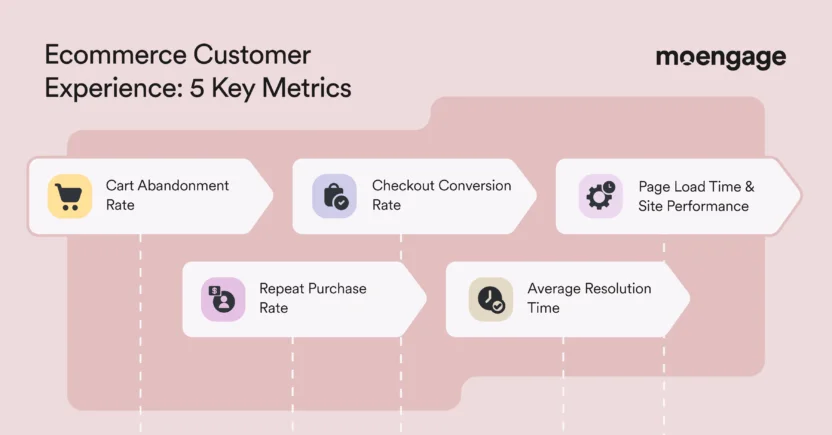
5 key Ecommerce customer experience metrics to prioritize

Measuring the right things matters more than measuring everything. For Ecommerce, some customer engagement metrics show exactly where customers get stuck, what frustrates them, and which steps impact revenue the most.

Key Ecommerce customer experience metrics include cart abandonment rate, checkout conversion rate, page load time and website performance, repeat purchase rate, and average ticket resolution time

  1. Cart Abandonment Rate: This metric analyzes how many customers put items in their cart but don’t finish the purchase. A high rate often signals friction in checkout. Maybe the shipping costs come as a surprise, forms are too long, or payment options feel limited. Keeping an eye on this metric helps spot problems that are literally costing sales.
  2. Checkout Conversion Rate: This metric shows the percentage of visitors who complete their purchase. If the number is low, the checkout may have confusing fields, glitches, or last-minute surprises that scare customers off. Even small tweaks, like simplifying a form or fixing a slow button, can make a real difference in revenue.
  3. Page Load Time and Site Performance: Slow pages push customers away quickly. Bounce rates tend to climb when product or category pages drag. Usually, faster pages mean more visitors get to checkout, and fewer abandon carts along the way.
  4. Repeat Purchase Rate: This metric tracks how many customers come back for another order, revealing loyalty and trust. Low repeat purchases can point to delivery delays, poor follow-up, or weak engagement. A higher repeat rate usually signals that the shopping experience was smooth and satisfying enough for customers to return.
  5. Average Resolution Time: This metric measures the time taken to solve a customer support ticket. Tickets about missing order tracking numbers, late deliveries, or returns show friction points. Fast and helpful responses often turn a frustrating moment into a reason for customers to stay loyal. To calculate this metric, divide the total time taken to solve all tickets by the total number of tickets resolved.

Focusing on these Ecommerce customer experience metrics gives your team a clearer picture of what drives retention. It makes the customer experience vision concrete and measurable, instead of guessing and hoping for the best.


How to Improve the Ecommerce Customer Experience

Improving customer experience in Ecommerce is rarely about one big change. Most of the time, it is the small things that add up. These are the moments that make a customer pause, smile, or quietly leave.

When a customer lands on your site, it is essential to notice how they feel. Are they confident, curious, or confused? Do they move through checkout smoothly, or do they hesitate and abandon their cart? These questions should guide almost every change you make.

1. Map the customer journey carefully

Do you really know every step your customers take, from landing on your site, browsing products, checking out, to delivery and returns?

Mapping the customer journey is more than drawing a diagram. It helps you see where customers hesitate, get confused, or drop off. To do this, you can:

  • Observe real customers navigating your site and note where they struggle
  • Identify touchpoints where friction or delays occur
  • Highlight areas where small improvements could create delight

Walking in your customers’ shoes reveals pain points you might otherwise miss. This gives clarity so that your decisions are based on observation and data, rather than assumptions.

2. Personalize every interaction

Customers notice when a brand “gets them.” Ecommerce personalization doesn’t need to be complicated. Even small, thoughtful touches make a big difference: suggesting recently viewed items, recommending complementary products, or tailoring promotions based on actual purchase history.

Think about it: would your customers appreciate random suggestions, or something that actually fits their needs? When done right, personalization builds trust, encourages repeat visits, and makes your site feel alive.

3. Simplify checkout and payment

Friction at checkout is a common reason for abandoned carts. Lengthy forms, hidden shipping costs, or confusing payment options push customers away. Simplifying the process can turn hesitant shoppers into confident buyers.

Some practical steps include:

  • Reducing the number of steps to complete a purchase
  • Offering multiple familiar payment options
  • Pre-filling forms or securely saving customer details
  • Displaying shipping costs and delivery times clearly upfront

Even small improvements in checkout can make a big difference in conversion rates.

4. Optimize site performance and mobile experience

Slow-loading pages frustrate visitors instantly. Everyone has left a product page that didn’t load quickly, and your customers are no different. Regularly testing site performance, navigation, and mobile usability ensures that browsing remains smooth and enjoyable.

Fast, responsive pages not only reduce bounce rates but also communicate reliability and professionalism.

5. Provide proactive and human customer support

Customer support shouldn’t exist just for complaints. Slow, robotic responses leave a negative impression, while timely, thoughtful interactions can create loyalty.

Consider whether customers can reach you when and where they need help. Multi-channel support via live chat, email, or social media gives flexibility, but personal attention is what leaves a lasting mark. Responding to small details in a thoughtful way can turn ordinary service into an experience customers remember.

6. Collect feedback and act on it

Feedback is only valuable if you take action based on it. Surveys, reviews, and post-purchase forms show frustrations and opportunities that numbers alone cannot.

Customers notice when their input leads to improvements. Even small changes, like clarifying a product description or fixing recurring checkout issues, remove friction and build trust. Feedback should be collected continuously rather than as a one-time effort. It helps the experience evolve over time.

7. Create consistency across channels

Customers move between mobile, desktop, apps, and social media constantly. Every interaction should feel like the same store. Inconsistent design, messaging, or checkout flows frustrate and confuse.

A consistent experience:

  • Reduces confusion and frustration
  • Builds trust and reliability
  • Makes the journey seamless across platforms

Ask yourself: if a customer switches from mobile to desktop, does it feel like a coherent journey to them, or are they entering a different site? Aligning the experience across channels ensures your brand feels reliable and professional at every touchpoint.


3 Best Ecommerce Customer Experience Platforms That Drive Retention

In Ecommerce, delivering a strong customer experience can make a real difference. The right Ecommerce customer experience platform helps brands engage customers effectively, build loyalty, and drive growth. Here are three platforms that stand out, each offering features to enhance Ecommerce interactions.

1. MoEngage

MoEngage is the best Ecommerce customer experience platform that helps brands implement cross-channel engagement to win more customers and retain existing ones

MoEngage is a cross-channel customer engagement platform that focuses on insights and personalization. It helps Ecommerce and retail brands deliver tailored experiences at scale. Over 1,350 global brands, including T-Mobile, Poshmark, and Kayak, rely on MoEngage to engage customers using AI-driven analytics and automation tools across multiple touchpoints.

Best for: Ecommerce brands seeking to implement omnichannel marketing strategies with a focus on personalization and automation.

Features focused on improving Ecommerce customer experience:

  • Omnichannel Engagement: Reach customers via email, push notifications, in-app messages, SMS, and more.
  • AI-Powered Personalization: Deliver tailored content and recommendations based on customer behavior and preferences.
  • Advanced Analytics: Gain insights into customer journeys and campaign performance to optimize customer engagement strategies.
  • Journey Orchestration: Plan and automate complex customer journeys across multiple channels to ensure timely, context-aware interactions.
  • Behavioral Segmentation: Segment customers based on real-time actions, such as browsing patterns, purchase history, or engagement levels, to create more relevant campaigns.
  • Push and In-App Campaigns: Send targeted messages in-app or via push notifications to drive retention, increase repeat purchases, and reduce churn.

Pricing Model: MoEngage offers a tiered pricing model based on Monthly Tracked Users (MTUs). The Growth plan comes at a price that varies based on the selected features and user volume. Larger Ecommerce brands can opt for the Enterprise plan, which includes advanced features, higher limits, and dedicated support with custom pricing available.

2. ActiveCampaign

ActiveCampaign is a tool that helps brands improve the customer experience in Ecommerce

ActiveCampaign is a customer experience automation platform that combines email marketing, automation, sales automation, and CRM tools. It helps Ecommerce brands automate repetitive tasks and create personalized customer journeys to increase engagement.

Yet, a few drawbacks include a steep learning curve, particularly with the automation builder, and an interface that many users find less intuitive than competitors. While the support team is helpful, some users mention that setup and navigation can be time-consuming, which can slow down smaller teams looking for quick implementation.

Best for: Ecommerce brands looking for an integrated solution that combines email marketing with CRM and sales automation.

Features focused on improving Ecommerce customer experience:

  • Customer Journey Mapping: Visualize and automate customer journeys to deliver timely and relevant messages.
  • Segmentation and Personalization: Create dynamic segments and deliver personalized content based on customer behavior.
  • Sales Automation: Automate sales processes to nurture leads and close deals efficiently.

Pricing Model: ActiveCampaign offers a tiered pricing structure, with plans starting at $15 per month for the Starter plan (billed annually), which supports up to 1,000 contacts. Additional tiers include Plus ($49/month), Pro ($79/month), and Enterprise (custom pricing). Pricing increases based on the number of contacts and features included. Monthly billing is available at higher rates.

3. Omnisend

Omnisend is an Ecommerce customer experience software tool

Omnisend is a marketing automation platform designed for Ecommerce brands. It offers a suite of tools to create personalized email, SMS, and web push campaigns, helping brands engage customers and drive conversions.

However, a few limitations of Omnisend include limited data analytics and design flexibility, which can make it harder to gain deeper insights or create more visually unique campaigns. Several users also mention that the customization options for email templates and personalization features feel restrictive. These gaps can be challenging for brands looking to scale their marketing with more advanced tools.

Best for: Ecommerce brands seeking an integrated solution for multichannel marketing automation.

Features focused on improving Ecommerce customer experience:

  • Multichannel Campaigns: Reach customers through email, SMS, web push, and more.
  • Pre-built Automation Workflows: Utilize ready-to-use automation templates for common ecommerce scenarios.
  • Product Recommendations: Display personalized product suggestions to increase average order value.

Pricing Model: Omnisend offers a free plan with limited features (500 emails per month to 250 contacts). The Standard plan starts at $16 per month for up to 500 contacts, and the Pro plan starts at $59 per month for up to 2,500 contacts. Pricing increases based on the number of contacts and messages sent (email and SMS volume).


Ecommerce Customer Experience Trends to Watch For

Ecommerce is evolving fast, and customer experience is now a key factor in who succeeds and who falls behind. The global Ecommerce market size was estimated at $25.93 trillion in 2023 and is projected to reach $83.26 trillion by 2030, growing at a CAGR of 18.9%.

Staying on top of the trends shaping customer experience is essential for Ecommerce brands that want to remain competitive. Here are the key shifts shaping how customers shop today.

1. AI-Driven Hyper-Personalization

Customers don’t want generic experiences. According to McKinsey, about 71% of customers expect personalized interactions, and 76% get frustrated when brands fail to deliver. Real personalization now means looking at browsing behavior, past purchases, and preferences to offer exactly what each customer needs at the right moment. It’s no longer just product recommendations.

Some brands are creating “segment-of-one” journeys where every shopper gets their own path. The payoff is higher conversions, stronger loyalty, and customers who actually feel understood.

2. Conversational Commerce and AI Chatbots

Voice shopping and AI chatbots are becoming standard. Around 35% of Americans own smart speakers, and voice technology is expected to hit $50 billion by 2029.

Modern AI assistants do more than answer questions. They guide product discovery, handle returns, recover abandoned carts, and even complete purchases. They are available all the time and can handle many conversations at once. Customers get instant help. Ecommerce brands get scalable support without sacrificing quality. It’s a win-win situation.

3. Immersive AR and VR Shopping

One of the biggest limitations of online shopping is that customers cannot touch or try products. AR and VR are changing that.

The AR Ecommerce market is growing from $5.8 billion in 2024 to $38.5 billion by 2030. Virtual try-ons let shoppers see how clothes or makeup look, and furniture apps show how a sofa fits in a living room.

These tools increase confidence, speed up decisions, and reduce returns. They also make shopping more engaging, something customers enjoy rather than just completing.

4. Seamless Omnichannel Experiences

Shoppers move between phones, laptops, apps, and stores without thinking about channels. They expect the same experience to work everywhere. Browsing on mobile, checking reviews on a laptop, buying in-store, it should all feel connected, leading to an omnichannel customer experience.

The challenge is that touchpoints keep multiplying. Online stores that manage this well see happier customers and better loyalty. It takes technology and team alignment, but there is no other way.

5. Loyalty Programs That Build Real Connections

Loyalty programs today go beyond points or discounts. The best programs create emotional connections through personalized perks, exclusive access, early releases, and tiered rewards that grow with engagement.

Customers who feel valued return, share, and engage more. For Ecommerce brands, the benefits include recurring revenue, higher retention, and more upsell opportunities. Combine loyalty with subscriptions, and customers stick around longer. Reward loyalty, and it often comes back in return.


Delivering Exceptional Ecommerce Customer Experiences: Conclusion

A great Ecommerce customer experience comes from understanding your customers’ needs, anticipating what matters to them, and making every interaction feel natural and helpful. With MoEngage, you can design personalized journeys, track behavior across channels, and continuously improve the way customers engage with your Ecommerce brand.

Book a demo and see how a platform like this turns insights into actions and helps make the customer experience on your Ecommerce platform feel seamless and thoughtful.

In-App Messaging: Examples, Best Practices, and Tools

  • UPDATED: 30 December 2025
  • 15 minread
In-App Messaging: Examples, Best Practices, and Tools
Reading Time: 15 minutes

There’s a small corner in every app that quietly shapes whether a customer stays or drifts away: in-app messaging. It’s the channel that speaks when emails go unread and push notifications get swiped aside.

Sometimes, it’s a gentle reminder, sometimes a nudge to finish what they started, and sometimes just the right bit of help at the right moment. Most customers don’t recognize these messages for what they are, but their customer journey often depends on them.

Not all in-app messages work. The difference between a message that connects and one that irritates usually comes down to context: what the customer is doing, thinking, or expecting at that moment.

This blog looks at how in-app messaging actually drives engagement and what best practices help these messages become useful, instead of background noise.


What Is In-App Messaging?

In-app messaging refers to sending targeted messages to customers while they are using the app. The message may appear as a banner, a slide-up card, or a full-screen overlay. It can guide customers through a feature, announce an offer, or induce them to stay when they’re about to leave the app.

But how does in-app messaging work?

It feels more like a conversation happening in context. Timing is what makes it different.

Basically, in-app messages arrive when the customer is paying attention; not before, not after. That is, when the customer has already opened your app and is using it. Done well, this kind of message doesn’t interrupt the customer. It feels almost invisible, and yet quietly nudges customers toward the action you want them to take.

In-app messaging vs. push notifications: Understanding the difference

In-app messaging and push notifications can seem similar at first. Both pop up on a screen. Both try to get attention. Yet they work in very different ways.

In-app messages appear while the customer is actively using the app. They guide, explain, or help with what the person is doing at that moment.

Meanwhile, push notifications, such as location-based notifications or rich push notifications, reach them when they’re not using the app, aiming to bring them back.

Here’s a simple breakdown that makes the contrast clearer:

Aspect In-App Messaging Push Notifications
Where it appears Inside the app, during active use On the device home screen or notification tray
Purpose Guide, educate, or assist during usage Re-engage or bring customers back to the app
Timing Real-time, context-aware Scheduled or trigger-based (often time-sensitive)
Interactivity Can include buttons, forms, or walkthroughs Limited – mostly one-click redirects

For a deeper understanding of how they differ, explore our detailed guide about in-app messaging vs. push notifications.


5 Common In-App Messaging Use Cases

In-app messages can guide customers through new features, reassure them that you’ve responded to their query, tell them about any new offers, or simply remind them to complete a task. Let’s take a look at a few in-app messaging use cases in detail that typically work well.

1. Onboarding new customers

When a customer opens an app for the first time, they are both curious and unsure. In-app messaging can help them find their way through the app. That’s why you can easily use this channel when following customer onboarding best practices.

A short walkthrough. A tip about a key feature. A small note after completing the first action.

In-app messages give a bit of confidence early on without overwhelming the customer. Those first moments often shape whether someone sticks around or churns in the first few days.

2. Feature announcements

Launching a new feature and hoping customers will notice it rarely works. In-app messaging can point it out in context. It can be a small card, a subtle banner, or a brief overlay explaining what’s new and why it matters.

Because it appears while the customer is engaged, they are more likely to try it instead of just reading about it somewhere else and forgetting.

3. Contextual prompts and nudges

Sometimes, all it takes for a customer to make a purchase is a small push. Whether it’s a reminder about items still in a cart or a suggestion for a related feature after completing a step, in-app messaging works effectively because it reacts to customer behavior in real-time. That immediacy can turn hesitation into action.

4. Transactional or confirmation messages

Receipts, order updates, confirmations — not every one of these always needs a push notification.

Delivered inside the app, these kinds of transactional messages keep things flowing. Customers don’t have to switch screens or check an inbox.

They see what’s relevant while staying in the moment. It’s simple, quiet, and builds trust.

5. Feedback and surveys

Finally, in-app message use cases include surveys and customer feedback.

Asking for feedback is tricky. Waiting days for an email often misses the moment.

In-app messaging makes it feel natural and easy to get customer feedback. A quick emoji rating after a ride or a quick question after a purchase can be low-effort, immediate, and more likely to capture real sentiment before it fades.


6 Real-Life In-App Messaging Examples to Learn From

Seeing in-app messaging in action makes it easier to understand why it matters. The strongest examples show timing, context, and intent. Each one solves a problem, nudges a customer toward something meaningful, and often blends into the app so quietly that it hardly feels like a message at all. Here are a few in-app message examples worth noting.

1. Onboarding Guidance: Duolingo
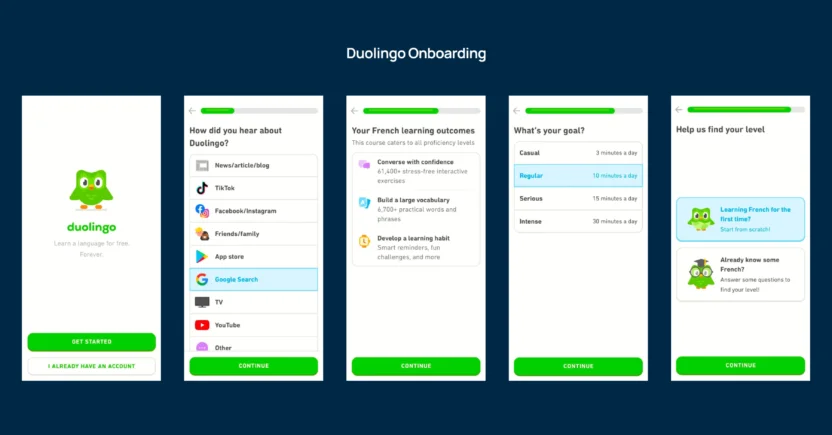
In-app messaging examples from Duolingo

Source: https://uploads-ssl.webflow.com/5f7ae188ef1b6bacc308dbdf/62c306daefce299b43d9fd48_duolingo-onboarding.png

Duolingo sends a series of in-app messages to guide new learners through the first lessons. Each prompt tells the user what to do next, reminds them of streaks, or celebrates small wins. It removes confusion and friction while maintaining motivation.

The main takeaway is to break onboarding into small steps and celebrate progress along the way. Simple, gentle guidance makes a difference in those first few days.

2. Feature Highlight: Spotify
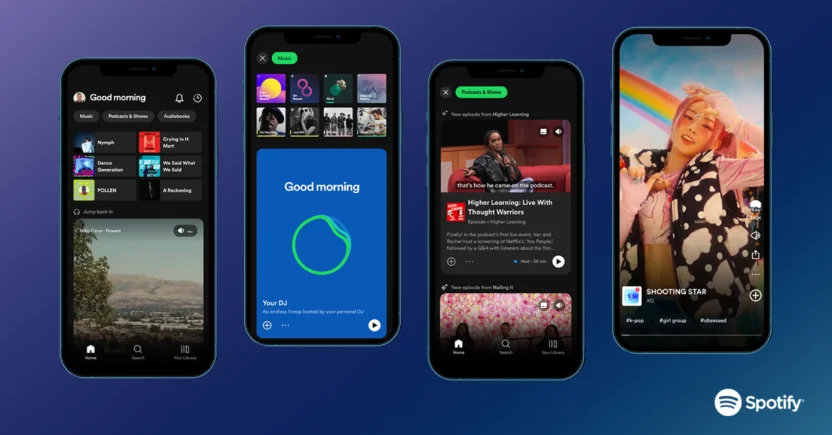
Spotify uses messaging in app to send feature highlights

Source: https://storage.googleapis.com/pr-newsroom-wp/1/2023/03/New-Home-Feed_FTR-Header.png

Spotify introduces new features through targeted banners or overlays while customers are already using playlists. The messages explain what’s new and include a direct call to try it immediately. Because the timing matches engagement, adoption tends to be higher.

For your app, you can track moments when someone might benefit from a new feature and present it right there rather than relying on emails or push notifications that might get ignored.

3. Announcement: Amazon
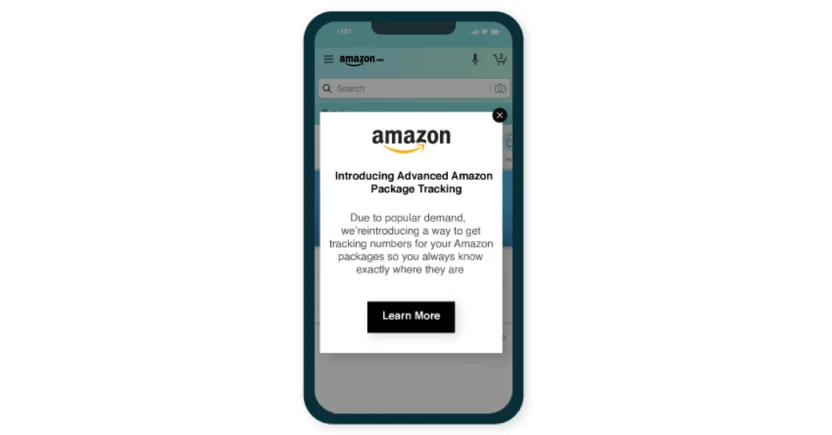
Messaging in app from Amazon
Source: https://cdn3.notifyvisitors.com/blog/wp-content/uploads/2020/12/Amazon-makes-important-announcements-through-app-push.png

Amazon shares relevant news and announcements with shoppers through subtle in-app messages while they are still browsing. These messages are effective because they arrive at the right moment and make customers feel like you genuinely care about them, prompting them to be notified about any changes that could impact their experience.

A takeaway for your app is to identify what your customers actually feel about their experiences with your brand, and then provide small, relevant nudges catering to their feedback

Which leads us to the next example.

4. Feedback Request: Uber
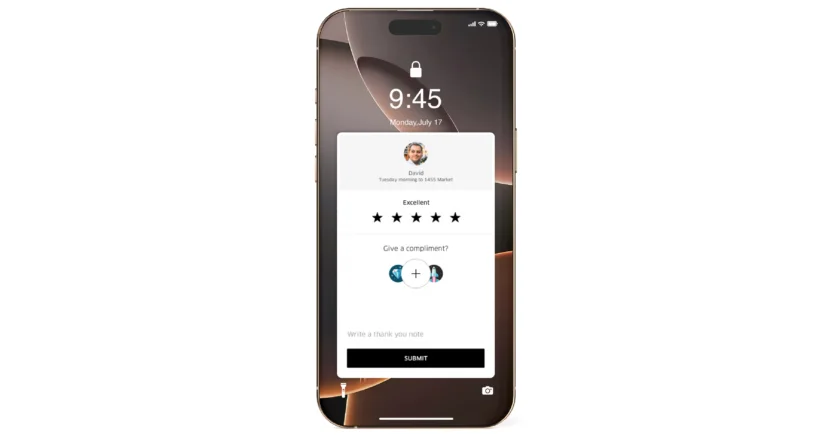
Uber sends a message in app asking customers for feedback after a ride
Source: https://www.tidio.com/wp-content/uploads/rating-uber-1200×789.png

One of the most common in-app messaging examples is when Uber prompts riders for feedback immediately after a trip. It is low-effort, just a few taps, and the timing is perfect because the experience is fresh. The method captures genuine sentiment without frustrating the customer.

You can apply the same approach in your app by asking for feedback while the experience is still in mind, instead of sending B2C sales follow-up emails days later.

5. Promotional Offer: 18Birdies
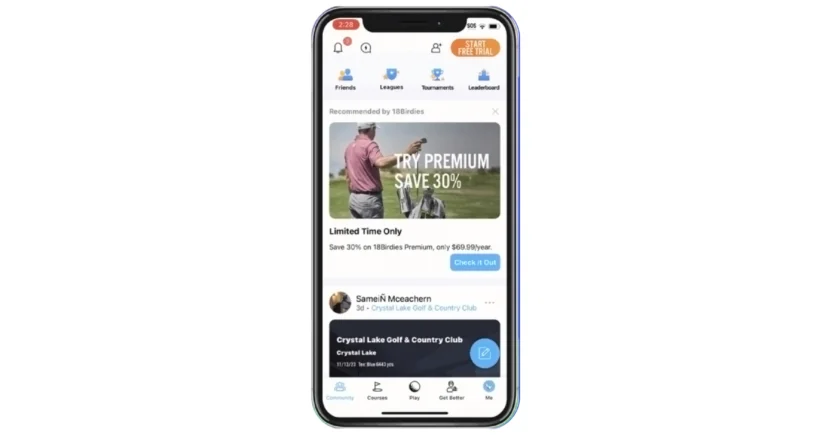
One of the in app message examples from 18Birdies which is a golf GPS app
Source: https://help.18birdies.com/article/620-activity-sharing

Partnering with MoEngage enabled 18Birdies, a Californian golf GPS app, to increase in-app stickiness by welcoming new golfers and making them aware of the app’s new features.

The app now delivers offers and loyalty rewards through in-app messages while customers navigate the ordering interface. Their messages are personalized, relevant, and often time-sensitive. These messages work because they feel like part of the journey, rather than a separate marketing push.
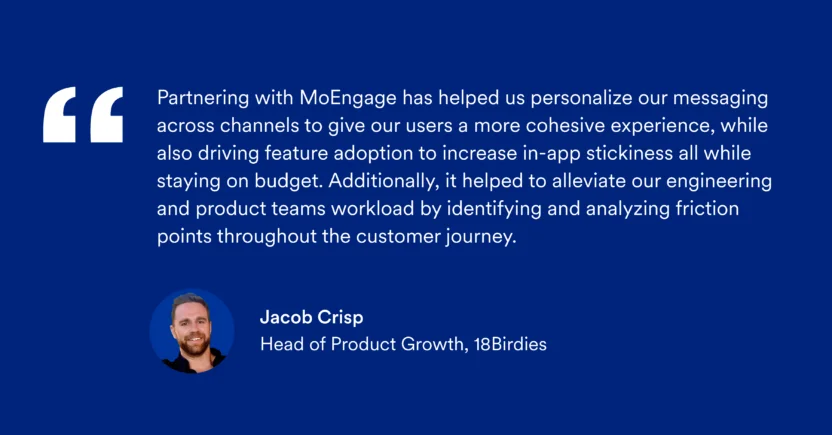
A testimonial of how 18Birdies has increased its in-app stickiness after using an in app messaging platform like MoEngage

For your app, integrating promotions where the user is already active usually increases engagement and makes the message feel helpful rather than disruptive.

6. Shopping Assistance: Sephora
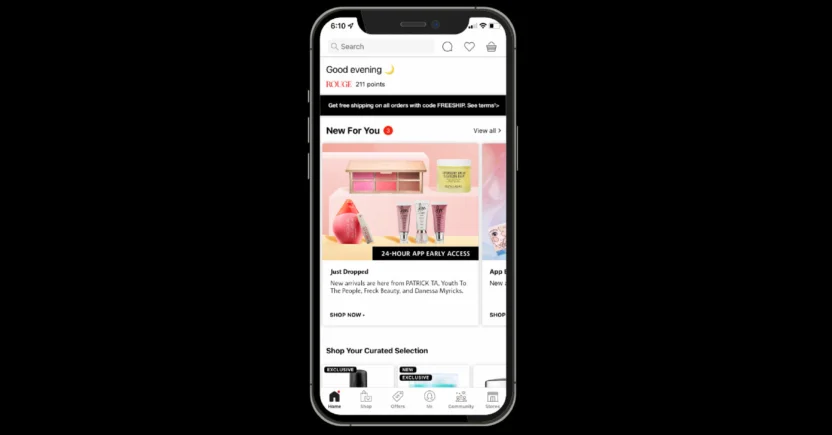
An in app message from Sephora to help customers while shopping

Source: https://www.sephora.com/contentimages/campaigns/App/2022-06-app-evergreen-asset-update-site-desktop-landing-page-980×900.jpg?imwidth=980

Sephora sends in-app messages to help customers while they shop. Personalized product recommendations, short tutorials, or limited-time offers pop up while someone is browsing. The messages are contextual.

For example, showing items related to what’s in the cart or suggesting complementary products at checkout works. Why? Because it provides something useful without interrupting the shopping flow.

In your app, you can do something similar. Offer guidance, tips, or suggestions at the moments when customers are most open to them. It makes the experience feel more helpful than just promotional.

These in-app message examples show that this channel is more than just sending notifications inside an app. The key is delivering the right message at the right moment. Done well, it nudges customers, reinforces trust, and quietly keeps them moving toward the right direction.


How to Craft Engaging In-App Messages

Just sending a message inside your app isn’t enough. Customers see dozens of prompts every day, and if your message doesn’t feel relevant, timely, or useful, it’s usually ignored. Sometimes, it even annoys them.

Crafting in-app messages that actually work takes thought, attention to context, and some precision. The goal isn’t simply to communicate. It’s to guide, connect, or occasionally delight the customer while they’re actively using the app.

Below are some in-app messaging best practices that make a real difference.

1. Segment your audience thoughtfully

Not all customers are the same, and your messages should reflect that. Segmenting based on behavior, preferences, or app usage patterns allows you to send messages that actually matter to each group.

For example, new customers may get onboarding tips, while long-term customers see rewards that improve customer loyalty, or advanced feature suggestions.

Thoughtful customer segmentation makes messages more personalized rather than generic, which improves engagement and reduces irritation. When you tailor messages to what different customers actually need or want, they are far more likely to take action.

2. Personalize based on customer behavior

Generic messages rarely resonate. Effective in-app messaging leverages insights into the customer’s behavior, including their actions, interactions, and current stage. It makes use of what you know about the customer, the actions they have taken, what they have interacted with, or where they are in their journey. Personalized marketing makes a message feel relevant.

For example, suggesting a feature the customer has not tried yet or reminding them about an incomplete action shows that your app ‘understands’ them. Context is critical. The more the message matches what the customer is doing, the more likely they are to respond positively. In most cases, even small touches of personalized communication can significantly improve engagement.

3. Keep messages short and clear

Customers don’t have time to read long paragraphs while navigating an app. A concise message that focuses on one clear action is usually noticed and acted upon. Stick to one point at a time, use simple language, and make the call-to-action obvious.

For example, instead of saying, “Explore our new features and see how they can help you get the most out of our app,” you could say, “Try our new feature now — it helps you track your progress instantly.”

Some ways to keep it short and clear include:

  • Focusing on a single idea per message.
  • Using plain, everyday language.
  • Making the next step obvious, so the customer doesn’t have to guess.

Short, clear messages reduce friction, improve customer engagement, and make customers feel the app respects their time.

4. Maintain a consistent tone and voice

Messages should feel like a natural extension of the app experience rather than impersonal alerts. Using a consistent tone, whether professional, friendly, or playful, helps customers recognize and trust your messages. It also reinforces your brand identity.

For instance, a finance app might use clear, reassuring language, while a lifestyle app could take a more casual or energetic tone. Consistency makes messages feel human and reliable, rather than robotic or pushy. Even small changes in tone can significantly impact how the message is perceived, so paying attention to this detail matters.

5. Provide value, not just promotion

Customers respond best when a message provides genuinely helpful content, rather than purely promotional content. Tips, shortcuts, reminders, or contextual guidance often outperform marketing messages alone.

For example, a productivity app could highlight a time-saving feature rather than simply announcing a new subscription plan. Prioritizing value helps build trust and strengthen the customer relationship.

In most cases, customers notice when a message actually helps them. Value-driven messaging leads to better engagement and a stronger long-term connection.

6. Use visuals and interactive elements

In-app messages do not have to be plain text. Icons, images, or interactive buttons can make a message more noticeable and more actionable. A well-designed message attracts attention, clarifies the point, and guides the customer toward the next step.

For example, a progress bar showing task completion or a ‘Try Now’ button can dramatically increase engagement. The visuals should support the message and not distract from it. In many cases, even small graphical cues can make a message feel more approachable and easier to act upon, making it more friendly and easier to take action.

7. Time messages appropriately

Even a perfectly written message fails if it appears at the wrong moment. In-app messages are most effective when they align with the customer’s current activity or need. Showing a tip about a feature while the customer is navigating it is far more effective than sending the same message hours later. Timing should feel like a gentle tap on the shoulder, rather than a random interruption.

Good timing usually involves:

  • Delivering tips while the customer is actively using the feature.
  • Avoiding messages that come too early or too late.
  • Treating the message as helpful guidance rather than a forced alert.

8. Test and iterate

No single message works perfectly for every customer. Testing different versions, like variations in wording, timing, placement, or design, helps you figure out what actually resonates.

Monitor customer engagement metrics, such as clicks, completion rates, or dismissals, and adjust your approach accordingly. Iteration ensures your in-app messages stay relevant over time.

Without testing, messages can quickly become stale or ignored. Small, incremental adjustments often lead to better long-term performance than trying to create a perfect message from the start.


In-App Messaging Tools: How They Work & How to Choose One

Running in-app messaging well takes more than just drafting a few messages and hoping for the best. It requires a platform that can handle delivery, targeting, personalization, timing, and analytics.

These in-app messaging tools sit between your app and your audience, allowing you to reach customers in ways that feel natural and timely, rather than forced or generic. They analyze engagement, help manage who sees what and when, and provide insights so your next message isn’t just a guess. In most cases, having the right tool can make messaging feel like part of the app rather than an interruption.

How to choose an in-app messaging platform

Choosing the right in-app messaging platform is not just about the features it offers. You need to think about how it fits your team, your app, and the journey your customers take. It should make messaging seamless, insightful, and actionable without adding technical headaches.

The goal is to focus on the content, the timing, and the value your messages provide, not the tools themselves.

Start by considering the types of messages you plan to send, the level of personalization required, and the kind of analytics and reporting you want. The right platform should enable your team to focus on crafting effective messages rather than grappling with technical hurdles.

Here are the key features to look for in an in-app messaging software platform:

  • Targeting and Segmentation: Being able to segment customers by behavior, demographics, or app usage is essential. This ensures the messages reach the right customers at the right time. It reduces wasted prompts and helps prevent annoyance. Usually, the more granular your segmentation, the more relevant your messaging can be.
  • Personalization Capabilities: Tools that allow dynamic content, personalized greetings, or behavior-triggered messages make in-app messaging feel alive. Customers are far more likely to act when the message seems tailored to their journey. Even small touches, like referencing the last action they took in the app, can make the difference between engagement and dismissal.
  • Timing and Trigger Options: The context of a message is crucial. An in-app messaging platform should let you schedule messages, trigger them based on events, or set conditions so they appear exactly when the customer is most likely to notice and respond. Sending it too early or too late usually misses the mark. Timing is often more important than wording.
  • Analytics and Reporting: Understanding what works and why is crucial. Look for tools that show open rates, engagement metrics, conversions, and behavioral insights. Having that data helps refine the strategy. If a message is ignored or dismissed, you can see patterns and make adjustments, rather than guessing what happened.
  • Multi-Format Messaging: Some platforms allow banners, nudges, carousels, or pop-ups. Using multiple in-app formats means you can match the type of message with the context. For example, a walkthrough might work better for onboarding, while a banner could suffice for an informational note. Flexibility helps you meet customers where they are.
  • Ease of Integration: The last thing you want is a tool that requires complicated coding or constant troubleshooting. It should integrate smoothly with your app, CRM, or other marketing tools. Difficult setups slow campaigns and make the system feel more like a burden than an aid.
  • A/B Testing and Experimentation: No message is perfect for everyone. Platforms with built-in A/B testing make it easier to experiment with content, design, and timing. You can see which version resonates better with different customer segments. Testing takes the guesswork out of the equation and allows your messaging to improve steadily rather than remaining static.

But we’ve overlooked a key criterion in this list: pricing. Related to this factor, MoEngage’s perspective on Branch’s 2025 State of App Growth Report is interesting. The report states that the biggest challenge for 36% of app marketers is scaling without increasing costs. To overcome this challenge, MoEngage recommends investing in retention-focused lifecycle strategies.

Expanding on the pricing factor…

How does in-app messaging pricing work for tools & APIs?

Pricing for in-app messaging tools typically depends on the number of active users, the volume of messages you send, or the total app audience. Some platforms stick to a monthly subscription, while others charge based on how many messages are sent or which features you access.

However, the exact structure often varies, and it’s worth paying attention to the details before making a commitment. In most cases, basic plans start around $50–$200/month for small apps, covering core messaging features and limited monthly sends. Mid-tier plans, often $200–$1,000/month, add advanced segmentation, analytics, and automation. Enterprise tiers can exceed $1,000/month, offering full customization, unlimited messaging, dedicated support, and integration options. Some tools also charge per active customer or per message sent, which can be ideal for apps with fluctuating usage.

The takeaway here is simple: costs usually scale with audience size, message complexity, and the features you want. Looking at pricing alongside what you actually need, and what kind of return you expect, makes it much easier to choose the right in-app messaging solution for your business.

How in-app messaging works on popular customer engagement platforms

Selecting the right in-app messaging platform can significantly impact the effectiveness of your engagement strategy.

Different platforms offer different levels of control, personalization, and ease of use, and they aren’t all built the same way. Some focus on mobile-first engagement, others lean more toward email or B2B workflows. It helps to see what each one actually does in practice and where they might fall short.

MoEngage In-App Messaging
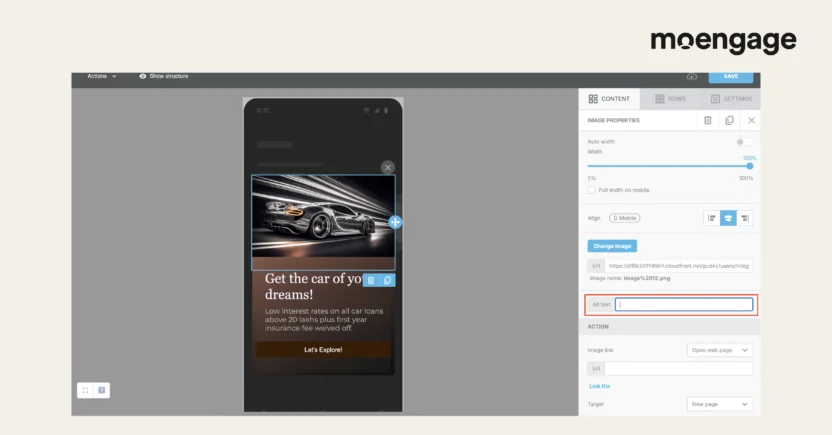
MoEngage is an in app messaging platform that lets you easily design in-app messages with a drag-and-drop editor

MoEngage delivers a complete solution for in-app messaging, combining strong personalization with usability that doesn’t require constant developer intervention. The platform uses AI-driven insights so marketers can target messages based on real behavior, preferences, or lifecycle stages, often without needing to code.

Key capabilities that set MoEngage apart:

  • Advanced Personalization Engine: You can pull from nearly unlimited data points to segment audiences and send personalized dynamic product messages that feel genuinely tailored to what a customer is doing at that moment.
  • Intuitive Drag-and-Drop Editor: Ready-made in-app templates and a visual editor let you create messages on your own. No developer needed for most customizations.
  • Contextual Targeting: Messages can appear in specific parts of the app, triggered by actions or contextual cues, which helps ensure the timing feels natural.
  • Cross-Channel Orchestration: MoEngage integrates in-app messaging with push, email, SMS, and web push, allowing you to deliver a consistent omnichannel customer experience.
  • Real-Time Optimization: Analytics and A/B testing tools let you measure what’s working and adjust messaging quickly, rather than guessing and hoping it works.

MoEngage’s platform is designed for B2C marketers who demand both power and simplicity, enabling sophisticated campaigns without the constant need for technical resources.

Braze In-App Messaging
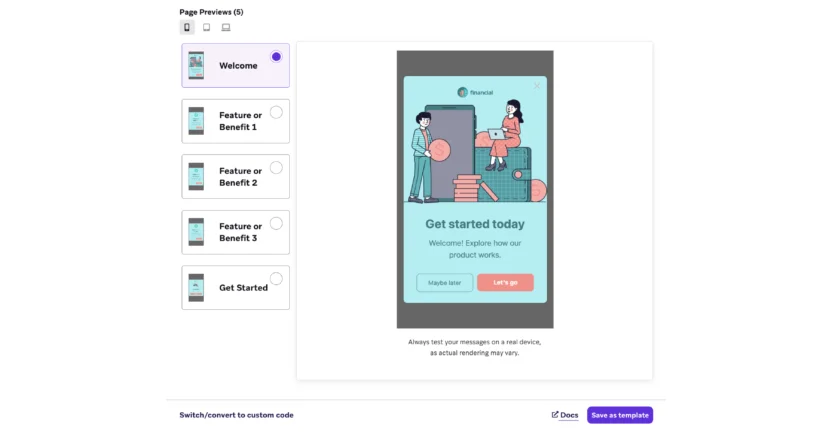
Braze in app messaging can be designed with its editor

Braze offers in-app messaging as part of its broader engagement suite. You can trigger messages based on user actions and use some template options, but customization often still requires developer work, especially for formatting or advanced behavior. It does have AI copywriting tools, though the quality can be inconsistent.

A few limitations of Braze often come up in user feedback. Many users say Braze has a steep learning curve. It takes time to get comfortable with its advanced features and reporting tools. The reporting and customization options are also somewhat limited, which makes building custom reports or getting detailed analytics harder than expected. Some reviewers have mentioned issues with pricing transparency and segmentation accuracy, while others felt that customer support tends to give surface-level answers instead of digging into complex problems.

Learn more about how MoEngage compares to Braze.

Adobe In-App Messaging
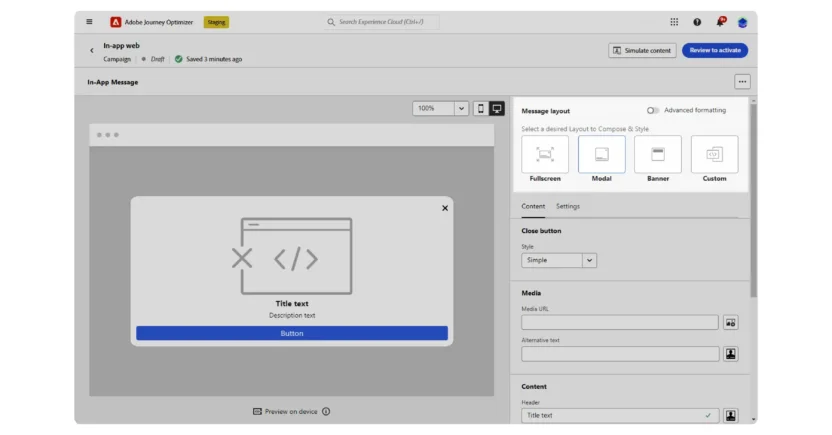
Adobe in app messaging is a part of Journey Optimizer

Adobe’s in-app messaging is part of Adobe Journey Optimizer, a comprehensive omnichannel platform for mobile engagement. It offers capabilities in in-app messages, push, content cards, real-time personalization, and behavior-based delivery rules.

That said, many users mention that the platform comes with a steep learning curve, especially for those new to Adobe’s ecosystem. The setup process can also be complex, often requiring significant time and coordination to get everything running smoothly. Smaller teams tend to find it expensive for what it takes to implement, and some reviewers note that the overall complexity can slow down integration and make day-to-day use more challenging.

Read about the detailed comparison between Adobe Marketo Engage and MoEngage.


How to Engage Customers with In-App Messages: Concluding Thoughts

Crafting thoughtful in-app messaging can transform your app from a tool into a truly engaging experience for your customers. Platforms like MoEngage make it easier to deliver personalized, timely, and impactful messages inside your mobile app that drive action and loyalty.

If you’re ready to see it in action, try a demo today and explore how in-app messaging can elevate your customer engagement.


CDEP in the AI-verse: Why Do Traditional Engagement Platforms Fall Short in the New Paradigm?

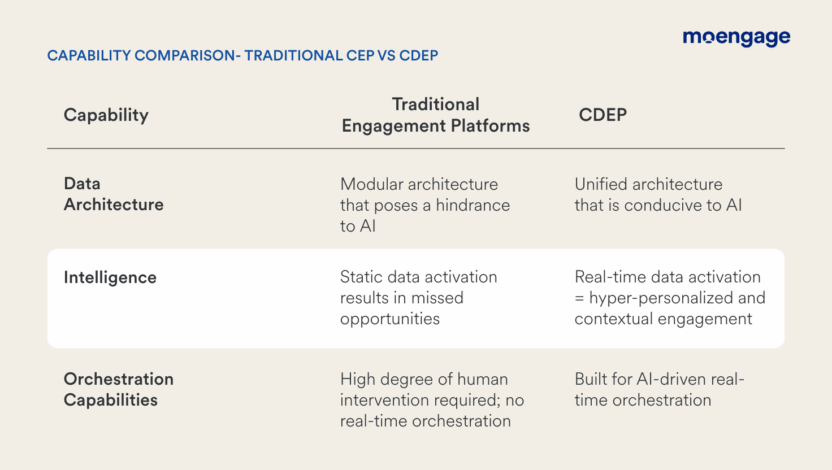
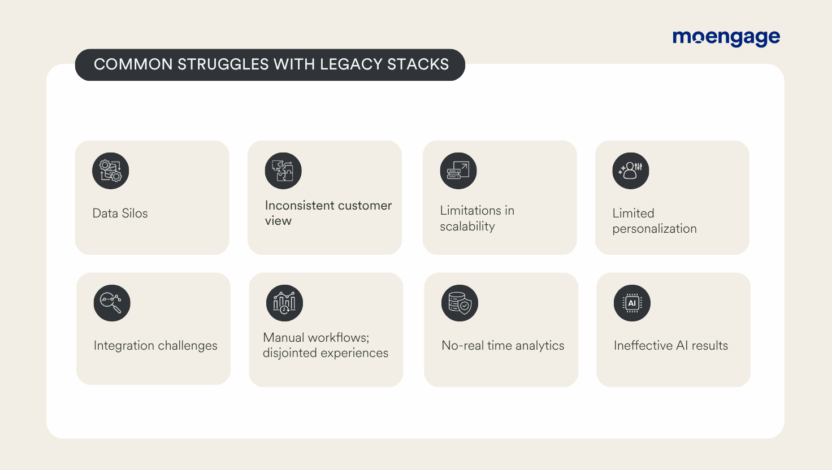
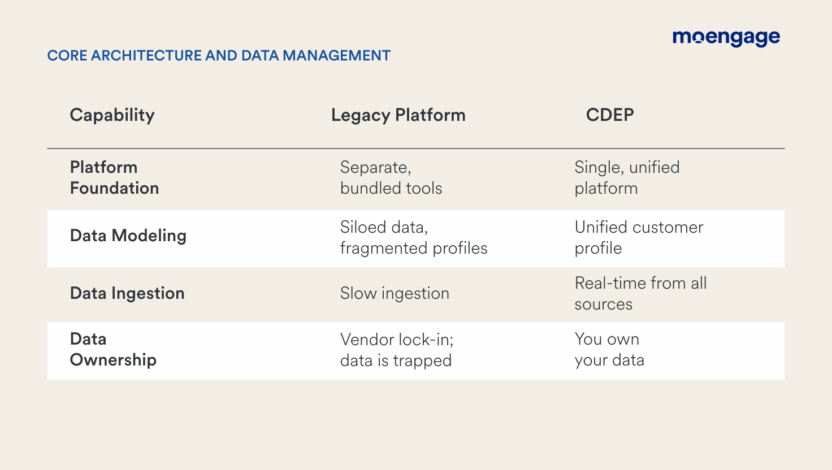
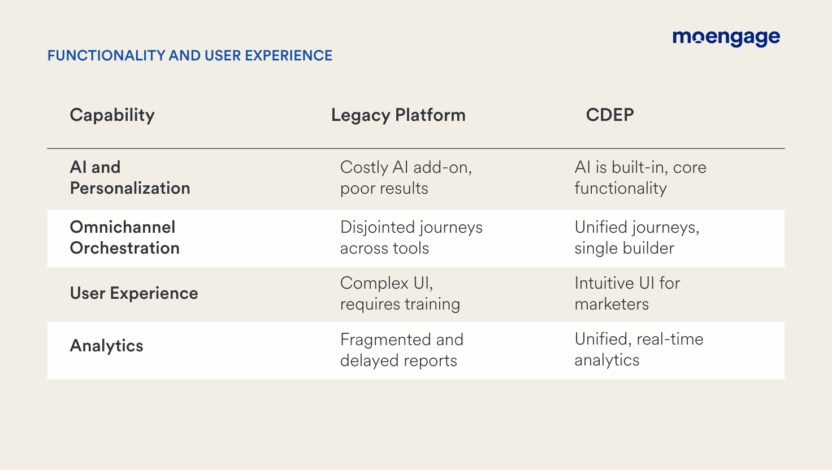
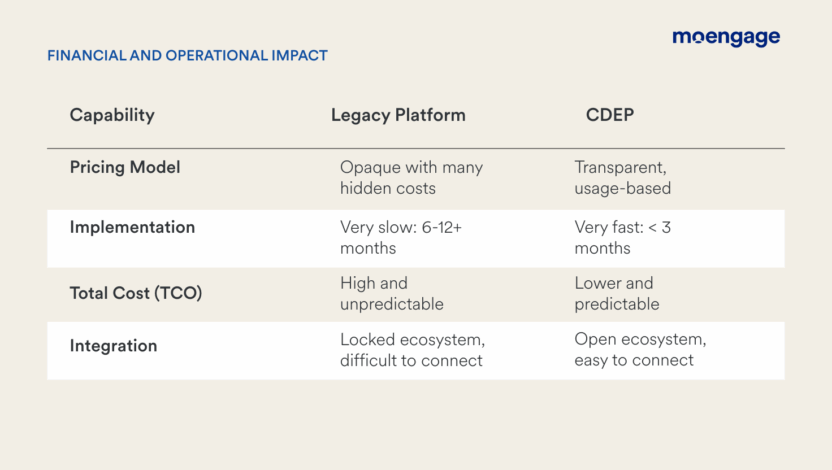
In today's AI-verse, traditional engagement platforms fail because their siloed architectures cripple AI with fragmented data. Customer Data and Engagement Platforms (CDEPs) provide the solution: a unified, AI-native foundation. This enables the real-time, intelligent orchestration necessary to meet modern customer expectations and build a future-proof tech stack.

  • UPDATED: 26 March 2026
  • 5 minread
CDEP in the AI-verse: Why Do Traditional Engagement Platforms Fall Short in the New Paradigm?
Reading Time: 5 minutes

In this AI-verse we inhabit, your customers have evolved. Intelligent algorithms have trained your customers to expect experiences that anticipate their needs, remember their preferences, and predict their next move. 

The question isn’t whether you’re ready for AI. The real question is whether your engagement platform can deliver the AI-native experiences your customers now consider standard.

The truth is that AI is only as intelligent as the data it is trained on. This is solely the reason why most AI initiatives fail.

Welcome to the AI-Verse

Personalization is so old-school in 2025 that it’s a given. In the AI-verse, consumers expect prescient, context-aware experiences that anticipate their needs before they even articulate them.

But the cold truth is that most traditional engagement platforms were built for a pre-AI world. They were made for a time when static segmentation was new and ‘first name’ personalization was seen as a heartwarming initiative from brands.

But times have changed. In the AI-verse, traditional customer engagement platforms are not only outdated but also hinder your brand’s ability to comprehend and meet customer needs.

Where Traditional Platforms Crack Under the AI Pressure

AI has become the ultimate litmus test to measure the efficiency of a Martech stack,  ruthlessly exposing every crack, gap, and limitation in traditional data platforms. While these platforms could limp along in simpler times, AI’s demands have revealed their fundamental inadequacies. AI models are simultaneously data-hungry and data-quality sensitive; they need vast amounts of information but will fail spectacularly if that data is incomplete, inconsistent, or stale.

Traditional customer engagement platforms have done nothing to eradicate data fragmentation. However, they may have added to the data fragmentation and siloing. This fragmented customer data, scattered across touchpoints that traditional platforms struggle to unify, creates devastating AI blindspots.

When AI can’t see the complete picture, it makes decisions based on incomplete information, resulting in messages sent to the wrong audience at the wrong time. Despite all the heavy investment into these technologies, customers still end up feeling misunderstood.

The Acquisition Trap: Short-Term Growth Strategy Over Long-Term AI Strategy

In a bid against time to ensure retention of their market shares, traditional enterprise platforms went on a rigorous acquisition spree. Traditional enterprise platforms bought everything from email marketing suites to data platforms to automation engines. They acquired it while overlooking the simple fact that each module spoke a different language. 

The modular stack and ecosystem they proposed looked great on paper, but customers were essentially purchasing huge data silos, paying upwards of $100,000 per product per year. 

Traditional platforms are falling behind in AI because they still struggle to achieve the data seamlessness AI demands. They manage a collection of products from different companies under one umbrella.

Limitations in Data Architecture

Traditional engagement platforms were short-term fixes around data silos, and they never eradicated data silos. But AI demands unified data. 

Enterprise platforms built their reputations on comprehensive feature sets, but their modular architectures become AI’s worst enemy.

Think about it: Data flows through a combination of multiple internally siloed systems, APIs, and integration layers, resulting in latency that hinders real-time AI decision-making.

Their batch processing capabilities, once considered robust, now feel glacial when AI needs to process behavioral signals within milliseconds.

While traditional customer engagement platforms can store massive amounts of historical data, this begs the question: Is the data actionable in real-time?

Intelligence Gaps

Traditional engagement platforms provide powerful segmentation tools, but they segment customers into static buckets when AI thrives on dynamic, behavior-driven micro-segments that shift in real-time. 

While traditional platforms can create journeys based on pre-determined paths, AI tends to adapt journeys dynamically based on individual customer signals.

Orchestration Failures

Traditional engagement platforms excel at optimizing channels independently. However, the need of the hour is AI-powered optimization that is orchestrated seamlessly through multiple channels.

Traditional platforms are built for high levels of human intervention, with adjustments, optimizations, and coordination across channels manually. This is exactly the bane in the AI-verse. Human-driven orchestration and optimization result in marketers missing out on the ‘golden window’, resulting in operational delays and messaging inconsistencies. For customers habituated to seamless AI experiences, receiving such inconsistent experiences is nothing short of a deal-breaker.

A CDEP triumphs over a CEP when it comes to data architecture, data activation capabilities and automated real-time orchestration capabilities.

CDEP: Born for the AI-verse

Customer Data and Engagement Platforms (CDEPs) differ from traditional engagement platforms in that, unlike traditional platforms that are currently retrofitting AI features, CDEPs are built for the AI era. 

With an AI-native architecture that treats machine learning as a core operational requirement, investing in a CDEP is essentially future-proofing your AI-driven growth strategy.

Investing in a CDEP is essentially future-proofing your brand's AI-driven growth strategy.

A true CDEP provides the unified data foundation that AI demands, processing customer information in real-time across all touchpoints. It maintains the data quality and governance standards that ensure AI models learn from accurate, complete information rather than incoherent and inconsistent data that produces mediocre and non-actionable insights.

But more than just managing data, CDEPs orchestrate intelligent customer experiences. They don’t just collect behavioral signals; they interpret them through AI to predict intent, personalize interactions, and optimize engagement. 

AI Ready vs AI Wishful

In a bid against time, many organizations are attempting to purchase AI capabilities as an add-on to their traditional platforms, hoping that the sophisticated ML algorithms will bridge the gaps created by fragmented data and siloed operations. Despite the substantial investments, these companies are puzzled by the lackluster performance and ROI from AI tools.

It’s not AI that is under-performing. It’s the shaky foundations offered by traditional platforms that are posing the real challenge to brands. The performance disparity between traditional approaches and AI-native platforms is not only widening; it is accelerating. As AI technology evolves and customer expectations soar, the advantages of utilizing an AI-native platform become increasingly significant over time.

It's not AI that is underperforming. It's the shaky foundations offered by traditional platforms.

Ultimately, the reality is clear: AI has already transformed customer engagement, and the pressing question now is whether your technological framework can effectively support the AI-driven experiences that consumers are starting to demand. While traditional engagement platforms have served their purpose, adapting them for the AI-driven landscape is akin to trying to attach a jet engine to a horse-drawn carriage. 

Conclusion

The foundational architecture in traditional engagement platforms falls short in meeting the speed, intelligence, and seamless integration that modern customer engagement requires. Customer Data and Engagement Platofmrs (CDEPs) signify more than just an upgrade; they herald a transformative shift toward AI-native customer engagement. They offer a cohesive data foundation, real-time processing capabilities, and intelligent orchestration that transform AI from a mere buzzword into a substantial competitive edge.
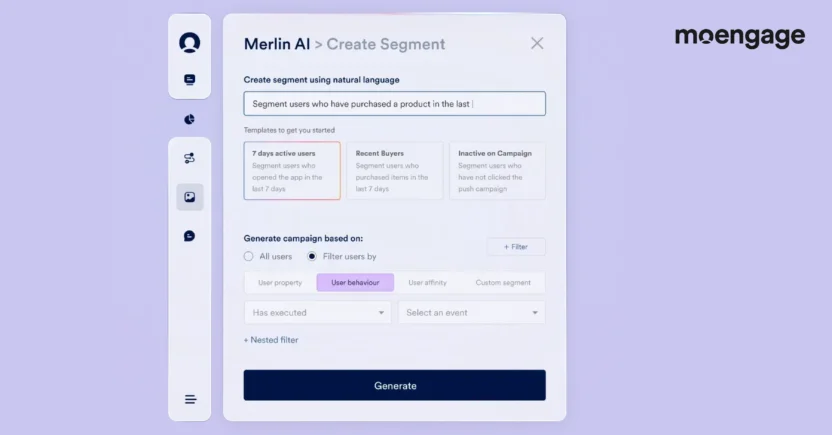
How SoundCloud, Loblaw, and Foxwoods Are Winning Customer Engagement

  • UPDATED: 13 October 2025
  • 6 minread
How SoundCloud, Loblaw, and Foxwoods Are Winning Customer Engagement
Reading Time: 6 minutes

As customer expectations continue to evolve, today’s brands face a crucial choice: adapt or die. This was the resounding theme at MoEngage’s recent event, The Customer Engagement Summit: Adapt or Die, in NYC. 

During a series of candid fireside chats, industry leaders like Megan Kwon from Loblaw, Hope Barrett from SoundCloud, and Blair Bendel from Foxwoods Resort Casino shared an inside look at how they are tackling this challenge. 

They discussed the significant changes they’ve made to their customer engagement strategies, the lessons they’ve learned, and the tangible results they’ve seen by focusing on a fundamental shift in mindset, data, and technology.

Below are some of the key takeaways and nuggets of wisdom they shared.

6 Key Takeaways from MoEngage Customers:

Takeaway #1: Plan Around the Customer, Not the Org. Chart

The first step in the “adapt or die” playbook is to dismantle internal silos. All three brands, despite their immense scale and complexity, recognized that their siloed organizational structures were holding them back. 

One of our biggest challenges is that a guest can get four different communications, separate for a single visit to the concert, dinner, spa, and hotel. That’s just not a well-curated guest experience. So the question was, how do we really optimize this? Perhaps, with a platform that can help to consolidate all channels, such as email, SMS, web, and app. — Blair Bendel, Senior VP – Marketing, Foxwoods Resort Casino

Blair Bendel, Senior VP – Marketing, Foxwoods Resort Casino, at The Customer Engagement Summit

Loblaw, with its 45 brands, and Foxwoods, with its sprawling on-property operations, mentioned that an initially fragmented approach had led to a disjointed and frustrating customer experience. Their solution was to adapt by restructuring teams, strategies, and technology around the customer, instead of the brand, which helped them address these challenges.   

We’ve reorganized ourselves to be much more focused on the customer lifecycle. This has allowed us to be much more proactive and strategic in our approach. — Megan Kwon, Director – Digital Customer Communications, Loblaw Companies Limited

Takeaway #2: The Path to Success Starts with Clean Data

To truly compete in today’s market, a brand must have a clear view of its customers, and that starts with its data. The speakers made it clear that survival is impossible on outdated, siloed, or unreliable data. As Megan Loblaw stated, investing in a clean data foundation is critical to fueling any strategy.

Invest a lot upstream in the data that fuels your strategies. If that data’s not clean, if it’s not sound and synthesized and unified, that makes bringing those strategies a lot more difficult. — Megan Kwon, Director – Digital Customer Communications, Loblaw Companies Limited

Fireside Chat with Megan Kwon, Director - Digital Customer Communications, Loblaw Companies Limited

This reality also forced SoundCloud to make a radical decision: they migrated their entire Martech stack to MoEngage because of a fundamental data problem. 

They recognized the need to overhaul their data infrastructure before they could innovate. This foundational work paid off, enabling them to achieve significant increases in customer engagement and personalization, tripling their annual email volume from 1.5 billion to 4.5 billion, all while maintaining steady unsubscribe rates.

[Before switching our tech stack] I couldn’t tell you how many emails we sent…I couldn’t even tell you if an email actually got to where it was supposed to be. And it was hard to sort of troubleshoot what actually was going on. — Hope Barrett, Sr. Direct Product Management (MarTech), SoundCloud

Fireside Chat with Hope Barrett, Sr. Direct Product Management (MarTech), SoundCloud

Takeaway #3: Create High-Stakes Moments with Transactional Messaging

In the race to innovate, brands often overlook the foundational elements of customer communication. Yet, all three speakers at the summit unanimously agreed that transactional messages are a critical component of adapting to modern consumer expectations. They are far more than simple operational updates; they are “high-stakes moments” that build or erode customer trust with every interaction. 

For a brand as vast as Loblaw, for example, a delayed or inaccurate pharmacy notification can cause immediate customer backlash, while a seamless, instant update reinforces reliability and trust.

Transactional, especially for our digital experiences, is basically the foundation of everything that we do. When those notifications are even a little bit delayed, our customers are very vocal about that. — Megan Kwon, Director – Digital Customer Communications, Loblaw Companies Limited

By treating such messages as a strategic lever and leveraging a tool like MoEngage Inform, these brands are turning a once-mundane function into a powerful tool for customer loyalty and retention.

Takeaway #4: Use Real-Time Engagement as a Competitive Differentiator

In a world of instant gratification, delayed communication is a death sentence. The most successful brands are those that can adapt to the speed of their customers’ lives, and the speakers highlighted the power of real-time signals to create impactful moments. 

Blair explained how a platform like MoEngage is helping them capitalize on these high-value opportunities across their massive, 9 million-square-foot property.

The opportunities to engage guests in real time are, are significant. If they had a jackpot and they’re a high-valued guest, to be able to instantly send them a push notification is incredibly powerful. — Blair Bendel, Senior VP – Marketing, Foxwoods Resort Casino

This ability to instantly engage customers in their moment of highest excitement is what builds emotional loyalty and drives repeat visits. This agile approach has already proven successful for Foxwoods, which experienced a 500-basis-point lift in email open rates within months of migrating to MoEngage.

Takeaway #5: Leverage AI to Amplify the Human Experience, Not Replace it 

Instead of seeing AI as a replacement for human creativity, these brands leverage it as a powerful tool to enhance their customer experience. They use AI to scale personalization and free their teams from the manual, time-consuming work of execution. By automating routine tasks, their teams can focus on strategic thinking, campaign design, and creating unique, human-centric experiences.

Blair emphasized this point, explaining that in an industry still behind in AI adoption, he sees it as a significant competitive advantage.

I see [AI] very complementary to what we’re currently doing. And it will enhance it as well. We have large buckets of segmentation, but to be able to break that down and round out that experience is gonna be a significant competitive advantage. — Blair Bendel, Senior VP – Marketing, Foxwoods Resort Casino

This mindset was echoed by Hope, whose team uses AI and data to power personalized customer journeys. 

SoundCloud’s strategic use of AI has driven impressive results, with triggered email campaigns leading to an 84.42% increase in profile setups, 72.32% increase in track likes, and 45.62% increase in plays, demonstrating that AI can deliver powerful, scalable results without sacrificing the personal touch.

Takeaway #6: Adaptation is a Human-Led Endeavor: Secure Buy-In for Success

The most advanced technology is useless without the people who will champion it. The true “adapt or die” moment for these brands wasn’t just in choosing a new platform, but in ensuring their teams would embrace the change. For them, securing company-wide buy-in was the final, and most crucial, step in their journey.

Hope from SoundCloud spoke candidly about how challenging it was to get her team on board with a major migration, as they were so accustomed to their existing systems. 

She overcame this by making the process a human-led, collaborative effort. Her team used a structured, data-led RFP with over 200 questions to make decisions objectively and to bring all stakeholders along for the journey.

When we potentially had a conflict where someone felt passionate about something, we said…well, let’s look at the data instead of having emotion play a role. So we had to actually solve [any blockers] with the [help of] data. — Hope Barrett, Sr. Direct Product Management (MarTech), SoundCloud

Blair shared a similar sentiment, noting that his “aha moment” was when even his IT lead, who was typically wary of new marketing integrations, became genuinely excited about the migration project. This human element is the final piece that makes survival possible in a rapidly changing market.

The Only Constant is Change: A Concluding Thought

The stories from Loblaw, SoundCloud, and Foxwoods are a powerful reminder that customer engagement isn’t a static function; it’s a continuous process of adaptation. It requires a willingness to challenge the status quo, to invest in foundational data, and to embrace technology that empowers (rather than replaces) human intelligence. 

As these brands continue their journeys, their success will serve as a testament to the idea that, in today’s rapidly changing market, the ability to adapt is not just a strategic advantage; it is a fundamental requirement for survival.

Want to dive deeper into these incredible stories? Watch the full sessions from The Customer Engagement Summit: Adapt or Die, on demand.

Beyond Tricks and Treats: 4 Ingenious Halloween Marketing Campaigns You Should Know

  • UPDATED: 05 November 2025
  • 6 minread
Beyond Tricks and Treats: 4 Ingenious Halloween Marketing Campaigns You Should Know
Reading Time: 6 minutes

Autumn arrives…bringing with it a crisp chill and a chance for marketers to get creative with their Halloween marketing campaigns. 🍁🍂 🍁🍂

This isn’t just a holiday; it’s a cultural event that lets brands connect with their customers through playful frights and festive delights. 

But to truly stand out, Halloween marketing needs to be innovative and rooted in a solid understanding of the audience. This includes going beyond simple orange and black packaging or offering 10% discounts to launching campaigns based on immersive experiences and captivating content that make a lasting impression on customers.

In this blog, we explore some of the best Halloween marketing campaigns from leading brands, such as MAC Cosmetics, Burger King, M&M’s, and Dunkin’ Donuts. 

4 Real-World Examples to Inspire the Best Halloween Marketing Campaigns

Here’s a breakdown of the unique strategies that the four major brands implemented during Halloween. You’ll also find valuable insights that you can use while planning your own Halloween marketing campaigns.

1. MAC Cosmetics’ Halloween Campaign: Spooky Looks & In-Store Magic 

MAC Cosmetics, a brand synonymous with bold self-expression, consistently uses topical events and holidays to connect with its customers. Their recent Halloween marketing campaign was centered on empowering consumers to become their own makeup artists. This approach featured a dedicated Halloween webpage and an omnichannel promotion through channels such as email and Pinterest

On these platforms, MAC provided a treasure trove of resources, including step-by-step makeup guides for a variety of spooky looks, each with direct product recommendations. Additionally, to simplify the shopping process, they also sold curated combo sets for popular themes like “Vampire” or “Ghoul.”

Beyond digital content, the brand provided exceptional customer support. Customers could book a complimentary in-store makeup service in advance or use a live chat feature to get personalized advice from a MAC artist on their Halloween looks. This blend of online and offline support made their campaign truly innovative. 

Halloween Marketing Campaigns by MAC Cosmetics

To amplify their reach, MAC also launched a “Halloween Makeup Challenge”, encouraging customers to share their creations for a chance to be featured on MAC’s website and social handles. This strategy successfully leveraged user-generated content, turning the promotion into a community-driven celebration. 

Takeaway for Marketers: 

MAC demonstrates the power of a comprehensive, customer-centric strategy. By empowering your audience with educational content, personalized support, and opportunities for engagement, you can turn a seasonal promotion into an immersive experience that builds deeper brand loyalty.

2. M&M’s Halloween Campaign: Rescuing Customers, One Candy at a Time

M&M’s, with its iconic colorful candies and playful brand identity, naturally fits into the festive spirit of Halloween. For its recent Halloween marketing campaign, the brand went beyond just seasonal discounts and offers to address the single biggest fear of the season: running out of candy. Backed by findings from the Mars Tricks, Treats and Trends report, which revealed that 78% of consumers shared this anxiety, M&M’s positioned itself as the hero of the holiday with its “Halloween Rescue Squad.”

This multi-faceted Halloween campaign was anchored by a dedicated webpage and new seasonal products. M&M’s launched Halloween-themed candies and new seasonal flavors like M&M’s Milk Chocolate Pumpkin Pie and M&M’s Ghouls Blend. They also offered unique, customizable M&M’s, allowing customers to imprint personalized messages, Halloween clip art, and photos for parties and trick-or-treating. 

The dedicated website was a hub of engagement and content, sharing Halloween recipes, guides for making crafts and décor with Mars products, and ideas for pumpkin carving. It also featured fun, interactive elements like Halloween-themed games and candy charcuterie board ideas, all of which were promoted across their social media and other marketing communication channels, such as email.

M&M’s Omnichannel Halloween Marketing Campaign

But the core of the strategy was one of the quirkiest Halloween marketing ideas: to provide real-time candy relief. M&M’s installed “Rescue BOOths” in areas with the highest past demand, where candy lovers could visit phone-box-style pop-ups and receive an instant, free candy refill. For those not near a booth, M&M’s partnered with instant commerce company Gopuff to provide free delivery of candy within 30 minutes on Halloween night. 

M&M’s Halloween Rescue Squad

This convenience-driven approach turned a marketing stunt into a genuine service, reinforcing brand loyalty and a positive customer experience. 

Takeaway for Marketers: 

M&M’s demonstrates the power of a data-driven Halloween marketing strategy. By identifying and solving a genuine consumer pain point, you can create a campaign that is not only innovative and memorable but also builds a strong emotional connection with your audience.

3. Dunkin’s Halloween Campaign: 1 Donut, 1 Viral Campaign, 0 Ad Spend

Dunkin’ Donuts proved that the most effective Halloween marketing doesn’t require a massive budget, but rather a sharp understanding of digital culture. Their recent Halloween campaign took its seasonal Spider Donut and spun it into a character-driven, viral phenomenon. They christened the character “Spidey D,” who then “hijacked” all of Dunkin’s social accounts—updating bios and blasting out chaotic, hilarious content in a brilliant organic stunt. Spidey D’s daily antics built a light-hearted, engaging narrative that culminated in a parody “firing” after he “leaked” Dunkin’s official holiday menu. 

Dunkin’s Viral Halloween Marketing Campaigns

This strategic move created a huge buzz and drove incredible results for Dunkin’ despite a minimal budget:

  • Over 2.5 million engagements
  • 2.9 billion earned impressions
  • 700K+ shares and 30K+ comments
  • 100K+ new followers
  • Attracted engagement from other brands like Walgreens and Oreo, who joined the conversation
  • The menu leaked by Spidey D became the most liked product launch in Dunkin’s history
  • Spidey D merchandise featuring the character’s memes sold out within an hour of its launch

Takeaway for Marketers: 

Dunkin’s campaign demonstrates that the most effective Halloween marketing campaigns prioritize compelling storytelling over large ad spends. Also, having a deep understanding of platform-specific content and a willingness to break traditional brand guidelines to become “unhinged” can sometimes lead to immense success. 

4. Burger King’s Halloween Campaign: A Spooktacular Brand Collaboration

Burger King has carved out a niche for itself in the Halloween marketing landscape by embracing humor and a playful rivalry with its competitors. One of their recent Halloween campaigns involved a creative partnership with The Addams Family franchise, resulting in a limited-time menu inspired by the kookiest family around. 

This partnership offered a unique and thematic spin on their classic offerings, with items like the Wednesday’s Whopper, Thing’s Rings, Gomez’s Churro Fries, and Morticia’s Kooky Chocolate Shake.

Burger King’s Partnership with The Addams Family as one of their Halloween marketing ideas

Beyond the menu, Burger King’s marketing for this collaboration was omnichannel. They leveraged their social media platforms and other channels like email to announce the new menu items and share visuals of the spooky-themed food. The campaign also included a limited-edition line of King Jr. Meal toys inspired by The Addams Family characters, further engaging with a family-friendly audience. 

This approach was a departure from some of their previous campaigns, showing a more integrated strategy. The collaboration with a well-known brand allowed Burger King to tap into existing fan bases and touch the emotional chord of customers.

In fact, for Q4 2024, Burger King announced that its U.S. same-store sales growth was 1.5%, (beating StreetAccount estimates of 0.8%). While these results show signs that Burger King’s year-end strategy has won back many customers, Burger King U.S. President Tom Curtis credited its Addams Family menu, timed for Halloween, and its Million Dollar Whopper promotion in November, for this achievement. 

Takeaway for Marketers: 

Burger King’s campaign highlights the power of a strategic partnership to create a great Halloween campaign. By leveraging a well-known property, a brand can tap into existing fanbases and create a highly shareable, nostalgic experience that transcends a simple product launch and resonates deeply with consumers.

Final Takeaway: The Spookiest Secrets to Successful Halloween Marketing Campaigns

As these brands demonstrate, truly standout Halloween marketing campaigns are about more than a spooky logo or a limited-time offer; they’re about crafting an experience and building a story. MAC Cosmetics proved the power of empowerment, turning customers into co-creators with educational tutorials and user-generated content challenges. M&M’s showed us the genius of a data-driven strategy, solving a genuine consumer pain point with their “Halloween Rescue Squad” to build loyalty. Burger King highlighted the immense value of strategic partnerships, leveraging a beloved franchise to tap into cultural nostalgia. And Dunkin’ taught us that authentic, character-driven storytelling can generate viral buzz and organic engagement that far outweighs a massive ad spend.

Ultimately, the most successful Halloween campaigns are those that transcend traditional advertising to become part of the holiday experience itself. They are not just selling products; they are selling a feeling of empowerment, relief, nostalgia, or entertainment through innovative approaches and compelling storytelling. By embracing creativity and a willingness to be bold, you can also conjure up a campaign that leaves a lasting impression long after the last treat has been handed out.

Ready to launch your next winning campaign? 

Take a demo of MoEngage and find out how the AI-first customer engagement platform can help you orchestrate a successful, omnichannel Halloween campaign. 

If you liked this content, check out our other thematic pieces:

CDEP vs Legacy Customer Engagement Tools: Which is Better For Your Brand and Why?

  • UPDATED: 26 March 2026
  • 8 minread
CDEP vs Legacy Customer Engagement Tools: Which is Better For Your Brand and Why?
Reading Time: 8 minutes

What’s a legacy customer engagement tool?

When you think of legacy customer engagement tools, stand-alone CRMs, email marketing software, marketing automation tools, and analytics dashboards come to mind. These tools need their database in a schema that is compatible with that particular tool.

Does it work in isolation? Yes.

However, the State of Martech 2025 report claims that the average martech stack owned by enterprises has 90-120 tools. Also, marketers are analyzing more data points and attributes than ever before to provide a personalized customer experience.

To tackle the problems that could arise with disjointed tools and data, marketers have been seeking integrated martech stacks that reduce the number of data silos and tools in the stack.

So, to keep up with the changing tides, legacy platforms like Salesforce and Adobe went on an acquisition spree to expand their product portfolios. This included email marketing tools, cloud infrastructures, data analytics, and business intelligence tools.

At the end of the day, these tools were still separate tools with separate databases and their own schema, now owned by these legacy brands. 🤦

Consumer brands that purchased these legacy stacks were:

  • ⚠️ Still struggling to optimize customer experiences
  • ⚠️ Still dealing with disparate data that was practically incoherent
  • ⚠️ Still paying what they were paying (or even more) for all these tools individually

Legacy Customer Engagement Tools: The Good, The Bad, and The Sus

The Good and the Bad

While the tools acquired by the legacy platforms were individually good at their specialized functions (eg, email marketing, analytics, etc), when they came together, the outcome was far from synergistic.

New problems that came up included:

  • ❌Data silos
  • ❌Inconsistent customer view across tools
  • ❌Limited personalization due to fragmentation in customer data
  • ❌Inefficient workflows resulting in manual data cleaning and transfers
  • ❌Difficulty in real-time analytics
  • ❌Inability to scale as customer data volume and complexity keep growing
  • ❌Fragmentation in the customer journey, resulting in disjointed experiences for the customer
  • ❌Integration challenges while attempting to combine individual legacy tools
  • ❌Mediocre results from AI tools since data is fragmented and silos
Challenges with legacy stacks include data silos, limitations in scalability and personalization, lack of automation and real-time capabilities.
Challenges consumer brands encounter with legacy customer engagement platforms

The Sus

With legacy stacks, the initial investment is just the beginning. Some observations we have seen from talking to 100s of customers globally who have migrated from these legacy stacks include:

  • Implementation and onboarding costs: Can vary from a few thousand to over $100,000 based on complexity, need for custom add-ons, and skilled implementation partners.
  • Implementation timeline: The average time observed in the partial implementation of an enterprise customer engagement stack ranges from 6-12 months. This is the average duration taken for the platforms to just go live, and is not the complete duration.
  • Hidden costs: These legacy tools often require their customers to mandatorily upgrade (paid) to the latest version of different tools in the martech stack, which essentially is a sneaky way for an ecosystem lock-in.
Legacy platforms have higher TCO due to implementation costs, ecosystem lock-in, forced upgrades, and higher implementation timelines.

Impact on TCO?

Legacy customer engagement platforms are notorious for giving vague and overoptimistic timelines for implementation and, future upgrade fees, and potential price hikes. Moreover, since their pricing model is based on ‘data credits,’ the chances of burning through these credits in the scenario of attempting real-time engagement are high.

In essence, consumer brands that choose legacy customer engagement platforms end up paying much more with time, resources, and missed opportunities for real-time engagement.
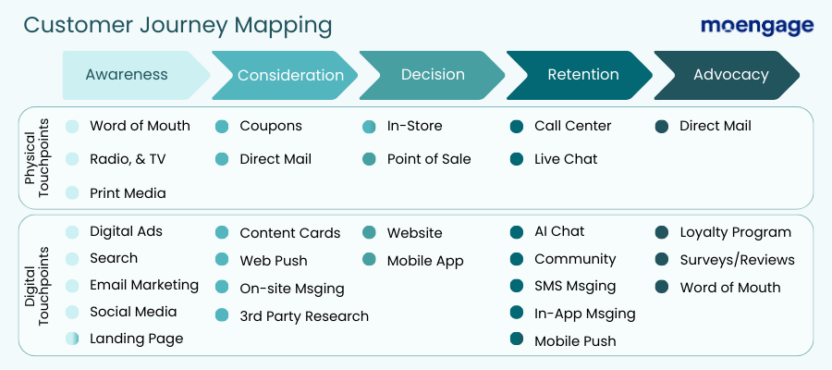
Deconstructing the Power of a Customer Data and Engagement Platform (CDEP)

Instead of having multiple mutually incompatible tools forcefully fit together, what if marketers and product owners had a single streamlined solution?

A single platform where your customer data foundation and your engagement channels are designed to work together from the start.

That’s your Customer Data and Engagement Platform (CDEP).

CDEP vs Legacy Customer Engagement Stacks: A Comparison

A Customer Data and Engagement Platform (CDEP) like MoEngage presents a significant and intentional evolution from legacy customer engagement tools by offering a more unified, flexible solution that offers consumer brands higher ROI at a lower TCO.

Unified Core Data Management Capability and Omnichannel Orchestration

Legacy systems often require separate, disjointed tools for different functions, leading to data silos and inconsistent customer experiences. A CDEP, on the other hand, provides an all-in-one platform.

Inbuilt Capabilities: Unlike legacy stacks that necessitate separate purchases for marketing suites, journey optimizers, personalization engines, analytics platforms, and loyalty management software, a CDEP has these features built in. This includes omnichannel orchestration across email, push notifications, SMS, in-app messaging, and web.

Data Ingestion and Unification: While legacy tools have limited data source support, a CDEP can ingest data from a wide variety of sources, including web/app SDKs, APIs, offline data, and data warehouses. It allows for the creation of custom objects and attributes, enabling more sophisticated data modeling and segmentation directly from a data warehouse.

A CDEP like MoEngage offers a single unified platform that ingests data in real-time from all sources.
CDEPs outshines legacy platforms due to their core architecture and data management capabilities.

Data Democratization and a Vendor-Neutral Ecosystem

A primary drawback of legacy tools is their ‘locked-in’ ecosystem, which restricts integration with outside platforms. CDEPs are designed for flexibility and interoperability.

Open Integration: CDEPs offer strong pre-built connectors and extensive API flexibility for custom integrations with leading martech platforms. This includes over 250+ integrations across advertising, business analytics, cloud storage, and data warehouses, fostering a vendor-neutral environment.

Data Democratization: CDEPs enable data democratization by allowing businesses to store their data in their own warehouses (like Snowflake, Redshift, or Google Cloud Platform), thereby breaking down the data silos that are characteristic of legacy systems.

Advanced AI and Machine Learning Capabilities

Artificial intelligence is at the core of a CDEP, offering sophisticated tools for hyper-personalization and optimization that often require separate and costly purchases with legacy systems.

Inbuilt AI Suite: CDEPs come with an integrated AI suite that provides features like content and image generation, 1:1 personalization at scale, AI-assisted segment creation, and journey optimization. This contrasts sharply with legacy tools, where each of these functionalities would be a separate, add-on purchase.

Predictive Analytics: Predictive models for customer affinity and behavior, as well as send-time and channel optimization, are built into the CDEP.

CDEPs offer operational experience due to their intuitive UI, unified real-time analytics, integrated journeys, and AI capabilities which is a core functionality.
Artificial intelligence, intuitive user experience and real-time, unified analytics is at the core of a CDEP.

Improved Scalability, Security, and Performance

CDEPs are built on modern, highly scalable, and elastic architecture to handle real-time data ingestion and processing. They also adhere to the latest security and compliance standards, offering features like data encryption, PII masking, and tokenization, and compliance with regulations such as GDPR and CCPA.

Enhanced Transactional Messaging Capabilities and User Experience

In the realm of transactional messaging, CDEPs offer significant performance advantages.

Speed and Reliability: They provide real-time delivery with less than 2-second latency and a high degree of reliability (99.99% uptime and 100% SLA).

Unified and Smart Orchestration: A single API can be used for unified messaging across all channels, with the ability to set channel priority and vendor fallbacks in advance—a feature absent in legacy tools.

Intuitive UI and Superior Support: CDEPs are designed with an easy-to-use, intuitive user interface. This is supported by highly-rated customer service, comprehensive migration support, and positive community reviews, addressing common pain points of the steep learning curves and unhelpful support associated with legacy platforms.

Transparent Pricing and Lower Total Cost of Ownership (TCO)

The economic advantages of adopting a CDEP are substantial, particularly when considering the total cost of ownership.

Straightforward Pricing: CDEPs typically offer usage-based pricing with no hidden costs or add-ons.

Reduced Implementation Costs and Time: The implementation timeline is significantly shorter (e.g., less than 3 months for a CDEP vs. 6-12 months for a legacy stack), and there are often no extra implementation costs. In contrast, legacy systems frequently involve implementation consultant costs, high implementation timelines, and expensive add-ons and upgrades. This proactive approach helps enterprises lower their TCO.

CDEPs pricing model is transparent, lower than legacy stacks and quite predictable since costs are calculated based on usage.
CDEPs are more economical in the shorter and longer run due to operational ease, lower TCO, and higher ROI.

Looking to migrate from a legacy customer engagement stack to a CDEP?

Here is how MoUpgrade can help your brand:

  1. Accelerate Time-to-Value with a swift migration process.
  2. Minimizes disruptions with a structured, seamless transition process so that your live campaigns and data flows aren’t impacted negatively.
  3. Complete and safe transfer of all your customer data.
  4. Dedicated migration managers and managed services for a seamless transition to CDEP.
  5. Migration credits to help offset expenses incurred in platform migration.

CDEP vs Legacy Customer Engagement Stacks: Which is Better For Your Brand? (A Decisioning Framework)

If you’re ready to cut your losses incurred with a legacy customer engagement stack but would like to do so in a structured fashion, we’ve got you covered.

Below is a framework you can adopt to make the right decision in the best interests of your business.

Step 1: Find the Gap(s)

Audit Your Tech Stack

Now is not the time to be sentimental with your tech purchases or be swayed by glossy promises. Take a look at your tech stack and map how customer data is flowing between the tools.

  • 🔍Identify what your stack does (not what was claimed) and what it doesn’t do (despite what was claimed).
  • 🔍Identify frictions and bottlenecks in the flow of data across your customer engagement stack

Map The Customer Journey

What would be the ideal journey you would want for your customers? Contrast that with the current flows set up in the legacy customer engagement stack.

  • 🔍Where does the customer experience feel disconnected?
  • 🔍Where does the customer experience fall short of your brand’s standards for customer satisfaction?

Quantify the Loss

Now that you’ve identified capability gaps and the corresponding gaps in your ideal customer journey, put a number on it.
Analyze and estimate revenue losses from cart abandonment, high churn rates, the operational costs of running a bloated stack, and the opportunity cost of being slow to market.
Step 2: Define the ‘North Star’- Envision the Ideal Customer Experience

Step 1 helped you identify the gaps. Step 2 will help you build the ideal hyper-personalized customer journey.

Envision the 1:1 Journey:

What would you do if you had perfect, real-time data about every single customer? How will the customer journey look in such a scenario?

Identify High-Impact Use Cases:

You can’t do everything at once. Prioritize the top 3-5 use cases that will drive the most immediate and significant impact on your business.

Establish Business-Critical KPIs:

Move beyond vanity metrics like open rates. Your success metrics must be tied to core business outcomes like customer lifetime value (CLV), retention rates, etc.

Step 3: Choose a True Growth Partner, Not Just a Platform

You are not just buying or subscribing to a tech stack. You are investing in a growth partner who can help you scale your business. Choose a true growth partner with a proven track record of scaling growth in your industry.

By following this 3-step decision-making framework, you can select a partner that will help you turn every customer interaction into a stepping stone for sustainable, long-term growth.

3- step decisioning framework to decide if you should choose a legacy customer engagement stack or migrate to a CDEP
Cut your losses with legacy customer engagement stack with our 3-step decisioning framework

Conclusion: Focus on the Future Growth, Not on the Sunken Costs

The decision between a CDEP and a legacy stack boils down to a simple strategic question: Are you investing in future growth or paying to maintain past complexity?

Legacy platforms are notorious for causing operational delays due to extensive data silos and hidden costs, which drives up the Total Cost of Ownership (TCO).

In contrast, a modern CDEP is architected for agility, efficiency, and lowering the TCO. By unifying data and engagement, it eliminates the need for a disjointed, expensive stack and empowers your teams with the AI-driven insights needed for true 1:1 personalization.

For brands focused on long-term profitability and market leadership, a CDEP isn’t just a better tool—it’s the smarter business decision.

Eager to break free from the ecosystem lock-in and data silos posed by legacy stacks? Book a demo to talk with our team today.

Marketing de gerações: como fidelizar todos os perfis de consumidores

  • UPDATED: 27 March 2026
  • 6 minread
Marketing de gerações: como fidelizar todos os perfis de consumidores
Reading Time: 6 minutes

Baby Boomers, Geração X, Millennials (Geração Y) e Geração Z. Com quem a sua marca está falando?

Entender o perfil dos consumidores para criar estratégias personalizadas e assertivas sempre foi essencial para o marketing. Hoje, porém, os profissionais da área enfrentam um desafio inédito: pela primeira vez na história, quatro gerações distintas estão presentes no mercado de consumo, cada uma com desejos, objetivos e comportamentos diferentes. Como se comunicar de forma eficaz com todas elas?

No passado, o consumo estava atrelado a valores como estabilidade e segurança. Hoje, os millennials, antes considerados a geração mais jovem, já estão na casa dos 30 anos, enquanto a Geração Alpha, ainda na adolescência, exerce forte influência sobre as decisões de compra de seus pais. E, em 2025, o cenário se tornou ainda mais complexo: surgiu a Geração Beta, uma geração que não vai conhecer o mundo sem inteligência artificial.

Enquanto algumas gerações nunca fizeram uma compra online, outras sequer entendem o conceito de loja física. Nesse contexto, as marcas precisam se adaptar rapidamente para atender a expectativas tão diversas.

Esse tema ganhou destaque no CMO Summit, um dos principais eventos de marketing do ano, que reuniu líderes de grandes marcas globais. As discussões giraram em torno de um grande dilema: como equilibrar o novo e o tradicional, o que manter e o que abandonar, o que fortalecer e o que reinventar.

Nos próximos tópicos, reunimos insights exclusivos, opiniões de especialistas e cases reais discutidos no CMO Summit para ajudar você a navegar nesse cenário multifacetado.

O antigo X O novo marketing

O marketing nunca foi um campo estático, mas nos últimos anos, a velocidade das mudanças tornou a reinvenção não apenas necessária, mas urgente. Enquanto estratégias tradicionais ainda têm seu lugar, o surgimento de novas tecnologias, plataformas e comportamentos de consumo exige que as marcas repensem suas abordagens.

Um dos maiores catalisadores dessa transformação foi a ascensão do social commerce, impulsionado principalmente por players asiáticos. 

Essa nova dinâmica elimina barreiras entre descoberta, entretenimento e compra, transformando redes sociais em verdadeiros marketplaces. Enquanto o marketing tradicional dependia de funis lineares (awareness > consideração > decisão), hoje o consumidor pode descobrir, interagir e comprar em um único clique, sem sair do feed do Instagram ou do TikTok.

Outra mudança fundamental está no valor da autenticidade. As gerações mais jovens, especialmente Millennials e Gen Z, rejeitam campanhas excessivamente produzidas em favor de conexões reais e conteúdo orgânico. Como reforça Renata Gerez, “modelo de consumo mais autêntico, exige menos produção, transformação de como construir isso com parceiros e influenciadores que são relevantes.”

Isso significa que as marcas precisam repensar não apenas o que comunicam, mas como e com quem. Parcerias com microinfluenciadores, UGC (User-Generated Content) e estratégias de community-driven marketing ganham força.

Diante de tantas mudanças, o perfil do profissional de marketing também se transforma. Não basta mais ser especialista em uma única área, é preciso conectar diferentes conhecimentos para criar estratégias integradas. José Krasucki, Head Corporativo de Marketing da Senior Sistemas, trouxe para a conversa a definição de nexialismo, que é o profissional que consegue entender os nexos de multiáreas.

As marcas que souberem equilibrar o melhor dos dois mundos, combinando o poder do branding tradicional com a agilidade do digital, serão as que conquistarão não apenas vendas, mas fidelidade em um mercado cada vez mais fragmentado.

Importância de errar

Uma opinião foi unânime entre os palestrantes no CMO Summit 2025: quem tem medo de errar acaba ficando para trás. Enquanto as gerações anteriores priorizavam planejamentos longos e campanhas impecáveis, o cenário atual exige agilidade, experimentação e aprendizado contínuo.

Enquanto um erro pode ser corrigido rapidamente, a inação tem um preço muito maior: perda de relevância, queda na competitividade e, principalmente, a desconexão com um consumidor que não espera — ele exige respostas rápidas.

Isso significa que:

Nenhuma estratégia é infalível – O consumidor muda rápido, e o que funciona hoje pode não funcionar amanhã.

Dados sozinhos não bastam – É preciso interpretá-los com uma lente geracional para evitar generalizações perigosas.

A agilidade supera a perfeição – Pequenos testes e ajustes contínuos geram mais resultados do que campanhas “prontas” demoradas.

Marketing de valores

Como manter sua essência enquanto se reinventam para dialogar com um público que valoriza autenticidade, impacto social e experiência impecável?

O marketing atual vive uma contradição fascinante: nunca as marcas tiveram tantas ferramentas para vender, e nunca os consumidores estiveram tão pouco interessados em ser “vendidos”. Alessandro Ferreira, do Grupo Fleury, coloca o dedo na ferida: “Como uma empresa centenária se mantém relevante para jovens que buscam experiências bem feitas e canais user-friendly?” A pergunta revela o centro do desafio – não se trata apenas de adaptar mensagens, mas de reconstruir valores.

José Eduardo Schwartsman, Head de Marketing da Kia, oferece uma pista: “Primeiro temos que entregar para depois receber”. Essa inversão da lógica transacional tradicional revela o novo contrato entre marcas e consumidores – onde o valor precede a venda. Não por acaso, a PUMA encontrou na autenticidade esportiva sua âncora de valor. Como explica Luciana Soares, Diretora de Marketing da PUMA:  “Não é o post ou a métrica”, mas a capacidade de “criar uma narrativa que ajuda o consumidor a escolher sua marca”.

Nesse cenário, parcerias deixam de ser campanhas pontuais para se tornarem “jornadas que não se constroem em um trimestre”, nas palavras de Soares. O desafio para as marcas? Entender que no marketing de valores, o produto não é o fim – é apenas o começo da conversa.

A importância da personalização

O consumidor moderno não quer apenas produtos – ele busca experiências que falem diretamente com sua individualidade. Como destaca Sérgio Pião, Diretor de E-Commerce da L’Oréal Brasil: “O consumidor quer mais soluções personalizadas para ele”. Essa demanda vai muito além de simples recomendações algorítmicas – representa uma mudança personalizada na relação entre marcas e clientes.

Patrícia Pessoa, CMO da Gol, complementa essa visão ao defender que a tecnologia deve servir a um propósito maior: “Levar a tecnologia de forma humanizada e reforçar o conceito da marca”. Aqui reside o paradoxo da personalização contemporânea: quanto mais digital nos tornamos, mais humana precisa ser a experiência.

O grande desafio? Criar personalização em escala sem perder a autenticidade – um equilíbrio que exige tanto a ferramenta ideia como parceiro, quanto inteligência emocional das marcas.

Dados como ponte entre o marketing e o negócio

As mudanças digitais transformaram o marketing em um hub estratégico de inteligência. O que antes era visto como departamento de comunicação, tornou-se o centro que conecta operação, comercial e estratégia.

O salto qualitativo veio quando os dados internos começaram a dialogar com informações externas, permitindo “entender o cliente de ponta a ponta”. Mas a verdadeira virada, como destaca Vanessa, ocorreu na mudança de postura: “Quando passamos a chegar à mesa do comercial com dados concretos, eles começaram a nos ver como parceiros estratégicos”.

Essa transformação revela três mudanças profundas:

– O marketing deixou de ser “o time das campanhas” para se tornar o tradutor do comportamento do consumidor;

Dados viraram a linguagem comum que alinha diferentes áreas da empresa;

– A proximidade com o comercial transformou insights em ações concretas de negócio.

A aproximação do marketing e comercial

Como vimos acima, a integração entre marketing e comercial se tornou estratégica nos negócios atuais. Como observa Isadora Reis, Head de Marketing, Comunicação Institucional & Gestão de Leads da Korn Ferry, “A colaboração entre marketing e vendas é essencial para o sucesso em B2B”. Essa mudança representa uma evolução fundamental: de departamentos que trabalhavam em silos para parceiros que compartilham objetivos e linguagem comuns.

Na prática, essa transformação se manifesta em três dimensões principais. Primeiro, na capacidade do marketing de traduzir dados em insights acionáveis para o comercial – não apenas números de campanhas, mas entendimento profundo do comportamento do cliente. Segundo, na criação de processos integrados, desde sistemas compartilhados até métricas alinhadas. Terceiro, e mais crucial, na mudança cultural que substitui a mentalidade de “nós versus eles” por uma colaboração. Como destaca Isadora Reis, “O marketing deve ser o guia estratégico (não apenas um executor), fornecendo inteligência e direcionamento para a empresa”. 

Os resultados dessa integração são transformadores. Organizações como Veloe e Korn Ferry demonstram como essa parceria permite desde abordagens mais assertivas até a criação de experiências realmente centradas no cliente. Mais do que melhorar eficiência, essa aproximação redefine como valor é criado e entregue – com o marketing atuando como ponte entre mercado e operação, e o comercial aplicando esses insights de forma mais estratégica.

Conclusão

O marketing moderno exige mais do que campanhas criativas — demanda uma estratégia integrada que una dados, personalização e canais de comunicação sob uma mesma visão. 

Essa visão estratégica do marketing como provedor de inteligência está transformando a dinâmica organizacional. Empresas que compreendem isso estão construindo organizações mais ágeis e preparadas para os desafios de um mercado em constante mudança.

O futuro pertence a quem ousa experimentar, aprende com os erros e coloca o cliente no centro — com as ferramentas certas.


O que os CMO das maiores empresas do Brasil estão falando sobre CRM

  • UPDATED: 27 March 2026
  • 4 minread
O que os CMO das maiores empresas do Brasil estão falando sobre CRM
Reading Time: 4 minutes

Nos dias 25 e 26 de junho, a cidade de São Paulo foi palco do CMO Summit 2025, um dos eventos mais relevantes do calendário de marketing e inovação no Brasil. A MoEngage acompanhou de perto as discussões que mostraram como os maiores líderes de marketing do país estão reformulando estratégias, colocando o cliente no centro e usando o CRM como uma ponte entre dados e personalização real.

Seja no varejo, saúde, mobilidade ou tecnologia, uma coisa ficou clara: CRM não é mais uma ferramenta de suporte. É pilar estratégico. Nas palavras de Claudia Vilhena, CMO do Carrefour e Sam’s Club Brasil, “CRM não é só disparador. É mudança de cultura. É sobre formar a cabeça da equipe, do líder e manter o foco no ser humano.”

Nos próximos tópicos, reunimos os principais insights apresentados pelos speakers, que compartilharam como a gestão de relacionamento com o cliente está se tornando o fator decisivo de diferenciação e fidelização em seus mercados.

CRM no B2B: Personalização estratégica e jornada de longo prazo

Patrícia Gomes, Diretora de Marketing e Growth da Edenred Mobilidade, enfatizou que o novo marketing B2B precisa ser mais humano e baseado em dados. “A diferença no B2B é ver as pessoas como pessoas. Colocamos a jornada dos clientes dentro do CRM para tomar decisões mais estratégicas. Um CRM bem nutrido permite que você tenha todas as ferramentas para conseguir se comunicar melhor com os seus clientes.” Com essa abordagem, a personalização vai além da comunicação: chega ao atendimento. O CRM passa a ser repositório vivo de contexto, histórico e preferências, gerando inteligência para a equipe comercial e de marketing.

Vanessa Rissu, Superintendente de Marketing, Growth e Analytics da Veloe, complementa esse ponto: “Por trás de um B2B, sempre tem um B2C”. A IA e o CRM, quando integrados, permitem a identificação de clusters, o reconhecimento de comportamentos e o melhor canal e momento para falar com o cliente. O ciclo de vida do consumidor passa a ser monitorado com precisão e previsibilidade, aumentando o impacto de cada ação.

Motor da fidelização

Em setores como o varejo, o CRM se apresenta como ferramenta central para construir lealdade. “Trabalhar fidelidade em um segmento não fiel é difícil. Mas o CRM ajuda a integrar dados e entender o consumidor através do ecossistema”, afirmou Claudia Vilhena, CMO do Carrefour e Sam’s Club Brasil. Seu programa de cashback, com 35 milhões de clientes cadastrados, é um exemplo de como a engenharia de dados pode devolver valor ao consumidor e estreitar esse relacionamento.

Já na Dasa, a Diretora de Marketing, Flávia Drummond, vê no CRM uma ponte entre a personalização e a confiança. “Usar a tecnologia para cruzar dados, com muito cuidado e governança, nos permite entregar valor para o paciente. Eu quero ser não só a marca mais lembrada, mas a melhor solução para ele.”

CRM no centro da estratégia de marca

No universo esportivo, Luciana Soares, diretora de marketing da PUMA, destacou que parcerias de valor se constroem no longo prazo, com autenticidade, propósito e coerência. Mais do que retorno imediato, essas conexões fortalecem a marca ao se tornarem parte da jornada emocional do consumidor. “Parceria não é do dia para a noite”, afirmou Luciana. “É preciso contratos mais longos, escolha de territórios com coerência, e uma história que faça sentido para ambos os lados.” Mas como manter viva essa conexão ao longo do tempo? A resposta está em conhecer esse consumidor com profundidade, acompanhar sua jornada, seus interesses, suas reações — e o CRM é o alicerce para isso. Ao conectar dados de visibilidade, engajamento e relacionamento, ajuda a construir uma jornada contínua com o consumidor — transformando campanhas em vínculos e contatos em comunidades.

Esse senso de pertencimento também aparece na fala de Rafael Sbarai, Head de Produto e Inovação do iFood, ao afirmar que é preciso analisar a north star metric da empresa. Sbarai reforça que, diante de todos os acrônimos, a métrica mais importante é: “Se pararmos de fazer o que fazemos, alguém vai sentir falta?”. Essa mensuração — que pode ser medida por recorrência, engajamento e lealdade — depende diretamente de um CRM eficaz que capte, interprete e responda ao comportamento do cliente em tempo real.

Da inteligência à empatia: o CRM como orquestrador

Patrícia Pessoa, CMO do Grupo Gol, reforçou que “o futuro do marketing é a convergência entre o humano, o data-driven e o tecnológico”. Nesse cenário, o CRM atua como sistema nervoso da operação, permitindo que a tecnologia se humanize e o atendimento se personalize. O aplicativo que informa um atraso de voo com antecedência só faz isso porque há dados bem integrados, conectados em tempo real ao comportamento do cliente.

William Kawaguch, Digital Communication Planning Manager da Kaspersky, e Claudio Knupp, Head de Mídia do Grupo Brivia, também destacam que a fidelização é tão (ou mais) importante do que a conversão. “Conversão vai além da venda. É sobre reter quem já está dentro de casa”, lembra William. E Claudio reforça: “Vamos trabalhar com padrão, não com pico. As empresas olham a meta visível, e não a recorrente.”

Para Kawaguch, o caminho da fidelização passa pela criação de comunidades, que se comunicam de forma relevante e personalizada. “Criação de comunidade é uma forma mais segmentada para o próprio público — e não algo genérico, como ainda é visto hoje.” Nesse contexto, o CRM é essencial para identificar comportamentos, interesses e perfis que permitam formar essas comunidades e fortalecer o relacionamento com base em afinidade e valor contínuo.

Diferencial competitivo real

Mais do que nunca, CRM é muito mais do que uma ferramenta de automação. É inteligência de negócios, estratégia de marca, cultura organizacional e, acima de tudo, um canal de relacionamento humanizado.

Para os líderes que passaram pelo CMO 2025, o consenso é claro: os dados não são o fim, mas o meio. E o CRM é a estrutura que transforma dados em valor para o cliente — e em resultado para a marca.


MoEngage

© Copyright 2026 MoEngage. All Rights Reserved.