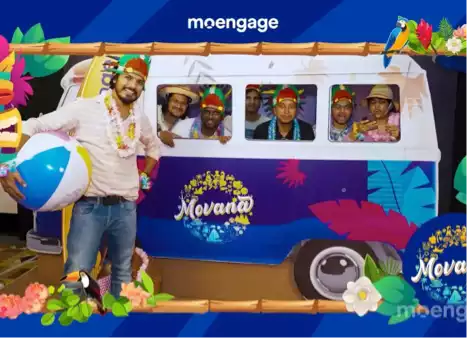
Right after Covid, we curated an unforgettable offsite for the dynamic team at MoEngage, bringing together 500+ brilliant minds for an experience like no other.
Audience engagement is crucial in hyper-personalization. It has to be very specific. For example, you might be giving regular discounts to every customer. But suppose you want to provide exclusive discounts to your high-value customers who purchased more than a certain amount or completed a specific number of transactions in the last few months. In that case, you’ve to narrow down the segmentation and build deeper customer segments.
That’s where MoEngage’s Aggregation Filters can help you.
What are Aggregation Filters?
The Aggregation Filters is an add-on filter to the segmentation module on MoEngage’s platform. It allows you to narrow your audience engagement and build deeper customer segments by applying aggregates such as Sum, Average, Min, Max, etc., on event attributes. You can aggregate any numeric attribute over a period of time and create segments based on value or even compare the aggregated values to filter out the right users.
Let’s understand this better with an example. Let’s assume you want to send discount offers to customers who have placed at least two orders in the last two weeks with a total spend of more than 1000. Your segmentation query will be as follows:
With this update, marketers can create deeper audience segments using aggregates from within the platform and reduce their dependency on the data teams.
Segmenting audiences based on aggregates such as sum, min, max, and average on event attributes can be a complex process. Marketers earlier had to depend on their teams to crunch data and multiple tools to do so.
With this new feature, marketers don’t have to look outside. They can leverage the Aggregation Filters under the segmentation module to create deeper audience segments from within the platform without any dependencies.
Note: Aggregation Filters are available only in the User Behavior Section of Segmentation.
How do Aggregation Filters work?
Let’s imagine you want to run a discount campaign, but only for those customers whose purchases increased by 20% over the previous month. In this case,
Use the + Aggregation button to add a new aggregation functionality.
Add the purchase (event) conditions based on which you wish to segment customers. For example, in this case, customers who purchased at least two times in the last two weeks and had a high order value.
Select the date range within which the customer made the purchase. Aggregation Filters can be applied for 30 days/4 weeks/ 720 hours / 1 month.
Select the Percentage Change. For example, you can segment customers who have purchased at least three times in the last 30 days and spent 25% more than the month before. The Change and Percentage Change fields can be negative too.
E-commerce: Shopping brands can use this feature to identify high-spending customers and send them special discounts. For example, brands can create Aggregation Filters to segment customers who performed at least 10 transactions over the past month and had a combined bill value of over 20,000/-. They can then send these customers an extra discount on their next purchase.
BFSI: Credit card vendors can leverage Aggregation Filters in segmentation to identify and segment customers that can be offered card upgrades. They may reach customers who made at least 500 transactions in a month and increased total spend by over 1,000/- from the previous month.
Music, Gaming, and OTT: Entertainment brands can use the Aggregation Filters to identify customers who consume the most amount of content in a particular time period and send them referral campaigns. For example, brands can isolate customers who consumed content at least 100 times or more than 200 minutes over the past month. They can then send them a campaign incentivizing referrals.
How to get started?
This feature is free and available globally. If you’re an existing customer, reach out to your favorite MoEngage Customer Success team member. If you’re new to MoEngage and want to use the Aggregation Filter, drop an email to [email protected].
Ramita is a content marketer with a knack for creative storytelling. She enjoys bridging the gap between people and brands through the power of language. When she isn't writing, she's either gaming, traveling, or playing fetch with her dog.
MoEngage Can Now Ingest Data ~10X Faster for Greater Scale
Contextual communication is vital in today’s hyper-connected world, where customers expect greater personalization and better experiences than ever before. Marketers need to keep up with customer trends and engage with each individual in the moment. This is where customer engagement platforms like MoEngage take it up a notch to enable marketers to deliver contextual, real-time communication that keeps every customer happy.
Marketers from over 1200 brands trust MoEngage with their customer engagement needs. The platform is built to scale, engaging with over 1.2 billion customers monthly via 3.2 billion messages delivered each day. We’ve got news for you — it’s getting even better!
MoEngage can now ingest data upto 10X faster than ever before! This means faster engagement, responses, analytics, and greater customer happiness.
This improvement benefits all of you, whether you’re a marketer, product manager, CXO, growth marketer, or someone else! Let’s dive in to understand this change and how it impacts your business. (Spoiler alert: There’s nothing you need to do. Just sit back and watch everything get faster!).
Why We’ve Made Things Faster
Earlier, any changes to the customer profile would be reflected after 30 minutes. While this enabled marketers to take action based on the customer’s activity, some customers might already have moved on.
Reaching out to customers at the earliest can positively impact their experience, helping drive greater engagement with your platform. A report by Salesforce found that 79% of customers are willing to share relevant information about themselves in exchange for contextualized interactions in which they’re immediately known and understood. The keywords here are ‘contextualized interactions’, ‘immediately’, and ‘understood.’
Customers want to be understood
While our systems have given you contextual information about each customer’s action and the help they may need, this update goes one step further. MoEngage can now process this data on a near real-time basis, allowing you to capture their attention at the right moment and guide them through their journey.
How This Will Help You
We’ve completely revamped the MoEngage platform to make our data ingestion process ~10X faster. This means you can access customer data at near real-time speed, to set up campaigns that reach them in real-time. This makes the entire customer journey more interactive and personalized to their needs.
Let’s take an example of a customer on a fashion website who abandons their cart because a shirt was unavailable in their size. Under normal circumstances, pushing the customer to purchase a similar product might be challenging. But with near real-time data, you can instantly nudge the customer to buy a similar shirt from a different brand available in their size. With such personalized attention, the customer’s lifetime value will also increase.
Let’s take an example of a fintech customer applying for a credit card. They’ve reached the final step but then canceled their application because they haven’t found answers to their questions. At this moment, marketers can instantly send them an FAQ page to ease their doubts and ensure a conversion.
This increase in processing power also translates to a higher limit on the data we can process, leading directly to greater scalability.
Key Benefits
Real-time Segmentation and Campaign Analytics
Create more personalized campaigns with nearly 10X faster data ingestion
Customer segmentation is typically a process that is done well after the customer has used and interacted with the product. This enables marketers to create segment-based campaigns that influence their future interactions with the product.
Now, what if you could segment and personalize in near real-time and attempt to influence the customer’s actions in the present?
With our improved speed, you can do exactly that! This is not limited to just the critical data points but applies to all customer data, from browsing history, conversion data, engagement metrics, and everything else that MoEngage brings you. You can reach customers with personalized campaigns and promotions in real time.
This improvement also helps marketing analysts, allowing them to analyze the results of a campaign or promotion from near real-time customer interactions. This saves time compared to a post-campaign analysis. Marketers and analysts can better understand customer behavior by checking each customer’s real-time activity.
Faster and Improved Observability
Analyzing campaigns with old data can be challenging, even if it is only 30 minutes old. This is because such data can be redundant and not representative of the issue the customer is facing in real time.
With campaign data available to you in near real-time, this is much easier and more relevant to the customer’s challenges. Marketers can see real-time data on the MoEngage dashboard in near real-time and fast-track their debugging activities.
Collect More Data and Set Higher Limits
Access customer profiles that are updated almost instantly
Increased customer data translates to improved customer profiling. With MoEngage’s latest update, marketers can update customer profiles almost 5X faster each minute, meaning that customer data and activity will be reflected on the dashboard almost instantly.
Marketers can sometimes miss changes in critical customer data like email ID and address because of a gap in being updated. This can impact the deliverability of campaigns and promotions. Such changes will now be updated almost real-time on the dashboard so that marketers can take action with the assurance of increased deliverability.
Coming Soon To Your MoEngage
We’re releasing this update in a phased manner, but you can be sure that a 10X faster MoEngage will be available to you soon. You can also be sure that this will improve the speed of your marketing campaigns and change how you approach customer engagement.
Near real-time collection and processing of customer data is the future of marketing efforts. Along with all the other features MoEngage offers, you’re in a great position to engage with your customers in the most efficient way possible. We’re excited to bring this update to you and look forward to your feedback.
Ramita is a content marketer with a knack for creative storytelling. She enjoys bridging the gap between people and brands through the power of language. When she isn't writing, she's either gaming, traveling, or playing fetch with her dog.
Introducing A Scalable And Reliable Real-Time Transactional Messaging Infrastructure
Discover a new way to send transactional messages across multiple channels in real time with MoEngage Inform!
In today’s fast-paced digital world, messaging platforms are integral to everyday lives.
Consumers rely on multiple messaging channels, from WhatsApp to Emails to SMS, to receive critical transactional alerts from brands. They expect immediate responses and updates on important events at their fingertips.
But building a reliable, scalable, and secure messaging system is easier said than done.
As organizations grow, messaging and communication needs become more complex. Adding multiple channels requires a dedicated team to maintain and update messaging infrastructures. Integrating vendors and channel providers need about 8 weeks of Engineering efforts.
This is where MoEngage Inform steps in.
What Is MoEngage Inform?
MoEngage Inform is a unified messaging infrastructure that enables you to build and manage transactional alerts across channels through a single API.
Using MoEngage Inform, brands can deliver critical messages to customers in real time. These include alerting customers when a package arrives, sending OTPs for approving transactions or logging in securely, cab arrival updates, or password reset requests.
Why Did We Build A Transactional Messaging Infrastructure?
1. Maintaining a messaging system requires significant Engineering bandwidth
Product-centric teams have no control over the content or logic of transactional alerts in current messaging infrastructures.
Setting up new alerts, editing or updating existing alerts, fetching performance data, adding new channel support, and optimizing alerts for new templates – current messaging systems require the Engineering team to step in for all, and more.
With core activities coming up frequently, Engineering teams are often forced to deprioritize these requests.
We have a notification microservice. It is ‘non-core’ to us. We have new features planned every quarter, and often, changes need to be made which require testing and deploying cycles. I would want to replace this system with an easy-to-use notification infrastructure without having to dedicate development bandwidth to building and maintaining it perpetually.
If only sudo commands worked irl 🥲. Relevant XKCD:
2. Lack of data and insights about transactional messages
Insights-led Engagement is the modern marketer’s approach to efficient Customer Engagement. Sending communication to customers without insights is like running a marathon with a blindfold – you are very likely to bump into hurdles and harm your overall goals.
Product and Marketing teams need easy access to alerts’ performance, how customers react to them, and what impact alerts have on business metrics such as LTV, revenue, or retention.
But when collecting data and insights requires the involvement of functions with stretched deadlines such as Engineering, it creates friction. Friction leads to delays. And delays lead to lost opportunities to grow.
3. Recurring broken customer experiences and a lack of a unified view
Did you know that 22% of consumers get frustrated when brands send them too many or too few messages? In fact, consumers are less frustrated when brands fail to personalize their experiences than missing out on critical alerts (source)!
Since transactional messages are siloed from promotional messages, there is a lack of a unified view of all alerts and notifications received by customers. Because of this, teams cannot identify if a customer has already received an alert on one channel and don’t automatically stop the same message from going on to other channels.
We don’t get alerts for when critical notifications break unless our customers tell us they didn’t receive an update.
This leads to broken experiences and frustrated customers who will remember your brand for the wrong reasons.
4. Messaging infrastructure is complex and expensive to build
Building a high-performance, reliable notification engine requires multiple iterations. Modern messaging systems need to evolve with consumer preferences and equip marketers and product owners to send personalized notifications without annoying customers.
Additionally, the infrastructure should be able to scale without effort so you can seamlessly add new communication channels, such as WhatsApp Business, to your omnichannel strategy.
Developing and maintaining a notification engine is easier said than done. You need to coordinate with multiple functions – Marketing, Design, Product, and Engineering, to make sure the notification engine works seamlessly. With development bandwidth constraints, making a reliable notification delivery system meant re-writing the service repeatedly every 6 months or 1 year.
Why Do Brands Need MoEngage Inform?
If you found yourself nodding your head while going “hmm..” as you read through the above points, our latest feature, MoEngage Inform, will be a breath of fresh air.
With MoEngage Inform, you can build and manage transactional alerts across channels through a single API.
MoEngage Inform saves time, is reliable, can scale with minimum effort, and gives meaningful insights to help you grow your North Star Metrics.
Here’s what makes MoEngage Inform the most reliable messaging infrastructure for your brand:
Plug and play: MoEngage Inform fits seamlessly with your existing stack with minimum Engineering effort.
Improve Customer Experience: With Smart Orchestration, stop sending the same alert multiple times on different channels if a customer has already interacted with your message.
Multichannel: Deliver important alerts via multiple channels, such as Email, Mobile Push Notifications, SMS, WhatsApp, Web Push Notifications, In-app Messages, and more, through a single API.
Unified view: Analyze all alerts in one centralized location and drive collaboration across multiple functions – Marketing, Design, Product, and Engineering. Get complete visibility into the logic, content, and timing of alerts that are up and running, on the go.
One-time setup: The Inform API is a one-time setup API and does not need regular check-ins by the Engineering team, freeing up their resources and bandwidth.
Real-time delivery: The MoEngage Inform API is built for high speed and reliability. With the average message delivered in under 5 seconds, your customers will receive critical alerts in time.
Secure, Scalable, and Reliable: Since the Inform API is a part of the MoEngage ecosystem, it adheres to global compliance and regulations such as GDPR, CCPA, ISO 27001:2013, SOC 2 Type 2, CSA STAR, and more. With MoEngage Inform, you can seamlessly add new channels or vendors, and switch between the vendors without having to redeploy code.
Cost-efficient: Sending alerts on multiple channels leads to increased costs, especially when a customer has already received an alert on one channel, and you continue to send messages on other channels. The MoEngage Inform API cuts down on unnecessary spending by automatically stopping once your customer engages or converts.
Built-in personalization: With MoEngage Inform, you can send relevant alerts across channels.
Fallback mechanism: MoEngage Inform’s built-in fallback mechanism automatically picks other vendors and channels upon a delivery failure.
This is what Anand Madanapalle Sridhar, the Associate Director of Product Management at Zeta, a next-gen banking tech company in India, had to say:
How Is MoEngage Inform Different From Current Transactional Messaging Infrastructures?
Without MoEngage Inform, Engineering teams need to build and maintain several APIs and work with different vendors for each communication channel.
Most often, building transactional alerts for each channel requires a dedicated workflow, making the entire process difficult and time-consuming to scale.
Here’s what current messaging systems look like:
And, here’s how the MoEngage Inform API works:
With a single API and a one-time setup, you can set up a reliable and scalable messaging infrastructure to send critical transactional alerts to your customers.
With MoEngage Inform, you can add new communication channels in minutes, seamlessly switch between vendors, and manage alerts on multiple channels. The MoEngage Inform API supports over 30 service providers, with SDKs available in all major languages.
MoEngage Inform’s Priority Logic allows you to set rules such as channel preferences and delivery prioritization. It also gives you the flexibility to add conditional statements to define the priority logic.
You can easily update/edit message content and design with MoEngage’s pre-built templates and WYSIWYG editors across Push Notifications, Emails, and Text Messages (SMS).
How Can Brands Use MoEngage Inform?
Financial Services and Fintech
Fraud prevention and security alerts
Transactional alerts (money debited/credited)
Wire transfer updates
Overdraft/withdrawal limit reached
Media & Entertainment (OTT) and Digital Publications
Building a transactional messaging infrastructure with MoEngage Inform ensures you have a reliable, scalable, and secure system while retaining complete control over functionality. This allows you to focus on your core offerings instead of building a backend infrastructure so that you can deliver critical transactional alerts without breaking customer experiences.
MoEngage Inform is an all-in-one transactional messaging solution for your brand’s transactional alerts across multiple channels through one single API.
Brands can use the Inform API combined with MoEngage’s Insights-led Customer Engagement Platform to support all of their transactional notifications and campaigns and get a holistic view of their customer’s journey.
If you’re an existing customer, reach out to your favorite Customer Success Manager to get early access to MoEngage Inform. If you’re new to MoEngage, connect with an expert to learn more here.
Pulkit drives growth through Content at MoEngage. His work has been featured in top publications such as Forbes, The Wall Street Journal, World Economic Forum, e27, and more. His experience as an m-shaped B2B marketer comes fueled with a passion for customer-centricity, affinity for data, and a love for technology, movies, comics, and gaming.
Launching Website Personalization: Create Personalized Web Experiences To Boost Conversions
We’ve all experienced personalization in numerous ways, and some of those experiences keep us returning to the website.
Personalization has become a critical part of a marketer’s toolkit to create delightful experiences and drive conversions. 25% of customers get frustrated when brands send irrelevant content or product recommendations. This goes on to show the importance of segmentation and, accordingly, personalizing experiences for customers.
Moreover, brands that use personalization see a 10% to 15% boost in their revenues. What does this mean for marketers? The better your knowledge of your customers and how you create tailored experiences, the higher the ROI.
The numbers prove personalization’s importance and impact on customer engagement, conversions, and retention. Excited and ready to see the effect of personalization? Well, then, say hello to MoEngage’s Website Personalization!
What Is Website Personalization?
Website Personalization is a marketer’s essential customer engagement component that helps create contextual and tailor-made website experiences. It’s a great way to create memorable experiences according to your customer’s preferences and behavior.
Creating personalized web experiences can be hassle-free by tapping into the power of AI automation and actionable insights. You can personalize every component of your website at speed and scale. These could range from personalized offers and product recommendations based on the audience’s past behavior and preferences data, and even for first-time unknown visitors! You can do all of this without a line of code too! Your website can now be a solid pillar of your omnichannelcustomer engagement strategy. You can create connected experiences with website personalization across all your marketing channels. Want to know how you can do this? A powerful customer engagement platform like MoEngage can help you.
Create connected experiences with website personalization across all your marketing channels.
Why Should You Prioritize Website Personalization?
91% of consumers are more inclined to shop with brands that show recognition, remember their preferences, and provide relevant product offers and recommendations. In fact, personalized website experiences are responsible for a 28% boost in marketing campaigns’ efficiency.
Source: McKinsey Reports
Let’s look at some of the key benefits of website personalization for your brand.
Boost Opportunities to Engage, Convert, and Retain
Have you made purchases based on product recommendations on your favorite apps or websites? That’s the potential and power of creating personalized experiences.
Brands across verticals see high conversions, engagement, and retention by simply deploying tailor-made recommendations that nudge visitors and customers to make a purchase.
One way of doing this is by showing relevant website content based on their cart activity on the homepage, category page, or product pages. This also helps them pick up from where they left off while helping you boost your conversions.
Create tailor-made recommendations based on the visitor’s last viewed products with website personalization.
Shorter Sales Cycles
With an attention span of a goldfish, and multiple brands and products to choose from, it’s challenging to grab eyeballs for your brand and maintain it. But when you create personalized website experiences that your audiences love, you’re well on your way to boosting customer engagement and shortening your sales cycles.
A great way of achieving this is by showing personalized dynamic website campaigns by personalizing every component of your website based on their behavior, preference, or affinity. The best part? You can personalize each component without dependency on your design or dev effort!
Create Relevant Experiences For Customers and Anonymous Visitors
When you understand your customers and prospects and their buying journey better, you inevitably offer them delightful brand experiences. This piques their interest in your offerings, creates connected experiences, and boosts customer loyalty.
How does this work, you may wonder. You can create dynamic experiences based on your known or unknown visitors’ entry points. These entry points can be based on traffic sources such as email, SMS, or ad campaigns. You can then accordingly show visitors eligible offers, deals, or even product recommendations. For example, when a visitor receives a discount coupon code in their email, the same coupon code can be shown to the visitor whenever they visit your website.
Run Campaign Experiments to Optimize For Conversions
Data has radically transformed how we market our products and services to consumers. To create the best website experiences, you need to be equipped with accurate insights into your customer segments and the relevant best-performing campaigns. You can experiment with website campaigns across multiple segments and cohorts to help you narrow down the best-performing ones. But how will this help?
When you can preview and test your campaigns before publishing them. Campaign experiments enable you to preview and test before publishing them. The experiment results give you the right insights on what’s working best and double down on those efforts. In turn, you’ll be able to drive higher conversions and a better ROI. These campaign experiments could range from content, graphics, product recommendations, website banners, cart activity, geolocation, and more. You can now optimize your customer engagement strategies for long-term and exponential growth with insights such as the performance of your revenue metrics or clicks.
Run campaign experiments and preview them before publishing for optimizing conversions with website personalization.
UPDATE: Level up your website recommendations with the same personalization engine that powers Amazon! 🚀
Your website is a pivotal touchpoint in your customer’s product discovery and shopping journey. Providing hyper-personalized, contextual product recommendations to your website visitors can help resolve poor product discovery or website browsing experiences.
Here are a few ways consumer brands can use MoEngage’s Smart Recommendations with Website Personalization:
1) Deliver tailored shopping recommendations to customers on your website based on their preferences and interactions.
2) Simplify product discovery by providing recommendations based on occasions, preferences, buying patterns, and past interactions. 3) Make the buying process seamless for your customers by delivering recommendations based on key customer events across the lifecycle.
Recommendation models available for every use case- be it based on similar items, user action based, or AI based.
Recommendation models available through smart recommendations include:
How To Use MoEngage’s Website Personalization To Create Delightful Experiences
Website Personalization creates connected experiences that tell your visitors and customers that you know and understand them, how important they are, and the value your brand offers in making their lives easier and more delightful.
Here are a few ways each industry can use Web Personalization to boost engagement and lift conversions.
For Retail & E-commerce brands
Run multiple campaigns across channels such as email, push notifications, social media, and SMS
Offers and product recommendations
Personalizing messaging, content, product recommendations, and website banners based on the visitors’ location and language preferences. You can also launch region-specific sales discounts and offers
Personalize content and product recommendations based on the visitor’s location with website personalization.
For Banking and Financial Institutions
Show personalized home loan offers, content, and other recommended loan offers
Create tailor-made omnichannel campaigns based on traffic sources and pages viewed. For example, when a visitor clicks on a Facebook ad about credit card offers, you can show them the same offer on your website and send them a personalized email about the offer to nudge them to make a purchase
A returning visitor can be shown promotional offers on the home page that is crafted specifically for them
For instance – A visitor fills out a loan calculator on a bank’s website but does not apply for a loan. The visitor is shown a personalized banner based on variables entered in the calculator to nudge them to apply for the loan
For Media & Entertainment Brands
Personalized website banners showing subscription upgrade offers for subscribers in a specific location
Content recommendation based on the visitors’ past listening history, complementary products, or most popular category
Premium subscribers and lower-tier subscribers can be shown different website banners with customized offers—based on their subscription plan
Customize website layouts such as Call-to-Action (CTA) buttons to show recommended shows and banners using the visual no-code editor quickly and easily
Customize website CTAs and banners for show recommendations with website personalization
For Travel & Hospitality Brands
Dynamically restructure page layouts or swap website banners based on intent, most-viewed flights or hotels or travel destinations, preferences, and segments
Convert a known or an unknown visitor to a customer by dynamically swapping your website banners based on real-time activity
Change home-page banners for visitors based on their segment profile and affinity—For example, you can show budget travel destinations to budget travelers and luxury travel packages to premium customers
Show relevant and personalized home-page banners for visitors based on their segment and preferences with website personalization.
Conclusion
With break-neck competition to keep up to and several options available to today’s consumers, it’s pivotal to stand out from the crowd. Website Personalization empowers your brand to offer personalized, relevant, and timely experiences that resonate with your audiences and customers.
MoEngage Personalize helps you achieve all of this at speed, and scale, without a single line of code. Excited to learn how your brand can implement Web Personalization? If you’re an existing customer, please get in touch with your favorite customer success manager. If you’re new, you can talk to our expert here.
Namraata is a seasoned content marketer at MoEngage, specializing in product content and has extensive expertise in push notifications and omnichannel marketing strategies. Leveraging her deep understanding of B2B SaaS products, she creates insightful and data-driven content that helps audiences maximize the value of their marketing efforts. Her proficiency in digital marketing trends, coupled with a knack for communicating complex concepts in an engaging manner, enables her to provide practical guidance to businesses navigating the ever-evolving digital landscape.
Create a Connected Experience With MoEngage’s Google Ads Audience Sync
Customer engagement is a broad term, and while it means different for a lot of marketers and product owners, we would like everyone to agree upon something: customer engagement is how you help your customer match their interests seamlessly while actively interacting with them about your product offerings.
Google Ads Network is the world’s most popular ad network and is one of the most important platforms marketers rely on to interact and engage with customers through advertisements. Customers who engage with Google Ads are usually high-intent audiences. This is evident through the high RoI the platform offers (for every $1.60 spent, brands earn an average revenue of $3.00 through Google Ads). With its wide reach (about 90% of all internet users), Google Ads helps advertisers bring customers to their platform for all kinds of end-goal including purchases, engagement, or reactivation.
At MoEngage, we understand and celebrate your obsession with customers. And that is why we have something that will help you and your valuable customers have a seamless and connected experience!
Presenting: Google Ads Audience Sync!
What Is Google Ads Audience Sync?
The Google Ads Audience Sync is MoEngage’s new native feature that enables brands to easily send customer segments to their Google Ads account automatically.
Segment your Google Ads audience through MoEngage’s platform!
And how does that help?
It helps create a connected experience on the internet (blog, website, social media, and more) by showing end-customers relevant advertisements on the Google Network based on their behavior, journey, preferences, affinity, and more!
In other words, marketers and product owners can create their target audiences based on the information customers have willingly shared with the brands. After creating these customer segments, which are based on behavioral variables, event journeys, and consentual customer data, these segments can be used for marketing engagement campaigns. This will help reach out to the segmented customer and match their interests across Google Search, Google Shopping, Gmail, and YouTube (and basically the entire Google Display Network!).
For example, consider a segment of customers who are browsing for their favorite brand of shoes (expressed through their prior repeated purchases). Based on their preferences, you can create a campaign that helps customers find exactly what they are looking for through the Google Ads network.
This native integration between MoEngage and Google Ads will help marketers add, delete, or/and edit audiences on their Google Ads accounts. With MoEngage’s insights-led analytics, marketers can see a seamless real-time data transfer between the platforms to engage and also re-target audiences across the Google Ads ecosystem.
Why Was Google Ads Sync Necessary?
Since we are continuously making an effort to drive more value for marketers and product owners across all owned or paid channels, we realized we could help brands by connecting customers to match their audience.
With Google Ads being the most popular ad network, with around 92% of the global search market, it was important (and inevitable!) that brands leverage the synergy between MoEngage‘s insights-led analytics along with Google Ads’ market dominance.
Edit and create new customer segments for your Google Ads through the MoEngage platform.
This is why we decided to address some of the most common points brands (and marketers) wanted to solve:
Connected Experiences: The best way to keep customers engaged is to offer them a context-relevant connected experience across the entire Google Display Network (GDN). This not only helps the more valuable customers who are important for the brand’s LTV but also helps brands re-engage with customers. Thus, there is a need for real-time data sync as data loses relevance very quickly. An automated solution that can sync audience data to Google Ads can definitely help in this aspect.
Cookieless Advertising: In a world that is increasingly moving towards cookieless advertising, it is important to re-engage with the right highly converting segments/most valuable customers. Marketers can leverage first-party data and further engage with these audiences across the Google Ads ecosystem.
Data Silo: Marketers and brands face data silos. This can now be reduced through MoEngage’s customer data and insights, and this can be put into action across the Google Ads ecosystem.
What Makes Google Ads Audience Sync Important for a Brand’s Valuable Customers?
Caring about the entire customer lifecycle stages, right from the top of the funnel contacts to the bottom, Google Ads Audience Sync helps brands and marketers achieve the following for their customers:
Improve Customer Experience: Marketers can connect their Google Ads Account with MoEngage, which will help sync customer data and customer segments with their Google Ads account through MoEngage.
Target Precise Contacts: Brands prefer to use cohorts, segments, and event-based triggers to target and re-engage customers on Google Ads. The Google Ads Audience Sync feature will allow them to create specific audiences on Google Ads based on cohort, segment, and event-based insights. You can now create/add/delete audiences for your Google Ads account with MoEngage!
If a customer engages with a campaign, they will see a relevant ad. If they don’t, they will see a different ad based on their activity.
Increase Customer Engagement Through Other Platforms: If your customers have clicked on your ads across the GDN and haven’t made a purchase, you can trigger a push notification to convert them! You can also send them an email with attractive offers for better conversions!
Use Google Ads as part of Flows: The best part about building omnichannel campaigns for a unified customer experience is here! You don’t have to toggle between the platforms anymore. Edits to a Google Ads audience can be done from the native MoEngage Flows dashboard as well!
Automate Your Segmentation Based On Your Marketing Plan: You can set up an automated periodic sync as either a one-time schedule, regularly at a given time, or as an event trigger. This will give you the flexibility to sync audiences to Google Ads as per your needs.
What Can You Do With Google Ads Audience Sync?
Customize how you want your customer segments to see Google Ads based on their activity.
With flexibility and comprehensiveness at your fingertips, there is a plethora of ways you can use MoEngage’s Google Ads Audience Sync.
Target Known Contact Segments: You can target and segment your existing customer list based on frequency. Orchestrate how often you want them to engage with your brand, in case of loyal customers. This will not only help with brand recall and favorability but also help with the LTV.
Excluding Customer Segments from Google Ads: You can also create audience suppression to prevent customers from receiving your advertisements, in case they are not your target audience, or if they’ve already moved past to a different stage in their customer journey.
Create Similar Segment-Based Audiences: You can create a detailed customer match profile of your seed audience and then add this list to your Google Ads account. You can use Google Ad’s Similar Audiences feature to find similar customers/new potential customers to reach or engage.
Remarketing Audiences: You can also build a custom audience based on a variety of factors, including shopping history, consentual customer data, and more, for more effective ad targeting. Follow up with less active customers who dropped off from the journey (initiated a purchase but didn’t complete the purchase). This can include customers who:
-did not open the app in the last 30 days
-did not make a purchase in the last 30 days
-have registered on the app but have not done a transaction in the last 30 days
How Can Google Ads Audience Sync Combine With Other MoEngage Capabilities?
With MoEngage’s insights-led analytics and Google Ads Audience Sync, you now have the best of both worlds! Combine capabilities to improve your acquisition costs for both your new and existing customers!
Google Ads Sync+Smart Triggers- Orchestrate Google Ad campaigns based on customer behavior. Add customers to a custom Google Ads audience based on a particular event.
Google Ads Sync+Flows- Create omnichannel campaigns to build a unified customer experience that now includes Google Ads. All from the same dashboard!
Create segments based on customer journeys through the MoEngage platform.
AI-Driven Segments (Predictions/Affinity Segments/RFM) + Google Ads- Predict customers who are about to churn/uninstall the app and run targeted campaigns through Google Ads and also through email nurtures. Increase message frequency for your at-risk customer segments. Find an approach that is inherently data-driven; audiences prefer brands that take cognizance of their preferences.
Conclusion
Google Ads Audience Sync is definitely the future of segment-based marketing for brands who are looking to keep their existing customers engaged while creating the perfect platform for new customers who are also looking out for great products and brands. With just a few clicks, you can set up the perfect cohorts, syncing your customers with Google Ads.
To know more, reach out to us today, in case you are not already in touch with your favorite MoEngage employee.
Shubhagata is an engineer turned content marketer, who believes that the best way to create a brand's awareness is to be honest about a product's capabilities. When he is not helping customers understand MoEngage's product efficiency, he is busy being an active contributor to the Fantasy Premier League community.
Crafting a winning Customer Engagement strategy requires a modern Customer Engagement stack. And with increasing customer expectations, a single or combination of a few platforms or apps is not sufficient enough to meet customers’ needs.
To keep customers engaged, businesses need to leverage different specialized apps and platforms at various stages in their journey be it for attribution, segmentation, or communication. In addition, all these apps should seamlessly integrate securely with each other and share data in real-time for end-to-end visibility.
This helps businesses get the maximum out of their customer engagement tools and provide experiences that customers resonate with.
Meet MoEngage App Marketplace
At MoEngage, we understand the importance of discovering the right set of apps and integrations that fits your needs and helps extend the usability of our platform. This is why we’re thrilled to announce, one of its kind, app marketplace for your Customer Engagement needs – MoEngage App Marketplace.
Our open, secure, and valuable marketplace will allow you to discover and integrate your favorite apps all from within MoEngage itself in a few clicks. It houses trusted and leading apps from various categories, including CDPs, Analytics, Loyalty, CRM, and more.
The integration page contains all the necessary details about the app, including the type of integration it supports, its advantages, and step-by-step instructions on how you can integrate the app with MoEngage.
Build Your Customer Engagement Stack Around MoEngage Faster and Hassle-free
Building an impactful Customer Engagement stack that grows with your business can be a very challenging and time-consuming process. Our App Marketplace helps solve the above challenges and enables marketers and product managers to –
Discover verified partners – Search for an application directly or discover new ones through featured and category pages.
Experience seamless integrations – Every partner listed on the marketplace provides seamless integration with MoEngage without needing any developer support.
High-quality secure and verified apps – Our integrations are rigorously tested internally and by selected customers before they’re made live.
Make an informed decision – We provide all the necessary information required to make an informed decision including benefits, alternatives in a certain category, and more.
To summarize, the MoEngage App Marketplace helps extend our value by helping you discover and seamlessly integrate with a set of trusted complementary apps and build a powerful Customer Engagement stack in the process, all from within our platform.
We’re excited to make it live with multiple applications across different categories. You can check it out here.
Himanshu drives partnership content at MoEngage. He loves sharing his marketing experience on his personal blog and has contributed to websites like Ahrefs, LiveChat, and ReadWrite. When he's not writing, you can find him binge-watching the latest Netflix series or watching tech videos on YouTube.
Strike a Balance Between Privacy and Personalization with PII Tokenized Sending
Last year, we conducted a global survey of 1,000 customers across the US, UK, Canada, and Germany. The survey revealed that consumers were willing to share their data with brands for a better omnichannel experience. Nearly one-third of the participants expected personalization based on their purchasing history, and 21% expected it to be based on their known interests. 27% of customers were most frustrated when brands sent them irrelevant content or product messages. The message was clear — customers want personalized experiences.
However, marketers often find themselves in a catch-22 situation. General Data Protection Regulation (GDPR) and the California Consumer Privacy Act (CCPA) regulations require that all forms of personal information have to be collected, stored, and secured in a specific manner to maintain data privacy.
They have to meet the following expectations:
Information Security expectations such as adhering to GDPR, country-specific and industry-specific regulations, and organization-specific regulations and limiting PII details that are to be stored outside the internal systems.
Marketing expectations such as access to PII and personalization data (names, age, etc.) to customize cross-channel communication, and sending ID data (such as email address) to marketing platforms to trigger customer communications.
To overcome this challenge and find a balance between privacy and personalization, we’ve introduced a new feature called Personal Identifiable Information (PII) tokenized sending.
What is PII Tokenized Sending?
PII tokenized sending is a set of configurations that enable brands to engage customers without storing their personal or restricted data in MoEngage. It ensures that your end-customers remain completely anonymous in the MoEngage database. This helps strike a balance between personalization and protecting customers’ data privacy.
It enables marketers to:
Send hyper-personalized communication: Engage with customers without storing or exposing their personal information, such as their full name, address, email ID, social security number, etc.
Stay compliant: Adhere to data compliance standards while using the MoEngage platforms and gaining customers’ trust. MoEngage’s platform is committed to data safety compliance, i.e., it adheres to GDPR, CCPA, and SOC2.
Maintain privacy: The PII data is not exposed to the MoEngage platform. The MoEngage platform fetches the PII data in real-time straight from the customer database, uses it while sending out the campaign, and drops the PII data right after. The end-customer’s data stays safe.
How Does PII Tokenized Sending Work?
Marketers share a unique customer identifier (or token) with MoEngage and other non-PII data.
Segmentation is performed as usual, and campaigns are scheduled to reach audiences identified by tokens.
While sending campaigns, the MoEngage platform fetches PII data in real-time straight from the brand’s database to send out personalized campaigns.
MoEngage shows the campaign sending/delivery details for each customer in an anonymized manner.
No PII data is stored in MoEngage during this entire process. Even campaign-sending logs are designed not to store any data classified as PII.
Who Can Use PII Tokenized Sending?
E-commerce store: An E-commerce store can send personalized emails to customers asking them to verify their credit card details without exposing the name or details to the MoEngage platform.
Digital wallet company: Digital wallet companies can send a personalized SMS to the account holders to inform the current balance in their accounts without exposing the phone number or account number to the platform.
Banks: Banks can send personalized emails to all their customers asking them to validate their information, such as their social security number or Aadhar card number, without exposing these to the platform.
Online gaming platform: An online gaming company can send a personalized SMS to its customers asking them to validate their email id, name, or phone number without exposing these details to the platform.
Online fashion company: An online fashion company can send a shipment status email to the customer informing the address where the product will be shipped without exposing those details to the platform.
How to Get Started
This feature is available for all customers globally. If you’re an existing customer, reach out to your favorite MoEngage Customer Success team member. If you’re new to MoEngage and want to use the PII tokenized sending feature, drop an email to [email protected].
Ramita is a content marketer with a knack for creative storytelling. She enjoys bridging the gap between people and brands through the power of language. When she isn't writing, she's either gaming, traveling, or playing fetch with her dog.
Get Actionable Insights, Create Hyper-personalized Experiences With Microsoft Dynamics 365 and MoEngage
With the increased restrictions on third-party data, more brands have started adopting customer data platforms (CDPs) to help them get access to first-party data.
However, data collection and segmentation are just the first few steps. And while CDPs are essential tools, brands also need customer engagement platforms (CEPs) like MoEngage to turn this data into insights for creating personalized customer journeys. This makes seamless integration between your data and engagement platforms a key to delivering truly impactful customer experiences.
To address this, we’re excited to announce our integration with yet another CDP, Microsoft Dynamics 365 Customer Insights. This partnership will help you orchestrate hyper-personalized customer journeys for different cohorts created using customer data.
Introducing our Integration with Microsoft Dynamics 365 Customer Insights
Microsoft Dynamics 365 Customer Insights and MoEngage’s insights-led engagement suite together make a winning combination, which is crucial for engaging and retaining your customers.
Simply put, with this partnership, you can use Microsoft Dynamics 365 CDP and its analytics capabilities to collect customer data and segment it into cohorts. These cohorts can then be sent to the MoEngage Platform to execute customer engagement in real time.
Hence, this partnership leverages the strengths of both platforms to establish an unmissable combo, regardless of whether you are a traditional or modern business.
Use Case Examples for the Microsoft Dynamics 365 and MoEngage Partnership
Here’s how different verticals can leverage the Microsoft Dynamics 365 and MoEngage partnership to their benefit:
1. Banking, Financial Services, and Insurance (BFSI)
The biggest challenge plaguing the growth of BFSI companies is incomplete onboarding. Studies show that 40% of consumers fail to complete their onboarding successfully. Hence, the primary focus for companies in the industry is to help customers finish signing up, including KYC completion and activation of digital services.
How the Microsoft Dynamics 365 and MoEngage partnership helps BFSI brands:
If you are a BFSI brand, then Microsoft Dynamics 365 will provide you with segmented customer data according to attributes such as incomplete KYC verification or inactivation of a service. You can then send these cohorts to the MoEngage platform for further analysis and engagement. Using MoEngage, you can create an omnichannel customer journey for each segment to provide a personalized customer experience at every stage. In addition to this, you can use predictive capabilities to open upsell and cross-sell opportunities via retargeting campaigns. And you can do this while keeping customer data confidential using our inbuilt features like PII Masking.
2. Retail and E-commerce
We’ve observed that the cost to acquire a new customer in the retail and e-commerce industry is 7X higher than retaining an existing customer. Hence the primary goals of brands in the industry are to predict at-risk customers, reduce churn rate, and recover former customers.
How the Microsoft Dynamics 365 and MoEngage partnership helps retail brands:
If you are a shopping brand, then Microsoft Dynamics 365 will help you capture customer data using its CDP capabilities and analyze predominant behavior traits of the consumers to create cohorts, such as ‘Lost Customers’ and ‘Dormant Customers.’ You can then send these segments to the MoEngage platform. Post this, you can use MoEngage to customize the customer journey for each customer cohort, predict customers likely to churn with the help of artificial intelligence, diagnose reasons for churn using User Path Analysis, implement omnichannel engagement strategies, and send personalized recommendations through Dynamic Product Messaging.
3. Media and Entertainment
Recent studies show that only 18% of consumers pay for subscriptions at the end of the free trial. This means the conversion levels in the media and entertainment industry are pretty low. Hence, the primary goal for marketers is to engage customers in a personalized fashion and showcase the value of a paid subscription.
How the Microsoft Dynamics 365 and MoEngage partnership helps media brands:
If you are a media and entertainment brand, then Microsoft Dynamics 365 will help you attain customer data using its CDP capabilities and provide segments such as ‘Consumers on Trial’, ‘Active Consumers on Trial’, ‘Dormant Consumers on Trial’, etc. You can send these cohorts to the MoEngage platform. Through MoEngage, you can personalize your messaging to appeal to different cohorts of consumers, use artificial intelligence to optimize campaigns through real-time feedback, and identify subscription drop-off points through funnel analysis, all in all, to increase conversions and ensure retention.
Conclusion
Conversion, engagement, and retention are some of the top industry-wide challenges. And without the right tech stack backing you up, these challenges will be impossible to overcome.
Together, Microsoft and MoEngage’s analytics and engagement capabilities provide you with a 360-degree view of your customers and actionable data, using which you can create hyper-personalized buyer journeys to win over your customers and ultimately achieve your business outcomes.
Falguni is the Senior Content Manager for North America at MoEngage. She is passionate about writing various types of content, from epigrams and micropoetry to long-form content, across multiple topics. Having spent her life living in different parts of the world, she enjoys traveling, meeting new people, and learning about different cultures.
Increase Customer Engagement and Retention With MoEngage’s Cards for Web
Imagine all those times when you went on a website and purchased a product, only to be told that you missed a great opportunity on a deal or offer because the website didn’t explicitly point it out to you.
Now imagine your customer, who went through a similar experience. Does it not dent their customer experience, when they find out that the product that they badly wanted wasn’t promoted enough?
Well, those days are gone.
Welcome to the world of *drumroll* MoEngage’s Cards for Web!
Customize with Self-handled cards! Right from UI/UX to message deliverability and placement.
What Is Cards for Web?
Cards for Web is a brand new way to communicate your best products and deals with your customers. It’s a great way to stay connected with your customers and actively engage with them, even if your customers have opted out of other communication channels.
Already available for mobile, Cards for Web is a brand new way to connect with your customers on your website. Right from new offers and promotions to alerts and important notifications, Cards for Web can help you in every way to display all you want your customers to see.
Choose how you want your product to be displayed to your customers with self-handled cards.
Why Opt for Cards for Web?
With MoEngage’s Card for Web (and also mobile), you add an important strategy to your omnichannel marketing channels. In fact, there are many reasons for the “why”!
Reach out to a wider audience: Even if your customers opt out from other channels of communication, they can still get all the important communications whenever they visit your website. This means that 100% of your website visitors will be aware of all your brand messages, irrespective of the browser or OS they use!
Non-intrusive for a better customer experience: Cards for webs are completely non-intrusive and non-pushy. Your customers won’t be disturbed by frequent notifications, and they can interact with your brand whenever they want! Customers can also stay anonymous while interacting with this channel, adding enhanced privacy to their experience.
Richer Content: With Cards, you can deliver a richer content experience for your customers. With the option to customize your own cards or choose from MoEngage’s in-built templates, convey your messages better and with more precision!
Segment and Personalize: Choose what you want your customers to see with the power of segmentation! Segment personalized messages you want to deliver based on geographies and customer preferences. Additionally, brands can also personalize their communication delivery based on what they think will resonate with their customers.
Measure Analytics: What you see is what you measure! Take the guesswork out of the equation and make well-informed decisions with MoEngage’s in-built insights-led analytics for Cards. Know what worked and will work with your customers.
Never lose an alert: Your customers will never miss an update or notification because all the alerts are easily accessible, including the ones that are dismissed by accident.
End-to-End customization: Self-handled Cards give you the opportunity to completely customize your card contents and how you want them to be displayed. Right from the UI/UX customization to the kind of message deliverability, you can choose what works best for your customers.
Convert more with a new channel: With another channel added to your existing omnichannel, you now have a wonderful opportunity to increase your conversion rate!
How Can You Use Cards for Web?
A very multipurpose channel, companies can leverage Cards for Web in a variety of ways. With Cards for Web being non-intrusive, and always reaching out to your customers, here are some of the most helpful use cases:
Offers and Promotions- Cards for Web can be used to promote all your brands’ latest offers and promotions. Customers will be notified every time they visit your website, without missing any notifications or alerts!
Exclusive Membership Promotions- Brands can also use this channel to promote exclusive membership promotions or subscriptions with their customers.
Product Offerings and Updates- In case you have some exciting product launches or updates to share with your customers, there’s a card for that! Go ahead and spread the word with your customers across all the channels including this one!
Transactional Messaging- If you want to update your customers for every transaction completed, give an update for customer bookings, or even for confirming an order, you can always use cards to get the message across!
Changes in Terms and Conditions/Policies- Need help with spreading the word about an update in your T&C, reinforcing that the changes are not lost on any of your customers? Well, you know what to do!
Reminders and Suggestions- Send reminders, best practices, service reviews, and other relevant content directly to the app’s inbox to boost engagement!
Run Surveys- If you are wondering how to gather feedback from your customers to improve customer experience or a product, Cards for Web can be your best option. Connect with your customers easily!
Final Thoughts
Cards for Web is MoEngage’s latest offering, designed for customer-centric brands that are looking to constantly improve their customer’s customer experience and keep them engaged with the latest updates and news. Cards for Web will help organizations connect with their customers deeply, personalize the customer’s experience and help deliver value to the buyer’s journey. If that sounds like you, it is for you!
Shubhagata is an engineer turned content marketer, who believes that the best way to create a brand's awareness is to be honest about a product's capabilities. When he is not helping customers understand MoEngage's product efficiency, he is busy being an active contributor to the Fantasy Premier League community.
Craft Personalized Shopping Experiences Using Shopify & MoEngage
Today, most online shoppers expect personalized shopping experiences. Any level of personalization, large or small, adds significant value to the overall customer experience. In fact, consumers are likely to spend 40% more than planned when they identify the shopping experience as hyper-personalized.
However, using an E-commerce platform alone isn’t sufficient to engage customers effectively. To provide personalized experiences, using a customer engagement platform like MoEngage alongside your E-commerce platform is necessary. And that’s why we’re announcing our no-code, one-click integration with Shopify, one of the largest all-in-one E-commerce platforms.
Introducing Our No Code, One-click Integration With Shopify
Our one-click integration lets you easily connect your Shopify store to the MoEngage platform. Once connected, you get a seamless flow of events and customer data from your online store. This enables you to –
Enable real-time data sync – Automated tracking of key user and event data points. Here’s the entire list of events.
Provide contextual engagement – Power personalized campaigns across Email, SMS, Web, Whatsapp, and Facebook ads.
Remove dependencies – The integration removes the need for developer support and offers a seamless integration experience.
A partnership to help you create personalized shopping experiences
Leveraging MoEngage for Shopping Personalization Across the Customer Journey
Here’s how you can provide personalized shopping experiences using MoEngage and Shopify across different customer stages –
1. Driving awareness for new products across channels
There’s no better way to drive visibility to your new products than sharing them with your existing customers by engaging them on various channels.
With MoEngage you can design personalized multi-channel campaigns for different customer segments. You can further optimize the campaign by creating multiple variations of the campaign and A/B test them.
Using emails for product launches
Additionally, for maximum engagement, you can leverage Sherpa, our AI Engine to send the campaign to the most preferred channel and at the right time. You can learn more about that here.
2. Triggering personalized recommendations to interested shoppers
Sharing relevant personalized recommendations to customers over email is one effective way to bring back potential customers to the website and increase sales.
Using MoEngage, shop owners can trigger personalized product recommendations to customers on the basis of their past engagement behavior and demographics.
For example, using AMP in email, a fashion E-commerce store can push a new collection email to customers who’ve shown interest in a certain category in past, allowing customers to explore more products from the catalog embedded inside the email.
3. Improving conversions by reducing cart abandonment
Recovering cart abandonment is the easiest way E-commerce companies can increase their sales. But it takes more than just a few emails to reduce cart abandonment.
To boost purchase completion, companies need a robust multi-channel re-engagement strategy. For example, companies can offer an instant discount to customers who’ve removed an item from the cart through web push notifications in real-time.
Triggering emails to prevent cart abandonment
Similarly, email engagement campaigns can be designed to nudge customers to complete the purchase and understand the reason behind the cart abandonment to streamline the checkout process further.
Additionally, Facebook retargeting ads can be triggered to bring customers back to the website.
4. Improve retention by triggering marketing campaigns to a customer segment
Using MoEngage’s segmentation capabilities, you can trigger campaigns to a particular segment on the basis of demographics or customer behavior. MoEngage also supports RFM segmentation which accurately groups customers as loyal, new, champions, idle and more.
For example, to prevent idle online shoppers from turning dormant, you can trigger a relevant discount campaign for them. For this, you can create a customized workflow where you can choose the different channels you want the campaign to be sent from. Similarly, you can run campaigns for loyal customers/repeat customers.
Using email campaigns to promote a limited-time offer
5. Collecting customer feedback instantly through AMP emails to promote customer advocacy
Over the years, collecting customer feedback has become insanely difficult. Conversion rates across channels including emails have seen a dip. The only way to solve this is by making the process as simple and intuitive as possible. One way to do that is by using AMP in emails.
AMP emails allow you to add interactive elements like buttons, surveys, customer satisfaction scores (CSAT) and carousels inside your email. This removes the need for customers to click through and visit a page to take action. This incredibly improves conversion rates and provides a seamless customer experience.
How to use AMP emails for NPS Surveys
So, rather than taking customers to an external page to collect feedback, you can do it inside the email itself by embedding a form. E-commerce marketplaces can use this to auto-schedule a product review/feedback email after a certain period of time after purchase.
Conclusion – Personalization Is Critical to the Online Shopping Experience
Online shoppers want a hassle-free, seamless, and personalized shopping experience. To do that, companies need to curate the experience so shoppers receive a relevant offer on the right product at the correct time. This will help promote customer loyalty and drive growth.
Our Shopify integration empowers customers to reach/engage customer segments by triggering cross-channel campaigns, including web push notifications and onsite messaging campaigns for the online store (website), along with SMS and E-mail with a few clicks.
To sum it up, the success of your personalization efforts directly depends on how you use customer insights to craft the shopper’s journey.
Himanshu drives partnership content at MoEngage. He loves sharing his marketing experience on his personal blog and has contributed to websites like Ahrefs, LiveChat, and ReadWrite. When he's not writing, you can find him binge-watching the latest Netflix series or watching tech videos on YouTube.
Subscribe to Our Library Updates
Be the first to access actionable reports, guides, tips, videos, podcasts from experts in Customer Engagement, retention and more!
MoEngage is an insights-led platform trusted by 1,350+ global brands like McAfee, Flipkart, Domino’s, Nestle, Deutsche Telekom, and more. MoEngage’s powerful analytics, personalization, and AI capabilities give a 360-degree view of your customers and help you create journeys across digital channels.