
[Customer Spotlight] Retail Omnichannel Growth Strategies from JimmyBrings

  • UPDATED: 17 July 2023
  • 7 minread
[Customer Spotlight] Retail Omnichannel Growth Strategies from JimmyBrings
Reading Time: 7 minutes

Editor’s note: Customer Spotlight is an initiative by MoEngage, where we talk to our customers to understand their growth strategy, engagement tactics, and best practices across product & marketing.

We all know the impact of the pandemic on consumer businesses and the shift in consumer buying behavior. Now with some brands planning to re-open businesses and some trying to sustain the current business model; we thought of discussing how this new normal might change the way you engage with your audience. So here I’m today with an insightful discussion on customer-centric marketing in the new normal.

Bonus Content 

👉 Beginner’s Guide to Omnichannel Marketing for 2021 [Download Ebook]

👉 Retail Strategies and Omnichannel Engagement Frameworks [Download Ebook]


Jamie Gagliardi heads Marketing at JimmyBrings, an alcohol delivery service in Australia. He unveils how he factors in customer needs when planning growth strategies in omnichannel retail.

He shares notable experiences from JimmyBrings’ growth journey.

Tell us about your professional experience and your current role at Jimmy Brings?

Jamie: I started out in retail the same way as most of us do, as a sales associate, at my local Toys R Us store. While working there, I always thought to myself that ‘there’s a better way to do this’, or ‘that’s not a customer-friendly solution’ when it came to marketing communication.

Later, I applied for a customer service specialist role and quickly understood the challenges experienced by customers. After a year, I moved to a different department as an Inventory Planner. I worked in this role for two years until I graduated with a Degree in Commerce.

During this time, Toys R Us realized the omnichannel business model was what customers were expecting within the retail landscape. Having an online presence became the core strategy for the brand and I moved to their marketing team. I worked closely to move their legacy digital marketing tools into a more sophisticated CRM platform. There were no active automated campaigns and no segmentation, rather a “spray and pray” approach.

But after the platform integration, my role transformed into a Digital Communications Specialist. Here I used my past learning to build key segments and define a communication strategy.

The strategy helped us drive our in-store loyalty program that connected offline data to our online e-commerce data. We were able to build a single customer view of all our customers with this strategy.

Then I joined Jimmy Brings as the Marketing Head overseeing CRM and digital marketing channels. I quickly realized that as a pure-play e-commerce business, a digital-first media was the need. This backed by data insights was the strategy for growth and new customer acquisition. We grew our service availability from 2 to 8 cities in under two years. Currently, our business is four times the size as last year.

How did the transition from offline to online marketing influence the way you build an omnichannel growth strategy?

In my time working with offline marketing, I realized it is easy to lose track of key metrics that actually help build strong marketing. For me, these metrics are customer growth, retention, and brand perception. These three things are at the core and really fundamental to marketing strategy.

The benefit of having an online business is it allows us to track data across all sources of customer journeys. We don’t have the lost link of offline data. So, the struggle of being an offline marketer is that it is tougher to quantify your contributions in terms of ROI. That’s why legacy systems are built that way—they don’t really measure success.

At an online level, you can quickly transition to a strategy and adapt it to what customers want. That is the benefit of having an online business. Traditional businesses focus heavily on merchandise and product-led business, and it’s about what you are selling. Online businesses focus on customer satisfaction.

How has mapping customer behavior improved your omnichannel growth strategy? 

Let me take the example of JimmyBrings — it is an app-first business but our customers come to our website too. This makes it crucial for me to know where the customers go and how the journey takes place. Currently, we are on a journey to place together a single customer view across all touchpoints. This is because my experience with offline marketing made me realize that without a complete customer view you can’t fill the gaps. Let me cite some strategies and examples for the same.

Strategy 1: Build a single customer view and then build an omnichannel growth strategy. 

For example, we know that for an abandoned cart user, push notification works better than email. And having that data in one place with a holistic view enables us to make quick changes that influence conversions.

Another example is to understand if customers are engaging more with our app or our website. A single view will unlock other unexplored functions for most retailers, including conversion rate optimization to ensure we optimize our upper funnel, as well as lower funnel.

Strategy 2: Map user journeys to stitch the gaps in your omnichannel marketing funnel.

For example, analyzing when a customer comes to my website but completes the purchase on the app informs me that the website is informative, but sales actually happen in the app. So now I’ll focus on transitioning landing pages to focus heavily on informing and taking users on that journey.
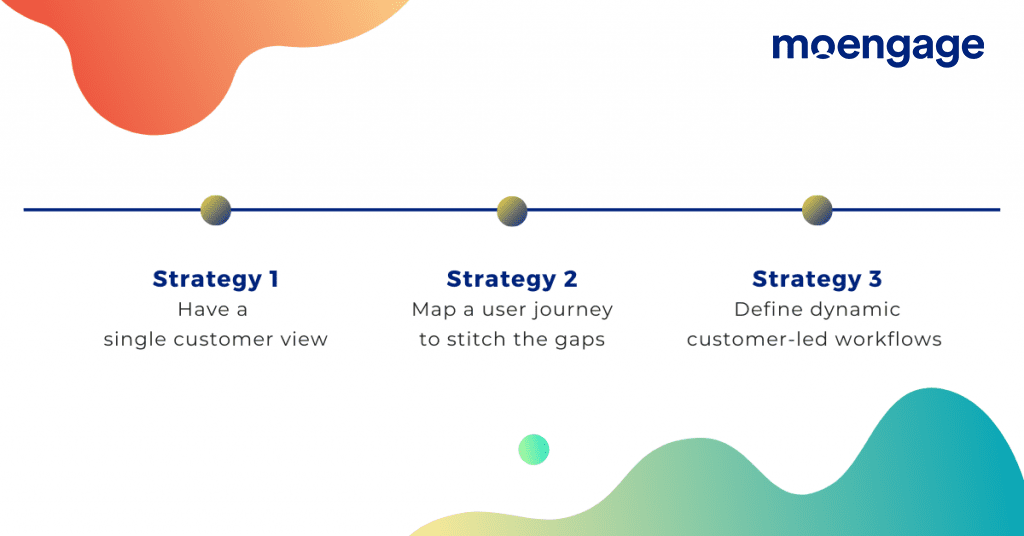
strategies for improving your omnichannel growth strategy

Another example is to create a roadmap to understand user pathways. For example, the most common pathway for a first time user could be an exposure to a Facebook or a Google ad and then a Google search to organic click. Based on this user flow you should weigh the campaign budget. Optimizing spends by altering creatives based on pathways is a good strategy.

Strategy 3: Define dynamic workflows that are customer-led, not product-led using relevant personalization. 

For example, to accurately prospect for new customers—create a campaign excluding existing customers from the campaign with an engaging and informative messaging. This messaging is to warm-up new customers to your brand and is, in contrast, to retargeting campaign messaging for existing customers i.e., more deal-oriented.

What are the 5 tenets that traditional retailers should follow to adopt omnichannel growth strategies?

There are few things I have learned along the way that I think marketers can apply while transitioning the business from offline to digital.

1. Find experienced digital marketers

The first step is to get experienced digital marketers, and if possible, upskill your current workforce. It is a complex area that probably doesn’t need experts in each specialization, but there is a lot to understand.

It will be best to upskill your workforce and get them to understand the basics of the digital marketing landscape. Even if you work with agencies, it’s great to have someone in-house that knows what they are talking about to speak the same language and to actually get the most value out of these agencies.

2. Be agile and adaptable

Next is to be agile and adaptable and it mostly depends on how you execute your plans. It’s not bad to have a 6-month, one-year, or 5-year roadmap. Take this pandemic, for example. If I have a roadmap, I analyze the previous and next 3 months to understand what happened and what will happen. Based on this, I can relook at some strategies to make it work and de-prioritize or re-prioritize things to keep on the roadmap. So, having an agile mindset is quite important for these kinds of transitions because nothing is going to go the way you planned.

3. Find the right CRM/Analytics tools

The next step is to utilize the right CRM or analytics tools to help you sieve through all the data collected over the years. Having data is one thing but knowing how to use it is another ballgame. I think once you start collecting all this online data, how are you going to measure metrics and explain it to key stakeholders matters. So find either an enterprise tool if you are at that scale or a small business tool if you are just starting but this is something you must invest time in.
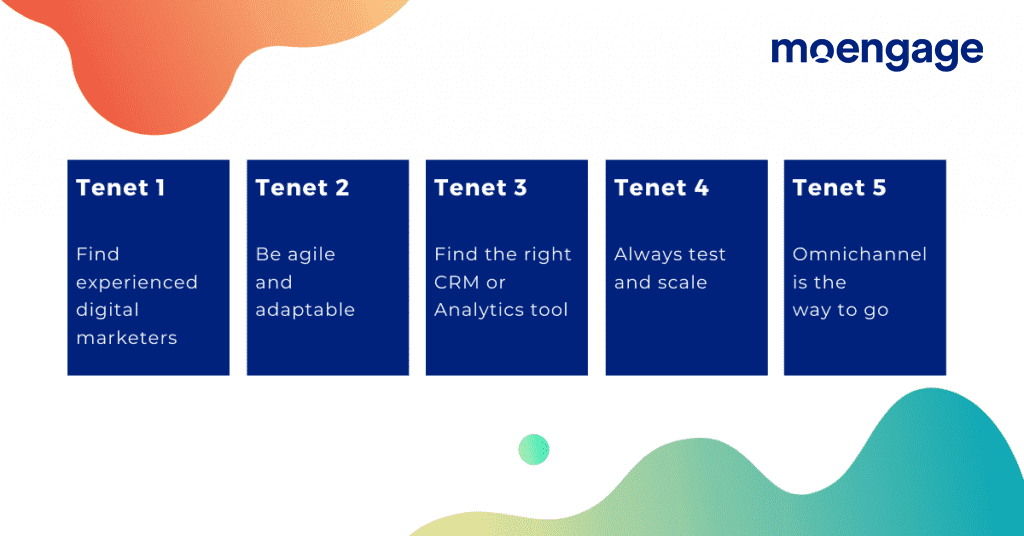
5 tenets that traditional retailers should follow to adopt omnichannel growth strategies

4. Always test and then scale

Testing and scaling channels are very important especially if you are tipping your toes in different territories. Having a massive budget into one channel and not knowing what it is going to do to your business is probably not the best strategy. I think diversifying that and understanding what responds well to your business is the best way of doing it because not all businesses will react to the same channels and it’s always about testing and scaling if that works.

5. Omnichannel is the way to go

Lastly, if you have the option, an omnichannel strategy is probably what you want to deem as the end goal. Don’t discount what you are doing in-store but don’t discount what you are doing online as well. They should talk to each other and complement each other. I think having one brand is what customers see, they don’t see your brand as an online brand or a brick-and-mortar brand.

So, internally you shouldn’t be competing with either of the channels. You should be taking the customer along the journey wherever they want to shop—whether it is to try and buy in the physical store or click to buy on an app. Leave that choice to the convenience of your end customer. But ensure the journey from finding the product to purchasing the product is smooth and synced with all platforms and channels.
traditional vs online business focus by jamie gagliardi

Thank you, Jamie, for sharing your knowledge about diversifying marketing strategies based on customer data. Have questions on optimum ways marketers from retail companies can smoothly transition from offline to online channels? Drop us a line below.

Here’s what you should do next

Changed Customer Behavior and Marketing Practices in Post-COVID-19 World

  • UPDATED: 31 July 2026
  • 9 minread
Changed Customer Behavior and Marketing Practices in Post-COVID-19 World
Reading Time: 9 minutes
Download Ebook – Detailed resource page on how to drive customer engagement during a crisis with in-depth strategies from leading global brands and industry experts

Download Ebook– Get consumer trends from 1.50 billion mobile app users in North America, Europe, India, Southeast Asia, and the Middle East

Download Report – Coronavirus Business Impact: Data-driven insights for brands during COVID-19

Download the Growth Strategy Handbook – A guide to setting up teams, processes & technology
stack for your growth program

The world has changed in an unprecedented fashion, and so has customer preference. Essential, functional, and emotional spending have taken precedence over luxury expenditure. How should the marketing teams prepare for such a world where customer preference and behavior has changed?

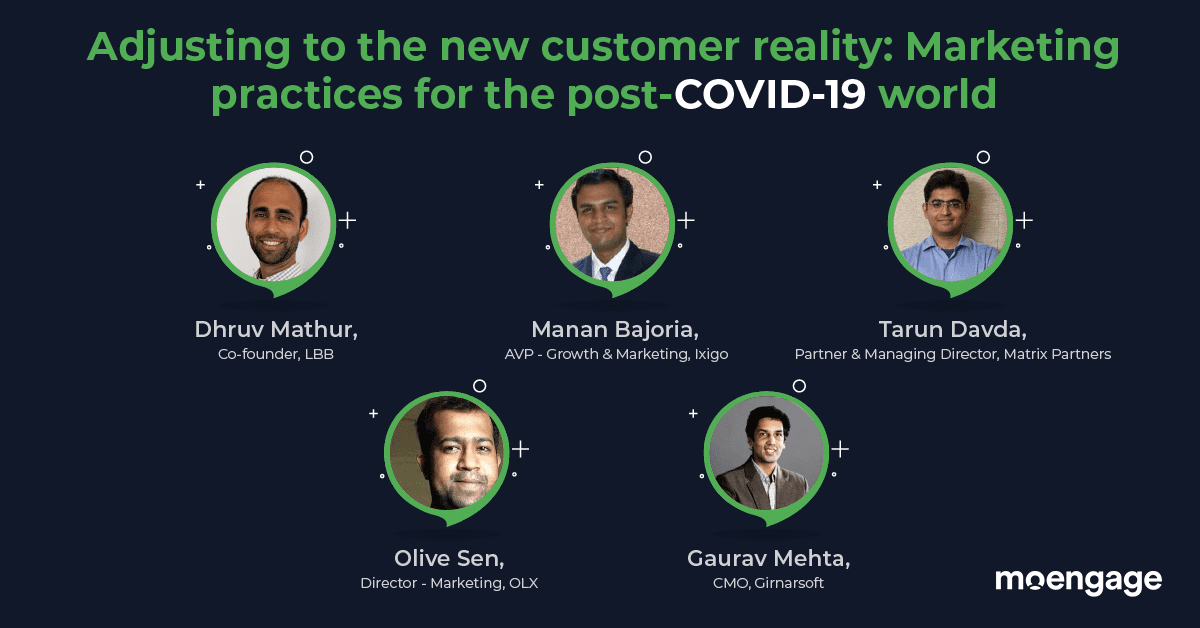
We aimed to find the answers from the co-founders, CMOs, Marketing leaders across India’s top players in the online marketplace, local business discovery platforms, travel & accommodation, IT, and equity investment firms.

In this roundtable we discuss

  • major changes in marketing communication tone in keeping with the current scenario
  • addressing business challenges in accordance with the changed rules
  • anticipating and dealing with changes in consumer behavior
  • reorganizing and planning for marketing & advertising spend in a post-COVID-19 world

Our speakers for the event:

  • Dhruv Mathur, Co-founder, LBB
  • Manan Bajoria, AVP – Growth & Marketing, Ixigo
  • Tarun Davda, Partner & Managing Director, Matrix Partners
  • Olive Sen, Director – Marketing, OLX
  • Gaurav Mehta, CMO, Girnarsoft

Without further ado, here are the key highlights and insights from the session:

Impact of COVID-19 on consumer behavior

Urgent need to go digital from localized businesses

  • Localized businesses have been deeply impacted which has pushed them to go digital more aggressively
  • LBB has noticed inbound requests from local businesses doubled on a daily basis
  • On the consumer side, services that required stepping out have taken a massive hit but searches related to home delivery have picked up tremendously.
  • While the traffic has dropped in absolute numbers but engagement has picked up since people are spending more time at home, posting a lot of information that the community is consuming.
  • The key to ensure growth right now is adapting to the changed environment and being opportunistic in taking chances

Digitization in the auto industry and renewed interest in pre-owned cars

  • With discretionary spend curtailed and supply lines disrupted, the auto industry has been affected.
  • The positive however is that OEMs earlier hesitant in going online are now proactively looking into digital avenues for research & discovery as well as transactions
  • Owing to the changed behavior of the OEMs, the whole industry can be expected to be digitized in the next 6 months
  • SEO insights are interesting as the used car segment has been getting good traction, a trend previously evidenced in China
  • The trend can be attributed to lowered user confidence in shared mobility services over health concerns. Users now prefer to have their own vehicle for emergency purposes
  • From a revenue perspective, March was the strongest month for CarDekho following which there has been a steep decline.

Buying & selling marketplace expects renewal in popularity of pre-owned goods

  • OLX has interestingly retained traffic to the portal despite a significant dip in supply-side
  • Various categories on the platform have been affected differently, with the auto being affected least while electronics and furniture have suffered majorly
  • Real estate has been hit the worst-hit both from traffic and revenue perspective
  • This can be attributed to the fact that neither users nor the sales teams are able to step out
  • Due to the mandatory lockdown, the offline inspection centers viz. Cash My Car has also been closed down disrupting the business further
  • The online buying and selling marketplace is optimistic about a bounceback to pre-COVID-19 business capacity in the next 1-2 quarters as the economic situations seem favorable to buying value for money, pre-owned goods

Lockdowns and restrictions disrupt travel and accommodation segment

  • ixigo has noticed a drastic impact on their business owing to the travel restrictions
  • Ixigo Trains App has taken a hit to the DAUs/MAUs, frequency of app launches/day, subsequently affecting the ad monetization revenue
  • Fall in impressions and advertisers curtailing digital spends has affected the ad bidding further reducing revenue/impression to one-third of pre-COVID-19 numbers
  • Limitations imposed (e.g. airlines planning to keep the middle seat empty) will mean hiked prices to make up for reduced inventory thus reducing demand again.
  • Business travel is expected to reduce with personal travel taking time to bounce as consumer confidence has taken a severe hit

Various industries noticing a permanent shift in consumer behavior

  • Travel & mobility sector is expected to have a slow recovery with unavoidable business travel likely to start sooner than leisure travel
  • The change in behavior can be attributed to dip in consumer confidence combined with worries of a 2nd and 3rd wave of the pandemic
  • Businesses will need to change plans depending upon recovery models viz. U, V, or L shaped.
  • Investors suggest planning for 3-4 months of zero revenue, 3-4 months of 30%-40% recovery, 3-4 months of 80%, and 80-100% of pre-COVID-19 revenue after a year.
  • Brands bouncing back quickly like China’s Didi (revenue back to 80% of pre-COVID-19 peak) have done so by gaining back consumer confidence
  • Didi provided sanitized cab offering with camera detecting if the car has been cleaned before, temperature check of the cab driver, mandatory masks for the driver and rider along with gloves and disposable hand sanitizers
  • Private mobility (self-drive vehicles) is expected to go up while shared mobility (taxis and public travel) will take more time to bounce back.
  • Similarly, with health concerns looming large two-wheeler used vehicle purchase is expected to see a spike
  • In the e-commerce space, certain categories like online grocery delivery are benefitting with increased digital interaction between consumers and local vendors
  • The telemedicine app industry has seen greater acceptance by the doctor’s now more than ever, as they are happy with video-consultations, virtual waiting rooms, recorded online medical history, a library of drug combinations for diseases, etc.
  • These one-time shifts in user behavioral trends are expected to stick forever unlike a fad

Solving for consumer’s lack of trust once normalcy returns

Gaining consumer trust in the usage of pre-owned goods

  • In the current scenario, it is essential for a business like OLX to gain audience trust in using pre-owned goods given the overwhelming health concerns
  • OLX is planning internally on how to implement safety checks in peer to peer selling to build consumer trust
  • The brand might have to intervene in peer to peer selling for ensuring proper sanitization
  • Such efforts are much easier implemented at inspection centers Upcoming project ‘OLX people business’ which deals with staffing of blue and grey collar employees will aim to resolve the delivery problems amid lockdown
  • Business models will change and evolve depending on recovery systems, i.e. U or L shaped recoveries

Curating user experience to address the changing customer dynamics

  • Auto classifieds have relied on a Low Touch Model which comprises of users taking charge of the whole buying and selling process of used cars
  • Curating experience for used cars purchase is essential to gain the trust of the consumers and address the changed dynamics
  • CarDekho is working with dealer partners to provide a curated experience to the users in their offline Gaadi stores, whether it is hygiene or documentation
  • The aim is to make the user experience low touch while offering high touch, high engagement from the delivery perspective.

How to grow business the right way during these times?

There are 3 phases any business should consider right now:

  • Phase 1: How to cut burn, manage runway, communicate with suppliers, clients, teams, stabilizing the company, expecting the worst-case scenario. Matrix Partners created a quadrant with COVID-19 impact and cash in the bank as two parameters. Different strategies were devised for companies falling in different quadrants
  • Phase 2: Examine if the product is going to be relevant or not in the post-COVID-19 world. Figure out the use cases and work on them. Add or tweak product offerings or pivot depending upon the above assessment
  • Phase 3: Figure out how to take advantage of the fact that market share has been brought down to zero (due to the pandemic). Decide what does it take for you to gain a disproportionate market share? What would you do today if you knew this is where the market will start. Do whatever is necessary to accomplish that, whether it means strengthening teams, reprioritizing product roadmap, etc.

Adapting marketing communication in response to changed user behavior 

Understanding your user and churning content to delight them

  • Focus on the customer segment, understand your consumer, and make a dent into their anxieties instead of using the same ‘stay home, stay safe’ narrative.
  • The key is to figure out where your business wants to gain disproportionate market share and try to be super relevant to the users
  • Try to cut through the clutter by adapting your marketing communication effort to pick a topic and provide delight to the users through that.
  • One example can be how VCs are supporting businesses, helping them learn and communicate with each other, and advising them to be in their mind space.
  • LBB has recently launched a program called ‘local gifts’ which enables users to buy gift cards from favorite local businesses (which customer can use later) to help the struggling business survive during these tough times

Focus shift from one category to ancillary ones might yield results

  • Insurance wing of Girnarsoft, InsuranceDekho is benefiting from great returns
  • The brand is now looking at consumer behavior, the goals driving that, and are adapting their Marcom strategy on top of that
  • Health and safety sentiments for oneself and family will increase in an uptick of insurance policies (purchase of used cars as well as new entry-level cars)
  • The brand is also focusing on ancillary services of used cars, standardizing the buying and selling experience and organizing the used car industry

Strengthen customer relationship through informative communication

  • Ixigo stopped sending sale communication i.e. cashback offers and instead focussed on travel safety advisory, a checklist to follow while traveling via flights/trains
  • The brand reached out proactively to customers and informed about travel policy changes
  • Introduced dedicated sections for COVID-19 news and a live tracker (which gets maximum clicks in a day) to keep the user engaged by providing legit information
  • Ixigo’s communication revolves around COVID-19 do’s and don’ts, explainer videos, debunking myths about COVID-19, refund policies, latest travel updates, and more
  • The communication has noticed good organic and huge social media traction
  • Ixigo has added a section about airline advisory, which is updated with information about policy changes, reaching out via WhatsApp about changes in bookings made, etc.

Rethinking marketing budgets, driving more business from existing customers, and figuring out key spend areas

Spend wisely and on cash positive and good ROI assets

  • Marketing spends at LBB haven’t been curtailed but has become more focused and is driven by product change, market share orientation, and performance orientation
  • Telemedicine and other categories are still advertising because it is a land grab opportunity
  • CPM/CPC rates and ad shares are dropping. Users will leverage it since these are never seen before bid rates
  • With big advertisers from some verticals stopping advertising, others are leveraging the open inventory
  • In fact, LBB hasn’t noticed any change in spend patterns of vendors who advertise on their platform except a slowdown in decision-making time
  • Some of these advertisers have already planned for the post-COVID-19 situation, figuring out what to do, and they’re certainly not stopping thinking about marketing and advertising.
  • There has been no change in the tactical approach at LBB but the marketing strategy has been adapted according to the behavioral changes of the user such as increased community engagement.

Online selling and buying marketplace prioritizing product innovation

  • For brands like OLX, the focus is on product innovation rather than marketing
  • The brand is, however, reaching out to existing customers via empathy-driven communication and driving CSR fundraising initiatives to help the migrant workers
  • The new user acquisition and performance marketing activities have taken a back seat.
  • The brand will start marketing spends once lockdown eases and things go back to normalcy
  • OLX is informing users about the validity extension of their listing and subscription packages

Building a platform based on genuine connections rather than advertising spends

  • A lot of marketing spends at Girnarsoft and it’s offerings like CarDekho have been curtailed
  • Only project-based marketing where partners want advertisement done on their behalf are operational
  • User acquisition efforts have been put on the back burner for now.
  • The organic play is going strong with the brand at 70-75% of traffic even now
  • The focus is on investing in building the brand which is the best defense against any upheaval be it a crisis or competitor pressure In the B2B domain, the brand is extending insurance to regular dealers through InsuranceDekho
  • The aim is to help the stakeholders with their working capital as an outreach program On the B2C side, the brand is ensuring that the video content churned out brings positivity to the users and in turn are getting a lot of love and traction from the audience
  • Girnarsoft is focused on building a platform through genuine connection rather than a transactional connection generated through advertising.
  • The brand has in fact doubled down on content marketing efforts as this is the right time to do a lot of these things

What is the biggest priority in the next 3-6 months?

The immediate priorities for the brands affected by the pandemic are to ensure cutting costs in order to extend the runway, devising contingency plans to revive the business, survival planning, tweaking the business models to be ready by the time normalcy returns. This is also the best time to implement a good operating rhythm, cultural agility, and decentralizing decision making as much as possible. Brands should also focus on understanding the new, thereby figuring out business solutions according to changed consumer behavior.

In conclusion, the speakers also shared their takeaway on remote work and its future. While most felt that there has been a boost in the productivity of teams like marketing, technology, and product, they lamented the lack of human contact, cumbersome process of setting up meetings. The unanimous feeling was that certain teams like sales need to get back on the ground owing to a more customer-facing aspect of their role. Most companies will now be more open to WFH scenarios and workspaces will be used for operational reasons that can’t be achieved at home.

What’s Next?

Check out the highlights of our exclusive virtual roundtable on the impact of COVID-19 on Indian businesses Find out how the global coronavirus pandemic affected the acquisition and LTV of apps in Europe? Wondering what is the coronavirus business impact on your vertical? Find out in our geography and business vertical specific COVID-19 impact quadrant! Register now to learn the tips of driving successful customer-centric marketing in the post-COVID-19 world!


Related Stories – 

Growth Marketing Teams 101: Why Your Business Needs a One Right Now

  • UPDATED: 02 September 2022
  • 4 minread
Growth Marketing Teams 101: Why Your Business Needs a One Right Now
Reading Time: 4 minutes

Do you know what is common to the poster childs of customer-centricity such as Uber, Google, Facebook and other unicorns? All of them have user-focused teams driving their growth strategies. Growth teams are not a new gimmick. Industry giants have successfully put them into practice for years and validated their usefulness like never before.

Think you’re aware of all Growth Strategy principles? Take this interactive quiz below
(don’t worry, you won’t be redirected to another page – you can take the quiz right here)

So, what exactly is a growth team?

Growth teams, as the name suggests, focus on growing the business as quickly as possible. What sets them apart from other teams in an organization is that they are cross-functional. Organizations that boast successful growth mindset teams combine the expertise of multiple disciplines into a single unit dedicated to achieving exponential growth. Such a team has members from sales, marketing, product development, engineering and even research and analytics.

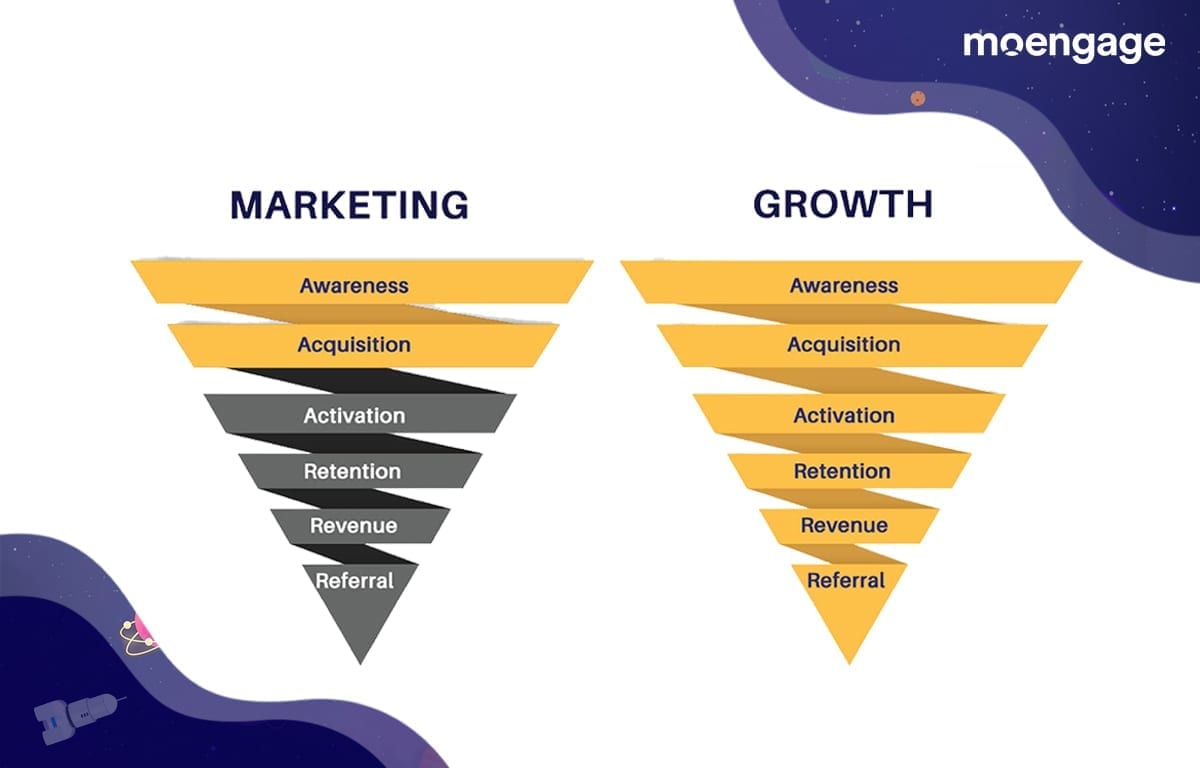
Marketing vs Growth Teams

By virtue of them being multidisciplinary and collaborative, growth teams have the potential to recognize and improve performance across the funnel. And they constantly use this potential to achieve a single, unrelenting target – providing creative solutions that deliver rapid growth through all-round product improvement.

What do growth teams do?

In start ups, it is common to see almost all employees chasing growth targets no matter what their role or function. Growth teams fuel this constant action by bringing in much-needed focus. They ensure that despite their obsession with growth, organizations continue to drive constant product improvements. Even large organizations such as Facebook, recognize that product improvements are what ultimately lead to user acquisition and retention.

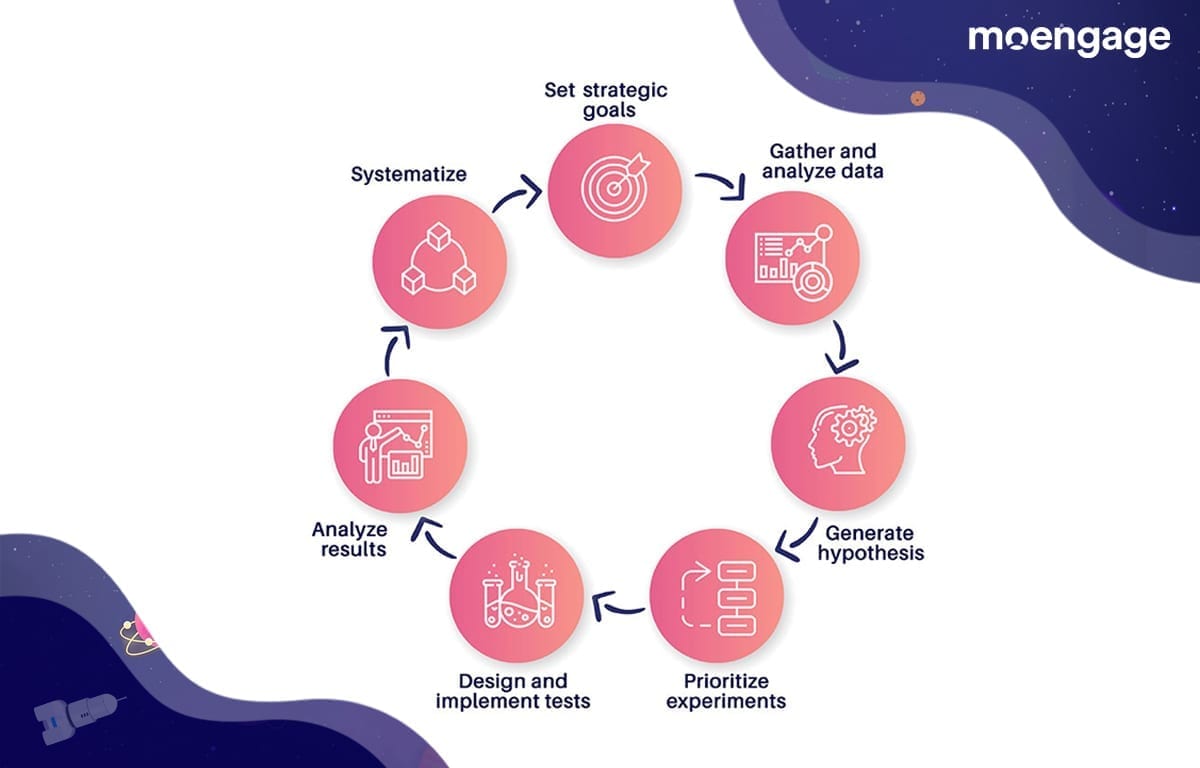
To achieve their goal of delivering rapid growth, growth mindset teams undertake a number of activities in a step-by-step manner.

growth mindset teams' activities


  • Set strategic goals – The first step for any team that wants to succeed in its endeavours is to set goals. Growth teams are no different in this respect. Goals are milestones through which these teams assess their progress.
  • Analyze data, generate hypotheses and create growth experiments – Growth teams base their actions on data. Once they have set goals, they go about gathering and analyzing all the data relevant to the product, customer and business operations. They generate hypotheses about factors that can be tweaked to maximize growth and create experiments to test their hypotheses.
  • Rapidly test new concepts and tactics, in order to effectively adapt to changing market realities – Armed with a bunch of valid hypotheses, growth teams test their ideas in the market to refine and adapt them to changing realities.
  • Provide multiple solutions to a single problem, test them and find the optimal solution quickly – When there are multiple obvious solutions to problems, growth teams step in to test them and find the optimal solution so organizations do not waste time and resources chasing different targets.

Through systematic data analysis and experimentation, cross-functional growth teams provide rapid acceleration to business success in an age where rate of customer acquisition and retention is key to survival.

The Complete Growth Strategy Handbook


How your business will benefit from a growth team

We have seen how growth teams speed up decisions and optimize actions to help business grow quickly. That’s only the surface of deep-rooted advantages that organizations can derive from growth mindset teams. Here are some of them:

  • Growth teams create a customer-centric mindset throughout the organization by constantly focusing on improving product experience.
  • They allow businesses to deal with changing market conditions, and help offset any unforeseen losses.
  • Being cross-functional in nature they make greater synchronization between various functions in the organization a habit.
  • Growth teams make organizations nimble because they enhance their ability to test various solutions, verify effectiveness and gauge potential quickly.
  • Finally, they help organizations to react instantly to changing customer responses and enhance customer experiences.

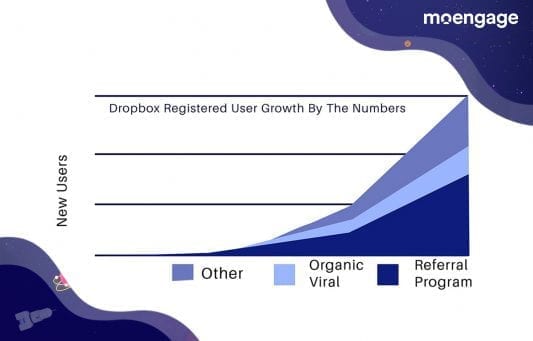
Dropbox Registered User Growth


A great example of the benefits of having such teams is Dropbox, which saw its user base increase from 100k to an astronomical 4 million users, within the space of a year in 2009. By using growth techniques and constantly focusing on product feedback, Dropbox created a revolutionary referral program, which led to high product success.

When utilized effectively, growth teams can be versatile and high-impact assets for businesses no matter what stage they are in. In the next blog, we will learn how to build the foundations of such a team.

Like what you read? Here’s what you should do next:

Who is MoE, the growth bot?

  • UPDATED: 02 July 2023
  • 3 minread
Who is MoE, the growth bot?
Reading Time: 3 minutes

At MoEngage, we’ve enabled startups and enterprises to experience hyper growth. Along the way, we picked our own lessons and grew team strength by 3x and revenue by 2x.

In our rigorous experience of the last 6 years lies the inception of MoE, the growth bot. As our mascot for the Growth Strategy Handbook, she will be walking you through a growth framework which can help enterprises and startups alike to build and scale a growth strategy.

In the process, MoE will debunk myths around growth strategies by helping you build growth teams, choose the right technology stack, and set up the right growth processes.

Think you’re aware of all Growth Strategy principles? Take this interactive quiz below (don’t worry, you won’t be redirected to another page – you can take the quiz right here)


Here are the five main characteristics of MoE that make her the undoubted mascot for our growth program framework.


1

She is data-oriented.

MoE believes in tracking and analyzing key metrics in response to a growth team’s experiments. Furthermore, she not only reports changes in numbers, but also provides logical explanations and qualitative insights which qualify the quantitative shifts seen. Hence, she helps teams understand exactly how their experiments are creating growth for the business.


2


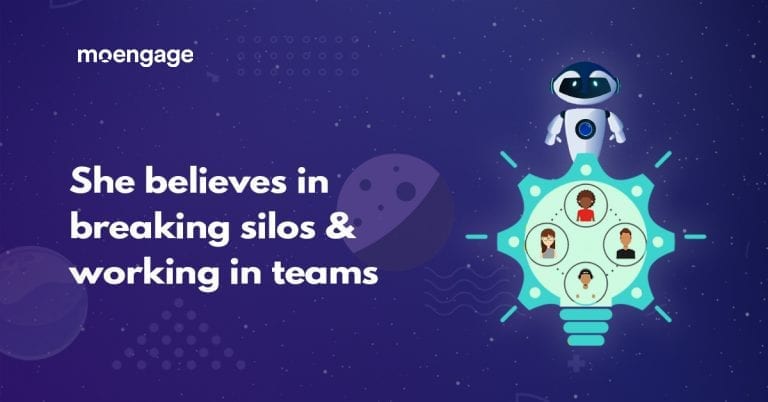
She believes in breaking silos and working in teams

MoE is versatile, with knowledge and skills that span various organizational roles. She measures opportunities for the business across the funnel and makes key decisions about prioritization of experiments in the business. Leading by example, she encourages a sense of innovation and creativity in the growth teams.


3

She has an eye for design and detail

MoE believes that good customer experience starts with good design and attention to detail. A good design responds to the voice of the user to find ways to make interactions and transactions seamless, using principles of consumer psychology and behavioral triggers. A bad user experience can signal the demise of any product. MoE believes that good design understands human intuition and habits.


4

She likes to experiment fast and fail faster

MoE is focused on building products quickly, and incrementally improving them later. This requires the ability to analyze data and use it to make modifications that realize growth potential. As a growth evangelist, MoE believes in the building and creation of multiple assets on a regular basis, which can then be deployed and assessed for performance.


5

She sets up processes which can be scaled

It is integral for the sustainable functioning of a growth team to set up processes that can be scaled with the growth of the organization. Setting processes includes establishing goals for the team, measuring performance on a regular basis using key metrics, and identifying channels for growth.

And that’s what makes our MoE, the perfect growth bot.

Like what you read? Here’s what you should do next:

  1. Take an interactive quiz and assess your knowledge on growth strategy principles.
  2. Download ‘The Complete Growth Strategy Guide’, and explore how to set up teams, processes & technology stack for your growth program.
  3. Watch videoslisten to our podcasts, or register for an upcoming webinar for more such information.
  4. Stay updated with the latest events, webinars, and #GROWTH resources.

#GROWTH20 Wrap-up: Exploring frontiers of building a strong growth strategy

  • UPDATED: 21 July 2023
  • 6 minread
#GROWTH20 Wrap-up: Exploring frontiers of building a strong growth strategy
Reading Time: 6 minutes

As we settle back at work after #GROWTH20, we want to look back and reflect on some of the key highlights from the conference.

#GROWTH20, held in Bengaluru on 18th February 2020, brought together 100 brands, 200+ attendees and 15 speakers for a full day of learning. We also made a couple of big announcements, and as has been our practice, shared our product vision and roadmap with the audience.

Raviteja Dodda, Co-founder and CEO of MoEngage, spoke about the company’s 2X revenue growth, team strength and our vision and goal. MoEngage’s 2X revenue growth in 2019-20 was made possible by the new mobile-first and internet-first customers we collaborated with in various countries. The team of MoEngagites grew to 250+, including regional teams that support our customers who are spread across the globe. Ravi also highlighted our vision and goal for the future, which are aligned to make us relentlessly ‘customer-first’ in everything we do. Finally, he shared our product vision for 2020 and beyond – our focus will be on personalization, segmentation, and analytics.

growth strategy_moengage presentation

Apart from showcasing our roadmap for 2020, we also had celebrated C-suite leaders, marketers and product managers sharing their expertise in growth strategy, retention and engagement methods.

Growth Strategy Presentations

Senior leaders from companies such as PhonePe, Superhumans and others made insightful presentations explaining their retention growth strategy and much more.

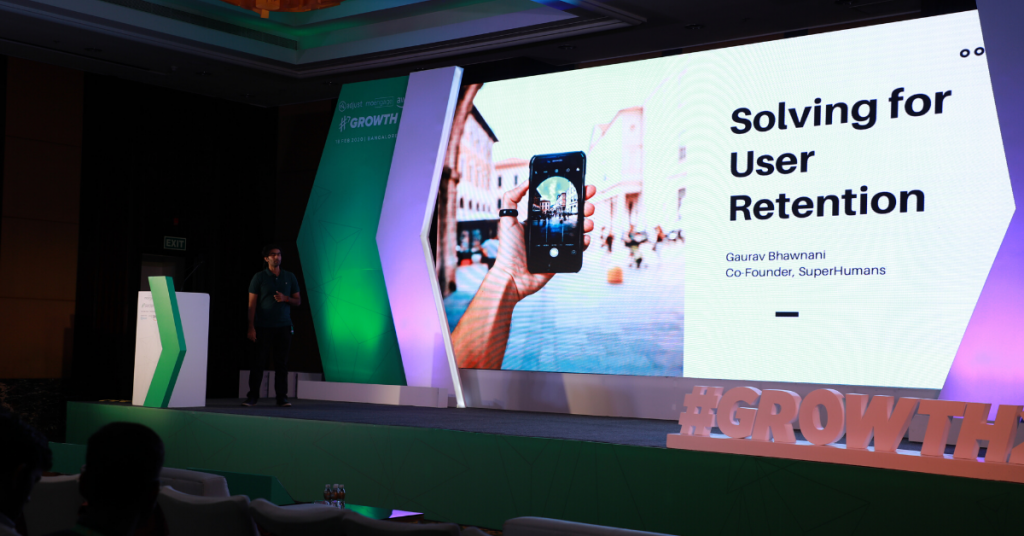
Retention Workshop by Gaurav Bhawnani – Co-founder, Superhumans: Gaurav spoke about the different ways of measuring retention, identifying drop off points, and stopping churn through a data-backed approach. He explained why brands need to understand that a successful product will result in a drop in churn rate. He shared some real-life examples of campaigns that he has executed in the past to understand retention rates. Gaurav also elaborated on how he has been using data to define retention metrics differently for different cohorts.

solving user retention-growth strategy

Retention Strategies to Improve Customer LTV by Rahul Chari – Founder and CTO, PhonePe: In his presentation, Rahul mentioned that keeping onboarding extremely simple is key to create an efficient user journey. To quote him, “Onboarding should be a simple setup that can break down user cycles and figure out their intentions towards completing a particular action.”

solving user retention-growth strategy

UI/UX Iterations by Tushar Mehndiratta – CTO and Co-founder, Avail Finance: Tushar showcased some interesting UI/UX examples that helped Avail minimize churn during user onboarding. He also emphasized that it is critical to keep the user motivated using AHA moments throughout the user journey.

solving user retention-growth strategy

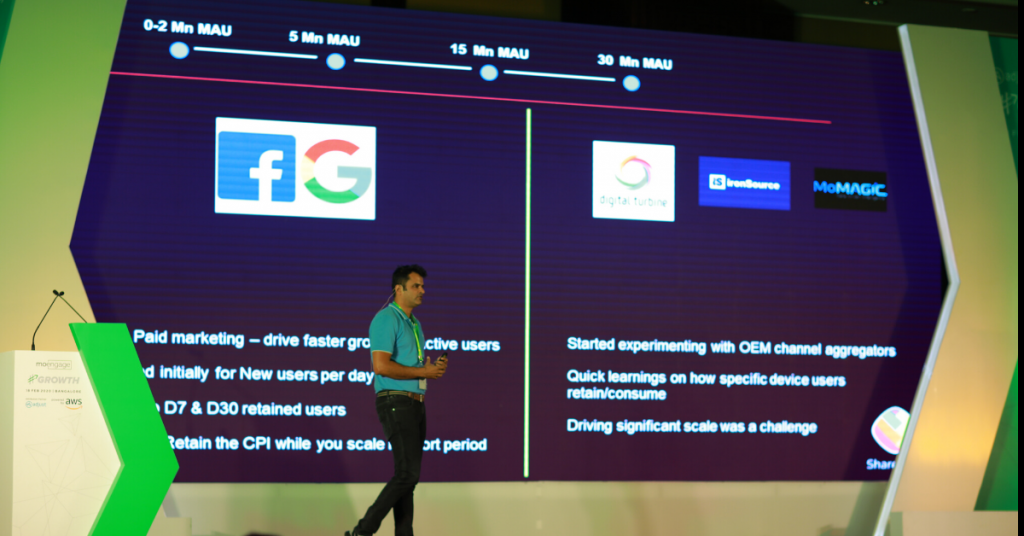
Sharechat’s six-step journey from 0 to 60 Million MAUs by Sunil Kamath – CBO at Sharechat: Sunil described his company’s journey to growth and the hacks that delivered organic growth. He said, “The future of the internet is regional … today users who are consuming content in non-English languages are high”. We also learnt that at times, consumers might not realize what they want to consume. In such cases, the brand speaks to them directly. Sharechat used this insight to to give consumers various categories of content that they could choose from.

solving user retention-growth strategy

Growth Strategy Chat with Experts

We hosted some fascinating panel discussions featuring CMOs, CTOs, and Founders of companies such as OLA, Medlife, Vedantu, Bounce, Licious to name some.

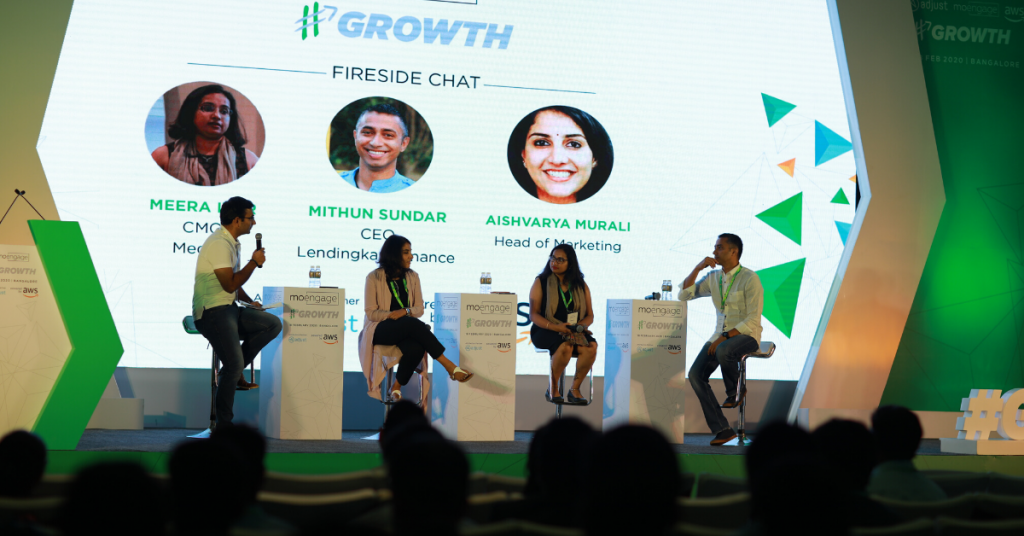
The first panel discussion covered strategies for building the right marketing process, team structure and metrics for hyper-growth. The panelists discussed the importance of understanding the consumer, and how it is essential to link functional metrics to that particular consumer in the purchase journey. They spoke about carrying two lenses — one for a microscopic view that looks at day-to-day revenue targets, traffic and conversions; another for a telescopic view to understand how the brand is going to sustain in the long-term – and making both work.

Speakers: Aishvarya Murali – Head of Marketing, Ola | Mithun Sundar – CEO, Lendingkart Finance | Meera Iyer – CMO, Medlife

growth marketing-growth strategy

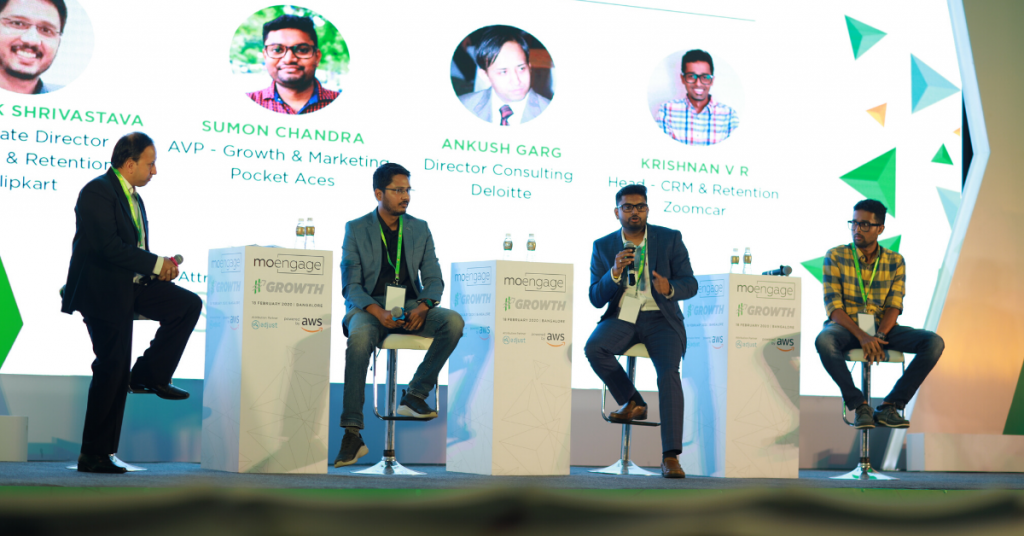
The next panel discussion started with the moderator, Ankush Garg of Deloitte, sharing his thoughts about leveraging analytics for CRM and growth. Flipkart’s Abhishek Shrivastava said that the last decade was about measuring success and the next decade is going to be about driving customers to the brand. VR Krishnan of Zoomcar added that the product needs to evolve in such a way that a customer has more reasons to come to the brand. We learnt how to use RFM models to become efficient at retaining and activating users while improving products to enhance DAUs from Sumon Chandra of Pocket Aces.

Speakers: Sumon Chandra – VP Marketing, Pocket Aces | VR Krishnan – Head of CRM, Zoomcar | Abhishek Shrivastava – Associate Director, CRM, Flipkart | Ankush Garg – Head of Digital Practice, Deloitte

measuring marketing-growth strategy

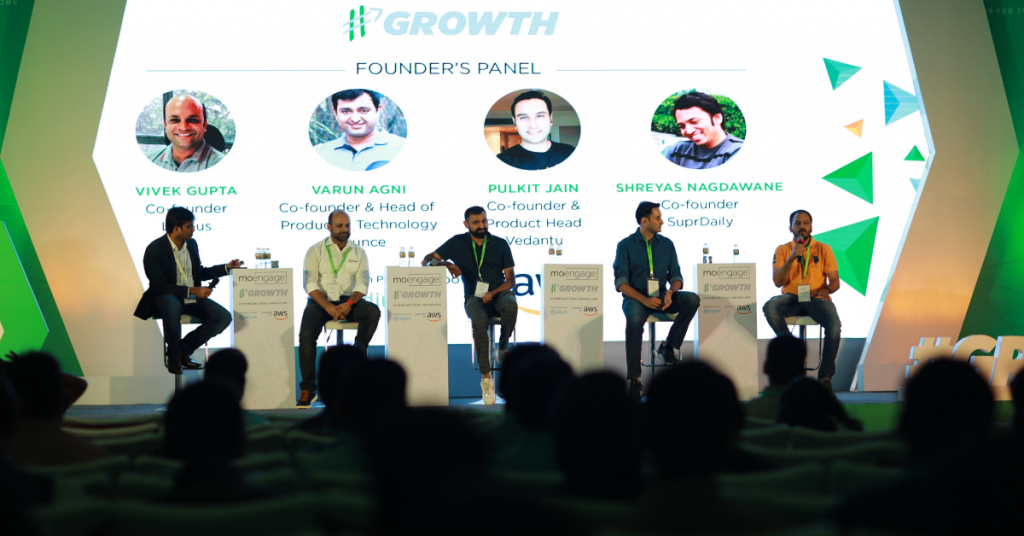
The final discussion featured an all-founders panel, with panelists sharing ‘AHA’ moments from their respective startups. One such moment for Licious, shared by Vivek Gupta, was that 90% of their new users returned to the product. Shreyas Nagdawne of Supr Daily further emphasized the importance of retention when he highlighted their month on month retention of 98% in the first few months of their journey. Similarly, retention is also a key metric at Vedantu. Pulkit Jain, Co-founder and Product Head at Vedantu, added that they go very deep in measuring NPS differently for students and parents. Changing tracks, Varun Agni of Bounce observed that leadership philosophy needs to change over time in a startup. To quote him, “That really helps when the team starts growing. You need to make sure you don’t become the bottleneck of decisions.”

Speakers: Vivek Gupta – Co-founder, Licious | Varun Agni – Co-founder & Head of Product, Bounce | Pulkit Jain – Co-founder & Product Head, Vedantu | Shreyas Nagdawane – Co-founder, Supr Daily

founder strategy-growth strategy

Those were all the highlights of the speaker sessions. The event also saw the launch of our two much-awaited content assets:


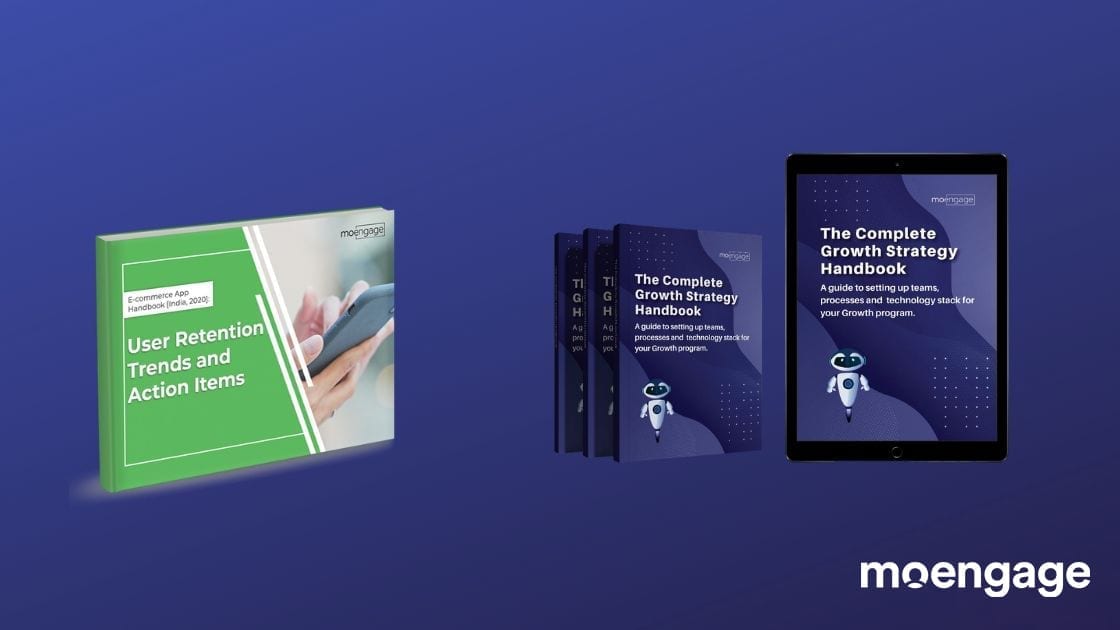
The Complete Growth Strategy Handbook, a guide to setting up teams, processes & technology stack for your growth program. Readers will gain a deep understanding of forming and managing a growth strategy and learn how growth teams affect businesses – startups and enterprises, alike. Download it here!

E-commerce App Handbook for India, user retention trends and action items report with staggering facts about e-commerce app retention in India. This report includes ready-to-implement action items for PM managers and c-suite marketers.

With this, we draw the curtain on #GROWTH20, one of the trending hashtags in Bengaluru. #GROWTH20 was a grand success as the participants walked out much more informed than before. We learnt from industry stalwarts, and discussed solutions to problems that we face together as a community. Here’s to many more #GROWTH events ahead.

About #GROWTH:

At MoEngage, we believe that creating communities, sharing insights and learning from each other is an important cornerstone of a thriving business. #GROWTH events bring leaders from different industries together as a community to share industry nuances. We are proud to host and create a global community of growth marketers, product owners and entrepreneurs.

Want to learn more? Here’s what you should do next:

#Growth Dubai Roundtable: How Mobile-First and Enterprise Companies Employ Personalization in Marketing Automation

  • UPDATED: 18 July 2023
  • 6 minread
#Growth Dubai Roundtable: How Mobile-First and Enterprise Companies Employ Personalization in Marketing Automation
Reading Time: 6 minutes

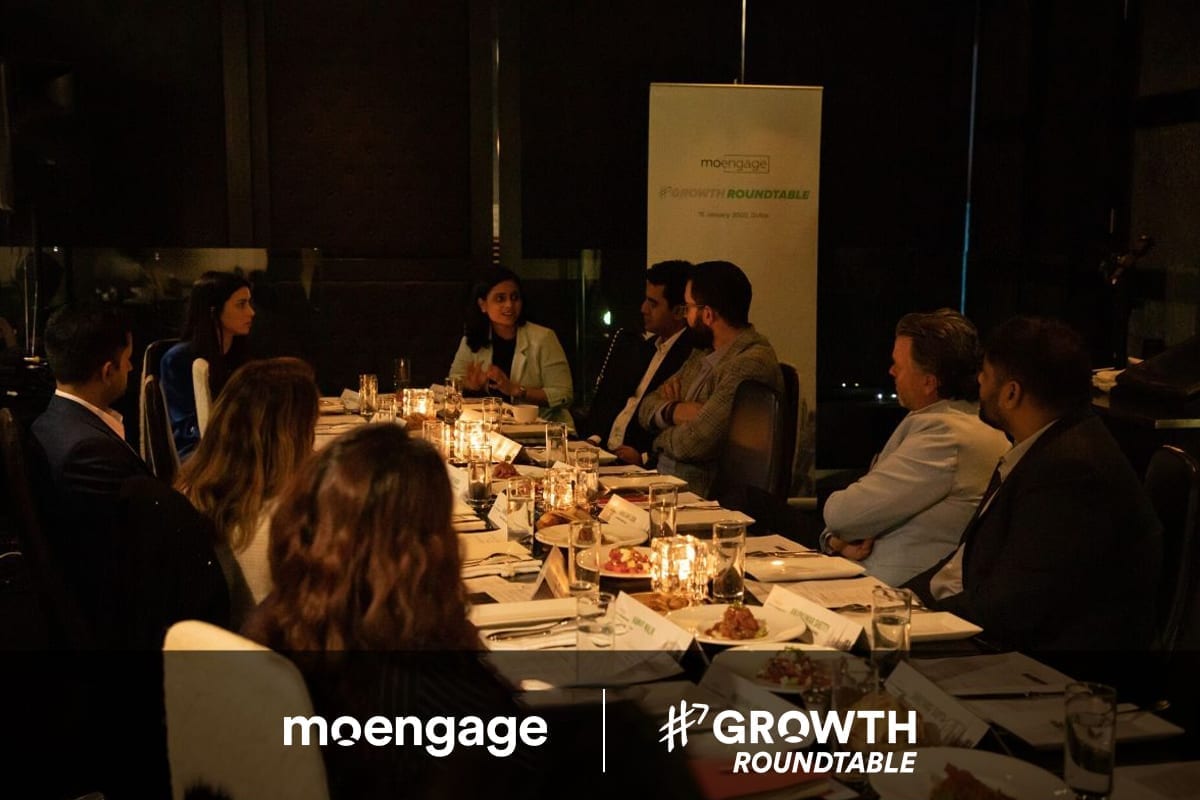
We recently concluded the insightful #Growth Dubai round table. Leaders from some of the fastest-growing companies of the 21st century, Careem, Emirates NBD (Liv), CASHU, Mashreq Bank, Emaar, to name a few, attended the event.

What’s a #Growth roundtable event?

At MoEngage we believe that creating communities, sharing insights, and learning from each other is an important cornerstone of a thriving business. #Growth roundtables are closed-group events for leaders from different industries to come together as a community and share industry nuances.

Naturally, this event is a grand success when the participants walk out much more informed than before. The professional camaraderie transforms into free-flowing conversations. Participants discuss solutions for problems that they face together as a community.

The Topic

The topic of the Dubai roundtable was pertinent – How do companies personalize user experiences to create long-lasting customer relationships?

With the rise of mobile, a new view of customer/brand engagement is emerging. The age of the customer marked the end of the one-size-fits-all messaging era. Today, a single message can’t get the job done unless it’s perfectly tailored to relate with every customer. This is the age where customers are more empowered than ever before and in control of their relationship with a brand. These customers continually demand personalization throughout the buying journey.

Mobile-First Vs Enterprises

Broadly speaking the participants of the Dubai roundtable can be categorized into two industry segments – Mobile-First and Enterprises. While mobile-first companies keep themselves abreast of the recent technological solutions for marketing problems and ways to implement them, enterprises are still playing a catch-up game.

Those of you who understand the differences between a mobile-first company and an enterprise can skip the next section and go directly to the insights.

1. What is a Mobile-First company?

The term “Mobile-First’ was introduced by Luke Wroblewski in his book of the same name.

“Mobile-first” signifies a design approach where you start with a focus on mobile experiences. Such companies begin with smaller screen resolutions and work their way up to larger screens with a unified experience. For modern businesses, this approach focuses equally on both versions – mobile web and applications. Examples include eCommerce, food delivery, travel, etc.

2. What is an Enterprise?

In the traditional sense, enterprises are companies with substantial manpower, processes, and customers. An enterprise may or may not have a digital revenue stream. These companies generally do not have a vibrant digital presence. Their customers, on the other hand, do. This change in the landscape and rapid boost in digital engagement have forced enterprises to re-think the way they approach digital channels. Examples are companies in sectors such as BFSI, real estate, etc.

If interested, take a look at Challenges of Enterprise Marketing Teams and How to Solve Them

So how does personalizing user experiences to create long-lasting customer relationships differ in these two segments?

Unlocking unified data view of customers

Mobile First Enterprises
Actionable data present Data Paralysis
Digital customer journey is better mapped Less visibility of digital customer journey
Departments/teams are cross-functional Departments/teams usually work in silos

Actionable Insights:

  • Data needs to be more holistic in order to be acted upon. For a brand, it’s important to analyze user behavior across different lifestyle segments.
    Case in point: One of the marketers from the Banking industry remarked how they engaged their customers by telling them that they spent $xx on coffee this month. This in turn nudged the viewer to create an expense tracker. This is a classic example of how brands can expand their engagement strategy by creating a unified view of the customers across different touchpoints.
  • A good way to start battling data paralysis and analyzing user behavior is by setting trackers within the native app/website. This helps you map the user journey and plug the leaky buckets (pages with considerable drop-offs). This will also be a good starting point for tracking the effectiveness of your future campaigns.
  • Setting up growth teams that don’t work in silos. Cross-functional teams that span across Data Science, IT, and Marketing communications roll out much more effective campaigns.

Personalization Strategies To Create Effective Campaigns

Mobile First Enterprises
When to send a message could be a challenge What to send in a message and when – both are a challenge
Messages are less promotional, more useful Messages are partly or fully promotional
Partnered with other lifestyle brands to drive engagement Partnerships are still being explored

Actionable Insights

  • Keep your messages less promotional and more useful to drive better engagement. One of the attendees – a marketer from the Travel industry – remarked how geofencing had really helped them in driving more impressions. Here are some ways to make your messages more useful, relevant, and personalized. Furthermore, keep in mind that running promotions can invite unwanted segments that don’t give you the expected return on investments.
  • Segment your users not based on hunches but on actual data points. For example, a participant from the Banking industry shared how accounting a user’s expenditure on other brands can be a far better indicator of their purchasing power than the traditional revenue-based model, which only takes into account the user’s relationship value with the bank. Expanding the datasets and getting a 360-degree view of your customer is inevitable in this day and age.
  • Start by generating lookalikes for user acquisition: Once you have your ideal user persona in place, look for similar users who fall in the same category. This same approach can be extended to social media channels such as Facebook which gives you the option to actively target ads to your lookalike audience.
  • Partnerships with other brands further enrich your personalization toolkit. Your users are interacting with multiple brands, and that opens up a plethora of opportunities to analyze user behavior and drive value for your brand.

How to ensure that your personalized messages don’t get creepy

  • Be mindful of who you’re creating the campaign for. Factors such as nationality, age groups play a big role here.
  • Make your campaigns loosely on the lines of user behavior and patterns rather than being too specific. For example, if a user has opened a savings fund with the name “Marriage savings”, you’re better off sending them messages which are around the family theme than marriage itself.
  • Time the message notification to perfection. It’s important that the message gets delivered at the right time to increase the likelihood of an impression. Setting a start and end time for your campaign is not enough. Enable your campaigns with the timezones that your users are in. There’s still space for machine-learning-driven tools to make the delivery more specific and customized to each user.

Bonus: How do brands extend customer service on Social Media

  • For the loyal advocates: Identifying your brand advocates and rewarding/recognizing them on social media is a small step with great benefits.
  • For the unhappy customer:
    – Acknowledge the complaint and respond to emails. Keep in mind that if you try to solve the complaint over social media, you’re indirectly encouraging other users to do the same. The last thing you want is for your social media handles to transform into a complaint board.
    Angry customers are good for business. There’s a huge opportunity to convert them into loyalists by compensating them with your best service.

Conclusion: Vision for future years

  • Create a diverse set of products that caters to growing market needs. Have the marketing team on board at the stage of product conceptualization.
  • Go with quality over quantity when it comes to creating campaigns.
  • Ensure seamless integration between teams internally. Set up real teams, not silos.
  • Expand the product platform to create an ecosystem around it. For example, a travel app expanding into an e-payment wallet that integrates with other brands.

Here’s What You Should Do Next

Customer Lifecycle Management Best Practices For Mobile Marketers with Ashish Khatri

  • UPDATED: 26 October 2023
  • 6 minread
Customer Lifecycle Management Best Practices For Mobile Marketers with Ashish Khatri
Reading Time: 6 minutes

Anything special or precious is hard to get but harder to look after. Be it a vintage car or, why even love! Customers are no different.

Today, one of the biggest challenges in the mobile-first world is customer engagement and retention, and in lieu of this, Ashish Khatri shared winning Customer Lifecycle Marketing practices during a MoEngage webinar.

You can continue reading this wrap-up blog or you can take a look at the webinar recording here.

Ashish Khatri has over 18 years of experience driving business goals for companies like Amazon Prime Video, Vodafone, ICICI Bank, and Reliance Jio. He has been instrumental in setting up digital marketing and engagement strategies for them and is currently working as an independent marketing consultant.

Bonus Content

👉 Customer Lifecycle Marketing Campaigns: An In-depth Guide [Download Ebook]

👉 Beginner’s Guide to Omnichannel Marketing for 2021 [Download Ebook]

Why is Customer Lifecycle Management (CLM) gaining prominence?

Ashish sets the context for CLM by stating some of the fundamental reasons for the growing significance of CLM.

  • Disruption in the industry: Mobile proliferation and technological advancement have made disruption almost inevitable and constant in the world of business and while industries are in the process of adapting themselves to this dynamic digitally centered world, they‘re continuously being challenged by new use cases, new tools, and more.
  • Customer retention is a bigger problem: Initial investment and freebies can help acquire customers, but retaining customers in a competitive market is what businesses are struggling with. Studies show that only 29% continue to be active customers after the first three months.
  • Multiple apps at work: In a burgeoning app economy, multiple apps are competing for the limited mindshare of the customer, who based on needs and situations will quickly app-hop from one app to the next.
  • Influenced by hyperactive US and China markets: The parent companies of some businesses are based in mobile hyperactive markets like the U.S. and China. These businesses are exporting some of their best engagement practices to India. Indian customers are therefore getting exposed to these competitive practices and hence there’s a rising need for companies to match this benchmark.
  • Mobile Internet penetration: The mobile adoption curve suggests that the consumption pattern of the next 200-300 million people online will be quite different from that of the early adopters.  They are more likely to absorb content that isn’t text-heavy like videos and use more voice search rather than text search, mainly due to literacy issues. English will take a backseat and businesses will need to focus on vernacular languages.

The main focus of brands is to steer the customer journey in a manner that maximizes customer lifetime value. The CLM framework forces brands to think of the customer journey as a series of steps and to tap into the pain points a customer faces at different stages of the onboarding journey. This enables brands to recognize the work they need to do to take the customer from point A to Point B.

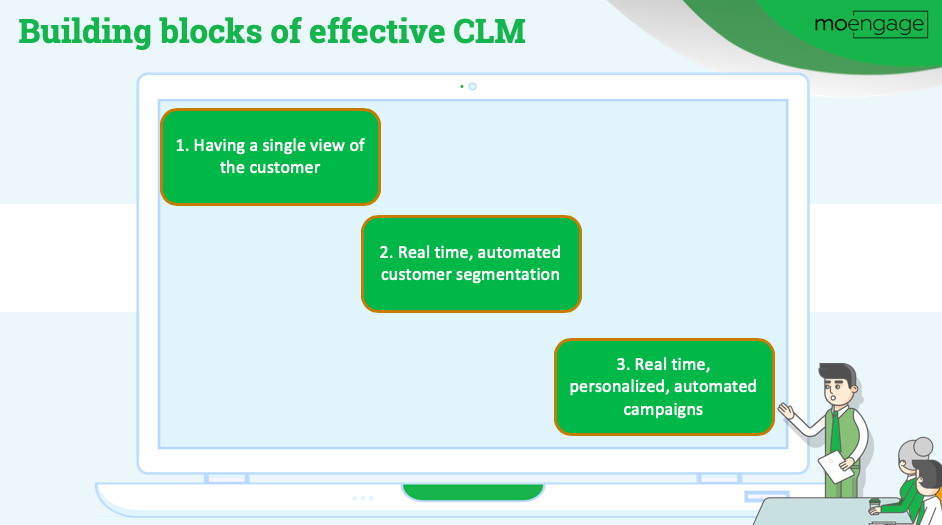
The Building Blocks of Effective Customer Lifecycle Management

Building Blocks of Effective Customer Lifecycle Management

Here are some prerequisites an organization needs to have in place before setting up a CLM practice:

A Single View of Customer: A 360-degree view of a customer will enable brands to keep in touch with the customer throughout the onboarding journey.

A single data mart that syncs offline and online transactions and records customer behavior at various touchpoints will help organizations use the right CLM approach for the right customer.

The messages sent to the customer, the calls and emails made to and by the customer, all need to be recorded in the same data mart so that the organization and customer are on the same page.  This further enables companies to send the right messages to the right customers at the right time through the right channels.

Real-time Automation of Customer Segmentation: The entire customer behavior right from the time of installation to uninstallation is captured, and this helps organizations segment their customers further and target them with the right campaigns.

Apart from commonly used segmentation variables like the devices used by the user or the products the user has bought or shown interest in, Ashish shares a very recent segmentation model called – RFM segmentation.

RFM stands for Recency (the recent activity of customer), Frequency (number of purchases), and Monetary value (aggregate value of purchases made) – It divides the customer base into multiple actionable segments. Brands can track their power customers or previous users or users who are showing signs of attrition. The RFM model can help trigger actionable campaigns from a customer engagement point of view.

To ensure that campaigns have a significant impact on business metrics, Ashish suggests getting the segmentation essentials right in the following ways:

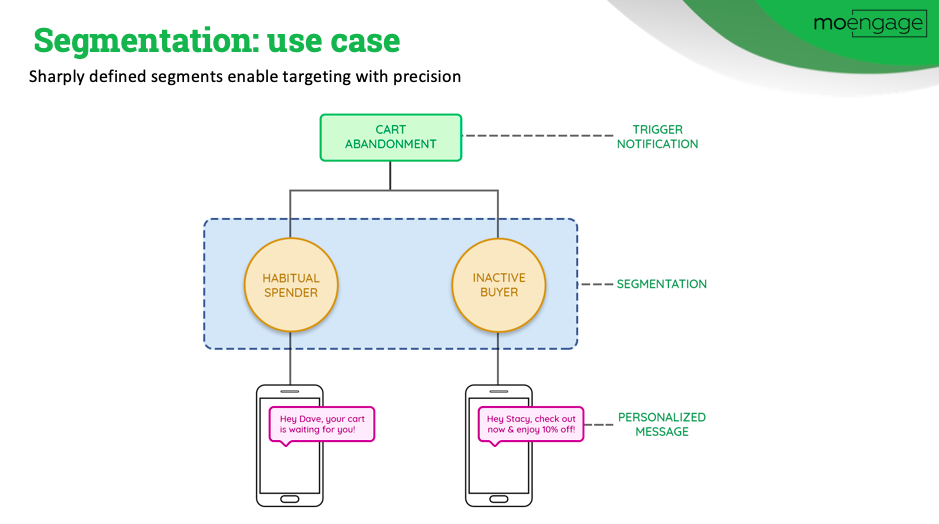
Segmentation Use Case

  • Micro-segmentation: With a widely diverse customer base, carpet bombing segmentation has lost relevance, and brands today prefer a more granular form of customer segmentation.
  • Real-time Segmentation: The need to catch customers at all critical touchpoints, like cart abandonment, in real-time is vital. The capture of real-time data provides the opportunity to create automated campaigns that go out to the respective customer in a few minutes with a relevant message.
  • Automated Segmentation: Automatic creation and execution of campaigns based on use-case scenarios
For more on behavioral segmentation, you can take a look at our article on event-based targeting.

Real-time Automated Campaigns: In a mobile-first market, Ashish suggests push notifications as one of the best practices for mobile customer engagement.

In fact, it will be interesting to know more about push notification best practices.

Marketing Automation Workflows for Your Brand

What are the things to keep in mind while framing a Push Notification Campaign?

User behavior takes center stage: The customer already has limited mindshare and is the target for many apps and notifications. In order to get the desired response, messages need to be relevant to the customer and so, being in sync with user behavior at every step in the customer journey helps to a great extent.

Timeliness: The push notification is based on the here-and-now action of the customer, so getting the time right is critical.  Ashish cites examples of food or content apps that choose the later part of Fridays for notifications about things to do on the weekend.

Continuous optimization through A/B testing: Brands optimize their push notification campaigns for best results based on a testing calendar for testing messages, CTAs, and rich media messages vs. plain text messages.

Set Measurable Goals: Organizations set goals based on the business metrics they want to move; for example, higher retention might be the goal for an e-commerce app, and higher conversions are what a subscription app might focus on. The key is to tie the goal down to a specific business metric that matters and then track the same.

Identify High-Value Actions (HVA) Linked To Business Goals: Brands identify which specific customer behavior will help them achieve their goal. For example, an e-commerce app that is trying to address the 30-day retention challenge finds data suggesting that customers who complete two purchases in the first 30 days are more likely to remain active after 30 days. These two purchases are the high-value actions the app needs the customer to complete.

Design campaigns that nudge customers towards the HVA: What can a brand do to get customers to complete the HVA? A welcome message,  an offer, or a discount coupon are some of the things brands try to get the customer to make a purchase or complete the respective HVA.

Brands should lay greater emphasis on the data points that will help personalize the user experience to a great extent and the significance of varying onboarding flows according to the acquisition funnel used and vice versa; this, he says, will increase brand awareness among first-time customers.

8 Effective Steps for Customer Retention in a Mobile-first World

  • UPDATED: 30 October 2025
  • 6 minread
8 Effective Steps for Customer Retention in a Mobile-first World
Reading Time: 6 minutes
  • Acquiring a new customer is 5x more expensive than retaining an existing customer.
  • An American Express study found that 86% of customers are willing to pay more for a better customer experience.

Landlines are almost dead. Desktops are rarely used. On the other hand, mobiles have become the go-to tool for anything – from shopping online to reading news; modern-day customers resort to mobiles as their first choice for getting things done.

For marketers, the mobile-first world is a double-edged sword. It is made up of millions of apps on app stores and in-the-moment experiences, making it a tough place to survive. Even the slightest misstep can send the customer swirling away in the direction of dozens of other distractions. Ensuring customer retention in a mobile-first world requires a strategic approach.

Bonus Content

👉 Definitive Buyer’s Guide To Customer Engagement Platform [Download Ebook]

👉 E-commerce App Retention Trends India 2020 [Download Report]

👉 Customer Engagement During Crisis Playbook [Download Ebook]

In a recent MoEngage webinar, Richard Shapiro, Founder and President of The Center for Client Retention, and Ehren Maedge, VP of Digital Engagement (US), MoEngage, broke down 8 surefire ways for customer retention in a mobile-first world.

Watch the webinar below, or continue reading for a summary of this webinar.


Richard Shapiro brought to the webinar his knowledge of customer retention accumulated over three decades. His first lessons on customer engagement were learned as a child at his father’s shop, where he worked as a cashier. There are three basic tenets that Richard stresses for customer engagement. Although learned decades ago, these tenets remain relevant even in the mobile-first age.

  1. In the mobile-first world, users are people first and then customers.
  2. Make customers feel welcome right from the first engagement – right from the moment they enter the mobile app or website.
  3. Create a relationship with customers. Relationships are what tie consumers together. Circling back to the first lesson, all customers are people first.

Why Customer Retention Matters Now More Than Ever

The internet has created an open field for all. There are fewer barriers to entry. Even teens are launching self-owned businesses with zero capital. As a result, almost every industry has become far more fragmented and competitive. There are more options for customers to buy from and more channels to explore these options. Customer engagement is the trump card for businesses to win in this hyper-competitive world

Customer Retention Weighs More Than Customer Acquisition – Here’s Why

Every business sets ambitious goals to acquire new customers. They fix targets on how many customers, downloads, and signups must be acquired in a given period. Invariably, the majority of businesses determine their success based on an increase in customer acquisition.

If we were to balance customer retention and acquisition on a weighing scale, customer retention would weigh more. Ehren managed to excavate some hard-hitting statistics that prove the same.

  • Acquiring a new customer is 5x more expensive than retaining an existing customer.
  • Selling to an existing customer has a 60% to 70% higher success rate.
  • Also, focusing more on serving existing customers increases loyalty. A study by American Express also found that 86% of customers are willing to pay more for a better customer experience.

Also, customer acquisition costs are consistently increasing, even with multiple channels for reaching customers. Retaining and engaging an existing customer is easier than acquiring new customers.

Steps for customer engagement in the mobile-first world

Step #1: Fulfill their hopes

Customers use a mobile app with the hope that it will fulfill their needs and aspirations. Although most users do not recognize it when they approach a store, they are driven by the strongest human emotion – that is hope. Right from the first instance, the mobile app should prove itself capable of living up to the expectations of the user.

Robert cited the example of a beauty product. Customers visit the product’s website with the hope that they will be able to find the right product that will make them look younger or feel great. Such a feeling can be provided only if the app’s workflow is personalized to deliver an exceptional customer experience at every juncture of the user’s journey.

Tokopedia was able to personalize its customers’ user experience with automated workflows that were tightly integrated with cross-channel campaigns. This personalization achieved with MoEngage enabled Tokopedia to improve its app retention rates by 60%.

Step #2: Personalize the message

The business must know who the customer is on an individual level. Attention to small details like addressing the customer by name and having a human tone to the marketing message all contribute to mobile customer engagement. The baseline is to treat them as people, not just customers who pay money.

That’s exactly what Jabong did. They moved from mass mailing to a hybrid communication system that can help them send contextual and personalized offers to customers. Learn more about Jabong’s success story in this video.

Step #3: Deliver more than asked

To create moments of engagement in a constantly distracted customer mind, it is essential to predict their needs and serve them efficiently. Proactive service is a sure-fire way to build trust. The focus should be on creating a unique experience that serves customer needs.

A unique experience is created when your app is able to deliver more than what is asked of it. Fave was able to win the rapt attention of users with push notifications and SMS bursts that educated them on how to best use their product features. Read more…

Step #4: Know your product or service better than anyone else

In the mobile-first world, customers have access to information more than ever. Also, they themselves hold information like their user personas, location, preferences, etc., which, if tapped into by the business, can result in better engagement.

Ayopop had trouble retaining customers and ensuring they renewed their subscriptions on time. With MoEngage’s Sherpa AI, they were able to shoot personalized and well-timed messages that subtly reminded customers that their subscriptions were nearing expiration. This helped Ayopop increase its transactions by 200%.

Step #5: Don’t deny your customers

NO might be a two-letter word. But the customer hears it as a seven-letter word, which is good-bye. In a mobile-first scenario, NO is said in my forms. It could come in the form of not recognizing a repeat customer or optimizing the app experience for hassle-free transactions, irrelevant messaging, and so on.

Richard prescribes identifying and addressing repeat customers, using relevant messaging, and delivering a smooth experience to heighten customer engagement.

For example, Future Retail, India’s biggest retail chain, developed the Future Pay app to adapt to the changing shopping landscape. Through this digital wallet app, consumers get an option to transact across all Future Retail Brands. Consumers use the Future Pay app as a digital wallet and accumulate loyalty points, receive personalized promotions games that reward and engage with customer support. One of their biggest wins was establishing unified customer engagement across Future Retail brands and standardizing customer analytics and campaigns for multiple teams. Take a look.

Step #6: Invite me to return

Customers need a small nudge to remind them of your brand and their previous interactions. Richard advises against stopping your customer interaction with just order confirmations. Extend it further with push notifications, feedback surveys, thank-you emails, etc.

But how do you follow up on interactions with customers who seem to have lost touch with the app? MoEngage’s Uninstall tracking and analytics-enabled apps like HelpChat reconnect with users through email campaigns. The personalized email campaigns powered by Artificial Intelligence helped boost the open rates by 34%.

Bonus Content

👉 Beginner’s Guide to Omnichannel Marketing for 2021 [Download Ebook]

👉 Customer Lifecycle Marketing Campaigns: An In-depth Guide for 2021 [Download Ebook]

👉 Customer Lifecycle Marketing Campaigns: An In-depth Guide for 2023 and Beyond – [Read Blog]

Step #7: Show me I matter

One of Richard’s early lessons in customer engagement was to make the customer feel welcome. In the mobile-first world, where most communication happens virtually, making customers feel important could be difficult.

Richard shares that sending targeted messages or dynamic content suggestions could help increase engagement exponentially. The idea is not to send random offers that are of no relevance but to communicate with the customer with relevant offers.

The challenge is sending the right content at the right time and to the right user segment. If done right, it could take user engagement to new heights. Tiket.com, is a leading online ticketing platform offering flight, hotel, car rental, attractions, and popular event bookings in Indonesia. The brand automated customer journeys to reduce churn and drive purchases on the app. Take a look.

Step #8: Don’t just serve; surprise them

As individuals, every customer craves attention. How can a business in the mobile-first world attract attention? Richard opines that wishing birthdays may be the old style. A slightly better way would be to wish them on their important milestones, like business founding anniversary, first-order anniversary, number of orders, etc.

Conclusion

A slight increase in customer loyalty, even to the tune of 5%, can increase lifetime profits per customer from 25% to 95%. And it all begins with treating the customer as a person first and then as a customer.

Brands like Tokopedia, BerryBenka, McAfee, Samsung, Travelodge, Jabong, T-Mobile, and Mashreq Bank maximize their customer engagement with MoEngage’s AI-driven intelligent marketing platform. Your brand could be next.

[Infographic] The Upside Down of Marketing Automation

  • UPDATED: 21 July 2023
  • < 1 minread
[Infographic] The Upside Down of Marketing Automation
Reading Time: < 1 minute
Bonus Content

  •  Beginner’s Guide to Omnichannel Marketing for 2021 [Download Ebook]
  •  A Beginner’s Guide to Omnichannel Marketing using Marketing Automation [Download Ebook]

There’s hysteria over the 4th of July – we’re all waiting for the arrival of the third season of the bad-ass sci-fi thriller, Stranger Things. This Netflix show has captured global eyeballs, and achieved a new-found fandom, as viewers get intertwined with the stories of folks at the fictional town of Hawkins.

As the world awaits with bated breath for the third season of Stranger Things, we delved into some dangerous realms of our own. The Upside Down in Stranger Things – which causes horror and intrigue in the minds of the residents of Hawkins, is mostly an unknown entity. However, did you know that Marketing Automation has its own Upside Down?

Here’s an infographic that covers the horrors of marketing automation – UPSIDE DOWN!

[Infographic] The Upside Down of Marketing Automation

Personalization combined with seamless automation is the way forward for marketers. Without a foolproof combination of the two, you might be sucked into a bottomless abyss that’s the Upside Down. That’s where platforms like MoEngage can help you set your marketing right – Take a look.

WWDC 2019 – What Got Us Excited at the Apple Developer Conference

  • UPDATED: 26 March 2026
  • 5 minread
WWDC 2019 – What Got Us Excited at the Apple Developer Conference
Reading Time: 5 minutes

The WWDC or the World Wide Developer Conference conducted by Apple is one of the most sought after events on every developer’s calendar. Highly anticipated, and rightly so, this year at the WWDC 2019, Apple announced a series of updates that has developers, marketers, and Apple users equally excited!

What Apple Announced During the WWDC 2019

a. iOS 13
b. iPadOS
c. Mac OS Catalina
d. Watch OS 6 (independent app store)
e. TV OS 13

Hardware updates

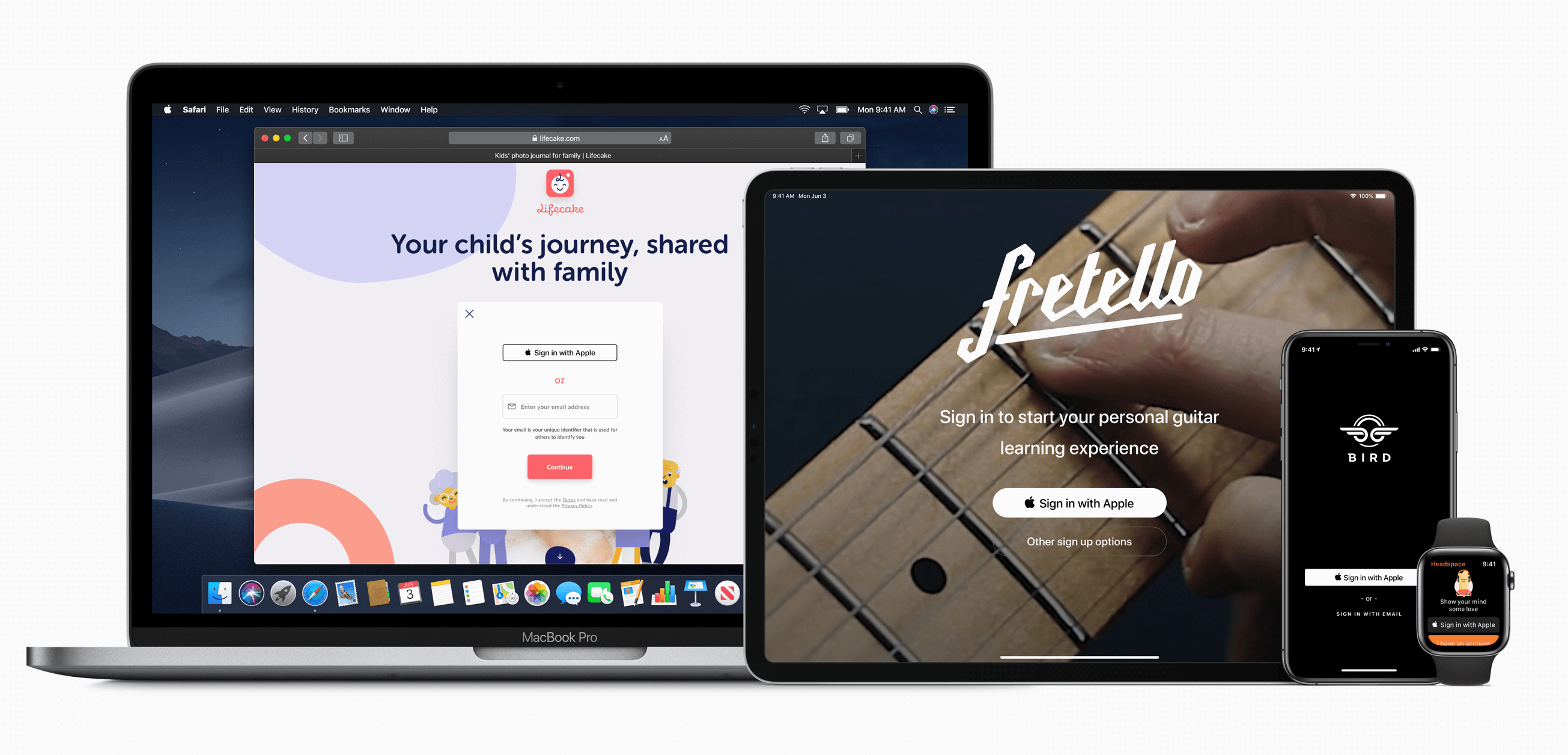
Moving on from iTunes, which has been discontinued and Apple Music taking its place, Apple has also announced few features that have made life easier for users and app developers. Some of them include the sign-in feature using Apple login, dark mode for phones and laptops, and location tracking alerts for their iOS 13 mobile operating system.

Apple Sign-in and Location Tracking

The sign-in feature makes away with social and Google enabled sign-ins, and improves security. Apple has put the user ahead of app developers and companies like Facebook and Google, which are known to collect user information and use them to further their processes. Sign-in with Apple creates a unique email address that sends emails to the user’s email, thus keeping their email addresses unexposed to app developers and marketers.

WWDC 2019- What got us excited at the Apple Developer Conference MoEngage

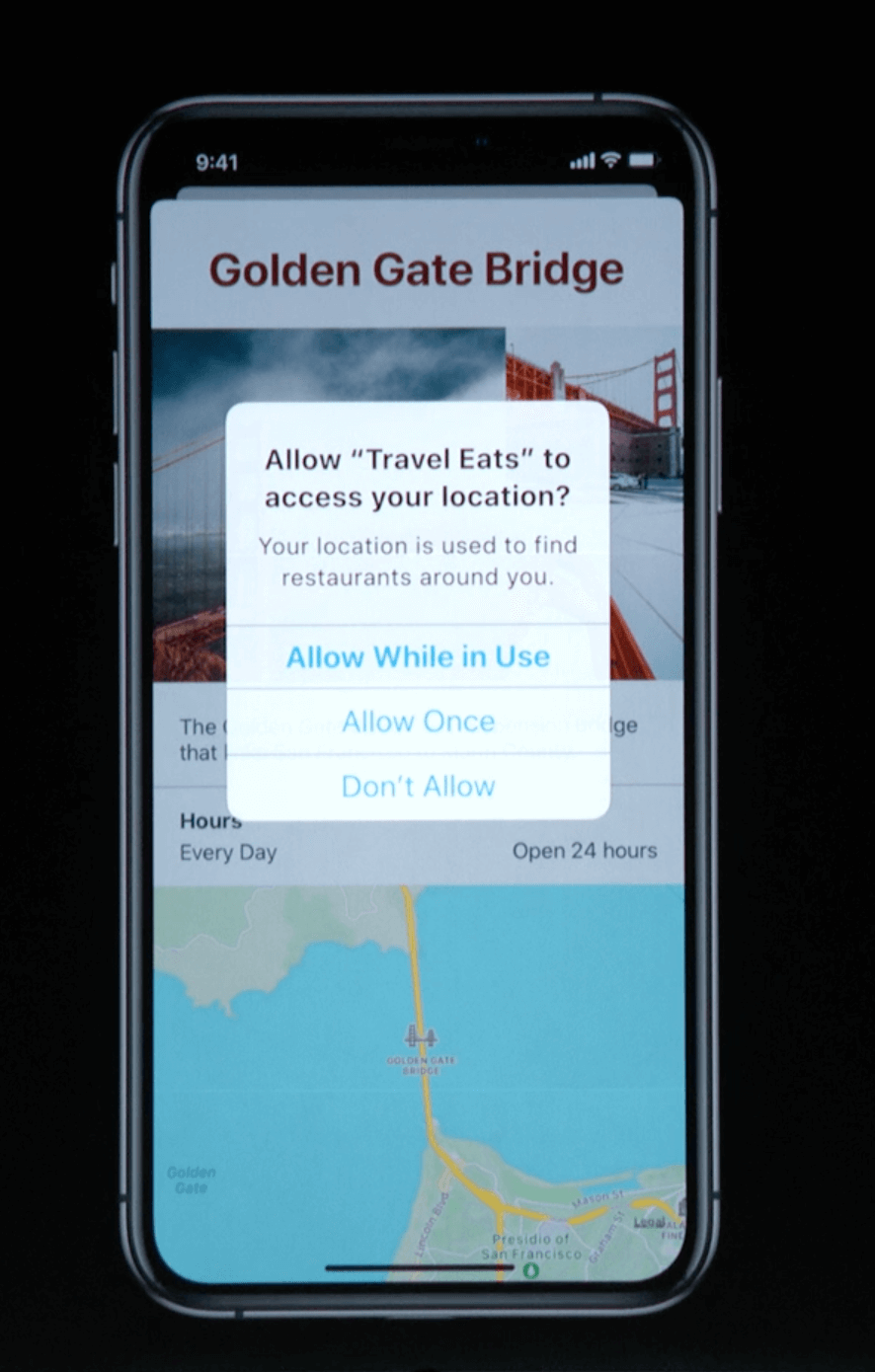
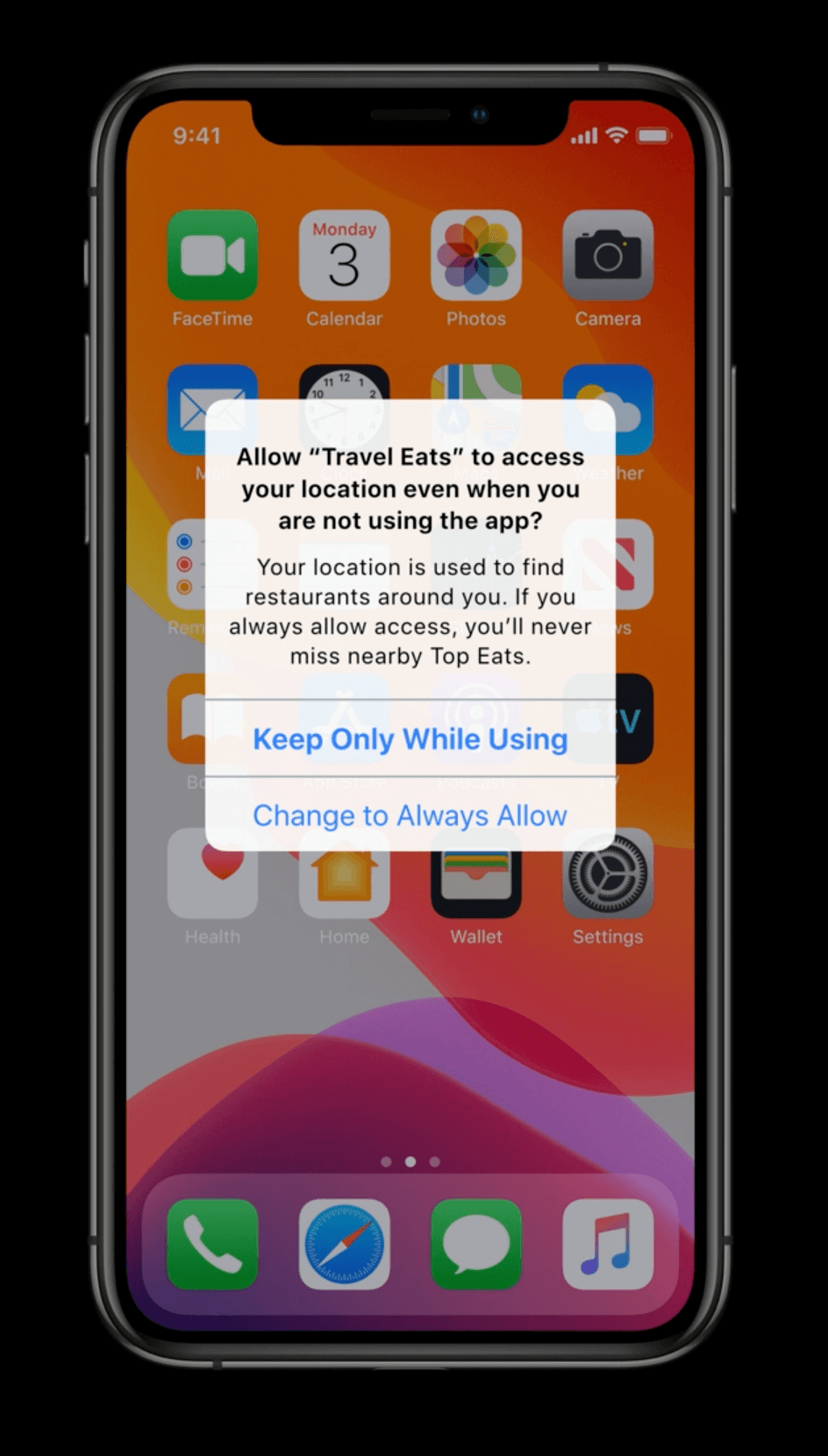
Location tracking feature has been revamped. This has made privacy a priority which is a welcome move from Apple. Apple has given an option for users to share the location only once. This is not a restriction, background location tracking and location updates are still possible.

For location tracking, there will be a separate pop-up which will appear again informing the user that the app wants to use the location in the background and seeks permission for the same.

WWDC 2019- What got us excited at the Apple Developer Conference MoEngage WWDC 2019- What got us excited at the Apple Developer Conference MoEngage

Image source – Apple

Dark Mode was unveiled with it gaining a lot of attention from app developers and designers. The Apple team stressed the importance of having an interface that is pleasing to the eye, easy to use and is also helpful in making apps look better, across platforms. It is available for iOS, and Mac operating systems.  

While this is good news for users, marketers, and developers should realize that the days of unbridled access to user data are gone. They now have to think of better ways to connect with their users.

WatchOS 6 and Independent App Store for Watch Apps

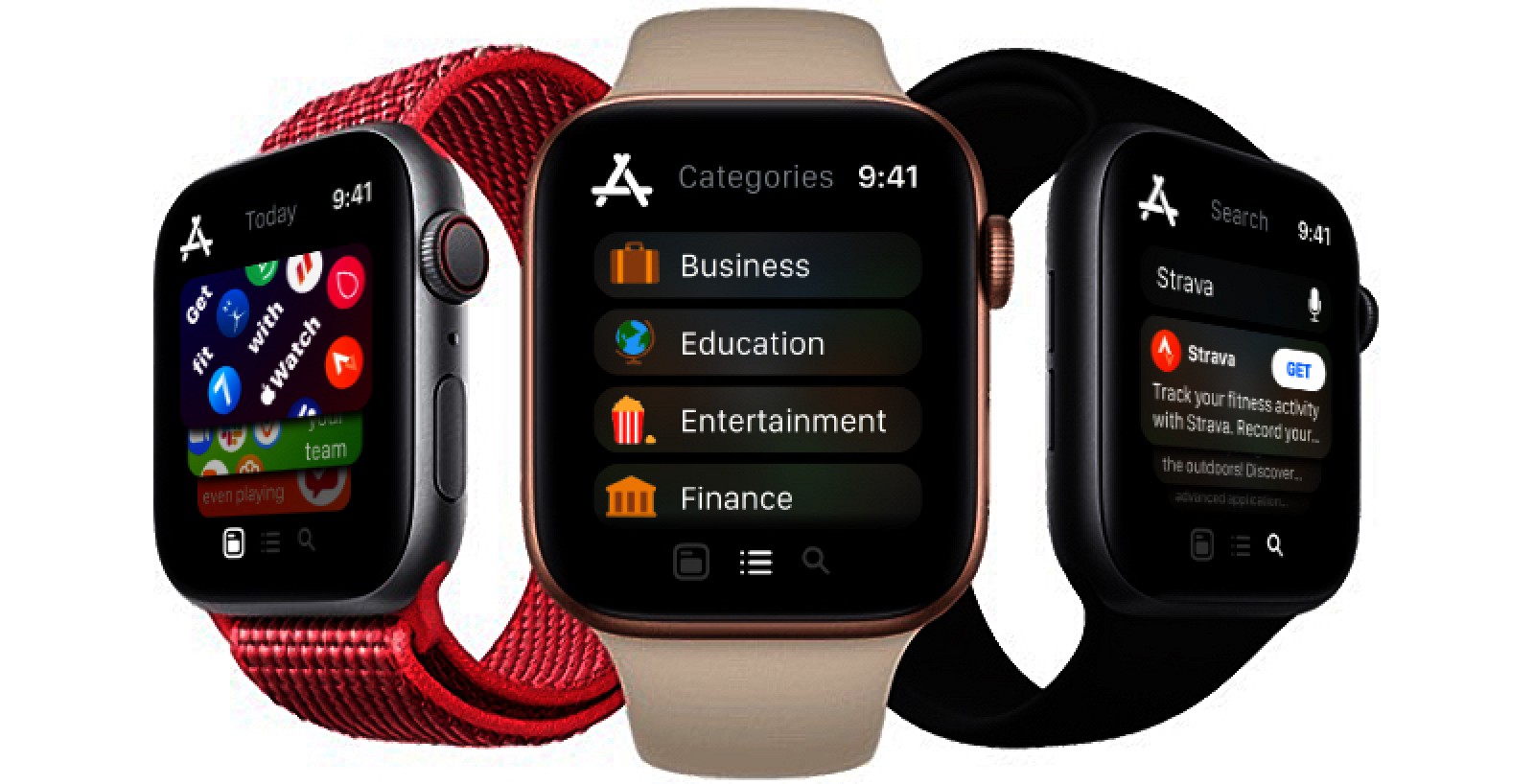
WWDC 2019- What got us excited at the Apple Developer Conference MoEngage

Image source – MacRumors

This is probably the most exciting announcement that came our way from Apple this year. It is clear that Apple is pushing its Watch product, and with the launch of WatchOS 6, they have broken away from a co-dependent app store with the iPhone. Watch users now have their Watch app store with apps that do not need to be installed on the iPhone for them to use it on Apple Watch. You can search through curated lists of apps using Siri or Scribble typing, install, pay for apps, make in-app purchases, and use them all without installing them or using the iPhone at all!

Some of the in-built apps on the iWatch will include a ‘dose’ app which is a pill reminder, ‘period tracking’ app for keeping tabs on menstrual cycles, calculator and the voice memo app, and an app to listen to audiobooks.

Here are some of the significant features that have our developers and marketers abuzz with excitement!

User Authentication in Watch OS

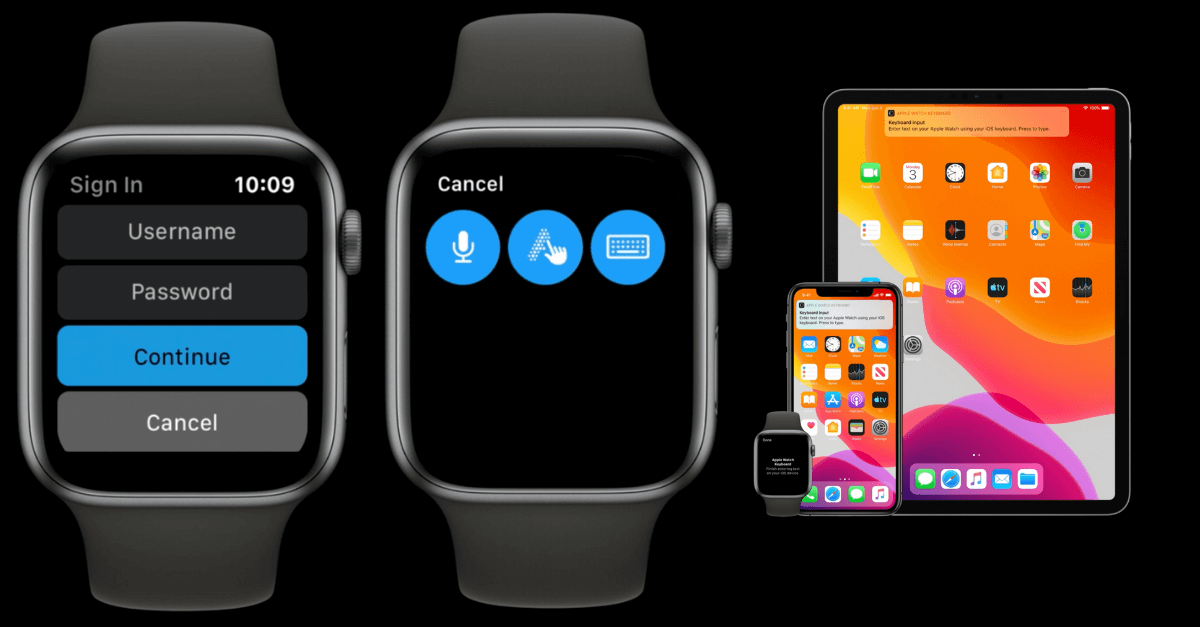
The new Watch OS enables sign-in with Apple support.Users can key in the username and password in text format from iPhone/iPad or through voice.

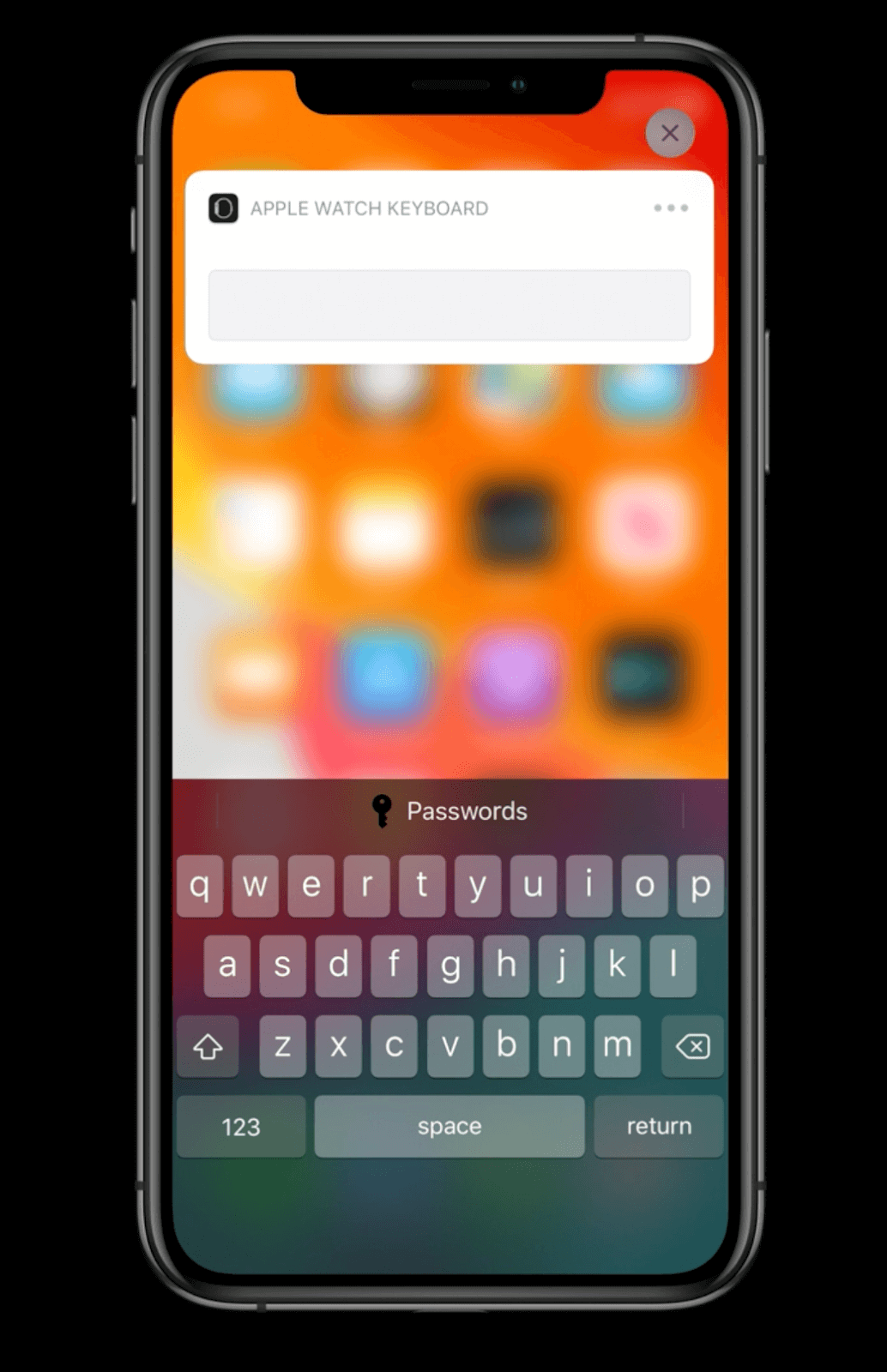
The process is simple, streamlined, and easy to use. Once a user opens the sign-in process with Apple support, the screen will prompt you to use either voice, Scribble or type. If you choose to type, Apple keyboard will open up on your iPhone or iPad and you can type in what you need which will reflect directly onto your iWatch.

WWDC 2019- What got us excited at the Apple Developer Conference MoEngage

It uses iCloud keychain to autofill credentials, similar to iPhone Apps.

WWDC 2019- What got us excited at the Apple Developer Conference MoEngage

Image source: Apple

These steps take the user/app developer one step closer to better privacy, reducing fraudulent sign-ins, faster access to apps across devices, and helps in building an eco-system that keeps user data private.

Push Notifications for Independent Watch Apps

The Watch Apps use the same APNs(Apple Push Notification Service) infrastructure as for iOS.What this means for developers and marketers is that they don’t have to create a new set of Push Notifications for non- independent Watch apps as the infrastructure is the same as on iOS.The parameters that hold good for sending push notifications on the iPhone hold good for the iWatch. For independent Apps, Push Notification implementation has to be handled separately using the same UserNotifications framework used for iOS.

This opens up a whole new world of opportunities to connect with users of the iWatch. There might be some variation in the content type and density as per the specifications of the iWatch. However, the good news is, marketers now have a whole new arena to enter and engage their users.

For developers and marketers, the independent app store for the iWatch has opened up many opportunities to engage users and decrease dependencies.

Project Catalyst and Xcode Package for MacOS and iOS

Seamless connectivity between apps has also been one of the focus areas of this year’s conference. To this end, there are 2 major updates that Apple has applied to allow developers and marketers to make their apps available to users across platforms easily and quickly.

Apple has been working on ‘Project Catalyst. Simply put, it allows apps to be available universally, across all OS’s and outside the Apple eco-system. This makes the job of app development easier, and users will have a seamless experience as the app will allow users across all platforms, collecting the same type of data and making app usage a unified experience. Third-party developers will receive the Xcode development package from Apple to enable this process.

Building native apps that work across all platforms just got easier with the new SwiftUI package. This uses the Swift programming language and allows developers to create apps that can be deployed on all OS’s of Apple.This reduces the go-to-market time, enables quicker deployment of changes and Push Notifications, and helps developers to consolidate user information across platforms.

Rounding It Up

With all these feature updates, along with the new OS, and hardware update announcements made at the WWDC 2019, Apple has taken steps to ensure that users are in power and control. This is the sign of the times where data security and usage has become a focal point of action for major tech companies. Governments across the world are pushing for higher transparency from companies. Most of the feature updates have this in mind. This should also be a priority for developers and marketers, and the shift is slowly moving into place.

We are excited to work on these feature updates and new options with the iWatch app store and a new OS for iPads. Connecting and engaging with our end users has always been our priority, and with these changes from Apple, it has made the whole process easier, user-centric, and faster.

What did you think about these changes and updates? Do let us know in the Comments section below!